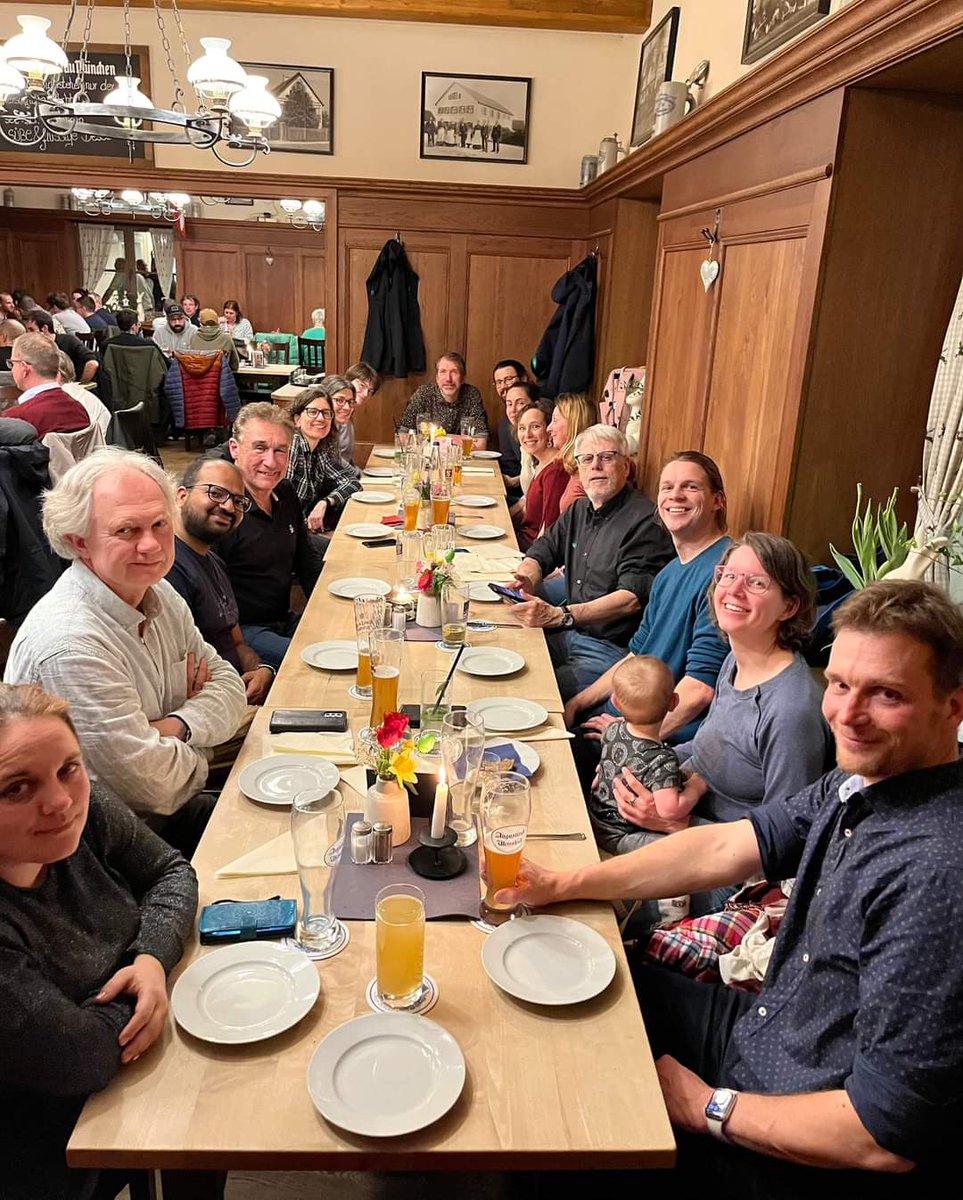
Registration for our upcoming ALMA workshop is now open: https://t.co/DAQrhN8bDc
- When: 20 - 22 Jan 2025
- Where: The University of Manchester (hybrid format)
- What: hands-on training covering the entire lifecycle of ALMA observations, from proposal preparation to data analysis
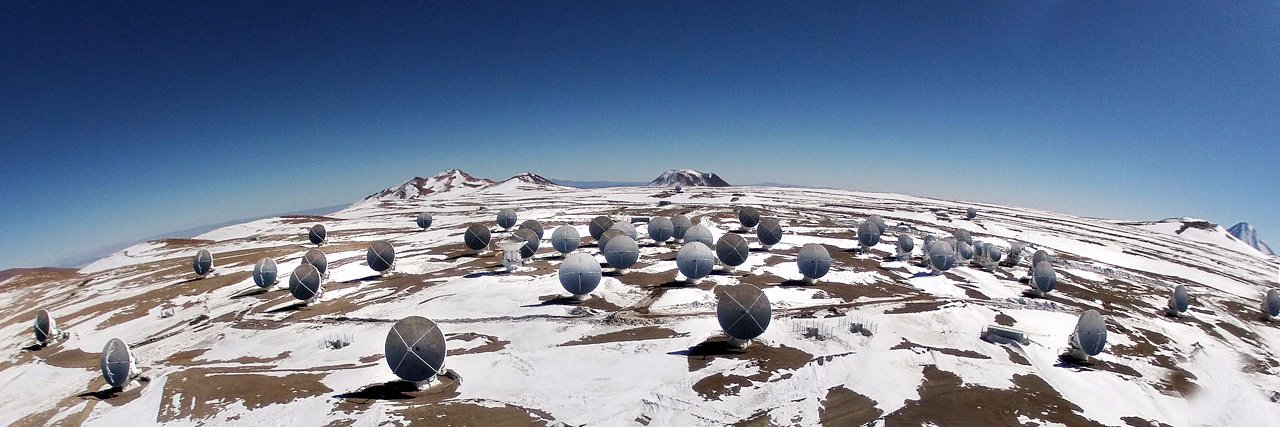
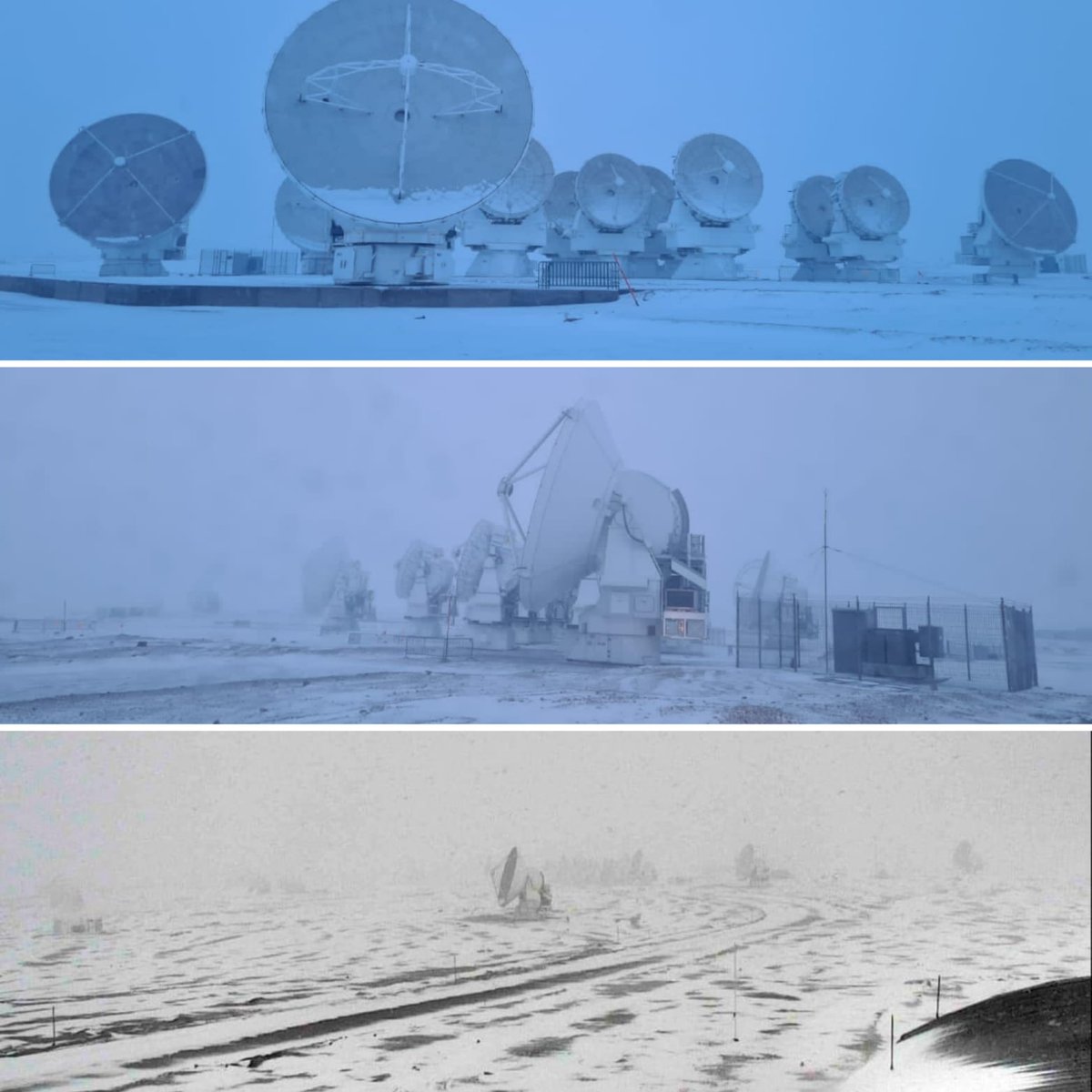
📡This weekend, nature displayed its might with fierce winds and a stunning snowfall. For safety, we closed access to the antennas and interrupted our observations. A minor setback that gave us these amazing views that we just had to share.
Registration for the 2024 European ALMA School is now open!
The school will be hosted in Manchester, and will provide training & updates on a range of aspects related to ALMA and future developments. 🔭
See the meeting website for more details: https://t.co/pt29SQ1cjJ
Next @SKAO Speaker Series - 25/9/23
Join Sean Dougherty and find out about @almaobs capabilities, celebrate ground-breaking science, and hear the latest on its operational status & upgrades!
@UK_ARC#astronomy#radioastronomy
https://t.co/1GrFqDeSOV
ALMA Cycle 10 Pre-Announcement is live!
Key anticipated dates:
- 12 April: Cycle 10 Call for proposals
- 10 May: Submission deadline
- August: Proposal review results sent to proposers
- 01 October: Start of Cycle 10 observations
See https://t.co/S3F6wzrxLD for more details 🔭
ALMA back on sky, SnooPI and Cycle 9 DDT submission server back online are some of the topics in the latest ALMA Science Portal news item. Check it out!
👇👇👇
https://t.co/kgu6ysyzxg
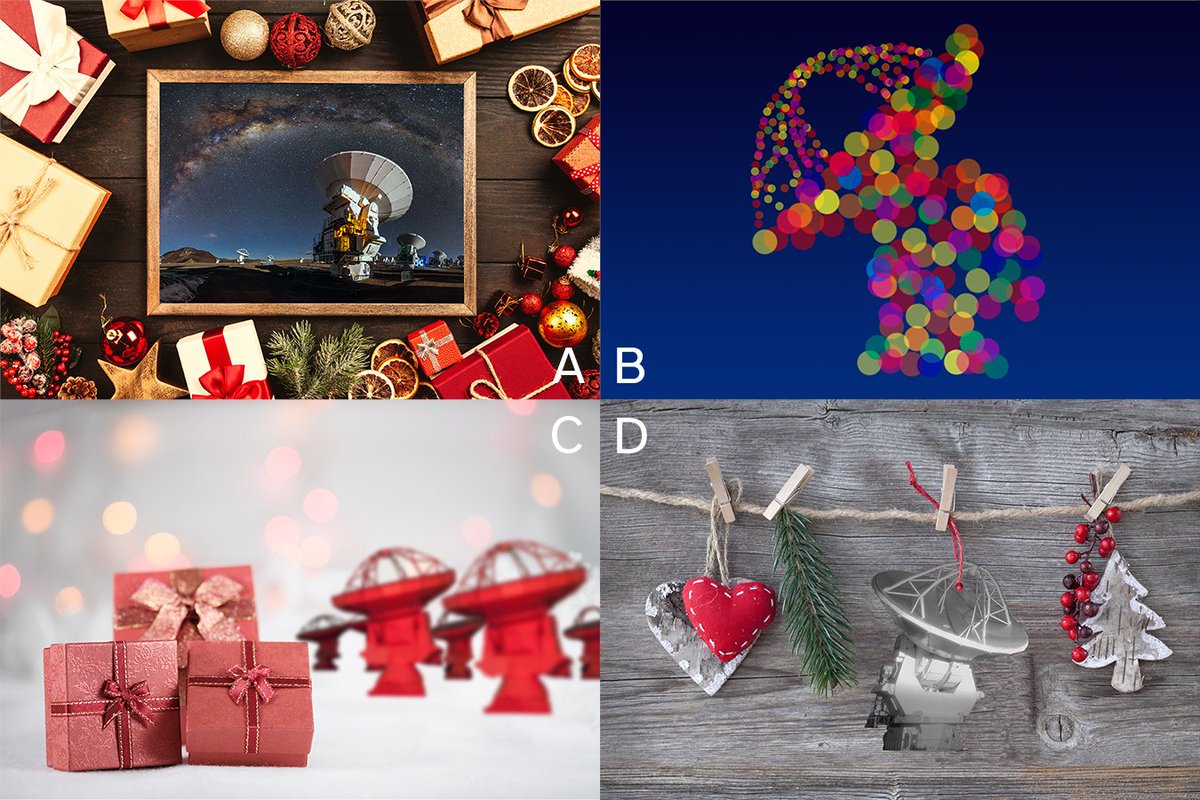
Looking for a festive @almaobs Christmas card? Here are some suitably festive images brought to you by @ALMA_Europe! 🤩 Original ideas for titles are welcome!
Credit: A: A. Duro/ESO, C: ESO/C. Malin, D: ESO/B. Tafreshi (https://t.co/PM6bqwWCmM)
The ARC at ESO is looking for an astronomer with a background in radio and/or millimetre astronomy. If you want to be part of one of astronomy's biggest projects, to work in a dynamic team and to contribute to ALMA's success, apply now! For details, see https://t.co/7EcM4Wncqa
If you want to know what it really means to "clean an image" and to learn the best tricks to properly clean your interferometric images, do not miss the upcoming I-TRAIN session this Friday, November 25th, 11:00 CET.
Details: https://t.co/dGxIkHV9Ju
📡Update: The Crisis Management Team has developed a full-recovery plan in consultation with cyber security officers from @ESO@prcnaoj_en@TheNRAO . Our priority is to work hard to resume observations before the end of the year. Thanks for all the support https://t.co/1zunQ9uai5
This month's UK ALMA newsletter is live! 📰
https://t.co/zhNpA2Ozvf
- Status of ALMA services
- Call for proposals for development studies
- Meeting of ALMA Young Astronomers (MAYA) 2023
- UK ALMA 2023 Hybrid Workshop
- Upcoming I-TRAIN session on tclean
@jgeach Hi Jim, that's strange. Are you e-mailing in reponse to a helpdesk ticket? If so, that functionality is current unavailable due to the recent cyberattack at ALMA. I'll send you a follow-up email now.
Cheers, Dan
@umm_rit @RoyalAstroSoc@jgreaves@DrPhosphine@davecl42@sukritranjan@jgreaves6 The clouds of Venus are about 90% sulphuric acid. Extremophiles on the Earth that live in acidic conditions can tolerate about 5% acid. So, the organisms that may exist in the clouds of Venus would need to protect themselves in some way. #AskTeamVenus
@ttencate The @eao_jcmt and @almaobs were conducted 2 years apart, in the north and south hemisphere respectively. Observations were calibrated to remove atmospheric effects & the observed PH3 signature is comparable in velocity & width between both making the Earth's atmosphere unlikely.