A new Science #Robotics study highlights the therapeutic potential of MicroSpine, a surgical robot system that can navigate tight intervertebral spaces for dexterous spinal nerve decompression in pigs and human cadavers. https://t.co/0HXLAsqcS7
Explore 5 studies from UT MD Anderson researchers at #ASCO26 advancing personalized cancer care, from targeted therapies to mutation-based treatments shaping the future of oncology.
Read more: https://t.co/pU8atdT5GB
@LeXiuning@LaurenByersMD@VanMorrisMD@JenMarvinPeek@MusaYilmazMD #EndCancer
Scanning a brain layer by layer is slow and damages the tissue with repeated light exposure. HKU researchers just built a system that images multiple depths simultaneously — cutting optical power by half and potentially speeding up 3D brain scans by eight times.
https://t.co/Jar5Plh93Q
#BrainImaging #Microscopy #Neuroscience
🚨 THEY CAN NOW SEE ALZHEIMER’S 15 YEARS BEFORE IT BEGINS
Imagine finding out a disease is silently growing inside the brain… more than a decade before the first memory slip ever appears. That is exactly what Japanese scientists are working toward.
Researchers have developed a powerful blood test that may detect signs of Alzheimer’s disease up to 15 years before symptoms begin. Instead of waiting for memory loss, confusion, or personality changes, doctors could someday spot the warning signs early enough to slow or even prevent dementia before it takes control.
The shocking part? This tiny blood sample can detect abnormal brain proteins linked to Alzheimer’s long before the brain suffers major damage. Scientists say this could completely change how the world fights one of the most feared diseases of aging.
For decades, Alzheimer’s was usually discovered too late. But now, the future may look very different.
A simple test. A hidden disease. And a race against time happening inside the human brain.
Source: Nakamura, A., Kaneko, N., Villemagne, V. L., Kato, T., Doecke, J., Doré, V., ... & Yanagisawa, K. Blood-based biomarker testing for Alzheimer’s disease research and diagnosis. Nature.
A surgeon in South Africa just made the deaf hear again.
With bones that came out of a printer.
Professor Mashudu Tshifularo walked into Steve Biko Academic Hospital in Pretoria in March 2019 and did something no one on the planet had ever pulled off.
He replaced a man's shattered middle ear bones with custom titanium versions printed from a 3D scan of his own anatomy.
The patient? A 35-year-old who lost his hearing in a car crash.
The fix? The hammer, anvil, and stirrup. Those three tiny ossicles that turn vibrations in the air into the sound of your kid laughing or your favourite song playing.
Tshifularo printed perfect replicas, slid them in through an endoscope, and closed up in roughly an hour and a half.
No giant incision. No facial nerve damage. No scarring across the side of the skull.
Just a camera, a printed bone, and a man who could suddenly hear again.
The technique works on anyone. Babies born without functional middle ears. Adults wrecked by infection or trauma. Pensioners losing their world to silence.
Because the implants are scanned and printed per patient, they snap into place like they were always meant to be there. And titanium is biocompatible, so the body doesn't reject them.
By 2026, the procedure has moved into expanded clinical trials with dozens more patients lined up.
One man, one printer, one quiet revolution in how humans get their hearing back.
Source: BBC Science Focus
🚨 Scientists just turned spinach leaves into human heart tissue… and it could change medicine forever.
Researchers discovered that the tiny veins inside spinach leaves can carry nutrients almost like human blood vessels. After removing the plant cells, they used the leaf as a natural scaffold to grow human heart cells.
This breakthrough could one day help repair damaged hearts naturally and it raises a chilling question…
What other hidden cures are waiting inside nature?
Source:
Gershlak, J. R., Hernandez, S., Fontana, G., Perreault, L. R., Hansen, K. J., Larson, S. A., Yang, Y., Dolivo, D. M., & Murphy, W. L. *Plant tissues as biomaterials for tissue engineering*. Biomaterials.
Germany’s stem cell therapy may let diabetics live without insulin
A revolutionary medical breakthrough is giving hope to millions of people living with diabetes. Researchers in Germany have developed a stem cell therapy that allows the body to produce its own insulin naturally. For decades, diabetics have relied on daily insulin injections or pumps to regulate blood sugar, but this new therapy could eliminate that dependency entirely.
The treatment works by transforming stem cells into functional insulin-producing cells, which are then implanted into the patient’s body. These cells respond to blood sugar levels in real time, just like a healthy pancreas. Unlike traditional methods that manage symptoms, this therapy addresses the root cause of diabetes and restores the body’s ability to regulate itself. Early trials show patients maintaining normal blood sugar without insulin injections for months, a feat once thought impossible.
This advancement is more than a medical achievement; it represents a profound improvement in quality of life. People no longer need to worry about missed doses, painful injections, or the long-term complications of poorly controlled diabetes. Families can imagine a future where loved ones live healthier, freer lives. Scientists are also exploring whether similar techniques could be applied to other endocrine disorders, opening the door to even broader healing possibilities.
Imagine a world where chronic diseases like diabetes can be reversed, not just managed. A future where the human body can be guided to repair itself naturally. With stem cell therapies advancing at this pace, that vision may soon become a reality.
🚨 SCIENTISTS MAY HAVE JUST CHANGED DIABETES TREATMENT FOREVER
Researchers in China are testing stem cell therapy that could help the body produce insulin again naturally. In early cases, some diabetes patients gained better blood sugar control and even reduced insulin use under medical supervision.
The treatment works by replacing damaged insulin-producing cells inside the pancreas. While it’s still in early testing and not a guaranteed cure yet, experts say this could become one of the biggest breakthroughs in diabetes treatment history.
Source: Nature. Stem-cell-derived islet-cell therapy research for diabetes treatment.
🚨 HUMANS MAY HAVE A HIDDEN POWER SCIENTISTS ARE JUST BEGINNING TO UNDERSTAND
Axolotls can regrow entire limbs, and now scientists say humans carry some of the same regeneration-related genes. Researchers believe the real mystery is not whether we have these genes… but why they are mostly inactive.
Studies on axolotls are helping scientists explore whether human tissue regeneration could someday become possible. What if the ability to regrow damaged body parts has been inside us all along?
Source: National Science Foundation. New axolotl study gives researchers a leg up in work towards limb regeneration
A tiny bee just did what chemotherapy couldn't.
Scientists in Australia discovered that honeybee venom can wipe out 100% of aggressive breast cancer cells in under 60 minutes.
And the healthy cells around them? Barely touched.
The breakthrough came from Dr. Ciara Duffy and her team at the Harry Perkins Institute of Medical Research, working alongside the University of Western Australia.
They tested venom drawn from 312 honeybees and bumblebees across Australia, Ireland, and England.
The target: triple-negative breast cancer and HER2-enriched breast cancer. Two of the deadliest, most stubborn forms of the disease.
The weapon: melittin. The same tiny peptide that makes a bee sting burn.
At one specific dose, melittin tore through cancer cell membranes completely within an hour. Within just 20 minutes, it shut down the chemical signals cancer cells need to grow and multiply.
Bumblebee venom, which lacks melittin, did nothing. Zero effect, even at high concentrations.
Scientists then recreated melittin synthetically in the lab and got almost identical results, meaning no bees need to be harmed to develop the therapy.
Published in the peer-reviewed journal npj Precision Oncology, the findings are still early-stage. Human trials haven't happened yet.
But one thing is clear. Nature has been hiding answers in plain sight all along, sometimes inside the smallest creatures on Earth.
Source: Harry Perkins Institute of Medical Research / npj Precision Oncology (Dr. Ciara Duffy et al.)
Alzheimer’s symptoms were reversed in mice after just three doses.
In a groundbreaking study co-led by researchers at University College London (UCL), along with collaborators including the Institute for Bioengineering of Catalonia (IBEC) and West China Hospital of Sichuan University, scientists have developed bioactive nanoparticles—termed supramolecular drugs—that successfully reversed key signs of Alzheimer’s disease in mice.
This innovative approach diverges from conventional therapies, which typically aim to target neurons or directly break down plaques. Instead, the nanoparticles focus on repairing and restoring the blood-brain barrier (BBB), the brain’s protective vascular interface that regulates its internal environment and clears waste.
In Alzheimer’s, the BBB becomes dysfunctional, leading to the buildup of toxic amyloid-beta (Aβ) proteins that impair cognitive function. The supramolecular nanoparticles mimic natural ligands of the LRP1 receptor—a key transporter protein on the BBB. By binding to Aβ, they facilitate its transport across the barrier into the bloodstream for elimination, while also triggering a feedback mechanism that resets and normalizes the brain’s own clearance pathways.
Remarkably, after just three doses administered to genetically modified mice that overproduce Aβ and exhibit Alzheimer’s-like cognitive decline, the treatment produced rapid results: Aβ levels in the brain dropped by 50–60% within one hour of injection. Long-term monitoring showed profound behavioral and memory recovery; notably, mice treated at an age equivalent to about 60 years in humans regained full healthy performance in cognitive tests when evaluated six months later (equivalent to age 90 in humans).
These findings highlight a novel, precision-engineered strategy that reboots the brain’s natural waste-removal system without traditional drug payloads, offering a promising proof-of-concept for addressing Alzheimer’s pathology at its vascular root. While far from a human cure, the work opens new avenues for therapies that could halt or reverse disease progression by enhancing the brain’s intrinsic defenses.
["Nanoparticles reverse Alzheimer’s pathology in mice." UCL, 2025]
🚨 Goodbye Kidney Stones?
Scientists have engineered special gut bacteria that may help stop kidney stones naturally. These tiny microbes break down oxalate — the substance responsible for many painful stones — before it reaches the kidneys.
Instead of painful treatments, future medicine could use living bacteria inside the body to quietly prevent stones from forming. A tiny organism… doing a huge job inside you.
Source:
Stern, J. M., et al. Engineered living therapeutics for the treatment of hyperoxaluria and kidney stone disease. Nature Biotechnology
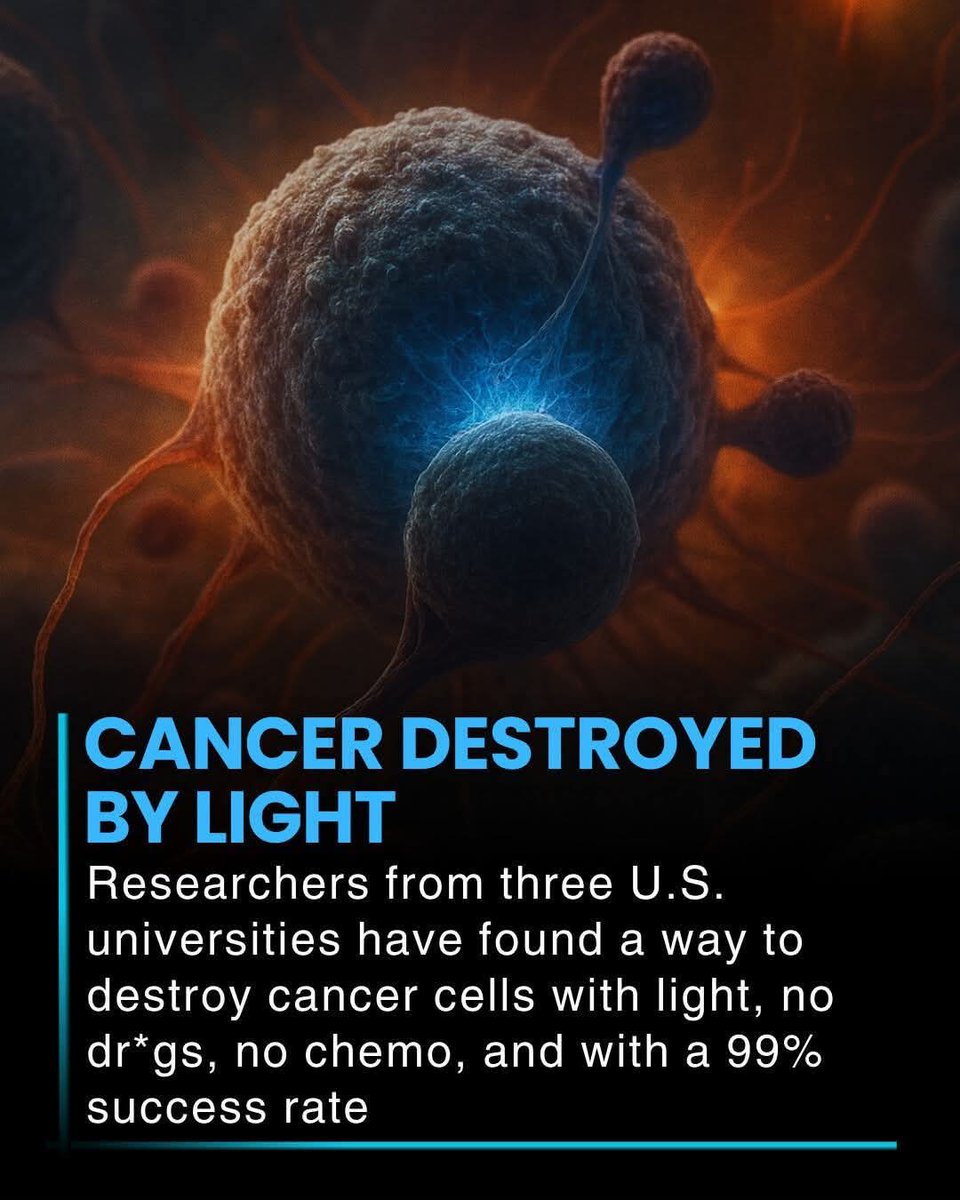
🎗 In a revolutionary breakthrough, researchers from three leading American universities have discovered a method to destroy cancer cells using light, completely eliminating the need for drugs or chemotherapy. Early studies show an astonishing 99% success rate, offering unprecedented hope for millions battling this devastating disease.
The technique, known as phototherapy at the cellular level, targets cancer cells with highly precise light wavelengths that cause them to break apart while leaving healthy cells unharmed. Unlike traditional treatments, this approach avoids the severe side effects of chemotherapy and radiation, providing a safer and more effective alternative.
Experts say this discovery could transform cancer treatment worldwide. By harnessing light to selectively dismantle malignant cells, doctors may soon have a non-invasive therapy capable of treating various types of cancer, including those resistant to conventional methods.
While further trials are needed before widespread use, this milestone represents a major leap forward in oncology, showing that cancer may one day be fought without the collateral damage caused by current treatments. The era of drug-free, targeted cancer therapy may be closer than ever.
🚨 FOR THE FIRST TIME, SCIENTISTS RESTORED HEARING USING STEM CELLS
Researchers injected lab-grown stem cells into damaged human ears…
and some patients regained measurable hearing ability.
The goal?
Repair the tiny sensory hair cells and neurons inside the cochlea that normally never regenerate once destroyed.
This is massive because hearing loss affects hundreds of millions of people worldwide…
and most current treatments only compensate for damage rather than actually repairing it.
Why this matters:
• Could restore natural hearing instead of amplifying sound
• May help reverse certain forms of deafness
• Opens the door to regenerating damaged sensory tissue
• Could eventually treat tinnitus and nerve-related hearing disorders
• Pushes regenerative medicine into real human neural repair
The deeper implication?
We’re entering an era where medicine may stop managing damage…
and start rebuilding biology itself.
Your body may not be as permanent as we once thought.
Follow for more future physics and breakthrough technology.
Forget killing cancer cells. South Korea just figured out how to talk them back into being normal.
Scientists at KAIST in Daejeon have done something the world has been chasing for decades.
They found a molecular switch that flips cancer cells back into healthy cells.
No chemo. No radiation. No destroying anything.
Just… reversal.
Professor Kwang-Hyun Cho and his team caught cancer in the act. That tiny window where a normal cell is on the edge of turning malignant but hasn't fully crossed over yet. They call it the "critical transition" — the same kind of jump that happens when water hits 100°C and becomes steam.
In that split-second window, the cell is unstable. Normal and cancerous at the same time.
And that's exactly where they hit the switch.
In colon cancer trials, they targeted three master genes — MYB, HDAC2, and FOXA2 — and the cancer cells didn't die.
They went back to being healthy intestinal cells. Like nothing ever happened.
The team built a digital twin of the gene network to map every move a cell makes on its way to becoming cancerous. Then they reverse-engineered the path home.
Their paper landed in Advanced Science, published by Wiley.
It's still early. Lab trials and mice. Human treatment is years away.
But the idea of curing cancer without killing a single cell is no longer science fiction.
Source: KAIST (Korea Advanced Institute of Science and Technology), published in Advanced Science journal
Scientists just found a way to reverse osteoporosis – not just slow it.
Researchers from the University of Leipzig and Shandong University have identified GPR133, a cell-surface receptor that functions as a master regulator of bone-building cells called osteoblasts. When GPR133 is switched on, osteoblasts ramp up activity and dramatically increase bone density.
In mouse experiments, animals engineered without the GPR133 gene developed fragile, porous bones similar to human osteoporosis. However, treating them with a synthetic activator called AP503—a small molecule discovered through computational screening—rapidly strengthened their skeletons. Remarkably, AP503 not only boosted bone mass in healthy mice but also reversed osteoporosis-like damage in older or diseased animals, with even greater effects when paired with physical exercise.
Because GPR133 influences bone density in humans and the underlying molecular pathways are highly conserved across mammals, the findings raise hope for a breakthrough osteoporosis therapy. Unlike existing drugs that merely slow bone loss (and often carry side effects or waning efficacy), a GPR133-activating compound could actively rebuild bone from within.
This approach could be particularly transformative for postmenopausal women, who face the highest risk of debilitating fractures, offering a safer, more effective way to restore skeletal strength.
["The mechanosensitive adhesion G protein-coupled receptor 133 (GPR133/ADGRD1) enhances bone formation." Signal Transduction and Targeted Therapy, 30 June 2025]
A groundbreaking study from Chalmers Institute of Technology and the University of Freiburg reveals that electric current can accelerate chronic wound healing three times faster. This breakthrough offers new hope for patients with diabetes, cancer, and poor circulation, enabling faster recovery.
#ChronicWounds #MedicalBreakthrough #Bioelectronics #ElectricHealing #WoundHealing #HealthInnovation #MedicalResearch #FuturisticMedicine #DiabetesCare
Today’s robots walk, swim, fly, and manipulate objects on the go—and they’re just getting started.
Learn more in a new #ScienceExpertVoices article: https://t.co/Kn3v3em0UT
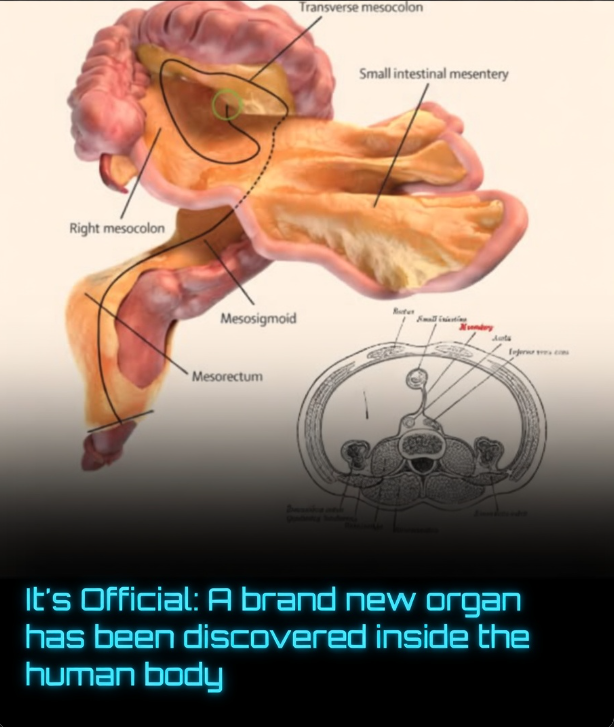
Scientists have officially discovered a brand-new organ in the human body.
The mesentery — a structure long thought to be a collection of fragmented tissues holding the intestines in place — has been reclassified as a single, continuous organ. This landmark discovery, led by researcher J. Calvin Coffey at University Hospital Limerick, has fundamentally changed our understanding of human anatomy.
For centuries, the mesentery was dismissed as insignificant. Now, thanks to detailed research, it is recognized as one unified structure. The finding was so significant that it has already been incorporated into the latest edition of Gray’s Anatomy, the world’s most respected medical textbook.
While the mesentery’s main function is to anchor and support the intestines, scientists believe it plays far more complex roles that are still not fully understood. Its formal recognition has given rise to an entirely new field called mesenteric science. Researchers hope that studying this organ will unlock new insights into digestive diseases, abdominal disorders, and potentially lead to better treatments for millions of patients.
This discovery is a powerful reminder that even today, the human body still holds remarkable secrets waiting to be uncovered.












![Rainmaker1973's tweet photo. Alzheimer’s symptoms were reversed in mice after just three doses.
In a groundbreaking study co-led by researchers at University College London (UCL), along with collaborators including the Institute for Bioengineering of Catalonia (IBEC) and West China Hospital of Sichuan University, scientists have developed bioactive nanoparticles—termed supramolecular drugs—that successfully reversed key signs of Alzheimer’s disease in mice.
This innovative approach diverges from conventional therapies, which typically aim to target neurons or directly break down plaques. Instead, the nanoparticles focus on repairing and restoring the blood-brain barrier (BBB), the brain’s protective vascular interface that regulates its internal environment and clears waste.
In Alzheimer’s, the BBB becomes dysfunctional, leading to the buildup of toxic amyloid-beta (Aβ) proteins that impair cognitive function. The supramolecular nanoparticles mimic natural ligands of the LRP1 receptor—a key transporter protein on the BBB. By binding to Aβ, they facilitate its transport across the barrier into the bloodstream for elimination, while also triggering a feedback mechanism that resets and normalizes the brain’s own clearance pathways.
Remarkably, after just three doses administered to genetically modified mice that overproduce Aβ and exhibit Alzheimer’s-like cognitive decline, the treatment produced rapid results: Aβ levels in the brain dropped by 50–60% within one hour of injection. Long-term monitoring showed profound behavioral and memory recovery; notably, mice treated at an age equivalent to about 60 years in humans regained full healthy performance in cognitive tests when evaluated six months later (equivalent to age 90 in humans).
These findings highlight a novel, precision-engineered strategy that reboots the brain’s natural waste-removal system without traditional drug payloads, offering a promising proof-of-concept for addressing Alzheimer’s pathology at its vascular root. While far from a human cure, the work opens new avenues for therapies that could halt or reverse disease progression by enhancing the brain’s intrinsic defenses.
["Nanoparticles reverse Alzheimer’s pathology in mice." UCL, 2025]](https://pbs.twimg.com/media/HISJgLNXkAAYxdi.jpg)


![Rainmaker1973's tweet photo. Scientists just found a way to reverse osteoporosis – not just slow it.
Researchers from the University of Leipzig and Shandong University have identified GPR133, a cell-surface receptor that functions as a master regulator of bone-building cells called osteoblasts. When GPR133 is switched on, osteoblasts ramp up activity and dramatically increase bone density.
In mouse experiments, animals engineered without the GPR133 gene developed fragile, porous bones similar to human osteoporosis. However, treating them with a synthetic activator called AP503—a small molecule discovered through computational screening—rapidly strengthened their skeletons. Remarkably, AP503 not only boosted bone mass in healthy mice but also reversed osteoporosis-like damage in older or diseased animals, with even greater effects when paired with physical exercise.
Because GPR133 influences bone density in humans and the underlying molecular pathways are highly conserved across mammals, the findings raise hope for a breakthrough osteoporosis therapy. Unlike existing drugs that merely slow bone loss (and often carry side effects or waning efficacy), a GPR133-activating compound could actively rebuild bone from within.
This approach could be particularly transformative for postmenopausal women, who face the highest risk of debilitating fractures, offering a safer, more effective way to restore skeletal strength.
["The mechanosensitive adhesion G protein-coupled receptor 133 (GPR133/ADGRD1) enhances bone formation." Signal Transduction and Targeted Therapy, 30 June 2025]](https://pbs.twimg.com/media/HHeEaQSWoAABuQ4.png)