@TenguOStars @SimpPolice911 Hard times create strong men. Strong men create good times. Good times create weak men. And, weak men create hard times. G. Michael Hopf
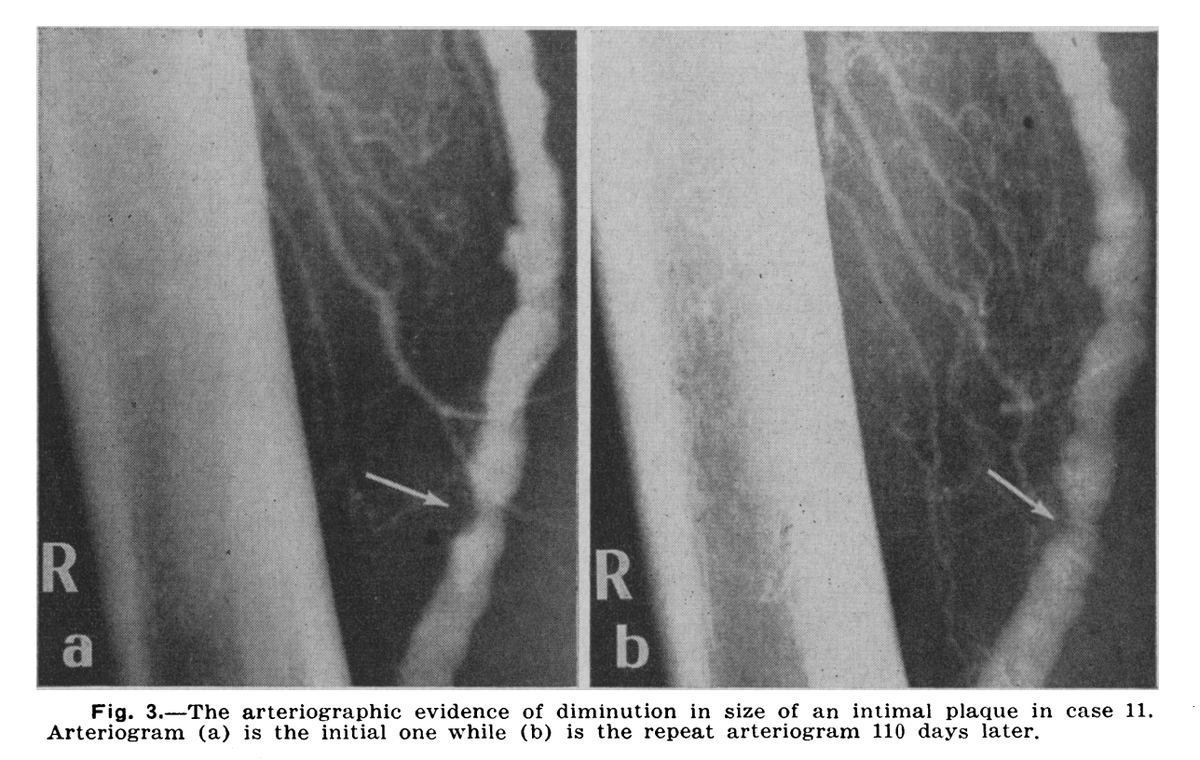
Vitamin C shrinks arterial plaques in clinical trial.
The picture below shows improvements in under 4 months.
500 mg 3 times daily in people with heart disease - 6/10 people had reduced plaques, while none in control did.
Vitamin C has several cardioprotective effects:
➞ Antioxidant
➞ Anti-inflammatory
➞ Collagen supporting
➞ Cholesterol lowering
1954. The old forgotten studies often have the best gems.
🚨 Scientists finally have a regenerative alternative to surgery for chronic neck and back pain sufferers.
And it’s a gel.
Medical science is pivoting from merely managing chronic spinal pain to actively reversing it through the use of advanced, injectable hydrogels. These biocompatible materials are designed to mimic the nucleus pulposus—the gel-like center of spinal discs—providing immediate mechanical support and restoring lost disc height. Delivered through a minimally invasive needle, the hydrogel fills structural gaps and re-establishes a healthy microenvironment within the spine. This approach represents a significant shift from traditional treatments, as it addresses the physical decay of the disc rather than just masking the resulting symptoms of Degenerative Disc Disease (DDD).
Beyond providing structural stability, these hydrogels serve as high-tech scaffolds that deliver stem cells and growth factors directly to the site of injury. By inhibiting inflammatory enzymes and stimulating natural cellular repair, the treatment encourages the body to regenerate damaged tissue from within. Early clinical research indicates that patients experience substantial pain relief and improved mobility following the procedure.
By restoring hydration and biological function to the spine, hydrogel therapy offers a promising path toward long-term recovery, potentially eliminating the need for more invasive spinal fusion surgeries.
Source: Li, Z., Mao, H., & Wang, J. Injectable Hydrogels for Intervertebral Disc Regeneration: A Review of Current Materials and Strategies. Journal of Biomedical Materials Research Part A.
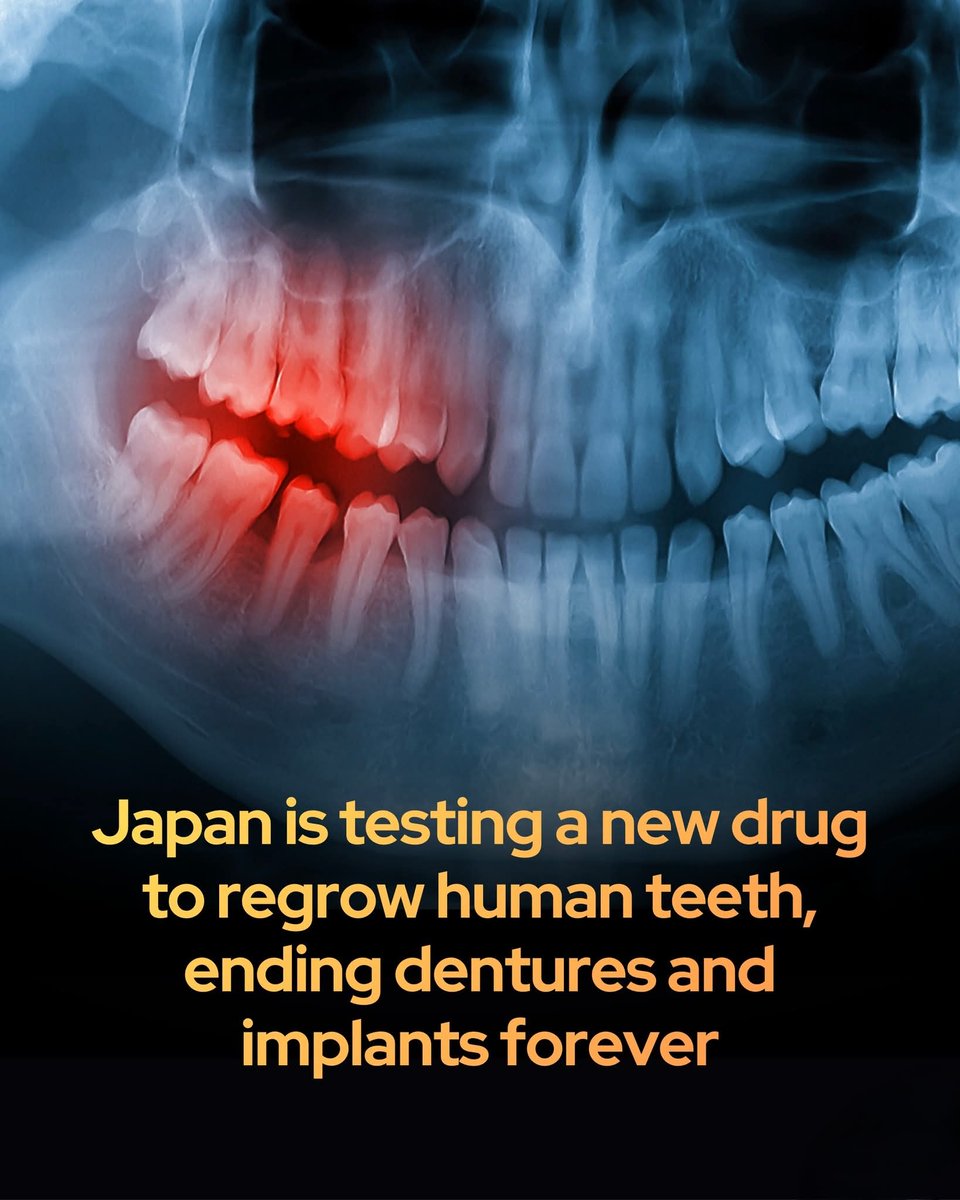
Human trials are underway for a drug that regrows human teeth in just 4 days.
Scientists are initiating human trials for a groundbreaking drug designed to regrow teeth naturally, potentially rendering dentures and implants obsolete.
For decades, permanent tooth loss has been considered an irreversible part of aging or injury, leaving millions reliant on synthetic implants and dentures. However, researchers at Kyoto University are now challenging this biological limitation by launching human trials for a drug that triggers natural tooth regrowth. The treatment works by inhibiting a protein called USAG-1, which normally suppresses the maturation of "extra" tooth buds. By blocking this biological brake, scientists have successfully grown new, fully functional teeth in animal models, effectively tapping into a latent "third dentition" that humans carry in a suppressed state.
The project is being advanced by the startup Toregem BioPharma, with an initial clinical focus on individuals with congenital tooth agenesis—a condition where adult teeth never form. These patients are ideal candidates because their dormant tooth buds are already present but inactive, waiting for the correct biological signal to mature. While the drug requires precise timing and developmental context to work effectively, its success could signal a massive paradigm shift in restorative medicine. Moving beyond porcelain and titanium, the future of dentistry may lie in the body’s own inherent ability to regenerate its natural anatomy.
source: Takahashi, K., Kiso, H., & Murashima-Suginami, A. Advances in tooth agenesis and tooth regeneration. Regenerative Therapy
LIMB REGENERATION
(videos 👇👇👇)
While full limb regrowth in mammals as described remains elusive, related real breakthroughs include DARPA-funded efforts since the 2000s to create blastema-like tissue from human skin for muscle regeneration and multi-million grants exploring regeneration genes in models like the MRL mouse.
Recent advances encompass protein-based joint regrowth in digits and gene therapies enabling paralyzed mice to regain mobility by regenerating neural connections.
Primates have shown functional recovery from spinal injuries via human neural stem cell grafts.
No confirmed coral-derived therapies or 2027 human trials match the claim, though ongoing research in salamander-inspired genetics holds promise for future applications.
The videos below 👇
delve into limb regeneration and related regenerative medicine topics:
• “Salamander Limb Regeneration — HHMI BioInteractive Video” on YouTube (explaining how stem cells enable amphibian regeneration as a model for potential human applications): https://t.co/yuJOTAYjgS
• “Unlocking the Secrets to Human Limb Regeneration” on YouTube (discussing axolotl research and progress toward human limb regrowth): https://t.co/ALP7Dm16nQ
• “Limb Regeneration - Michael Levin (CLIP)” on YouTube (exploring bioelectric approaches to regenerating limbs in frogs and implications for mammals): https://t.co/fluVFRb1fT
• “BREAKTHROUGH Limb Re-Growth In Mammals Unlocks Anti-Aging Secrets” on YouTube (covering gene activation for scarless tissue regeneration in mice): https://t.co/2U6VU4uSU2
• “Paralysed mice walk again thanks to new gene therapy” on YouTube (detailing gene therapy for nerve regeneration in spinal injuries, related to broader limb function recovery): https://t.co/oX8xMIB4n8
A Japanese research team has developed a drug that can regrow human teeth.
TRG-035, which works by blocking a protein called USAG-1 that prevents new teeth from growing. After successful trials in mice and ferrets, human clinical trials began in 2024.
@colonakin Εμένα με τρόμαξε το ποσό απότομα σταμάτησε να γελάει κ άρχισε να μιλάει σοβαρά,έτσι κ το πάθει αυτό στο κομμωτήριο σε έχει φάει με την μηδέν κατευθείαν.