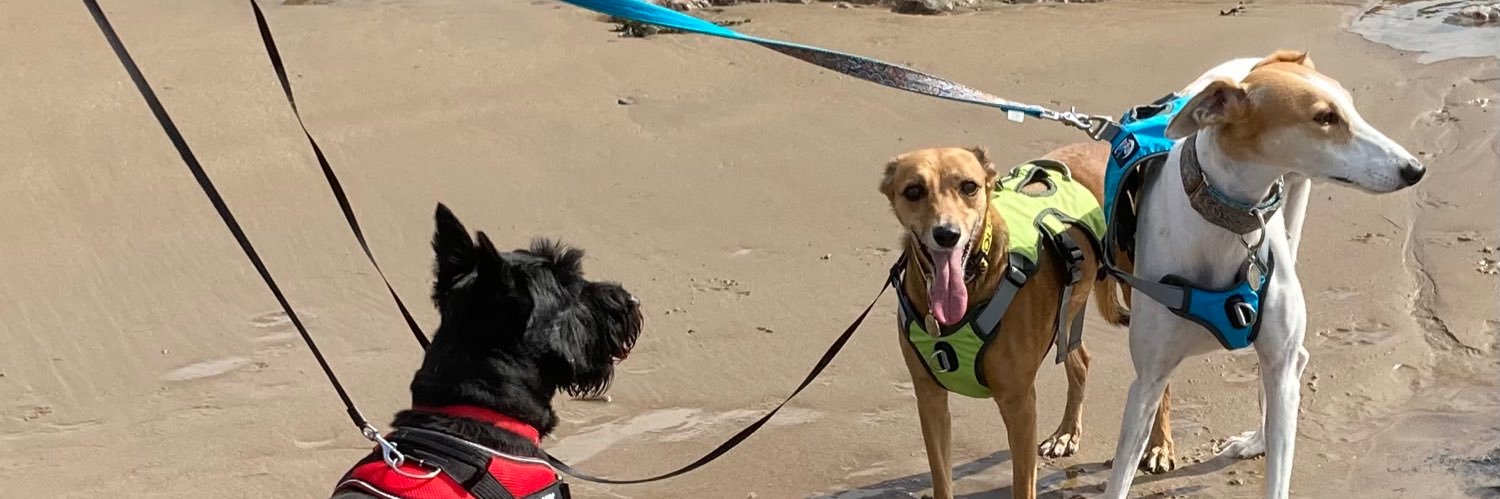
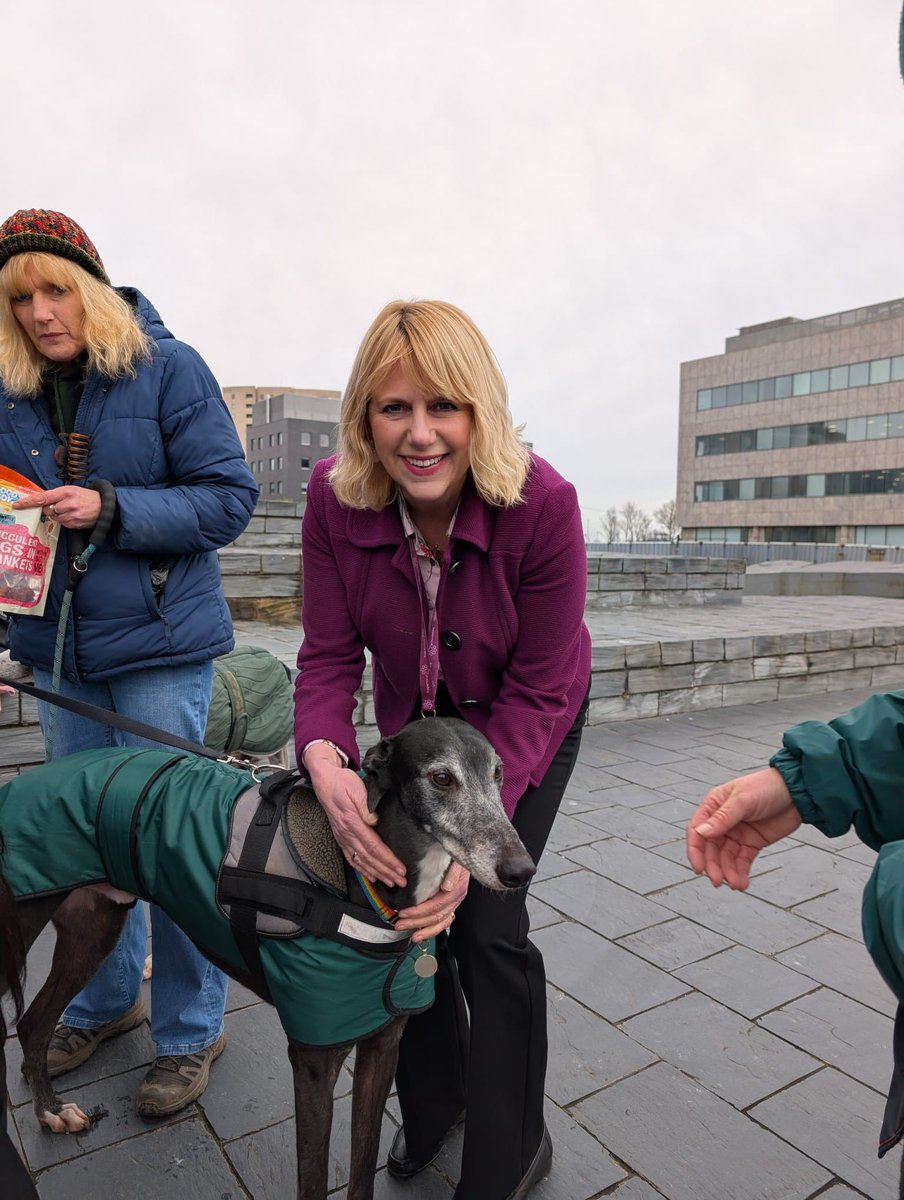
I'm absolutely over the moon that the Welsh Government has announced today that greyhound racing will be banned as soon as practically possible.
Years of hard work & campaigning from charities, animal welfare organisations, campaigners, and backbench politicians has paid off! 🥳
'Mary.' (c1920) Gertrude Fiske was an accomplished Impressionist painter who trained under Frank Benson. Perhaps not as well known as some of her contemporaries but considered to be at least the equal of Mary Cassatt. An essential figure in the history of women painters.
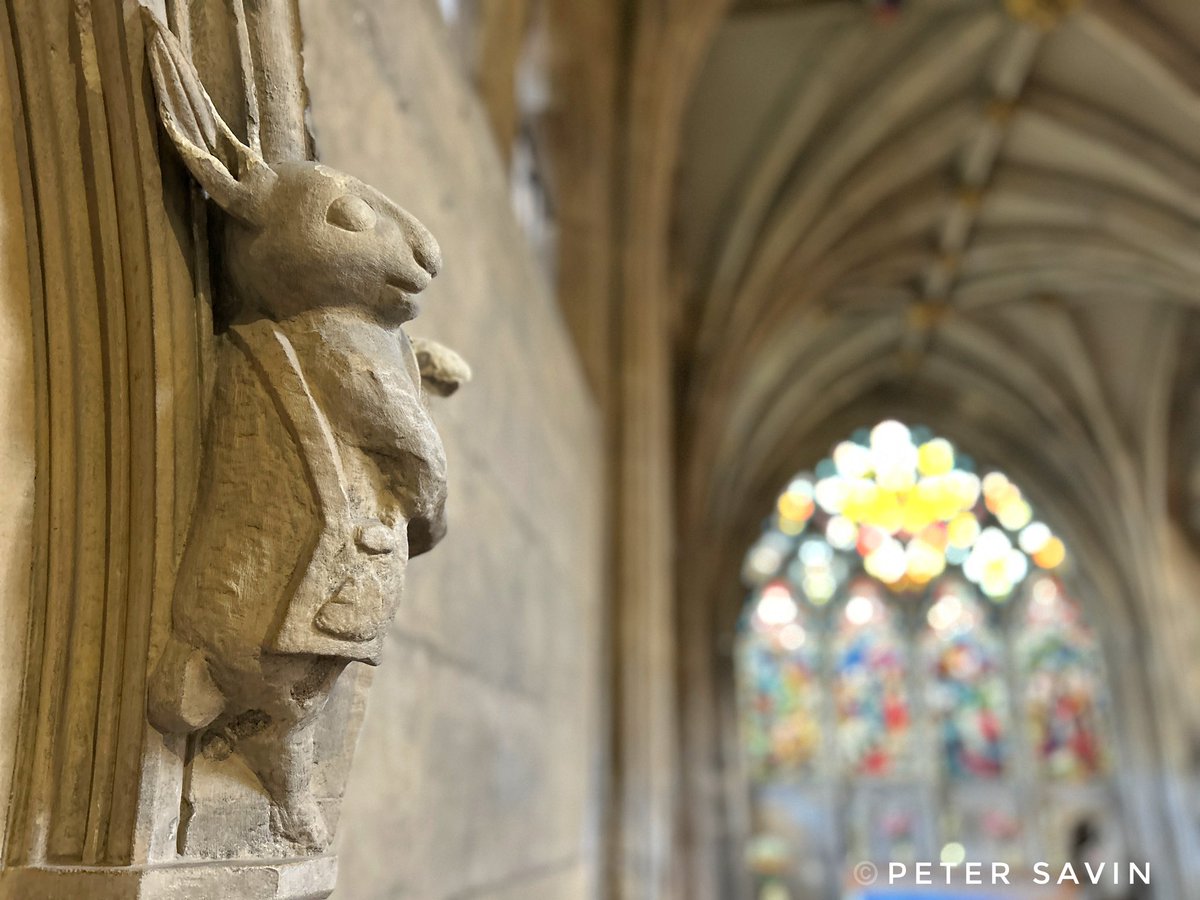
So Yesterday I asked people to name this Roundel Dalmation Dog from @tfl's new campaign.
Here are my favourite answers...
Holland Bark
Grunder Hound
Labrador Grove
Regent's Bark
Mornington
Brixton!
And
Dalstation
Woman of the Day nutritionist and dietician Dr Elsie Widdowson born in 1906 in Surrey. It’s her day because OTD in 1940, rationing was introduced on butter, bacon, ham, and sugar, and by 11 March this was expanded to all meat.
When the government needed to know if the UK could survive on homegrown food if German U-boats stopped all food from entering British waters during the war, Elsie and her colleague Professor Robert McCance provided the answers in their top-secret experiment, the Cambridge Study.
In December 1939, Elsie and a small group of volunteers lived solely on restricted rations - one egg per week, 450g meat, a tiny amount of fish and milk and margarine, unlimited amounts of potatoes, vegetables and wholemeal bread. They took intensive outdoor exercise to replicate the strenuous physical work ordinary Britons would be likely to carry out as part of the national war effort.
As wartime rationing began to bite, Elsie worked out that bread, green vegetables, and potatoes contained all the nutrients needed for healthy survival.
“You can, if you have to, live on a very simple diet.”
She and the volunteers went the extra mile and voluntarily tested what amounted to a starvation diet for months - nothing more than bread, cabbage and potatoes. “We did not believe that we should use human subjects in experiments that involved any pain, hardship or danger, unless we had made the same experiments on ourselves.”
Rationing never did get quite as severe as that but they were testing out an extreme.
They advocated for bread to be fortified by vitamins and minerals, particularly calcium, and their findings became the basis of the wartime rationing system. Elsie was especially worried about the nutritional needs of babies and factored those in at every opportunity.
Some foods were not rationed during the war - fruit, veg, bread, fish and alcohol - but there were only ever limited amounts available because some foods were not native to the UK and had to be imported at great personal cost to the men of the Merchant Navy on the Atlantic Convoys.
Whale meat and tinned snoek (a type of fish) were freely available but for some reason, didn’t fly off the shelves. Loo rolls were available but only the crispy kind (soft toilet paper wasn’t invented until 1942 and it was expensive). People used squares of newspaper instead; something the Sydney Morning Herald thoughtfully accommodated when it published its print editions with a couple of blank pages on the inside during the bleakest days of Australia’s Covid 19 lockdown in 2020.
Although the Cambridge Study remained top secret until after WW2, it was directly responsible for improving the health of the British people. Infant mortality declined. Life expectancy - outside of war-related deaths - actually rose because for the first time, everyone in the general population had access to a carefully calibrated diet with sufficient vitamins and minerals.
Elsie was instrumental in providing that benefit to the public. She died in 2000, aged 93.
Be part of a future Goodwood project and comment with a picture of your Type 2 VW Campervans. If you know someone that’s proud of theirs, tag them below. #VWCampervan#Type2Campervan
My column in this month's @HistoryToday is about the old custom of giving books or poems as a New Year present. Gifts at New Year were thought to bring luck in the year ahead - we should bring back the tradition of starting the year with a new book! https://t.co/RUft2VZsmB
Something wonderful for the weekend!
About 40,000 years ago, during the #IceAge, an ancient artist skilfully sculpted this tiny head of a cave lion from mammoth ivory. It is one of the World’s oldest known works of figurative art.
From the Vogelherd Cave, Swabian Jura, Germany. On display Landesmuseum Württemberg, Stuttgart: https://t.co/iu03tybMoG
📷 by me
#Archaeology
Do not allow your inner child to fade away as the years pass by. This precious part of yourself — the one that finds wonder in small moments, laughs freely, and sees the world with curiosity and delight — is essential to maintaining genuine joy and vitality throughout your life. From the precious waters of the Yukon River, I am sending joy, hope and positivity.
***
Music: Fiddle by Samantha Depatie, Dhol Drum by Gurdeep Pandher
***
https://t.co/6SUwuA5XN6
Woman of the Day WRNS officer Jean Laidlaw (circa 1921-2008) of Scotland, the first Wren seconded to the Western Approaches Tactical Unit during WW2 and the brains behind Operation Raspberry which foiled German U-boats sinking Merchant Navy convoys in the Atlantic.
Information about Jean is sketchy but apparently she was later the first woman to qualify as a chartered accountant in the UK and it was her fine methodical brain that devised a tactic so successful in foiling and sinking U-boats that it caused them to be withdrawn from the Atlantic.
British convoy losses to Nazi submarines were brutal. Between 1939 and 1945, 3,500 Allied merchant ships and 175 Allied warships were sunk, and 72,200 Allied naval and merchant seamen lost their lives. My uncle was a 16 year old lad in the Merchant Navy on the Liverpool to Murmansk run and he survived the torpedoing of three ships but it cost him his health physically and mentally. Winston Churchill said in his memoirs that the only thing that kept him awake at night was the convoy losses.
WATU was set up in 1942 under the leadership of Commander Gilbert Roberts, an expert on board game-style wargaming exercises. The only tactic the Royal Navy had was the Buttercup tactic, devised by an escort ship commander - escort ships moved outside a convoy whenever a U-boat was spotted and fired flares to highlight them. It helped but it wasn’t anywhere near enough. Losses continued. Roberts needed mathematicians and wargaming specialists but he was told there were no men available.
Vera Laughton Matthews, head of the Women’s Royal Naval Service, seized her chance. A feminist who wrote for The Suffragette and a former WW1 Wren herself, she had been waiting for this moment. The Royal Navy saw Wrens as typists and car drivers but Vera had been recruiting bright young women who were mathematicians and linguists. She had a free hand; after all, the Wrens were not subject to military rules because the War Office didn’t take them seriously.
She sent Jean on secondment to WATU, followed by 66 other Wrens.
Using models, chalk and string, Jean and her colleagues analysed U-boat and Buttercup tactics and it was when she learned the range of a U-boat torpedo - one mile - that she realised that enemy submarines could only be effective if they had already infiltrated the miles-long convoys. But how?
Jean worked late into the night going over and over the problem. Once she worked out that U-boats travelled faster on the surface than they did underwater and usually approached at night, that’s when she had a revelation.
They approached on the surface, shot their torpedoes, submerged to 720ft (out of Royal Navy radar range), lay doggo until the rest of the convoy passed over them, then resurfaced. All the Royal Navy had to do was to send its escort ships to the back of the convoy, wait for the U-boat to pop up and hey presto! Fire at will.
Jean saw it as blowing a raspberry at Hitler.
Operation Raspberry started in May 1943 and the Royal Navy reversed the heavy losses. Thirteen Allied ships were lost but so were 14 U-boats. Hitler realised it was unsustainable and Admiral Donitz was ordered to withdraw them from the Atlantic.
After the war, Gilbert Roberts was awarded a CBE. What about Jean? She went back to accountancy, lived a quiet life with her partner and died in 2008.
A reflective service, thinking about listening to the world, ourselves, words of promise, and listening for the one who comes. Everyone is very welcome, especially those who find this time of year to be more challenging. Afterwards, we will share mulled wine & Christmas biscuits.
The #fox appears in the folklore of many cultures and is associated with cunning and tricks or as a familiar animal, possessed of magic powers #FolkloreThursday
Artwork by Jackie Morris, artist, author, illustrator #WomensArt
Lise Meitner was nominated for the Nobel Prize in Physics and Chemistry 49 times (19 times for Chemistry and 30 times for Physics), but never won. Many people consider this a great injustice, as her colleague Otto Hahn received the Nobel Prize in Chemistry for their joint discovery of nuclear fission.
📷 Meitner at the Vienna International airport photographed in 1953. Courtesy of Austrian National Library.