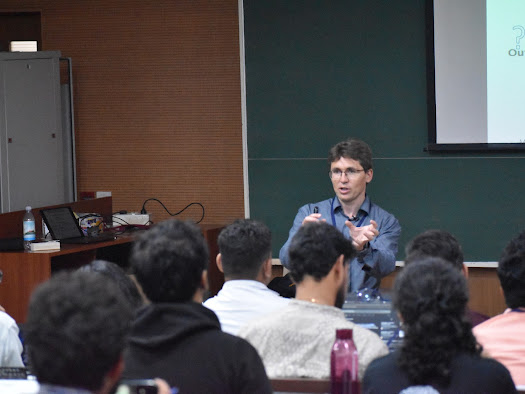
Just a few days until our 'Multiscale Brain Simulations in EBRAINS: from the Neuron to the Patient' webinar!
Join us on Thursday at 09:00 CET for presentations by Viktor Jirsa, Chief Science Officer of EBRAINS, and Egidio D’Angelo, Director of the Neurophysiology Unit at the University of Pavia.
Together, they will introduce how multiscale brain simulations on EBRAINS enable the integration of data and models across different levels of brain organisation, bridging cellular mechanisms and whole-brain dynamics.
Register here: https://t.co/e7icddd22R
September is Childhood Cancer Awareness Month 🎗️This month, we hold space in our hearts for the brave children facing cancer and the families who love and care for them.
Are you a PhD graduate in the Life Sciences, Physics, Chemistry, Earth Science, Math or Computer Science? Apply for the Max Planck-Weizmann Joint Postdoctoral Program. Includes a fully funded four-year position, split equally between these two esteemed institutions >>
Hot off the press! Our new paper in @BrainStimJ shows how 10 Hz r(T)MS induces synaptic plasticity via coordinated pre- & postsynaptic activation and BDNF/TrkB signaling. STDP modeling predicts frequency dependence. Kudos to @GalanisChr & the team! https://t.co/q2ycCT763G
🎯 NEW PAPER ALERT: NaviNIBS - Open-source neuronavigation that matches commercial functionality but with full customizability. Enables new advances in precise stimulation targeting and personalized treatment! 🧠⚡
https://t.co/WkPcgHYVqW
#Neuroscience#TMS#OpenSource
🧠 We treat depression with TMS, but don't understand how it works.
Our team tracked brain changes during Stanford Neuromodulation Therapy (SNT) and found treatment reduced brain excitability by 40%, with predictive changes by day 3.
Progress moving from guesswork to precision
Thank you Prof. Peter Jedlička, for a fascinating talk on neuron modeling. You broke down complex ideas on hyperexcitable circuits and hippocampal neurons in a way that really clicked.
Our new paper in @eLife: The interplay between homeostatic synaptic scaling and homeostatic structural plasticity maintains the robust firing rate of neural networks https://t.co/k1bBYISG9q
Our new paper in @eLife: The interplay between homeostatic synaptic scaling and homeostatic structural plasticity maintains the robust firing rate of neural networks https://t.co/k1bBYISG9q
Happy about our new paper in Nature:
The GluA3 AMPA receptor homomer provides a framework to study this disease-prone glutamate receptor. https://t.co/ymmwQXxZa7
Open PhD position in the Collaborative Research Center on "Neuropsychobiology of Aggression". The position is located at the Neuroimaging Center (NIC) in Mainz and involves working with Transcranial Ultrasonic Stimulation (TUS) in combination with EEG. https://t.co/VdckLQNcoe
🧠 Just out in @brainstimj: Our review explores how rTMS modulates microglia, influencing neuroinflammation, plasticity, and brain repair. Ready to explore the immune dimension of neuromodulation ?! #Freiburg#Neuroanatomy
👉 https://t.co/qrQN91jKpX
#ThisWeekInNPP
This review article from @EkhtiariHamed & team discusses the need for individualized non-invasive brain stimulation protocols to improve treatment outcomes, proposing personalization across 4 dimensions: context, target, dose, & timing
https://t.co/5DXKoAlyGp