I did not see this one coming. BREAKING NEWS folks!
Midjourney, yes the AI image company, just launched a real medical device that feels like it's straight out of Star Trek.
https://t.co/LSs2zbYViM
They’ve unveiled the Midjourney Scanner, the first working prototype of Full Body Ultrasonic Computational Tomography. It uses a ring of thousands of tiny transducers to fire ultra-precise sound waves through the body. The returning echoes are captured at a staggering 17 gigabytes per second, and the 806 terabytes of gathered data are then reconstructed by a 2 petaflop compute system into a highly detailed 3D map of your entire internal anatomy — organs, tissues, blood vessels, etc., in 60 seconds.
The resolution is extreme: each sensor can resolves motion smaller than the width of an atom, detecting internal tissue details down to half a millimeter. And unlike MRI or CT scans, it uses no radiation, just sound. Think of it like getting an ultrasound from the 22nd century.
The ambition is breathtaking. Midjourney wants to build a fleet of 50,000 of these scanners, capable of delivering a billion full body scans per month. That's enough to make comprehensive full body imaging available to every person on Earth.
They’re not hiding it in cold, clinical hospitals either. The vision includes placing these scanners inside what look like Midjourney spas, turning what’s usually an annoying medical procedure into something genuinely pleasant.
This is Star Trek level healthcare infrastructure: fast, safe, non-invasive full body imaging at planetary scale. If they pull it off, it could fundamentally shift medicine from reactive treatment to proactive, early detection on a global level.
Progress (and Midjourney going full medical) marches on. 🩺🚀
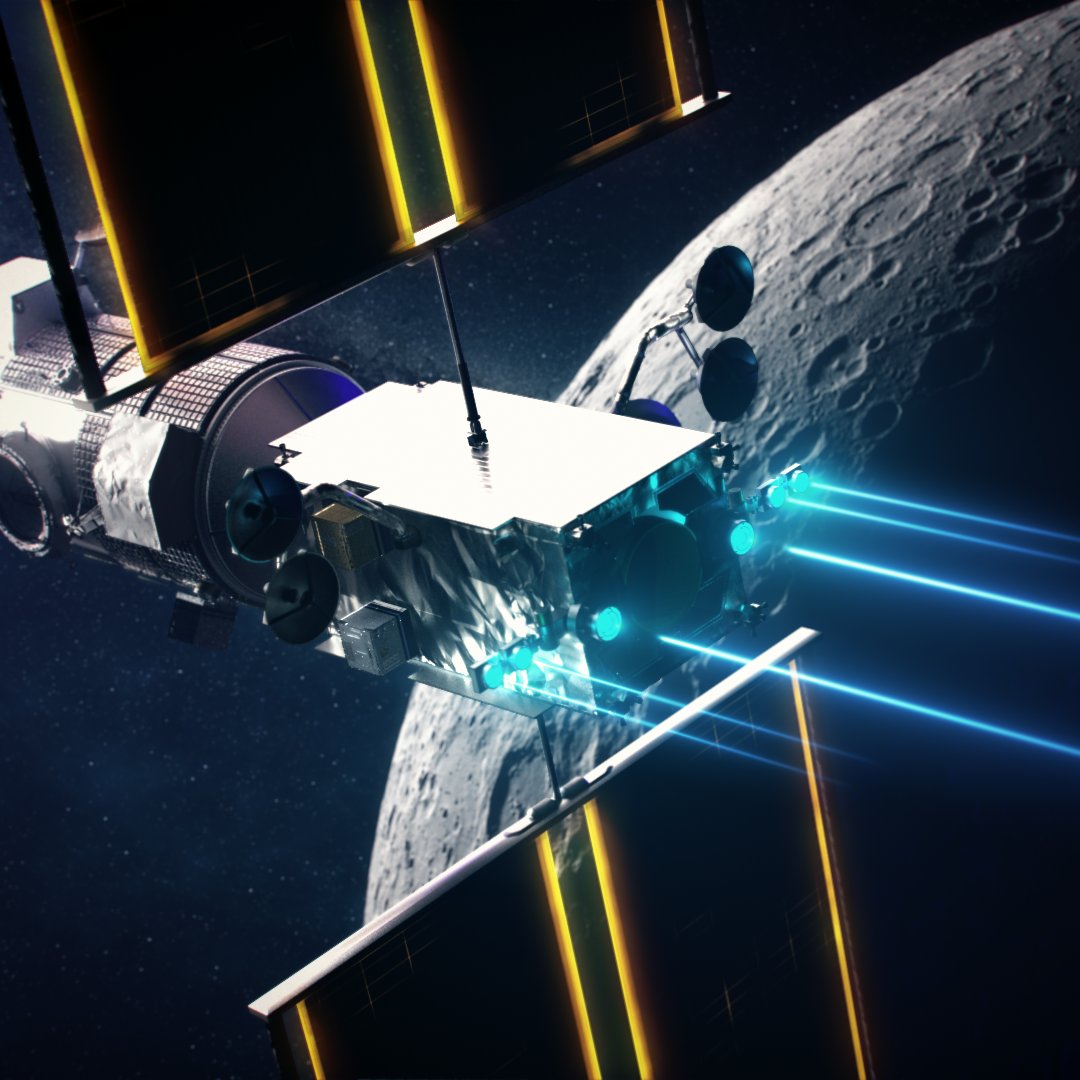
Planetary defense is a pressing challenge in space. Here's how Blue Ring is solving it. We developed NEO (Near-Earth Objects) Hunter, a mission concept that tests ion-beam deflection and direct kinetic impact techniques, leveraging Blue Ring's unique ability to maneuver, host, and deploy payloads across deep space.
The lesson I take from the SpaceX IPO is that the only thing stopping us from solving arbitrarily difficult problems is extreme creativity in business models.
No amount of tax and spend programs got us reusable rockets and great electric cars. Customer delight is a necessary precondition for success.
There seems to be some discussion around whether successful entrepreneurs should give up control of their companies so they can subsidize some philanthropic venture that otherwise has no value prop sufficient to run it as a business where customers voluntarily exchange money for goods and services at a competitive and reasonable price.
This misses the point. Transformational products deliver tangible value at 1000x the rate of charities whose value cannot be tested in the market place. Think about the undeniable value of the smart phone, satellite Internet, electric consumer devices, etc etc.
I think the transformational moment for SpaceX was when Elon stepped away from the philanthropic Mars greenhouse concept and fixed his resolve on unlocking radically better rockets for humanity. The greenhouse would have been, at best, a neat trick. Falcon and Starship give humanity a durable economic engine to maintain and improve access to space, forever.
I think you need to distinguish between inference and training. The inference he wants to launch in 3 years will be based on Starlink but with optical laser comm between satellites. That is certainly doable in 3 years. It’s not what people think of when they think about datacenters, though. They will be vastly smaller than what people are imagining. It will add up to a gigantic amount of compute in space, but the connectivity between the satellites will not have the throughput of the connectivity of a gigantic data center on earth, probably, so it will be able to do inference, but not training.
He hasn’t set a timeline for much larger datacenters in space typical of the sizes needed for training. I think that is reasonably 10-20 years (10 y for the economics to work out, but will take longer to develop the tech so closer to 20 y).
It’s plausible to never put those larger systems in space. Elon publicly stated that smth like 99.9% of all AI will be inference. I would guess he said that because these issues have been on his mind, i.e., how much easier it is to launch inference nodes than to build larger, centralized, training DCs in space. If training is such a small fraction of compute it can plausibly be kept on Earth, so we might never need to put such large centralized systems in space.
However, Elon also talks about Kardashev 2 a lot, and having gigantic “Minds” in space doing deep thought at the K2 scale will probably require vastly more connectivity between GPUs than a laser comm system between small satellites can provide, so I think Elon will switch to massive, centralized systems at some point in the future, but that’s probably beyond the planning horizon. He talks about launching compute off the moon using a rail gun, so those might presumably still be small satellites of compute, although they could be nodes that are assembled in space into a larger data center.
My conclusion is that his predictions about launching inference satellites are extremely doable.
His discussion about putting a self growing city on the moon to build AI satellites within 10 to 13 years is probably much faster than possible, IMHO, having studied this and developed tech for it for decades. Every industrial technology will need to be adapted to the lunar environment and its resources, which will be a gigantic amount of engineering. The supply chain will probably need to be narrowed so that so many different types of parts won’t need to be made on the moon, so that, too, will require everything being redesigned. I think it’s possible to build a self growing factory on the moon in maybe 30 years (making a wild guess) but if starship is taking massive quantities of capital to the moon on a weekly basis, then maybe it can be accelerated to a much shorter timeline than this. That will, of course, depend on growth of revenue in AI to support launching such massive loads of lunar capital, expansion of robotic manufacturing on earth to reduce the need for revenue to pay for it, and other factors, so it is hard to predict.
Amazon cancelled the new Stargate show.
The rumor is that the show writer, Martin Gero, would not budge on compromising lore or elements within the show for a "wider modern audience" as they did with Rings of Power for LoTR lore.
Martin Gero wanted to create a show that maintained continuity in the story and lore of the old shows, including the mythology and tech, while respecting the 17 seasons of history.
Amazon instead wanted something new for the "modern audience" that's more accessible, reimagined, with more modern casual sensibilities.
Because the showrunners wanted to maintain integrity rather than turn Stargate into another "modern audience slop" like Rings of Power, Amazon leadership canceled it. The franchise heavyweight, like Joseph Mallozzi, was very excited for the fresh stories Gero worked on. Amazon says they are still open to Stargate, just not "this" version... yes they wanted to Rings of Powerify Stargate.
We really can't hate these people enough.
Single Crystal CVD Diamond
Have no doubt, you are at the dawn of an industrial revolution. There is a string of breakthroughs happening throughout upstream industries that all compound.
Diamond manufacturing is now able to produce CPU size single crystals wafers.
Currently these are marketed as heat spreaders because they have thermal conductivity of 2,200 W/mK which means they move heat incredibly effectively.
However, that somewhat misses the wood for the trees…
Diamond has physical and electrical properties that exceed traditional silicon, making it uniquely suited for high demand applications.
Thermal Conductivity: Heat is the enemy of electronics. Diamond conducts heat better than almost any other known material, about 5 times better than copper and over 10 times better than silicon.
A diamond chip can act as its own heat sink.
Ultra Wide Bandgap: Diamond can handle massive amounts of voltage and operate at incredibly high temperatures without electrical breakdown.
This makes it perfect for high power applications like electric vehicle inverters, power grids, and aerospace technologies.
High Frequencies: Electrons move very quickly through diamond, allowing chips to operate at much higher frequencies, which is ideal for advanced telecommunications and radar.
Radiation Hardness: Diamond is incredibly resilient to radiation, making diamond based chips ideal for satellites, space exploration, and nuclear facilities.
To make a material act as a semiconductor, you have to "dope" it. To do this you inject impurities into the crystal lattice to create a positive (p-type) or negative (n-type) charge.
Diamond's atomic structure is so tightly packed that forcing other elements into it is hard. While p-type doping (with boron) has been figured out, reliable n-type doping (with phosphorus) remains a massive hurdle.
Theoretical ceilings
Band gap
Silicon wafer = 1.1 eV
Diamond CVD wafer = 5.5eV
Clock speed
Silicon wafer = 5-6 GHz clock wall
Diamond CVD wafer = 1-2 THz clock wall
Max Running Temp
Silicon wafer = 150°C
Diamond CVD wafer = 1,000°C
Whilst we etch silicon with photolithography and Extreme UV light, this doesn’t really work with chemically inert diamond.
Diamond CVD is currently etched with oxygen plasma etching, but this lacks the precision of EUV.
However, we can etch diamond to extreme precision with electron projection lithography. EPL was invented in the 90s by Bell Labs, IBM and Nikkon but abandoned as it was harder than EUV.
Electrons repel each other so the beams blurrs too readily.
What if we built a femto electron beam?
What if we built it to extreme such that it was a ‘single electron’ pulse?
What if we build a microscopic "bed of nails" containing millions of nanoscale tungsten or silicon tips (photocathodes). You shine a massive, highly complex femtosecond laser system across the entire array.
Every time the laser pulses, millions of tiny tips each fire a single, perfectly straight electron at the exact same time.
Turns out, research teams at likes of MIT and Stanford are currently experimenting with exactly this, laser driven nanotip electron emitters.
Pair that tool with Diamond CVD substrate tech and we approach the material limits of both semiconductors and nanotechnology.
Would require asynchronous logic to escape fatal clock skew and operate at full capability.
But I think I will live to see it.
.@satyanadella just put the whole "water" debate to rest.
Datacenters run on a closed loop cooling system, the water usage of a datacenter for an entire year is roughly equivalent to a usage of 1 restaurant!
Incredible advance in the treatment of pancreatic cancer! 12-month survival went from 17% to over 50% with the new drug called daraxonrasib!
Pancreatic cancer has been one of the least treatable cancers for a very long time. Someday soon all cancers will be completely curable.
Sweden’s AirForestry makes a 20 ft.-wide 6-prop electric drone that drops a branch-shearing tool on a tree, grips the trunk, and whisks it away
I think the tree it grabbed here is like 9" DBH?
Today, we share a breakthrough on the planar unit distance problem, a famous open question first posed by Paul Erdős in 1946.
For nearly 80 years, mathematicians believed the best possible solutions looked roughly like square grids.
An OpenAI model has now disproved that belief, discovering an entirely new family of constructions that performs better.
This marks the first time AI has autonomously solved a prominent open problem central to a field of mathematics.
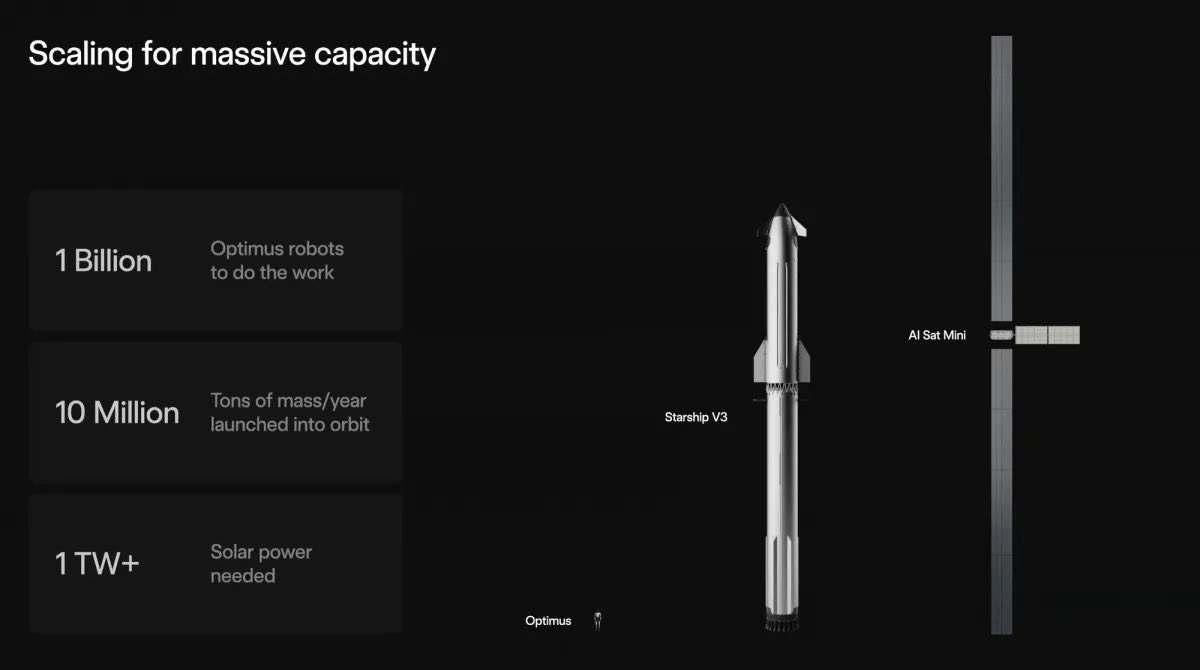
10 million tons of solar mirrors with 5g/m^2 density could provide a Petawatt of sunshine to liberate volatiles on Mars. That should be enough to partly terraform the planet. That’s 1 year of Starship’s launch capacity, according to recent presentation. They’ll last >10yrs.
Hot take but SpaceX is probably the best civil engineering company in the world. Somehow they are able to make these insanely complex ground system and building designs and find the perfect contractors and technicians to build out their ideas in months or 1-2 years.
I feel like we need the SpaceX methodology and their contractors across many projects. If we did we could probably have gotten so much done and in a much higher quality.
They say you can’t have fast, cheap, and good, but somehow SpaceX always manages to deliver on all 3.
when spacex was getting started, the first and last men to walk on the moon testified before congress against it.
gene cernan told congress commercial space companies "do not yet know what they don't know."
he said the boeings and lockheed martins were "the folks who have been working on everything we've done for the last 50 years. they know how it can be done."
neil armstrong said he was "not confident" the newcomers could achieve their goals.
together with jim lovell they warned it would put america on "a long downward slide to mediocrity."
spacex now launches more rockets than every country on earth combined.
the experts will always tell you it can't be done. build it anyway!
Melt. Extract. Breathe. Repeat. 🧑🚀
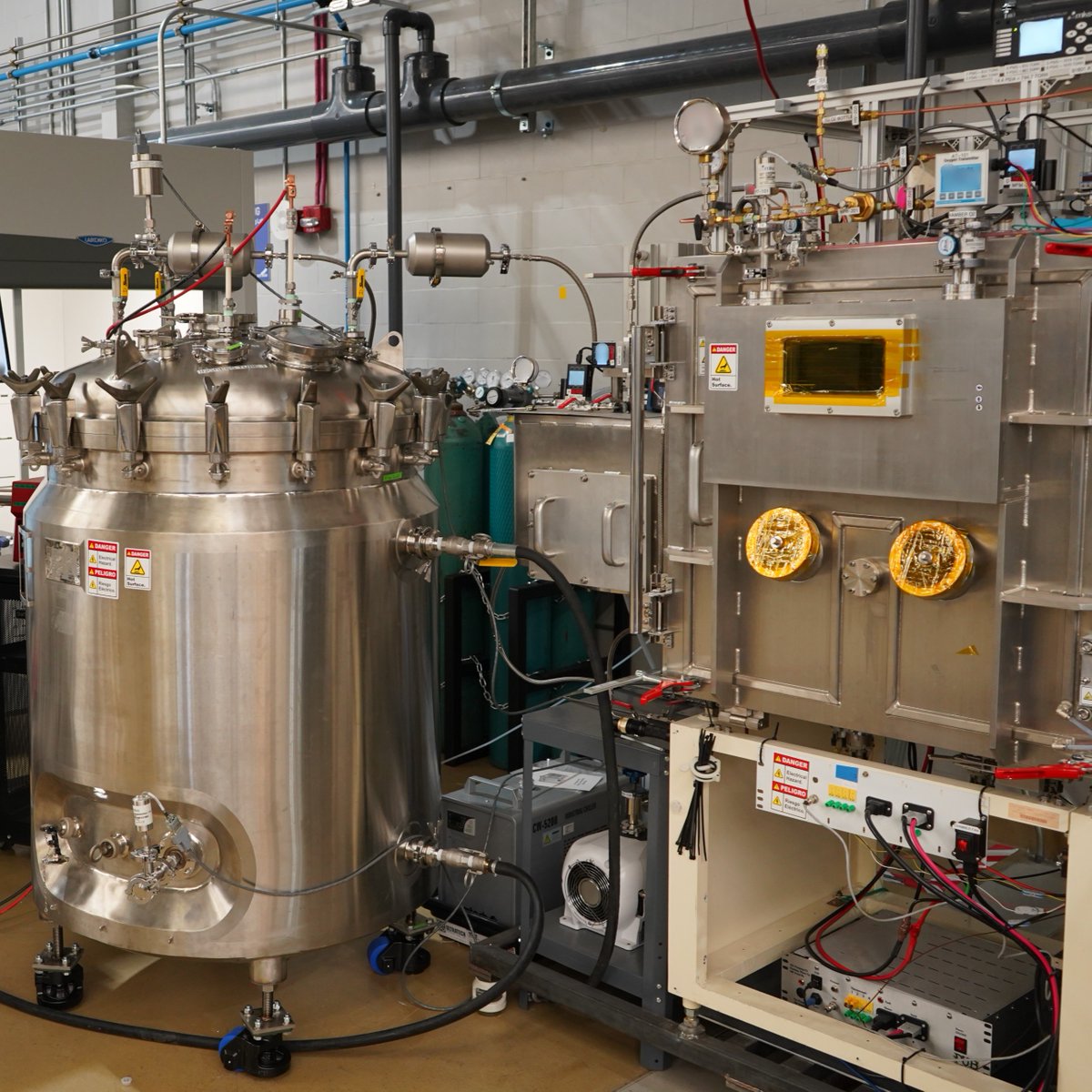
From Moon dust to fresh air, our Air Pioneer technology turns lunar regolith into breathable oxygen, ready for astronauts returning to the Moon. At our Space Resources Center of Excellence in LA, we developed a reactor (left) that melts regolith simulant and passes a current through it to release oxygen and other gases. The gases flow into the purification system (right) and emerge as medical- and propellant-grade oxygen. A flight-qualified Air Pioneer at this same scale could provide the first breath of life for a sustainable Moon base. 🌕
This is wild. Google Research demonstrates a ~20x more efficient implementation of Shor's algorithm that could break ECDSA keys within minutes with ~500K physical qubits.
Google is now are more confident on a 2029 post-quantum transition. We are no longer looking at mid 2030s, we could have quantum computers of this scale by the end of the decade.
They believe this result is so severe that they are not publishing the actual circuits. They instead published a ZKP proving that they know of the quantum circuit with these properties. This is very atypical, showing Google thinks this is serious shit.
All blockchains need a transition plan ASAP. Post-quantum is no longer a drill.
BREAKING: @NASA to launch first Nuclear-Powered mission to Mars called Space Reactor-1 Freedom
- First EVER mission with nuclear-electric propulsion to travel beyond Earth orbit
- Launching NET December 2028
- Features a nuclear fission reactor to generate electricity
- This electricity will power ion thrusters for propulsion
- Repurposes Lunar Gateway's Power & Propulsion Element (PPE) as the bus
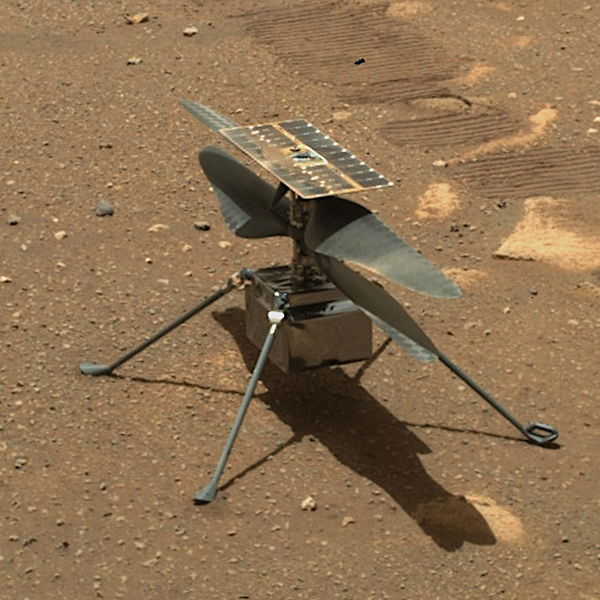
- Carrying a payload of 3 Ingenuity-class Helicopters to Mars, called Skyfall
📷 @NASA
ALS has gradually taken away Kenneth’s ability to speak. Through Neuralink’s VOICE clinical trial, he’s exploring how a brain-computer interface designed to translate thought to speech could help restore autonomy in his daily life.
Watch to learn more: