Give it 2-3 years and there’s a Messi docuseries reminding every one of every loss it took him to get there. The world will love Messi even more. They had to lose for the win to eventually be that big.
AI OVERPRODUCTION
China seeks to commoditize their complements. So, over the following months, I expect a complete blitz of Chinese open-source AI models for everything from computer vision to robotics to image generation.
Why? I’m just inferring this from public statements, but their apparent goal is to take the profit out of AI software since they make money on AI-enabled hardware. Basically, they want to do to US tech (the last stronghold) what they already did to US manufacturing. Namely: copy it, optimize it, scale it, then wreck the Western original with low prices.
I don’t know if they’ll succeed.
But here’s the logic:
(1) First, China noticed that DeepSeek’s release temporarily knocked ~$1T off US tech market caps.
(2) Second, China’s core competency is exporting physical widgets, more than it is software.
(3) Third, China’s other core competency is exporting things at such massive scale that all foreign producers are bankrupted and they win the market. See what they’re doing to German and Japanese cars, for example.
(4) Fourth, China is well aware that it lacks global prestige as it’s historically been a copycat. With DeepSeek, becoming #1 in AI is now something they actually consider possibly achievable, and a matter of national pride.
(5) Fifth, DeepSeek has gone viral in China and its open source nature means that everyone can rapidly integrate it, down to the level of local officials and obscure companies. And they are doing so, and posting the results for praise on WeChat.
(6) Finally, while DeepSeek was obscure before recent events, it’s now a household name, and the founder (Liang Wengfeng) has met both with Xi but also the #2 in China, Li Qiang. They likely have unlimited resources now.
So, if you put all that together, China thinks it has an opportunity to hit US tech companies, boost its prestige, help its internal economy, and take the margins out of AI software globally (at least at the model level).
They will instead make their money by selling inexpensive AI-enabled hardware of increasing quality, from smart homes and self-driving cars to consumer drones and robot dogs.
Basically, China is trying to do to AI what they always do: study, copy, optimize, and then bankrupt everyone with low prices and enormous scale.
I don’t know if they’ll succeed at the app layer. But it could be hard for closed-source AI model developers to recoup the high fixed costs associated with training state-of-the-art models when great open source models are available.
Last, I agree it’s surprising that the country of the Great Firewall is suddenly the country of open source AI. But it is consistent in a different way, which is that China is just focused on doing whatever it takes to win — even to the point of copying partially-abandoned Western values like open source, which seemed like the hardest thing to adopt.
On that point: they did build censorship into the released DeepSeek AI models, but in a manner that’s easily circumvented outside China. So, you might conclude they don’t really care what non-Chinese people are saying outside China in other languages, so long as this doesn’t “interfere with China’s internal affairs.”
Anyway —this is an area I’ve been watching, and my reluctant conclusion is that China is getting better at software faster than the West is getting better at hardware.
@paulg I would use Replit to get to prototype asap and learn and fail fast. then use figma to iterate in phase 2 or 3 after a Replit built concept is validated with customers. Eventually Replit agent will replace figma, but it’s not there yet.
Tech Week is back. And we’re coming to NYC!
The ecosystem hosted 750+ events in SF/LA this year, and there are already 300+ on the calendar for #NYTechWeek.
To celebrate, we're giving away 3 tickets to @a16z's @Techweek_ welcome party kicking it all off.
Full details below ⬇️
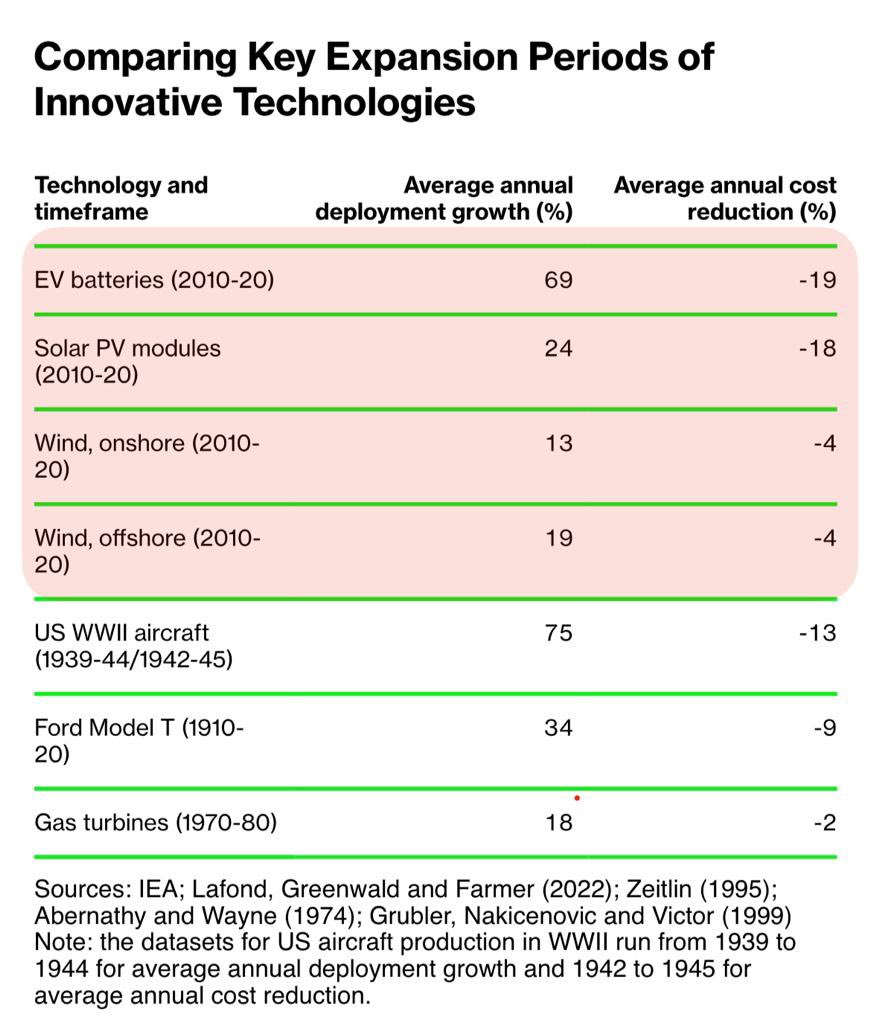
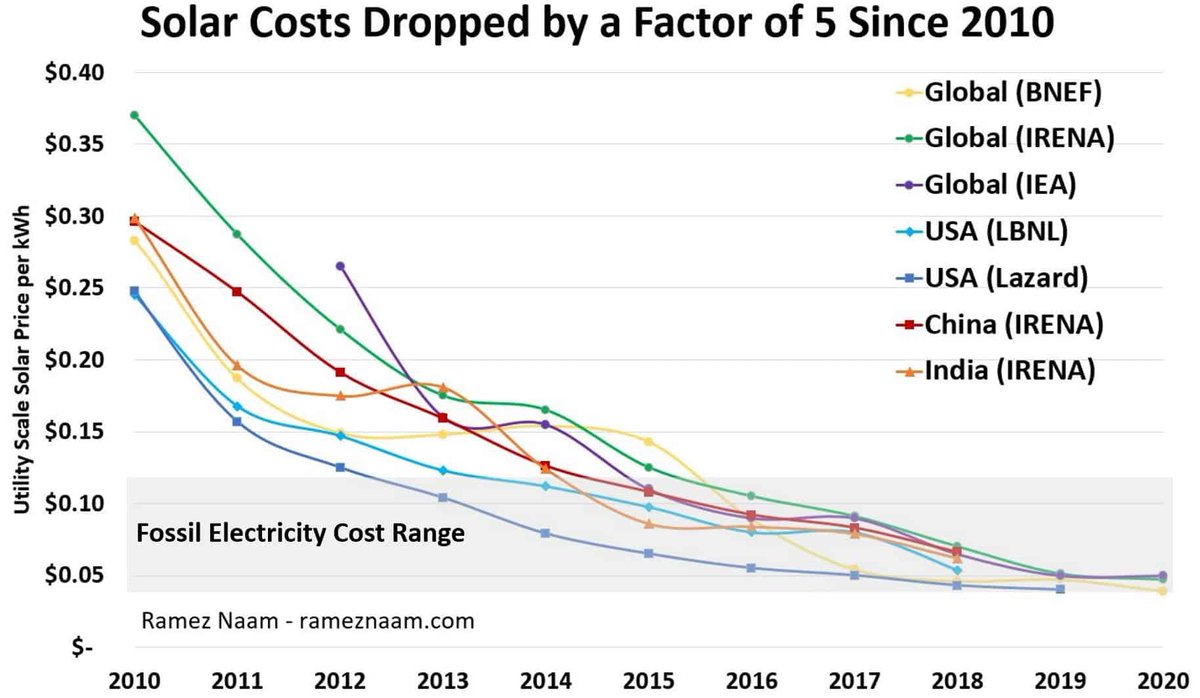
Look at the explosive growth and falling costs of batteries, solar and wind in the chart below…the numbers are really impressive.
This is why I think we will have a near zero marginal cost of energy by 2030. The incremental cost of generating power will approach ~$0.005/kWh in this time frame - essentially making power free and abundant.
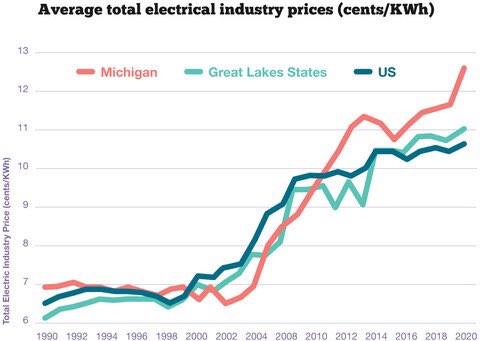
The big issue will be the realized cost of this energy and will demonstrate, especially in the US, the decrepit and costly delivery infrastructure from the incumbent utilities. All of this translates into higher prices which makes no sense (see image).
My bet has, and will continue to be, that more and more of power will be generated by individuals using solar PV + battery packs in their home.
The pull through from EVs will also help accelerate this trend.
So whether you want a Tesla and end up with solar and battery or you simply want lower energy costs and break away from your utility, many Americans will end up in the same place: they will become a mini utility that makes power from the sun and uses it to power their lives.
Now, one thing we will save for later is the tipping point of insolvency for utilities as this trend really accelerates: how do they pay for their debt when enough people generate their own power and quit the utilities?
This is a multi $T default in the offing…likely in the 2030-2040 timeframe.
@Jason Haven’t seen this but considering the times, give attendees the opportunity to pick an NFT they own after a web3 login that gets printed on their badge
I’m moving $1B of my Square equity (~28% of my wealth) to #startsmall LLC to fund global COVID-19 relief. After we disarm this pandemic, the focus will shift to girl’s health and education, and UBI. It will operate transparently, all flows tracked here: https://t.co/hVkUczDQmz