Our systematic investigation of G protein coupling profiles of 100+ #GPCRs driven by the one and only Ikuo Masuho is out after ~10 years of work. We see many interesting patterns with the help of AI. Check it out- there is a useful reference table.
https://t.co/ia0BIfjuii
Thank you Dr. Amy Arguello for speaking in our MDT on Addiction seminar series on November 7th & sharing your research with our team. Your presentation titled, “Adolescent drug use and relapse-like behavior” was very informative.
@UMN_MDTA
So glad to see this out! Dual-polarity voltage imaging—a multi-year, multi-lab effort to unveil the concurrent dynamics of multiple cell types in awake animals. In collaboration with @ganeshvasanc, Schnitzer lab, @ChengHuangThu, @jess_cardin, @vpieribone https://t.co/Oz2iGX5Yot
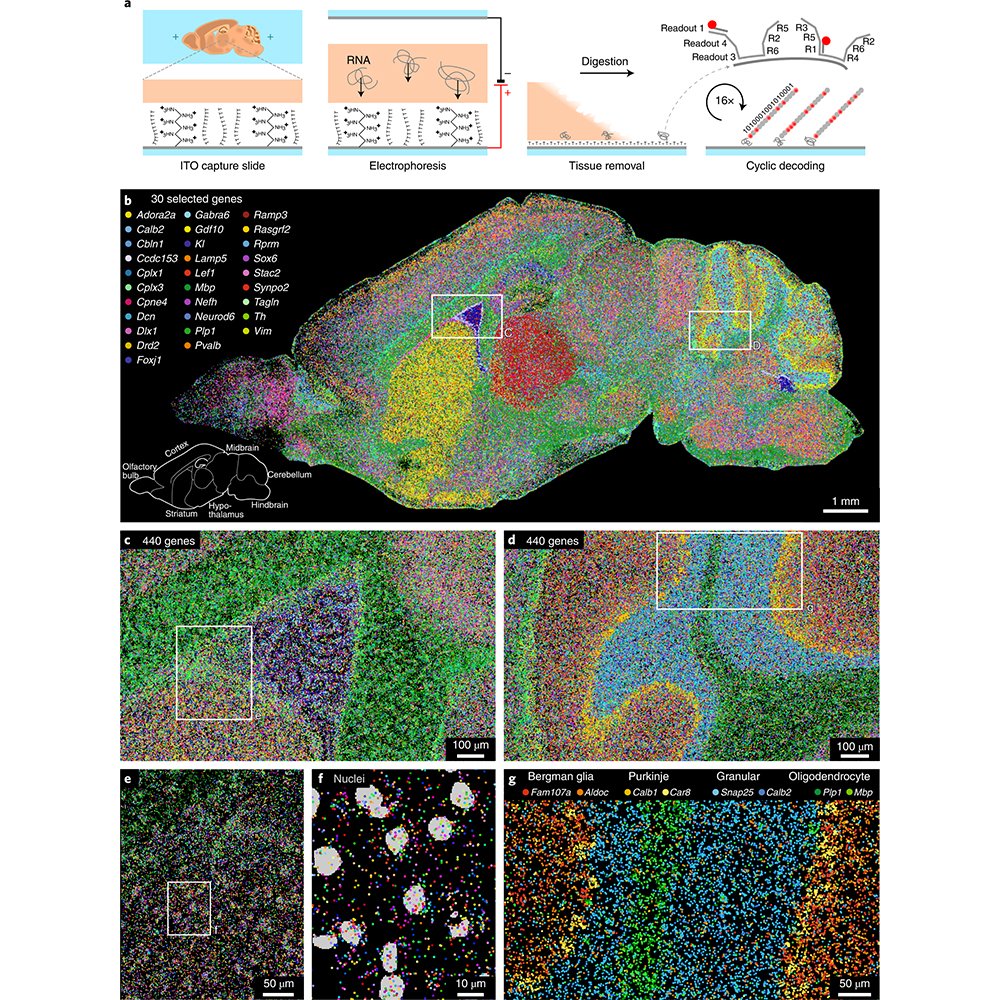
A @NatureBiotech paper presents a method called EEL FISH that profiles spatial transcriptomes in single cells in large, complex tissue samples. https://t.co/C8yMFdcevJ
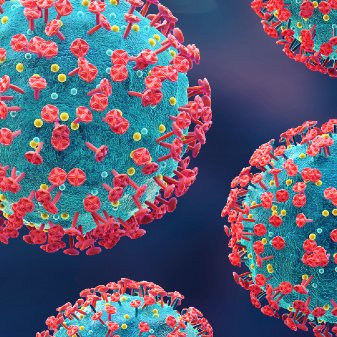
Laboratory of Structural Biology of Disease led by Fang Li, PhD has published a new paper in PNAS, which offers evidence for possible animal origin of the COVID-19 omicron variant.
https://t.co/r1QlUqI3uN
Wow from @miketadross
"we demonstrate robust, bidirectional editing of chemical neurotransmission. We provide for distribution of validated reagents, community design principles, and synthetic building blocks for application to diverse pharmaceuticals."
https://t.co/Id9f0dRJJf
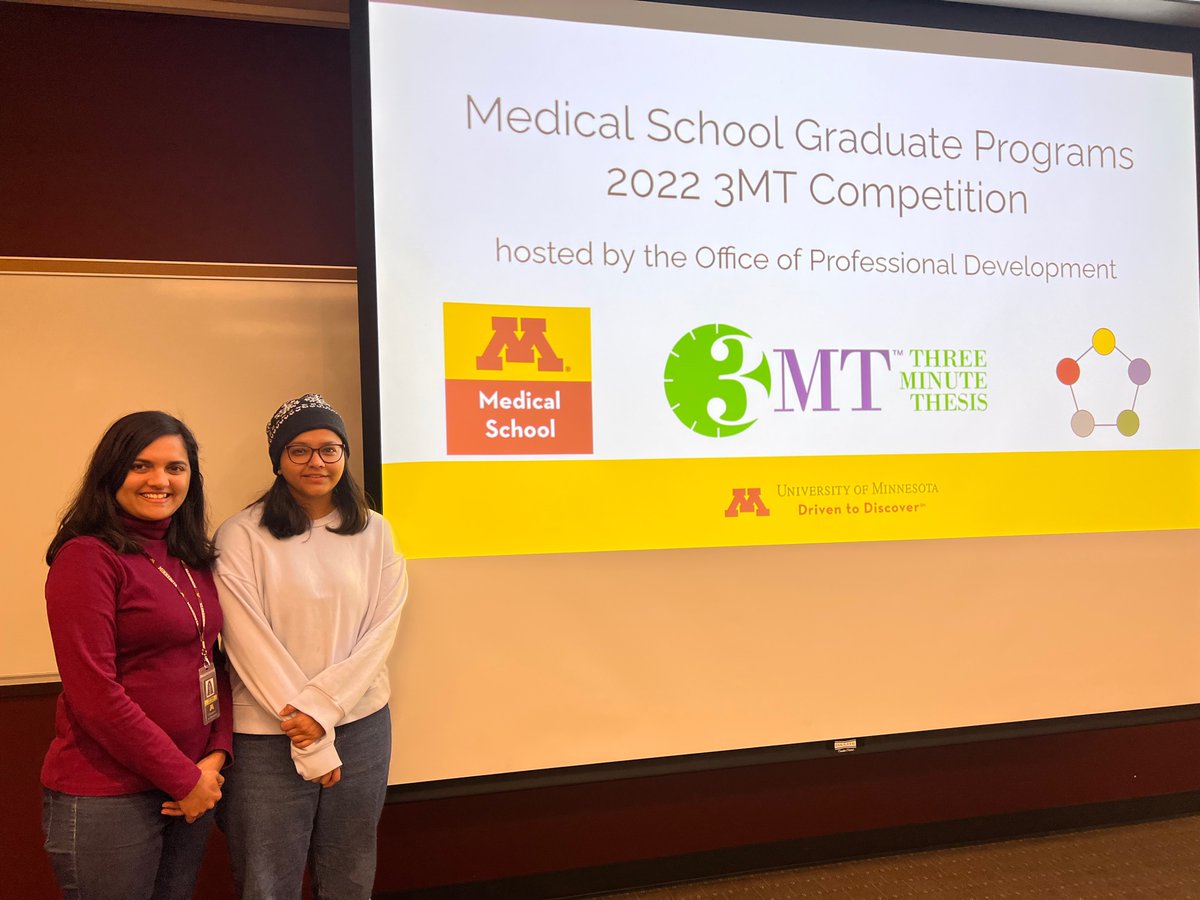
Big wins for MPaT students Apoorva & Adidti in the 3-Minute Thesis competition. Adidti Bapat took 3rd place🏆! Apoorva Limaye took 1st place🏆 with her talk "Unraveling protein dynamics to facilitate rational drug designing" & moves on to the University-wide competition in Nov.!
'..optogenetic and chemogenetic activation of residual PV+ INs effectively ameliorated depressive-like behavior and rescued short-term spatial memory in AD mice..'
https://t.co/jkpRLjBcJN
Student Spotlight: Anisha Adke is starting her first year of PhD in the Molecular Pharmacology and Therapeutics Graduate Program. She has been a leader in our program’s M1/M2 antiracism education series. Keep up the good work!
A new RNA-editor invented by @DukeNeuro’s Josh Huang let's scientists monitor + manipulate brain cells w/ unprecedented selectivity and ease. It might also be an effective route to treat complex diseases like epilepsy or cancer (reported in @Nature today).
https://t.co/36nn4bPkR0
Study helps to explain the higher prevalence of Alzheimer's disease in women.
X-linked ubiquitin-specific peptidase 11 increases tauopathy vulnerability in women #AlzheimersDisease@CellCellPress https://t.co/KFBsbekvWg
We (with @azayhara and @hongyu_chang ) wrote a mini-review on recent advances in optogenetics: integrated opto-electrodes for near cell resolution stimulation, closed-loop manipulations,etc. We discuss new exciting types of experiments this tech enables.
https://t.co/wUQLFp4vAs
Meet Dr. Martha Streng. @geewhiz_ephys is a postdoctoral fellow in the Krook-Magnuson lab st U. of Minnesota. Her research is focused in cerebellar interventions for temporal lobe epilepsy.
Gophers for Puerto Rico are collecting funds to help the island in the aftermath of Hurricane Fiona! Pueblos are still without power and resources! Help us by donating and sharing widely! #MedTwitter#doubledocs#sciencetwitter
https://t.co/0LJuigwqwe #GoFundMe
New Research: DNA methyltransferase activity in the basolateral amygdala is critical for reconsolidation of a heroin reward memory: The persistence of drug memory contributes to relapse to drug seeking. The association between… https://t.co/y2r08nefUQ #Molecular#Neuroscience
New study @NatureComms finds that our gut bacteria may determine the levels of many molecules in our blood, highlighting another way in which gut bacteria can have a major impact on our health
https://t.co/a7neQpxfiq