@frankdotlee Thanks a lot! I did spot that, but assumed it was a work around rather than default workflow. I’ll give it a go! Appreciate you getting back to me :)
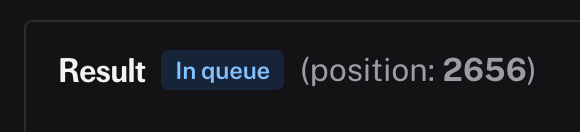
@1littlecoder@_juliushere@fal OK thanks for the update. Would be amazing to have a proper status page where can monitor this more transparently. Do you have an ETA for the full fix?
@1littlecoder@_juliushere@fal fal-ai/flux-1/schnell, fal-ai/nano-banana & fal-ai/nano-banana/edit all seem to have 5k+ length queues right now. Anything that can be done there?
Famously, founders think that copying Elon means going super ambitious and big. Which is true for PR but not engineering.
Elon is quite scrappy with technologies. For early iterations he takes tech that's proven commercially and ready for deployment, not something at the frontier.
As Kyle Vogt from Cruise (now bot company) put it nicely: you want to bet on deploying technology that's commercially proven, not something at the frontier. Because you never know how long it's going to take to make that commercially useful - 1 year or 10 years.
Let's take self-driving. Tesla's early efforts in 2016 started with absolute focus on imitation learning along with lots of supervised learning - tons of data annotation for bbox, segmentation etc. In 2016, the hype was around unsupervised learning and RL. So doing supervised/imitation learning was a very boring approach.
The robotics startup (bootstrapped, <10M funding) betting on world models as main breakthrough might not be the right idea. Solving 1-3 boring problems via some derivative of pick and place wouldn't be that bad of an idea.
Like Vivek from Matic Robots puts it: solve something simple and add a buy button to it.
@matbogus In my experience it’s the model which applies diffs between current and generated code which doesn’t work with notebooks.
It’s surprising because I would have expected the cursor research team to use notebooks as part of their dev workflow…