If you are using #Python & @matplotlib for visualizations, check out Pylustrator, it offers a convenient GUI to order subfigures via Drag&Drop and apply styling with a few clicks! Perfectly suited for creating figures for academic publications! #academia https://t.co/s447P53nNA
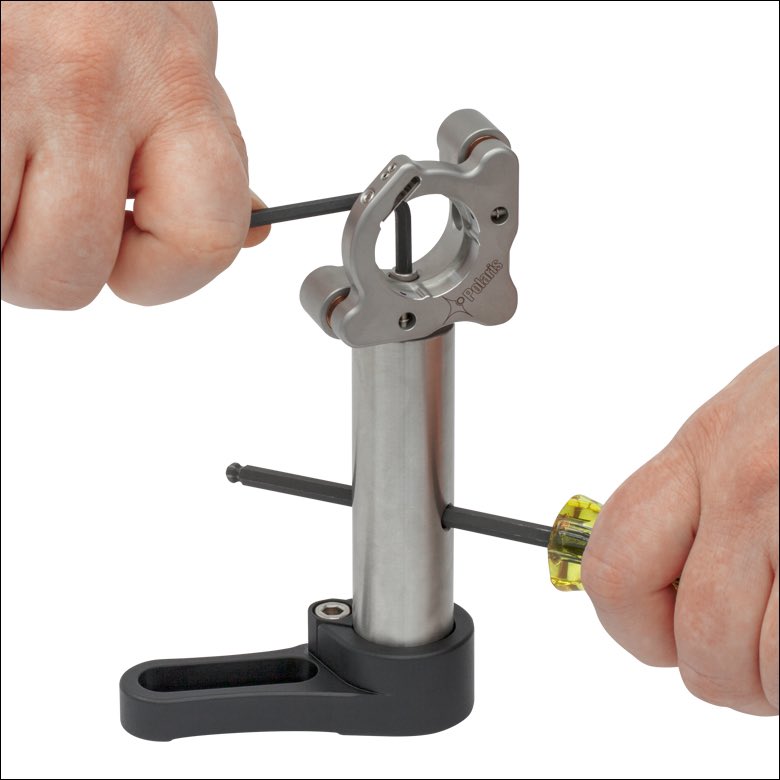
1/? I've had a few people ask me why I prefer @Thorlabs posts over their cages. The argument for cages is self-defeating: supposedly they provide pre-aligned centration, but mechanical tolerances =/= optical tolerances. You end up having to put everything on kinematic mounts...
Here's an easy way to reuse pipettes for patch clamping all day... https://t.co/IZSN5G14XS . Our latest paper describes the optimal method @the_kolb@William_Stoy@eboyden3@bksuhasa
Excited to share my first publication! Giving more vision to computers to find cells in slice so we don't have to! @patcherbot@MJMRowan@craigrforest#phd
https://t.co/F8WQi9uZVD
Excited to share my first publication! Giving more vision to computers to find cells in slice so we don't have to! @patcherbot@MJMRowan@craigrforest#phd
https://t.co/F8WQi9uZVD
Thrilled to announce our first major breakthrough in applying AI to a grand challenge in science. #AlphaFold has been validated as a solution to the ‘protein folding problem’ & we hope it will have a big impact on disease understanding and drug discovery: https://t.co/P53t2TxVRa
I've always found it easier to understand something if I can step through a simulation. Case in point: The Gerchberg–Saxton algorithm for creating holographic phase masks. I had a hard time visualizing it in 3D, but 1 dimension is just right for exploring this method
This new cable-suspended miniature #lab "stalked" free-flying specimens, providing detailed data on #insect flight. Designed by @Univ_Lorraine, @CNRS, presented in @SciRobotics: https://t.co/iJkOh0K291 #robotics ($)