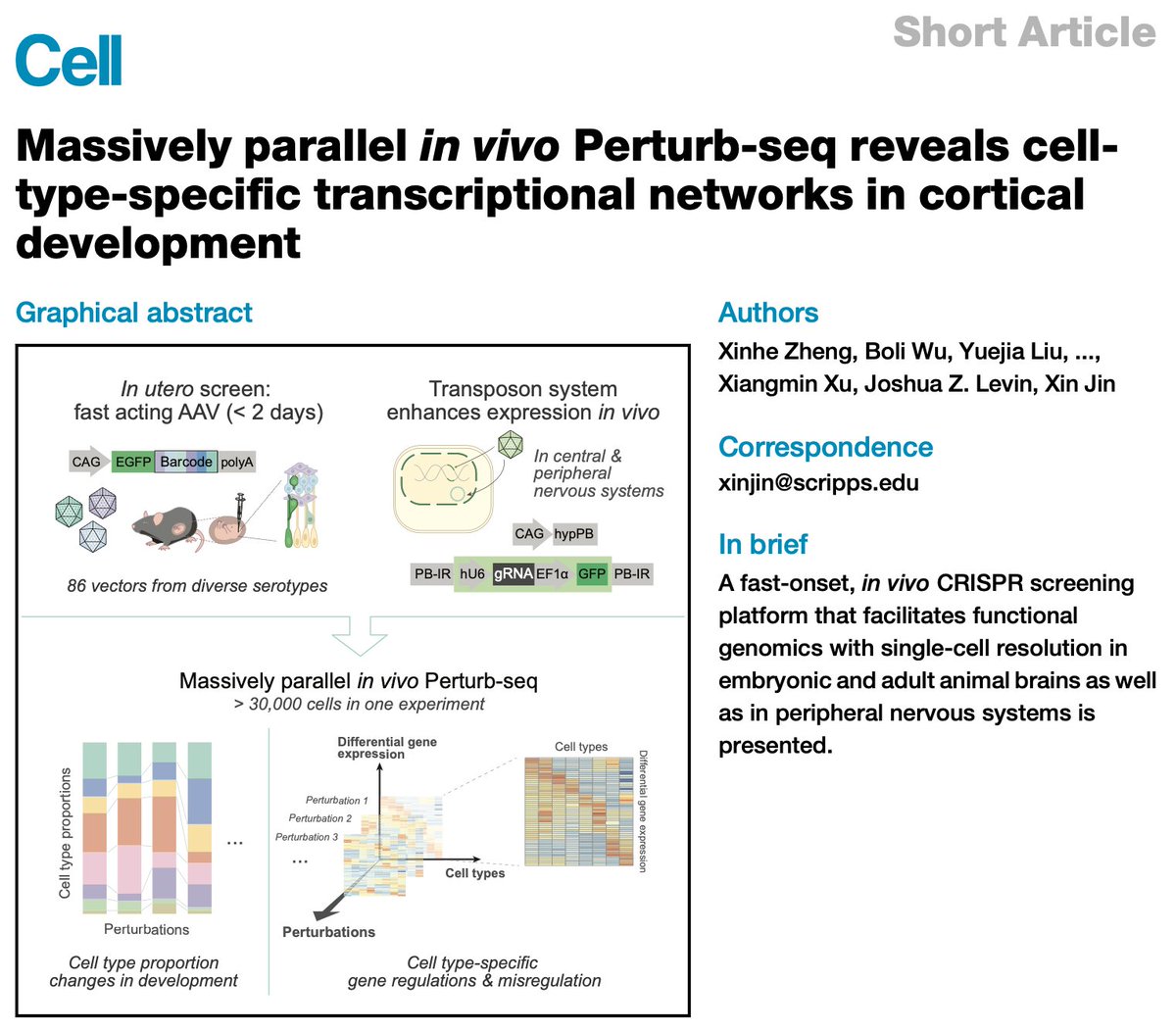
📢 Our latest paper is out in @CellCellPress! Led by the multi-talented @XinheZheng, we accelerated AAV-based gene delivery to 2 days & enabled in vivo CRISPR screens with single cell-level readout, a leap from existing capabilities 🤯 How does it work? (1/8)
Join us for a free Presidential Lecture next month with Scripps Research Institute professor Li Ye on the "Energetics of Integrating the Brain and Body."
📅 Oct 7, 6–7pm
📍 NYC
🎟️ Register: https://t.co/4wF0yIBXZq
#science#neuroscience
Come be my colleague at UCSD Cognitive Science! We are looking broadly for future leaders in understanding brains, minds, intelligences, etc.
https://t.co/PyrSaL91iz
NEW PREPRINT!
An evo-devo look at how new cerebellar nuclei are made. Spoiler: region-specific excitatory progenitors in the early rhombic lip drive it; inhibitory neurons fill in later. Check it out if you care about evolution or cerebellar development: https://t.co/56elWsyU5Y
My department @UTSW_Psychiatry is hiring TT faculty! Our Neuroscience Research Division has diverse research programs, from genes to neural circuits to human brain imaging. @UTSWMedCenter has a vibrant/growing neuroscience community @UTSWBrain
https://t.co/otlYuRIoJB
Transformative opportunity for early career faculty @hhmi_science#FreemanHrabowski Scholars competition opens 11/3/2026 but you can get started NOW: view application components, establish eligibility, and unlock example applications and other resources https://t.co/lyIRKQLwQP
After such a consequential week for AI, with the leading labs demonstrating real progress, today's news feels especially timely: @SVAngel is launching Project Blueprint, a comprehensive effort to forge consensus among industry leaders and lawmakers around durable solutions to the hardest AI policy challenges so that all Americans can benefit from AI's opportunities. And we've brought on @JayCarney to run it. https://t.co/0qb7MIGknd
We are encouraged by the reaction of Sam Altman, Dario Amodei and Demis Hassabis to the launch of Project Blueprint:
Sam Altman, co-founder and CEO of OpenAI: "We have before us a technology of immense and still-unfolding wonder. I believe AI has the power to heal people, to discover cures and to deliver abundance on a scale the world has never known before. But we need a way for the world to build trust in the technology so that we can all get to share these benefits. National safety requirements for the most capable systems are a great first step, ideally building towards a global framework for advanced AI models. I’m glad Ron is bringing the people building AI and policymakers together to help move that work forward.”
Dario Amodei, CEO and co-founder, Anthropic: "AI is advancing faster than our institutions can adapt, and the most important decisions about how it is developed and deployed will be made in the next few years. If those decisions are to serve the public, they can't rest with AI companies alone. Industry and policymakers need to work through them together, with an honest, shared understanding of what these systems can do. We're glad to support Project Blueprint's effort to make that possible."
Demis Hassabis, chairman and co-founder of Google DeepMind and the chief scientist of Alphabet: "We have long said that AI development needs to be both bold and responsible. We support bringing industry and lawmakers together around public policies that promote both innovation and safety."
Very excited to share our new paper, published in Cell!
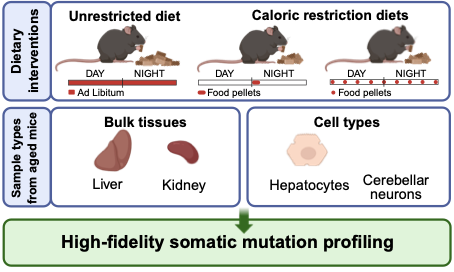
We found that caloric restriction (CR) in mice reduces somatic mutation burdens across the genome, and that this effect has some surprising features.
🧵👇
1/8
I’m on the faculty market this fall!
NIH K99/R00 awardee using birdsong to study how brains learn complex skills across molecules, synapses, circuits, behavior & computation.
Know a faculty search where I might fit? Send it my way + share!
https://t.co/eH3M9yxX2V
#neuroscience
We have 15 open positions at Astera Neuro! We're hiring experimental and computational neuroscientists and engineers to build a large-scale research effort aimed at understanding consciousness = the brain's internal model of world and self.
https://t.co/3modGIsJRG
We're looking for:
• Experimental Neuroscientists
• Computational Neuroscientists
• Optical Engineers
• Hardware Engineers
• Software Engineers
• Probe Engineers
• and more!
I'll share much more about our scientific vision soon. For now: I know we could never have built this in academia. The confluence of talent across different domains, the purposive design of the org structure and open science approach, and the deep, long-term support, all aimed at cracking the brain's internal model, is unprecedented.
If you want to understand consciousness, if you sense a huge gap between our internal experience of the world and our scientific understanding of it, if you believe systems neuroscience needs a fundamentally different, collaborative, and scaled up approach, we are building the ideal research environment for you.
I've never been more excited in my life. Across Astera Neuro, Astera AI, and Astera Simplex, we're creating a whole new discipline around one question: how does the brain build a world model: a symbolic system that perceives the real world from flickering sensory input streams and can think, plan, and experience? Everyone here is converging on this question from a different direction. The degree of conceptual focus combined with tactical breadth is thrilling.
If this sounds like you, come join us.
https://t.co/3modGIsJRG
For too long, we have only had 2 sex-specifically spliced genes in the mosquito. Welcome to the world, MOSN! Males: big protein. Females: small protein. Fascinating new domain of unknown function. Great collab with @lizzyzhao, Sean Eddy, @nipunbasrur, @yaeltea
https://t.co/DK2j7OKHqe
Our new preprint on remote memory and chromatin metaplasticity, in collaboration with the Schnitzer lab, is now live on BioRxiv! Congrats to @Yuxi_Ke!
https://t.co/bfUOb1vZPk
https://t.co/EgF1sPv09y
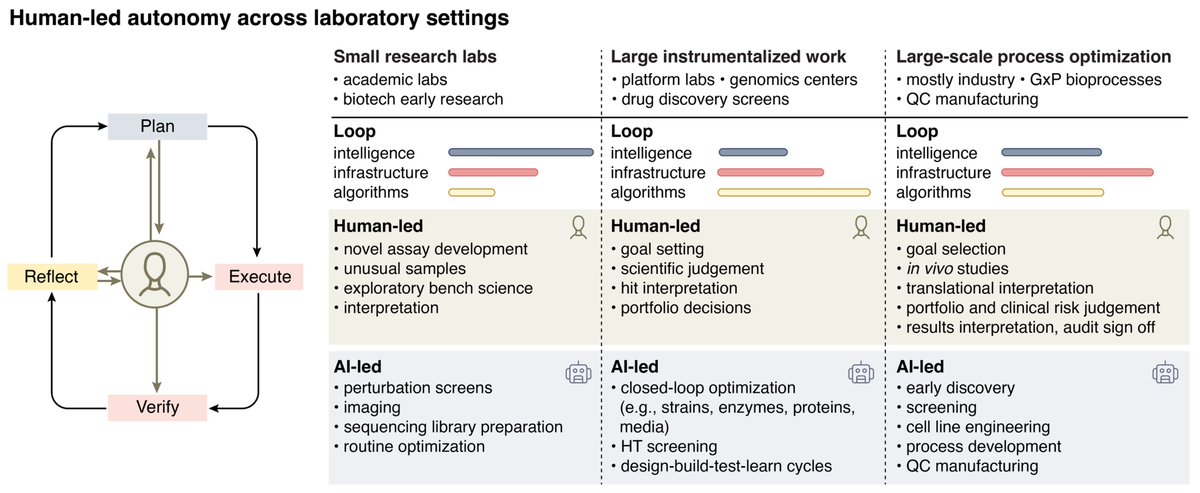
As a collaboration between my group at @SCSatCMU, Aviv Regev's team at @genentech, and @michellearning's team at @medra_ai, we are pleased to share our Perspective, "Towards human-led, agent-driven autonomous laboratories for the life sciences." 🤖 https://t.co/tJBVnIXtTr
This preprint release is coordinated with a complementary Perspective by @MengdiWang10, @lecong, and colleagues: https://t.co/x2AFNMmEkC. Together, the two Perspectives examine the future of autonomous science from complementary angles.
Our Perspective was Led by @WenduoC in my group, with @mishamamq, @ShenShuaik4260 and @zocean636 at CMU; Anna Hupalowska, Jennifer Rood, Christine Bakan, and Aviv Regev at @genentech/@Roche; and Gaurav Agrawal and @michellearning at @medra_ai.
🚀https://t.co/tJBVnIXtTr
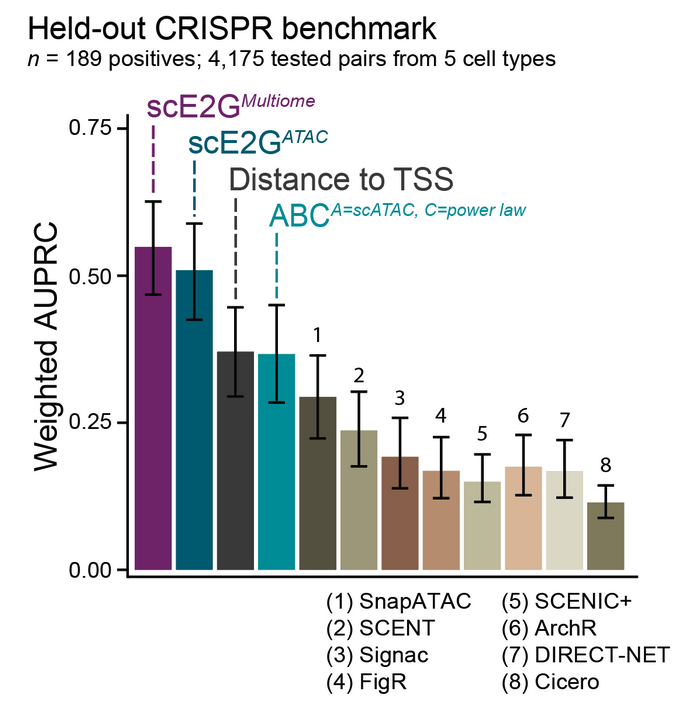
Update: scE2G is now online at @NatureGenetics!
📄 https://t.co/uxtqRnL8Hr
Since the preprint, we added a new benchmark on a fully held-out CRISPR dataset.
scE2G continues to show state-of-the-art performance, reinforcing that it generalizes well
1/
Different molecular breadcrumbs, same family tree!
Lightning strikes twice: check out this beautiful paper from Julia on somatic mutation lineage tracing + alongside last week's study using sc-multiomics/DNA methylation = landing the same conclusion!
https://t.co/HfcsIGukwV
Gaining therapeutic access to the human brain is one of the biggest unsolved problems in biomedical science.
Today @nature, we uncover a massive influx of immune cells into the human brain during aging, revealing that the brain is more accessible than previously thought. 1/
https://t.co/BuHdVk1V2I
Thrilled to post thread re: new single-cell lineage of mouse embryo reconstructed w/ DNA Typewriter. One animal, zygote to late organogenesis (E13.5). Tree has 1,340,794 transcriptionally profiled, annotated tips (cells), 1,142,588 dated internal nodes, rooted at zygote
1/n