Ex Postdoc fellow at the University of Utah, and a physician at Tokyo Women's Medical University with a focus on arrhythmia management. Tweets are my own.
Published in @HRS_O2Journal😀
Beyond etiology, LV wall thickness may help explain recovery after AF ablation in patients with systolic dysfunction.🫀
⬆️Thicker/homogeneous myocardium recovered most.
⬇️Thinner/heterogeneous myocardium recovered least.
https://t.co/qZH2ziEJ7g
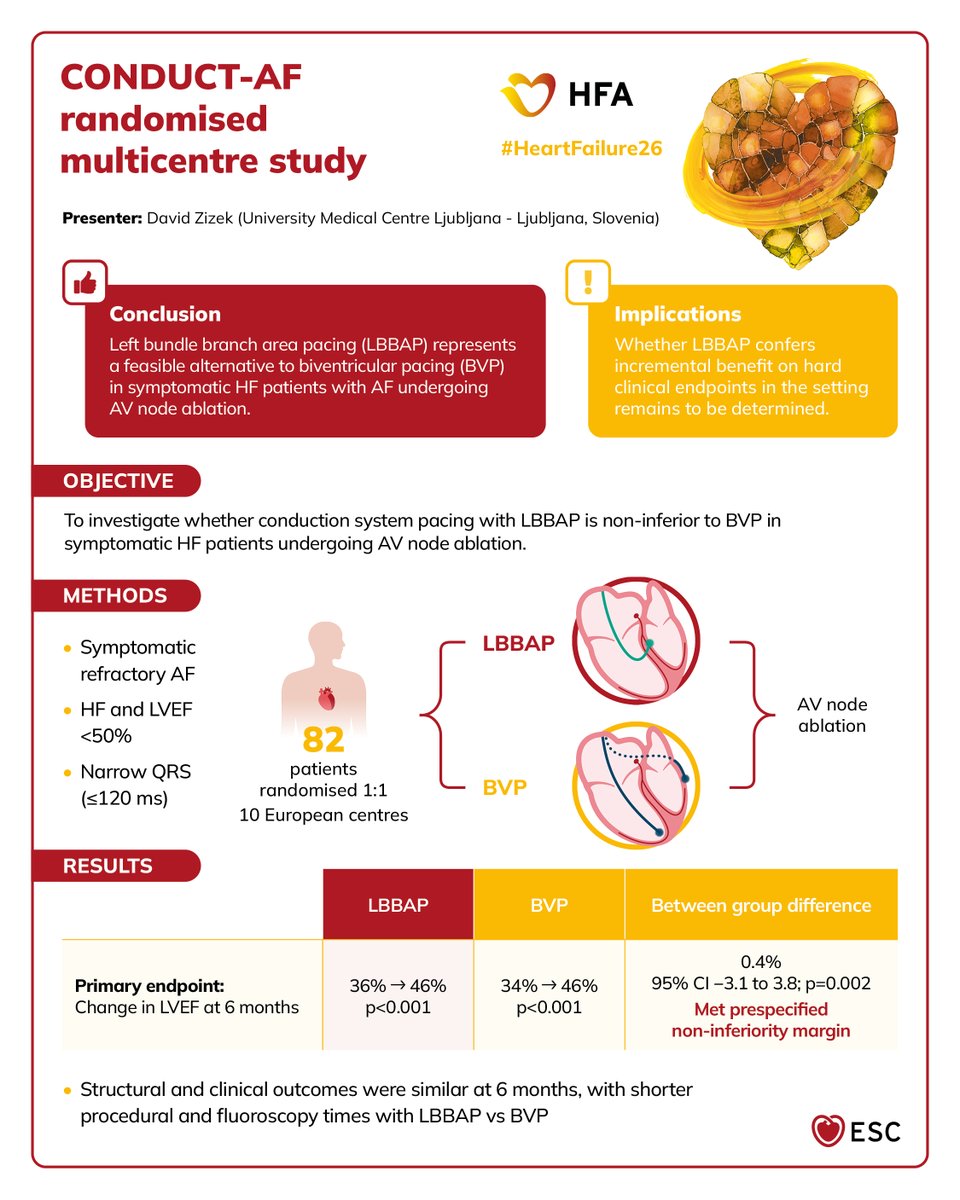
Conduction system pacing versus biventricular pacing after atrioventricular node ablation in heart failure with atrial fibrillation: the international randomized CONDUCT-AF trial 👇
#HeartFailure26#HFA_ESC@HFA_President
What a line-up coming at #ACC26 in New Orleans. Not much antithrombotic science (pity), but a lot of interventional cardiology (good). Trials I’m most interested about:
- CHAMPION-AF – LAA closure vs oral anticoagulation in AF. Another outcomes trial that may finally settle a long-standing debate.
- STEMI-DTU – LV unloading before reperfusion in anterior STEMI without shock. Can physiology beat time-to-wire?
- CHIP-BCIS3 – High-risk PCI with planned LV support vs standard care. Protection or overengineering?
- ALL-RISE – Angio-derived physiology vs pressure wire to guide PCI. If positive, this could change cath lab workflows.
- ORBITA-CTO – Sham-controlled CTO PCI. Symptom relief or placebo? Courageous and necessary.
- SURVIV – Redo surgery vs transcatheter valve-in-valve for failed mitral bioprostheses. Real-world decision, real endpoints.
- PRO-TAVI – TAVI without routine PCI. How minimalist can we safely be?
- OPTIMA – IVUS-guided vs angiography-guided PCI in unprotected left main. Imaging vs eyeballing, once again, with outcomes.
https://t.co/fYGdLSSRJy
#acc26 Six reasons why CHAMPION AF should not change oral anticoagulation for AF
I will have a formal post up on @theheartorg but here is a short summary
1) Stroke and Ischemic Stroke went the wrong way.
All S -> 33 vs 50 [HR 1.46 95% CI, 0.94-2.27)]
IS -> 27 vs 45; [HR = 1.61; 95% CI, 1.00-2.59)]
Look at those upper-bounds.
2) NI would not have been met for efficacy had they used a margin with both rate ratio and risk difference, which is standard practice.
The margin of 4.8% is based on event rates at 12%, which is 1.4 in relative terms (40% higher). But when event rates come in lower, as they did: 4.8% vs 5.7%, the 4.8% margin is too lenient.
The 0.9% higher rate of the primary endpoint has a 95% CI of (-0.8-2.6%), so 2.6% is less than the margin of 4.8%. Now do it with relative risk.
It's in table 2. The relative risk is 1.20. The 95% confidence intervals were 0.87-1.66. Note that 1.66> 1.40 so LAAC is not noninferior based on rate ratio margins
3) The primary safety endpoint is flawed because it excludes periprocedural bleeding and uses nonmajor bleeds, such as gum bleeds and bruising. It's open label trial so who which group will complain of more nonmajor bleeding?
4) When counting all events, Watchman barely reduced major bleeds. Also in the main results table is that major bleeds were 83 vs 87 (5.5% vs 5.8%; HR 0.92 95% CI 0.68-1.24)
5) Net Clinical Benefit was also flawed because they used nonprocedural bleeding and nonmajor bleeds.
A normal patient would simply say, there were 17 more strokes and only 4 less bleeds. Hardly a good trade.
6) Bayes: trials don't give answers, they update priors. For Watchman, you have PREVAIL failing against warfarin, CLOSURE AF clearly failing against best med Rx (mostly DOACs) so priors are pessimistic. To go from pessimistic priors to enthusiastic posteriors you'd need hugely positive data. CHAMPION is not that.
Don't believe the stories that CLOSURE failed due to them using other LAAC devices. In the AMULET IDE trial, Watchman and Amulet were similar. Also, if you believe that German operators are worse than US authors, you need to travel more.
Conclusion: Oral anticoagulation for AF is one of the most evidence-based practices in all of medicine. To upend that would take much stronger data.
Don't be bamboozled by this trial, which was designed to be positive before the first patient was enrolled.
#ACC2026
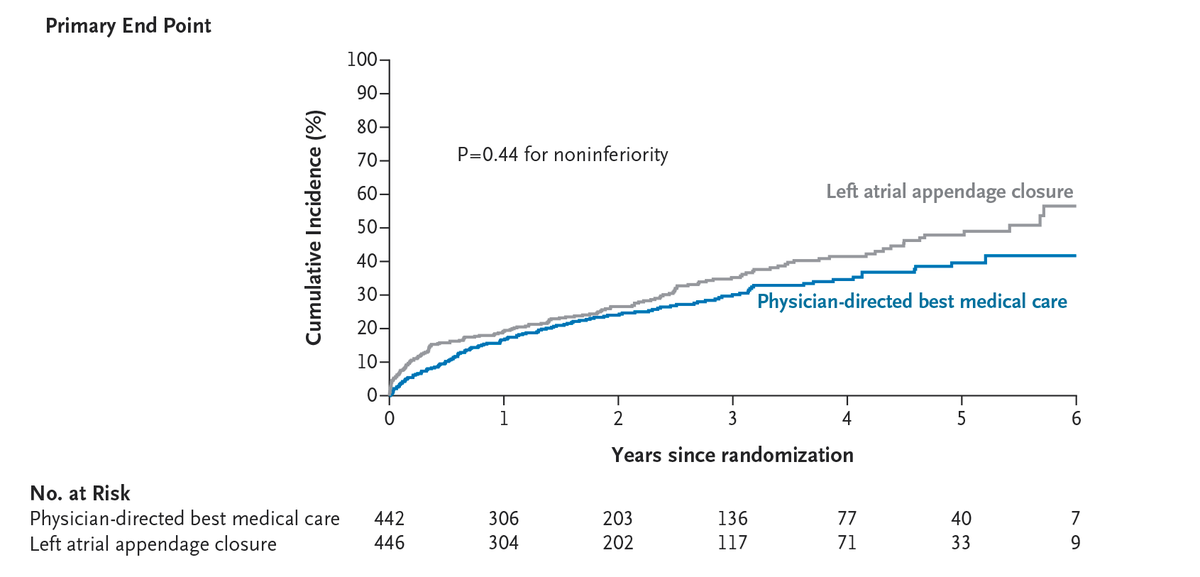
Among patients with atrial fibrillation at high risk for stroke and bleeding, left atrial appendage closure was not noninferior to medical therapy in reducing the risk of stroke, embolism, major bleeding, or death at 3 years. Full CLOSURE-AF trial results: https://t.co/qAMC2o36Mi
Editorial: Left Atrial Appendage Closure — Another Overused Method in Cardiology? https://t.co/KyOWdblUR3
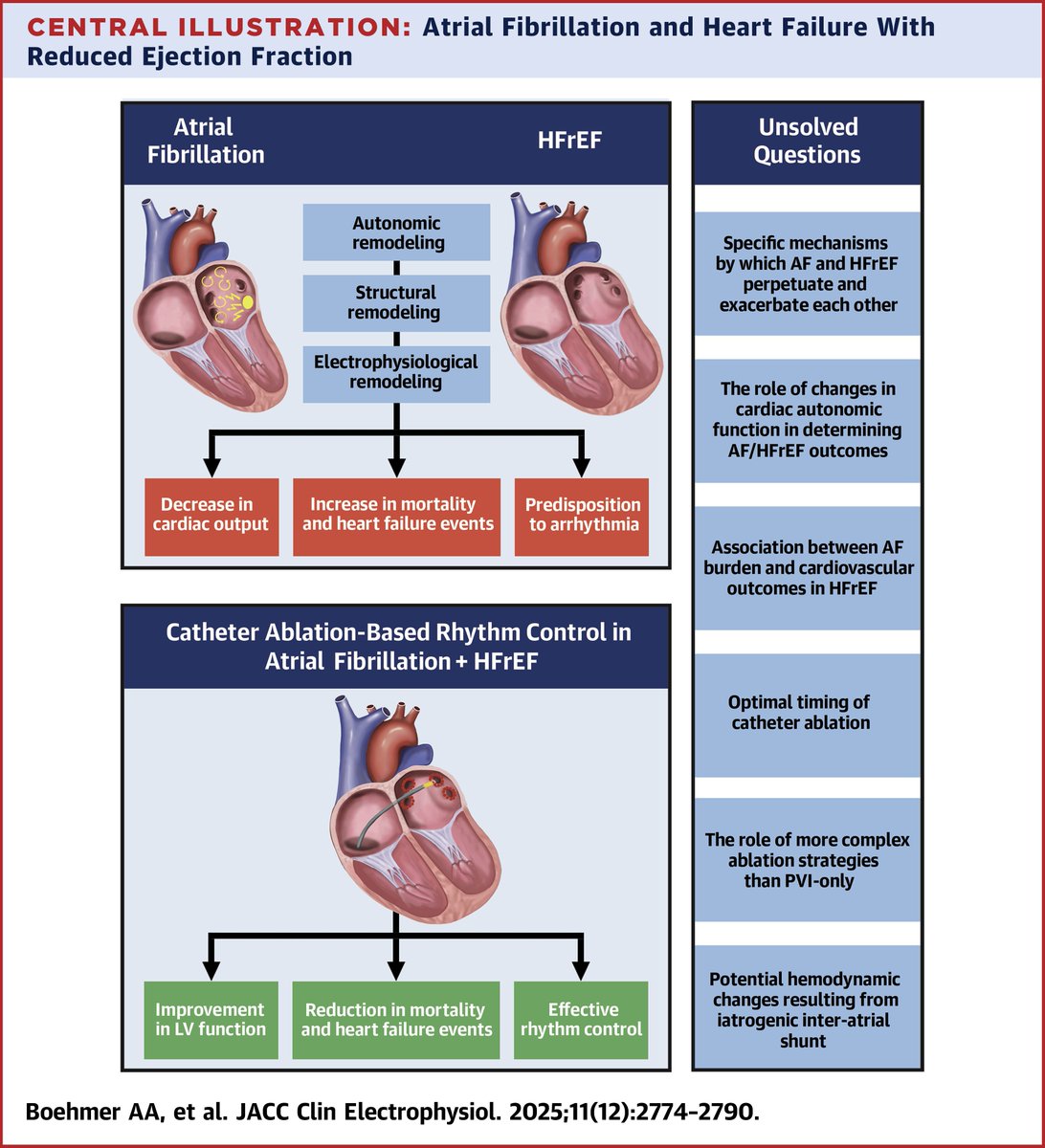
#AFib+HFrEF: State-of-the-Art Review📚
Recent data show SR restoration ⬆️ LV function & ⬇️death/HF hosp vs medical therapy.
🤔Should ablation be first-line or are we over-selecting responders?
🖇️https://t.co/6eq9GCyWfW
@JACCJournals@LuigiDiBiaseMD@nmarrouche@DhirajGuptaBHRS
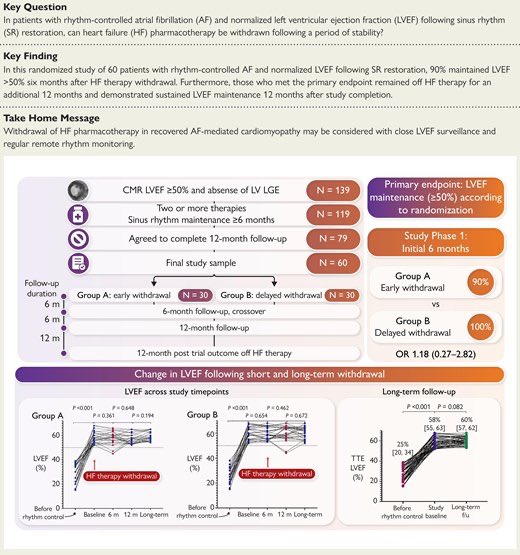
Withdrawal of heart failure therapy after atrial fibrillation rhythm control with ejection fraction normalization: the WITHDRAW-AF trial
Withdrawal of HF therapy following AF rhythm control for prior AFCM and recovered LVEF was not associated with a decline in LVEF for most patients in the following 6 months
#Cardiology #MedTwitter #CardioTwitter #HeartHealth #Healthcare
@hfcollaboratory@AndrewJSauer@ankeetbhatt@gcfmd@SJGreene_md@dranulala@biljana_parapid@AnastasiaSMihai
https://t.co/Oa3qBtDZ9k
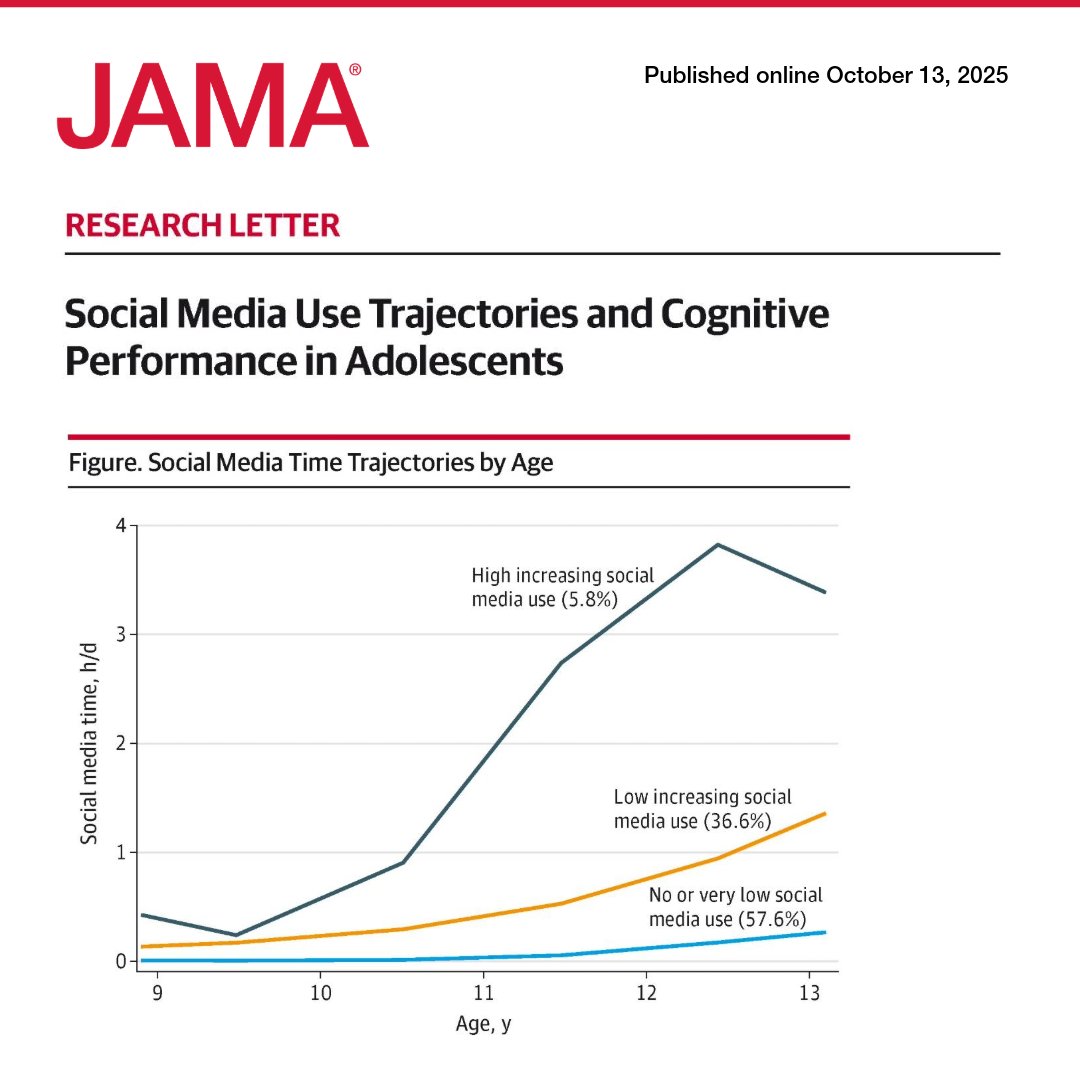
In US adolescents, increasing social media use from ages 9–13 was associated with lower scores on measures of reading, memory, vocabulary, and composite cognition. https://t.co/I6JIZ8FrrM