What if you could control the weather in any video — just like applying a filter?
Meet WeatherWeaver, a video model for controllable synthesis and removal of diverse weather effects — such as 🌧️ rain, ☃️ snow, 🌁 fog, and ☁️ clouds — for any input video.
We’ve updated the Unreal Engine EULA so devs can now choose to train AI models on their UE and MetaHuman projects, and benefit from AI models that understand their code and content.
This change does not give Epic any rights to your content or code.
Check out the blog for the details: https://t.co/1vwSoPLvGq
With everyone busily using LLMs + Blender/Three.js to make 3D models, I thought I'd try a different geometric representation.
This dragon isn't a mesh, NeRF, 3DGS, or video model: it's 27kb of GLSL code (generated via LLM), defining a closed-form implicit surface. 🧵 [1/n]
1/6 "3D Vision is dead, long live 3D Vision!"
Excited (again! 🤓) to share new work from our group, led by @jiahan_zhang1: Generative Cinematographer.
Starting from a single image, artists can plan a shot in 3D by authoring camera moves and choreographing the subjects, then see those choices come to life in the generated video.
Paper: https://t.co/INoMENLSAI
Project: https://t.co/WT3b0BUmRj
We'll be spending a lot more time trying to understand the outputs of language models. A few thoughts, tips & tricks:
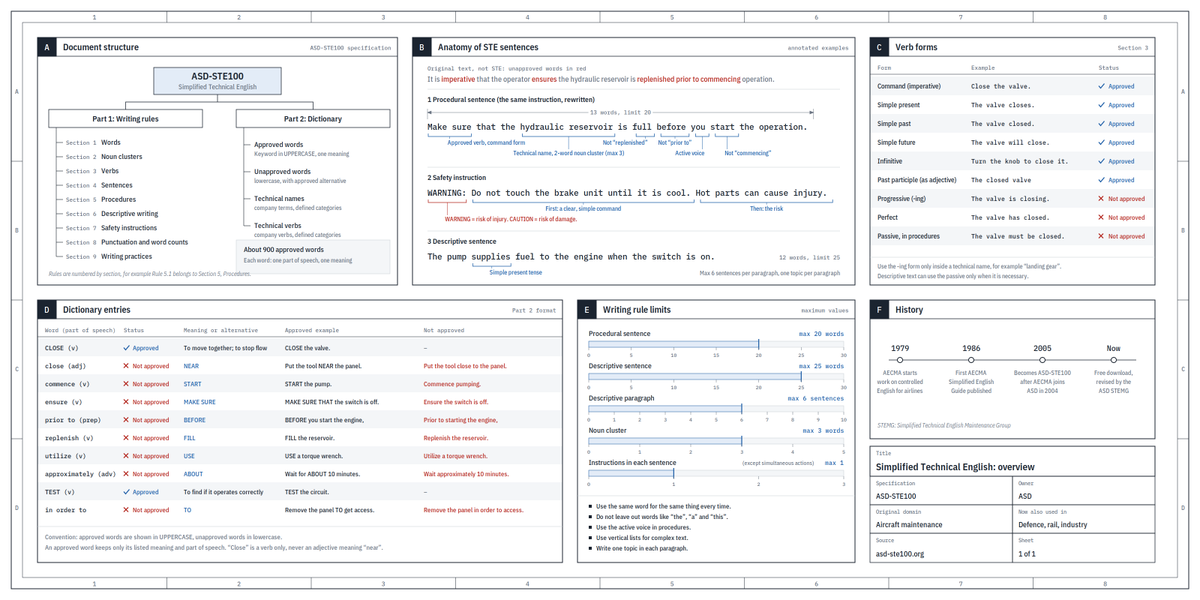
Writing. Something I've had success with: Ask your LLM to explain something in ASD-STE100, it's a controlled language specification originally developed for aerospace maintenance documentation. LLMs well-versed in this language and it comes with heavy constraints on clean writing style that I often find a lot more readable. Sometimes I've tried to soften it a bit e.g. ask for "80% of the way to ASD-STE100" because the spec is quite stringent. But even better:
Diagrams / images. Instead of writing, ask your LLM to create a diagram. These can be a lot easier to process, parse, and understand. But even better:
Web pages. Ask for output "in HTML" to get a beautiful, interactive webpage. LLMs are getting really good at frontend and can create beautiful experiences, animations, etc. But even better:
Explainer videos. The output format I am most bullish on is fully custom / bespoke explainer videos generated on any arbitrary topic. Experiment with things like "Create a 3b1b style video explainer on X. Use my ElevenLabs API key for audio narration". (you'd need an API key for the latter or you can ask your LLM to find you decent free alternatives that use your local compute). This is actually starting to work!
In summary:
- As LLMs get better, they will do more and more of the legwork autonomously, and a lot more of our work will rise up the abstractions into oversight and understanding.
- Luckily, LLMs can help here too because as intelligence and code are increasingly abundant, you can ask for large, custom, discardable software artifacts (e.g. web apps, video explainers) that would have never made sense to create before. Push the boundaries here and you'll be surprised.
I am open-sourcing DeckWerk, a multi-platform slide editor with stellar video support, real-time collaboration, and Agent support. I used to be on Linux but had to switch to Mac b/c there was no good enough slide editor - @OmarchyLinux & @dhh inspired me to vibe-code my own, so I'm finally back on Linux!
Install from source via GitHub (installers coming soon!):
https://t.co/fzpmpB4eoG
What is the role of academic computer vision research in the age of increasingly powerful large models? Is GPT-6 Astra a step change? How can a researcher have an impact today in academia?
These are the questions I ask myself as I head off to ECCV 2026, a conference I’ve attended since 1992. One of my papers this year is VIGA, a method that takes an image as input and outputs a 3D Blender scene that represents that image. This is a classical inverse-graphics task and VIGA was the first method to solve it using an agentic approach.
The idea is now several years old and the first version of the paper was rejected. This delayed publication significantly. After it was accepted at ECCV, it was quickly surpassed by people using Claude Code for the same purpose. Today GPT-6 Astra blows away all previous results. But we still head off to ECCV to tell the community about our invention that is now fully out of date.
The way academic work often progresses is that one reads recent papers, notices that they have limitations, comes up with a new idea, explores this, publishes it, etc. Any published paper I read today is based on ideas that are at least a year old. And those ideas were based on the literature of the time, which was also a year old. That means that any paper I see at ECCV is likely two years out of date. In AI today, two years means your work is likely irrelevant.
At CVPR this summer I noticed that many authors have not gotten the message. They continue to work on “old” problems that have a long history. This history is based on assumptions about how the “vision problem” will be “solved”. The truth is that it is being solved in a very different way and many of these problems are no longer relevant. Another group of papers focuses on very niche problems where large models likely fail because of insufficient data or lack of business interest. The impactful papers were largely from industry and had long author lists and massive data+compute behind them. These papers were also out of data, describing systems that had been released months before, but at least they served to provide the community with more complete documentation and analysis of commercial systems.
So what should academics do? First, we need to put aside the tools we’ve used for years and start from scratch. Every project should start by trying really hard to solve the problem with existing tools. I would like to see every paper begin with a detailed experimental analysis of how existing models perform and why they fail (if they do). This gives the kind of insight we need today. Then, assuming current models fail, the solution should provide some fundamental insight that will outlive the next release of such models.
Reviewers today still focus on technical novelty. This pushes people to focus on tweaking architectures rather than clearly moving the field forward. Papers need to be judged based on their novel insight and not their novel technical contribution. This is a real shift in thinking but it focuses us on what matters - progress of the field.
If we want there to be a “field” of computer vision, then it can’t become a marginal backwater, focusing on esoteric problems. If you haven’t tried using Astra (or whatever comes next) to solve your problem, then you have not done your homework. This omission should be seen as negatively as not having a previous work section.
Concretely, I think papers should include a new section analogous to “Related Work” where that related work is current models and how they perform on the task. Reviewers should start asking for this and expecting authors to be able to articulate their insights about the limitations of existing large models.
I'm interested in your thoughts.
A student asked me about my habit of bike riding or walking in the forest as a way of gaining inspiration. I thought I'd share my response:
I suspect everyone is different but all of our brains need time to process information. Some of this happens in sleep -- the idea that if you have a hard problem that you should "sleep on it" is very true. I often wake up with an inspiration.
You need to give your brain time to do its thing. You can't control inspiration. All you can do is create opportunities for it to occur.
I often have ideas in a dark conference hall while half-listening to a boring talk. I'll have spent the day at posters and learning about new work. Sitting in the dark and letting my mind drift is when those fragments come together into something new.
I will often do some work early in the morning and hit a snag. Then I go for a bike ride in the forest. I am not intentionally thinking about my problem -- I'm in the moment. My body is moving in the world. But part of my brain must be working on the problem because within 15-20 minutes, I have the solution.
The brain is amazing. Cramming it with information all the time may feel productive. But feeding it information is very different from letting it be creative. You can't force it to be creative and if you are force feeding it, it can't be creative. You need to leave it alone. Let it wander. Let it make connections. Give it space. Trust it.
We can finally talk about it:
We found a way to extract hidden reasoning of frontier models using a vulnerability in the APIs of every frontier AI company.
We verified that our reasoning token count matches billed API thinking tokens 1:1 for most of the prompts we queried.
SPEAR (A Simulator for Photorealistic AI Research) has been selected as a 𝐬𝐩𝐨𝐭𝐥𝐢𝐠𝐡𝐭 𝐨𝐫𝐚𝐥 𝐩𝐫𝐞𝐬𝐞𝐧𝐭𝐚𝐭𝐢𝐨𝐧 at #ECCV2026 🥳💡
Who says you need massive compute resources to do computer vision research? 🤓
(We did every experiment in the paper on a single GPU)
BRDFusion provides realism and precise control for relighting , night simulation, and dynamic object insertion🎉
Please check out more demo on website, and it’s open sourced!
https://t.co/lT2a3AwBHC
Introducing BRDFusion: Physics Meets Generation for Urban Scene Inverse Rendering.
Given a driving video, we decompose the scene into geometry, materials, and HDR lighting. This enables relighting, night simulation, and object insertion.
Introducing BRDFusion: Physics Meets Generation for Urban Scene Inverse Rendering.
Given a driving video, we decompose the scene into geometry, materials, and HDR lighting. This enables relighting, night simulation, and object insertion.
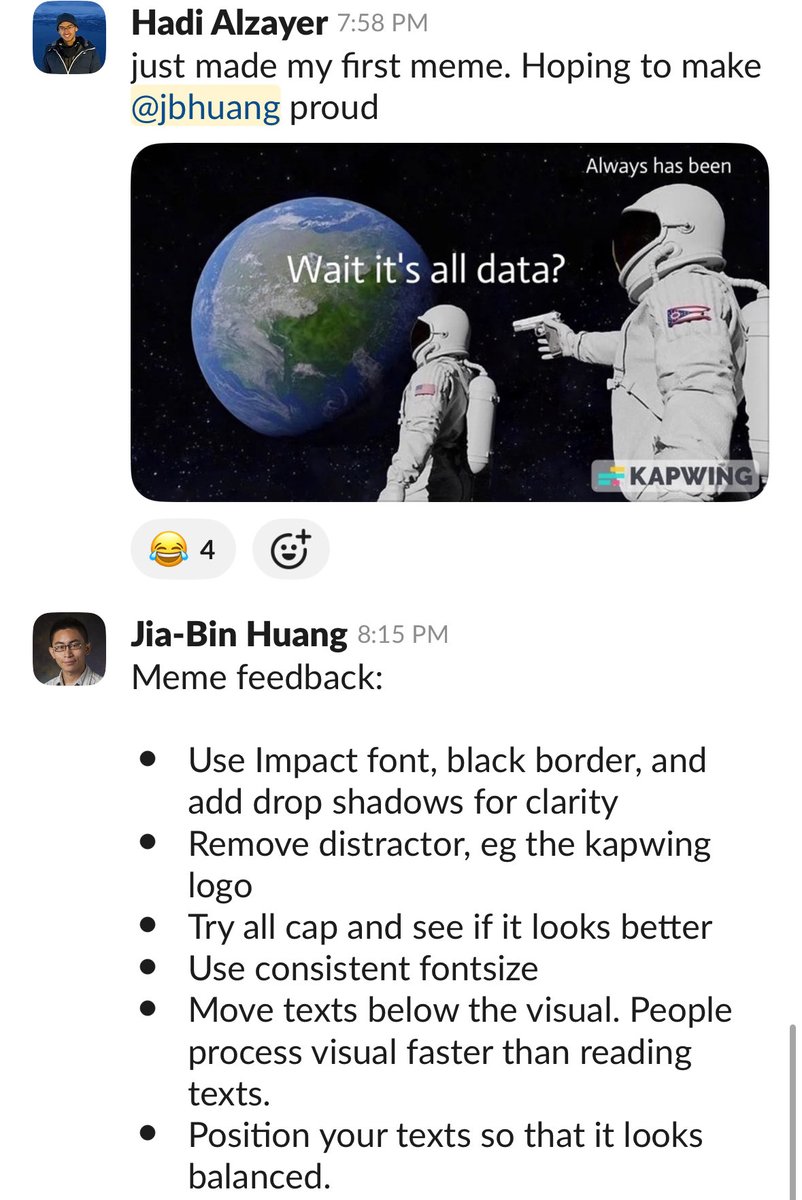
one-slide rebuttal for explicit models of the world by @ShenlongWang in favor of “vision science” as coined by Bill Freeman earlier in the morning.
also, this is the funniest thing I’ve seen today 😄
🚀 What if physical AI policies could interact with generated worlds in real time?
Introducing OmniDreams, a generative world model for closed-loop autonomous vehicle simulation.
Tech report, code, models, and data samples are available now.
Project: https://t.co/BOTWdSJKMx
Code: https://t.co/hPH3KbE6Uy
Model: https://t.co/G4g9TWFD2W
Join the #omnidreams discord channel: https://t.co/AIwYQvc0bv
Excited to share our new work: GenWildSplat: Generalizable Sparse-View 3D Reconstruction from Unconstrained Images.
A feed-forward framework that reconstructs scenes from sparse, unposed photos in 3 seconds, handling varying lighting and occluders.
Accepted at CVPR 2026.
🧵👇
A bunch of folks have been building machine learning models that turn a photograph into a 3D environment made of Gaussian splats (read: blobs of color floating in space).
Cool technology & a very admirable effort. But marketing these as "world models" seems wrong.
More accurate would be to say that they are a riff on the broader class of image-conditioned 3D generators, with a somewhat different flavor of condition image and output representation.
As far as world modeling, they don't make great predictions about how the natural world looks or behaves. (Even for, say, a chair behind a table.)
Again: I love the technology. Super cool creative stuff. I don't love the marketing and hype around it.
I also took a picture of this classic place for the teaser demo of our #CVPR26 paper LuxRemix (https://t.co/HCVianYn7g) 😄
I used to love to sit there on Saturday afternoon, hoping Einstein could give me some research ideas 🤣
Credits also to @c_richardt for composing the vid.
We’re excited to share LuxRemix: interactive light editing for indoor scenes! 🏠💡
Capture a room once, then turn individual lights on/off, change colors, and adjust intensity – all in real-time 3D from any viewpoint.
💡 https://t.co/MZNEDpEW68
📄 https://t.co/OldK7jZbJi
I've observed 3 types of ways that great AI researchers work:
1) Working on whatever they find interesting, even if it's "useless"
Whether something will be publishable, fundable, or obviously impactful, is irrelevant to what these people work on. They simply choose something that feels interesting, weird, beautiful, or off in a way they can't ignore. For many of these people, "interestingness" is also often strong research intuition for an important problem that hasn't fully materialized yet, but their ideas often end up being meaningful during the process of exploration.
The canonical example for this in physics is Richard Feynman who got intrigued by the way that plates wobbled. He followed this curiosity on something that seemed like a useless endeavor, and it ended up feeding into deeper physics (and eventually won him a Nobel prize):
"It was effortless. It was easy to play with these things. It was like uncorking a bottle: Everything flowed out effortlessly. I almost tried to resist it! There was no importance to what I was doing, but ultimately there was."
The AI version of this that I've observed before is when someone obsesses over a "minor" failure case, a weird training dynamic, a small theoretical mismatch, or just something that most people think is pointless to chase down. These threads end up becoming interesting and impactful more often than you'd expect. The risk is that one can spend a long time on a pointless rabbit hole, but I've observed that the best researchers often have a very good sense for when an idea is a dead end vs. whether it's promising given more effort.
2) Working on what they feel extremely strongly is the "right" way to do something
These people have a clear picture of how the field *should* progress, and they're willing to work on unpopular things to prove their vision. They'll commit to something that others think is wrong, premature, or not worth it. An interesting quantitative way of measuring this is the citation graph of a paper. If you see a paper that has been around for many years but only started getting cited a lot more in recent years, that means that they were early (and right!). An obvious example is diffusion, the first paper of which was as early as 2015 (Sohl-Dickstein et al., 2015) but the ideas only started getting real traction in 2021 or later.
The failure mode here is getting stuck defending a pet theory long after it's been falsified. And there's obviously many examples in our community of people who do a lot of goal post shifting or beat a dead horse for many decades. But when these ideas are legitimately undervalued, they result in paradigm shifts instead of incremental progress.
3) Crushing SOTA
There's a type of researcher who isn't necessarily the most "philosophically original" or creative, but they are extremely effective at pushing a system to its limits. You can give these people a pre-existing task and benchmarks, check in on them in a month, and they will have crushed SOTA. Obviously this is not about benchmark hacking or short term wins. It's a real skill to take a combinatorial space of noisy research ideas and papers and conduct a rigorous search and ablation process.
I've also found that this type of researcher has great intuition about the field: a sense for which ideas will scale, which tweaks are meaningful, good values for hyperparameters, and quickly figuring out which papers are worth paying attention to.
—————
I think that these archetypes are all concrete expressions of good "research taste". (1) is a taste for interesting questions, (2) is a taste for long term worldviews, and (3) is a taste for careful execution and science. The best researchers I know often have a preference for operating in one of these modes, but frequently weave in and out of each depending on the stage of the project.
We’re excited to recognize and thank our amazing #3DV2026 sponsors!
Your support makes research, collaboration, and innovation possible. 💡✨
Want to join this group of partners?
Learn how you can support 3DV here: https://t.co/SeKhtbZCSd