Our project "scDisInFact: disentangled learning for integration and prediction of multi-batch multi-condition single-cell RNA-sequencing data" is out at Nature Communications. scDisInFact disentangles the perturbation effect from batch effect (1/n)
https://t.co/filRWcschC
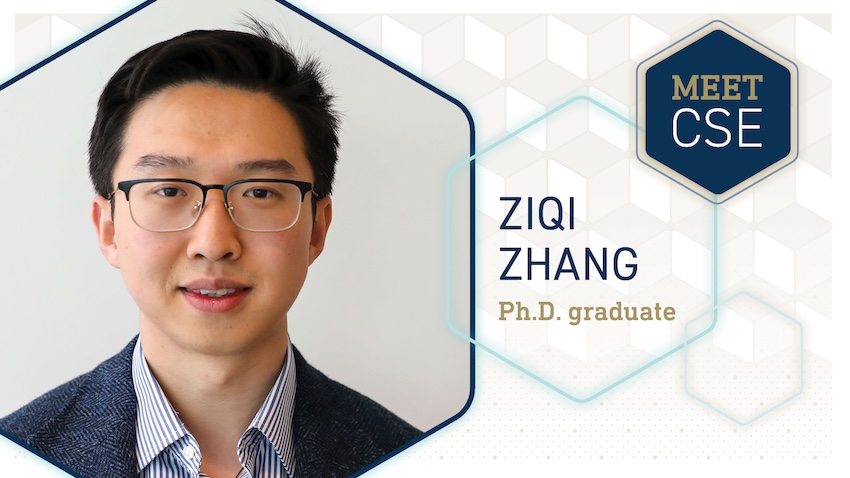
The Class of 2025 is ready to turn study into application! Among the graduates is Ziqi Zhang, who has already made an impact in machine learning and cell gene sequencing!
Meet Ziqi in the profile 👇 and join us in congratulating the #Classof2025! 🎓🥳
https://t.co/dw0t4rwnrQ
Truly an honor to deliver a keynote talk at the awesome AWSOM workshop! My slides are at https://t.co/ZSpxchLb71 which includes our work on scMoMaT, scDisInFact, scHybridNMF and scMultiSim.
Our project "scDisInFact: disentangled learning for integration and prediction of multi-batch multi-condition single-cell RNA-sequencing data" is out at Nature Communications. scDisInFact disentangles the perturbation effect from batch effect (1/n)
https://t.co/filRWcschC
scDisInFact is now published @NatureComms (https://t.co/JUoqcYlItj)! Designed for analyzing scRNA-seq data from multiple conditions (or perturbations) & multiple batches, it performs disentanglement & integration & perturbation prediction. Work by @Ziqi_Peter et al. #singlecell
We also compare the model performance with other perturbation prediction methods in the task of perturbation prediction. Our model shows superior performance, especially in cases where there are strong batch effect (5/n).
We tested the model on a Glioblastomal dataset and a combined COVID-19 dataset from three different data papers. The model successfully disentangled different sources of variations in these datasets, especially the batch effect and condition effect (4/n).
LinRace is now published @NatureComms! https://t.co/hGl0s3XpGg We are grateful to the reviewers for their valuable time& constructive comments which helped us to improve the paper substantially, and the editorial team for processing our manuscript very efficiently. @xinhai_pan
📢 Georgia Tech's School of Computational Science and Engineering has multiple faculty openings! https://t.co/w6v6KwN07z
Join us at the coolest CSE department in the world! @GTCSE@gtcomputing@mlatgt
From simulations using Covid-19 datasets to understanding cancerous microenvironments, Asst. Prof. @XiuweiZhang's group is using computational methods to make breakthroughs in single-cell omics research! Check out how!
https://t.co/ZdhY0dTZTw
@Ziqi_Peter @GTResearchNews @mlatgt
To analyze scRNA-seq data from a number of patients for disease study, we developed scDisInFact, that disentangles batch effect from variations between data matrices caused by different patient conditions, like disease severity and drug treatments. Work by @Ziqi_Peter et al (1/n)
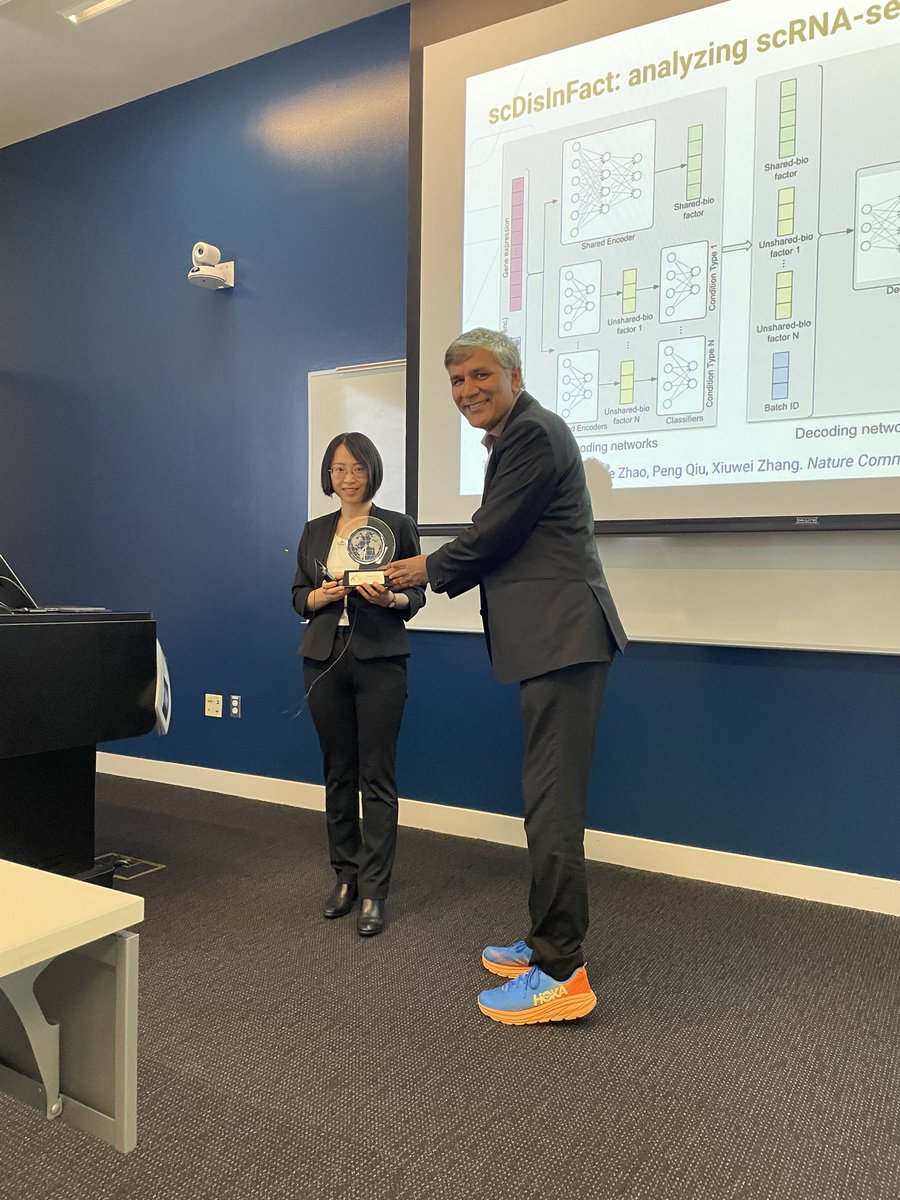
Ziqi @Ziqi_Peter won the Best Talk Prize (computational track) for his work "scDisInFact: disentangled learning for integration and prediction of multi-batch multi-condition single-cell RNA-sequencing data" (preprint coming soon)
@Ziqi_Peter@XiuweiZhang and colleagues present scMoMaT, a mosaic integration method for single cell multi-modality data from multiple batches
https://t.co/pmYCKdXHZV