Excited to share our latest work. We introduce an improved version of NanoSeq, a duplex sequencing protocol with <5 errors per billion bp in single DNA molecules, and use it to study the somatic mutation landscape of oral epithelium in >1000 people. 1/n https://t.co/KBjrDfrxlj
Very excited to see our study on a case of ALL to AML switch after CAR-T treatment out in @NatureCancer! Using deep genome sequencing, we show the cancer switched cell types to escape therapy.
@broadinstitute@sangerinstitute@getz_lab
Thread below 🧵
https://t.co/LGUtJmZ7O2
June really appears to be my lucky month - our new preprint is out on @researchsquare! 😍 Together with @doctor_msc, @andrewrjlawson and many others we looked into the life history of mitochondria in the human haematopoietic system https://t.co/7qjyALrJ65. [1/x]
➡️Delighted to share our latest work (read n’ share, it’s open access!):
"Inherited MUTYH mutations cause elevated somatic mutation rates and distinctive mutational signatures in normal human cells"
#Cancer#ageing#polyposis@NatureComms
https://t.co/Nnx08jS74o
🧵[1/]
If you are interested in somatic mutations in non-neoplastic diseases, please check out our latest preprint in which we characterise the somatic mutation landscape of psoriatic skin
https://t.co/htKYtIS9zl
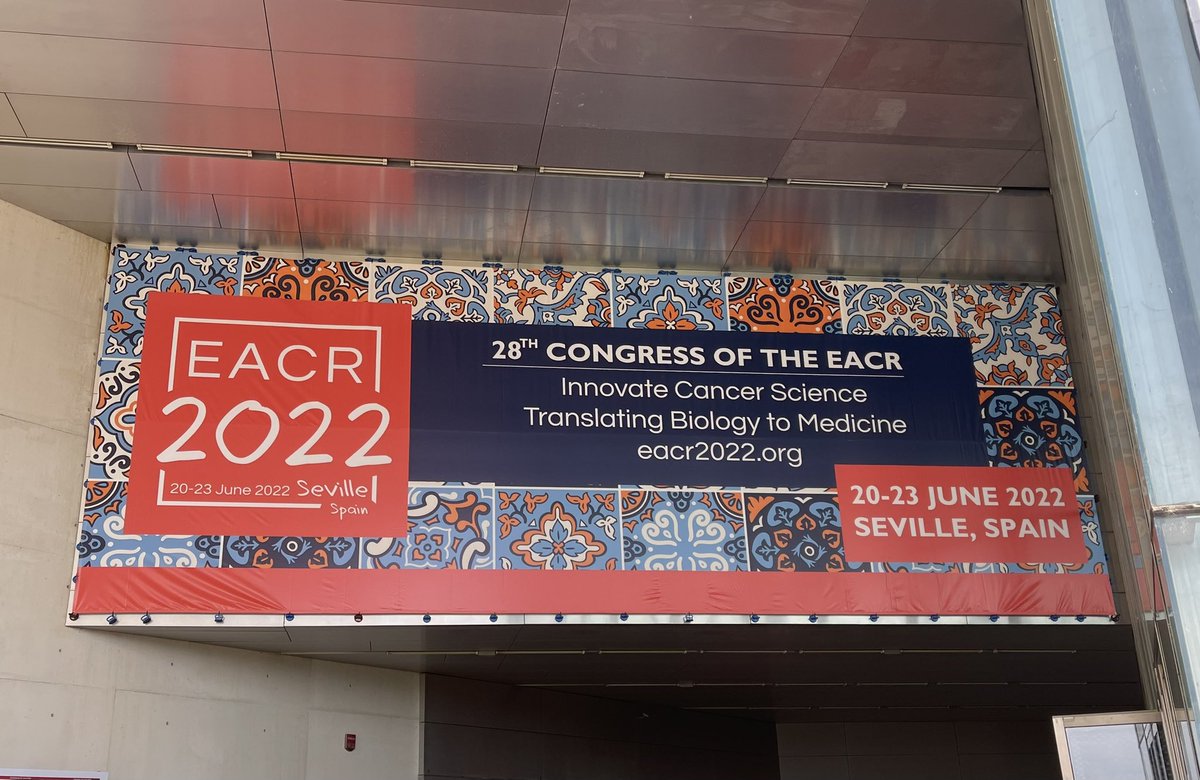
Amazing to be at #EACR2022 in person! Beautiful city & exciting science ahead. Very happy to represent the @imartincorena and Campbell groups @sangerinstitute together with super⭐️ @_Luke_MRH_. If you are around, would be fantastic to see you join for our talks on Wednesday 🥰
Amazing work by Alex and Adrian asking fundamental questions about somatic mutations and ageing. A privilege to have a played a small part in this great story.
Incredibly excited to share our paper ‘Somatic mutation rates scale with lifespan across mammals’ now published @nature.
https://t.co/a68IkkTt33
An illustrated & updated tweetorial… [1/24]
Delighted to share our latest work in its final form (and open access!). Here, we studied the rate at which somatic mutations accumulate in different species to address some long-standing hypotheses. 🧵… 1/
https://t.co/xK8S6U7CsU
Delighted to share our new pre-print:
➡️Inherited MUTYH mutations cause elevated somatic mutation rates and distinctive mutational signatures in normal human cells⬅️
#Cancer#polyposis#ageing#Genomics
https://t.co/Mcf3fSDgvm
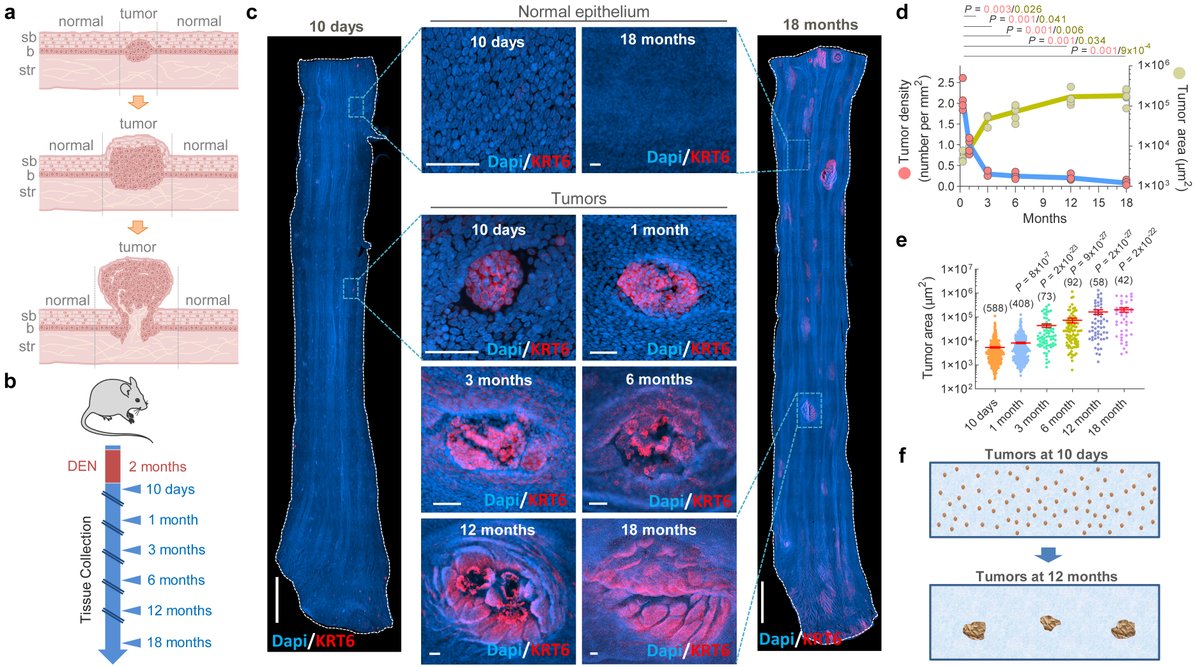
Out today @Nature! Human tissues accumulate cancer-driver mutations with age, yet tumor formation remains rare, why!? We show that mutant clones in the normal epithelium can have a tumor-protective role by outcompeting and eliminating nascent tumors. https://t.co/GfBaLNHvBq
Delighted to share our paper
➡️Increased somatic mutation burdens in normal human cells due to defective DNA polymerases
https://t.co/uDo1cEz39n
Implications for our understanding of cancer risk and the somatic mutation theory of #ageing
🧵⬇️
How does a single cell generate different organs and tissues of the human body? Do early cells contribute equally? Do embryonic patterns differ between people? Sequencing normal cells reveals the developmental stories hidden in their DNA @NaturePortfolio https://t.co/oAZw1SMMea
Thrilled to share our paper on the mutational landscape of human somatic and germline cells @Nature. We integrated histology and genomics to explore the genetic diversity that develops within our bodies as we age.
https://t.co/Ep2do4JNXP
An illustrated tweetorial… [1/15]
I am incredibly excited to share our preprint ‘Somatic mutation rates scale with lifespan across mammals’In this paper we provide an unprecedented description of somatic mutation across mammals.
https://t.co/qjOV7NrWS5
An illustrated tweetorial…[1/17]
#GenomicsLite is back this week, look at how cancer is researched in the lab - from tumour to treatment.
We'll be joined by @PJaaks and @_Luke_MRH_ from @sangerinstitute.
Sign up: https://t.co/3bRrn7xMC6
So proud of this new study. We developed naive and memory B and T single-cell expansion protocols and produced lymphocyte and blood stem cell genomes, from healthy individuals aged 0-81. I am still stunned at the biological insights revealed. [1/10]
https://t.co/8qu19Xue5b





![ATJCagan's tweet photo. Incredibly excited to share our paper ‘Somatic mutation rates scale with lifespan across mammals’ now published @nature.
https://t.co/a68IkkTt33
An illustrated & updated tweetorial… [1/24] https://t.co/o8BLsIXH7x](https://pbs.twimg.com/media/FQPMMCCWYAIybBt.jpg)
![ATJCagan's tweet photo. Thrilled to share our paper on the mutational landscape of human somatic and germline cells @Nature. We integrated histology and genomics to explore the genetic diversity that develops within our bodies as we age.
https://t.co/Ep2do4JNXP
An illustrated tweetorial… [1/15] https://t.co/083TEmQDvJ](https://pbs.twimg.com/media/E9pUK57WQAAvTUR.jpg)
![ATJCagan's tweet photo. I am incredibly excited to share our preprint ‘Somatic mutation rates scale with lifespan across mammals’In this paper we provide an unprecedented description of somatic mutation across mammals.
https://t.co/qjOV7NrWS5
An illustrated tweetorial…[1/17] https://t.co/PIN9RCY0Vv](https://pbs.twimg.com/media/E9OVz-pWUAE4I3a.jpg)
![heatherEmachado's tweet photo. So proud of this new study. We developed naive and memory B and T single-cell expansion protocols and produced lymphocyte and blood stem cell genomes, from healthy individuals aged 0-81. I am still stunned at the biological insights revealed. [1/10]
https://t.co/8qu19Xue5b https://t.co/voN5isu1Qe](https://pbs.twimg.com/media/E0dMmsfXIAMpz9c.jpg)


