🤔 Did you know?
Tether now holds almost as much US government debt as Saudi Arabia.
or that
@MoneyGram issues its own dollar.
@deel issues its own dollar.
@PayPal has one.
or that banks are putting deposits onchain and @Visa settles stablecoins 🤯
and somehow this is only the beginning.
Read all about it in our new guest essay by @Josh_Gier on how private money came back, what broke apart, and who ends up owning the layer that makes all of it work ↓
https://t.co/uWl4j5hN7W
🚨BREAKING: Trump’s midterm pledge: a $5,000 “dividend” for every adult U.S. citizen if Republicans hold both the House and Senate in November.
He says the country’s economic strength would make the payout possible 🇺🇸
1/ Looking to launch a stablecoin card program?
With Privy and @stripe, you can now do that in as little as a month.
Today, Privy is launching prebuilt components for cards: one integration to embed the full cardholder experience in your app and launch across 25+ countries.
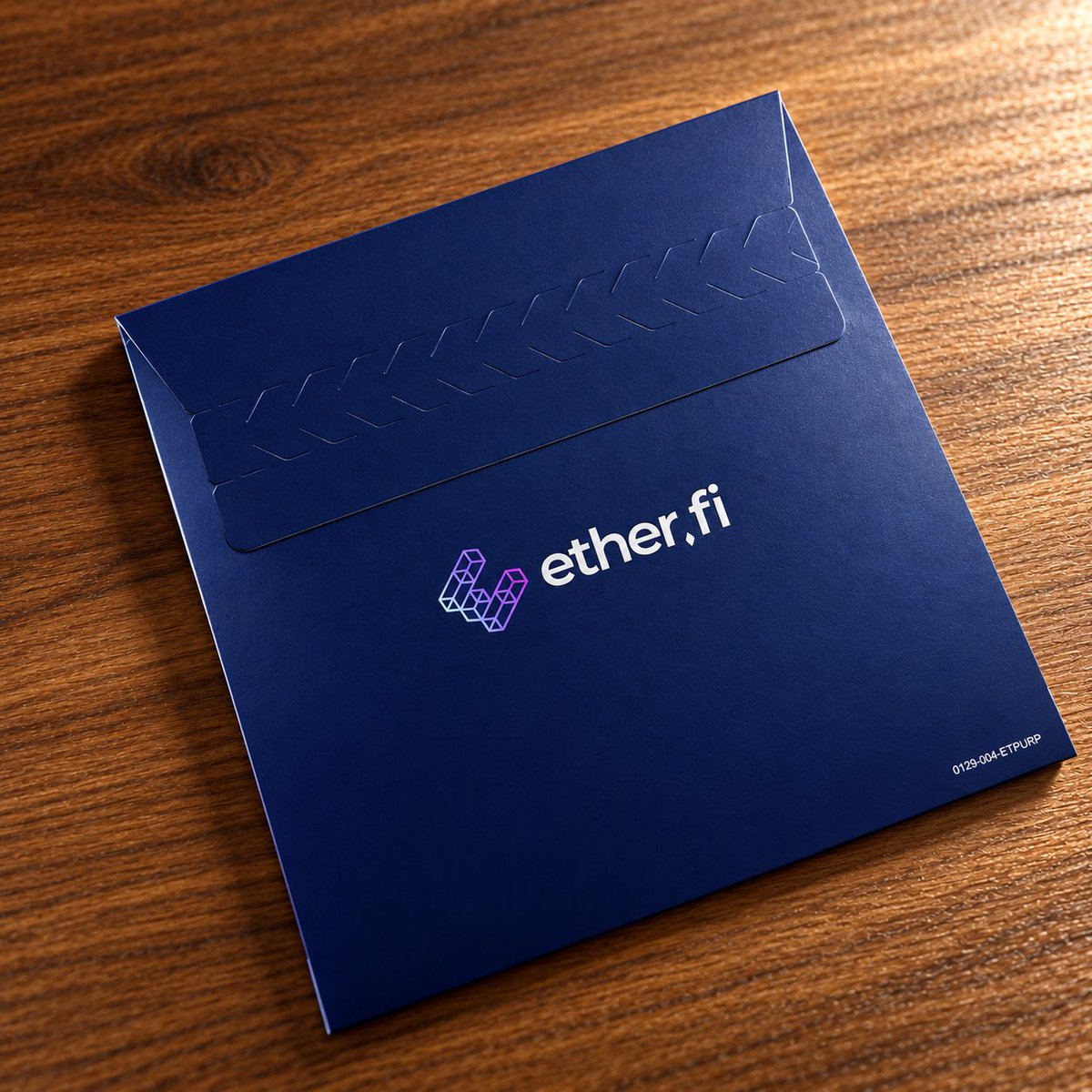
My Luxe metal card just arrived and it’s stunning! 💥
Not the usual cold metal: the surface finish makes it incredibly pleasant to the touch. They really sweat the details at @ether_fi 🏆
https://t.co/Cb9zzWZNa9 RECAP | Aug 29–Sep 4 👇
Full coverage → https://t.co/xBPf78GJIC
🇸🇬 Singapore moves its stablecoin framework toward law
@MAS_sg opened consultation on Payment Services Act amendments on September 1. Gibson Dunn’s analysis identifies a proposed standalone stablecoin issuance licence, changing the licensing approach set out in 2023.
Responses close October 16. Subsidiary rules will be consulted on separately; the new regime is not yet in force.
🇷🇺 Russia’s digital ruble reaches its first mandatory rollout phase
From September 1, the largest banks and their merchant clients with annual revenue above RUB120M must provide digital-ruble access or acceptance under the central bank’s schedule.
Consumers can still choose whether to use it. The next bank and merchant groups follow in September 2027 and 2028.
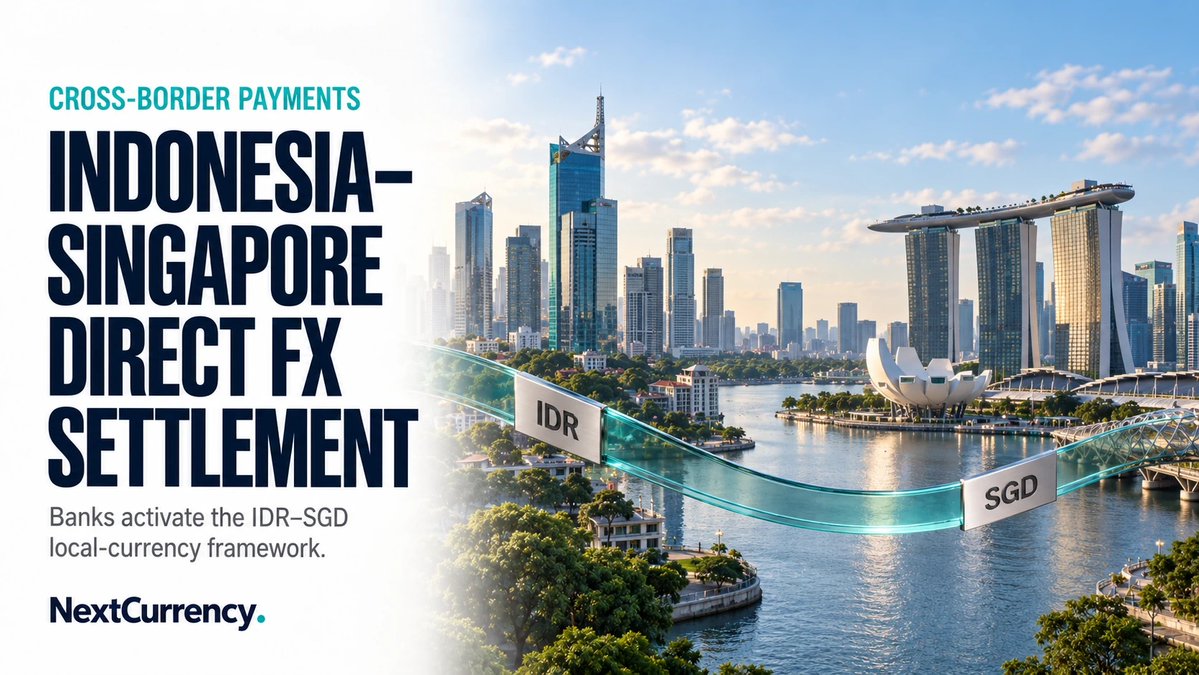
🌏 Indonesia and Singapore activate direct IDR–SGD settlement
@bank_indonesia and @MAS_sg operationalised their local-currency framework on August 31. Nine Indonesian banks and three Singapore banks can facilitate eligible trade, investment and cross-border payments with direct rupiah–Singapore dollar quotation.
DBS, OCBC and UOB are the Singapore participants. Businesses gain another FX route; the actual saving depends on the bank’s spread, fees and available liquidity.
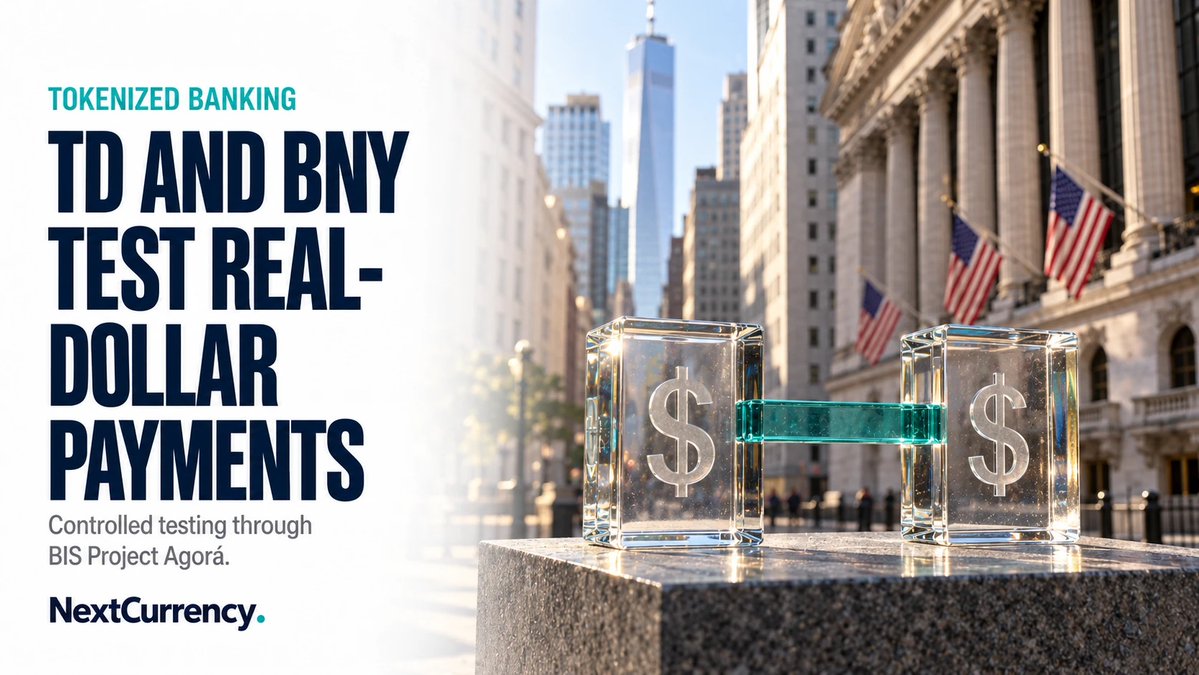
🏦 TD and BNY test tokenized payments with real US dollars
TD says it moved actual dollars between two US entities through @BIS_org’s Project Agorá, with BNY acting as clearing bank and intermediary.
The controlled test linked tokenized bank money with settlement infrastructure. Its atomic-settlement design lets linked payment legs complete together or not at all, reducing the risk of paying out one currency without receiving the other.
🚨 BREAKING: A vulnerability in @raincards Solana card infrastructure has hit Avici, affecting 1,685 users and $500,859.22 in card balances.
Rain says the vulnerability affected an outdated version of its @solana card contract used by a small number of programs. The affected contracts have now been upgraded.
@avici says its users’ self-custodial Solana and EVM wallets were not affected, and all affected card balances will be refunded in full.
The incident has also been reported to the FBI’s Internet Crime Complaint Center.
More to follow.
https://t.co/Cb9zzX0kZH RECAP | Aug 21–28 👇
Full coverage → https://t.co/nKICkAlZHe
💳 Stablecoin card spending crosses $1B in a month
Paymentscan data cited by Reuters put July stablecoin-card spending above $1B. @RedotPay says cumulative industry spend has now passed $10.9B.
The bigger story: stablecoins are becoming a funding layer behind familiar card payments. Merchants still receive an ordinary card transaction, but the money upstream increasingly begins on-chain.
🏦 @StanChart becomes the first bank distributor of $HKDAP
Anchorpoint remains the regulated issuer. Standard Chartered Bank (Hong Kong) now provides a bank-led fiat conversion and institutional distribution channel, targeting fund settlement, treasury management and cross-border trade payments.
For non-USD stablecoins, distribution may matter as much as issuance. Banks already sit where corporate cash, FX and payments meet.
🇪🇺 @Revolut begins the phased rollout of $EURR
Selected customers in Denmark, Poland and Portugal can now access the euro stablecoin, with wider EEA availability expected later in 2026. Bridge (@Stablecoin), owned by @stripe, supplies the issuance infrastructure.
This is a major test of whether a mainstream financial app can create real demand for an on-chain euro. Revolut brings the distribution; the next numbers to watch are supply, active holders and transaction volume.
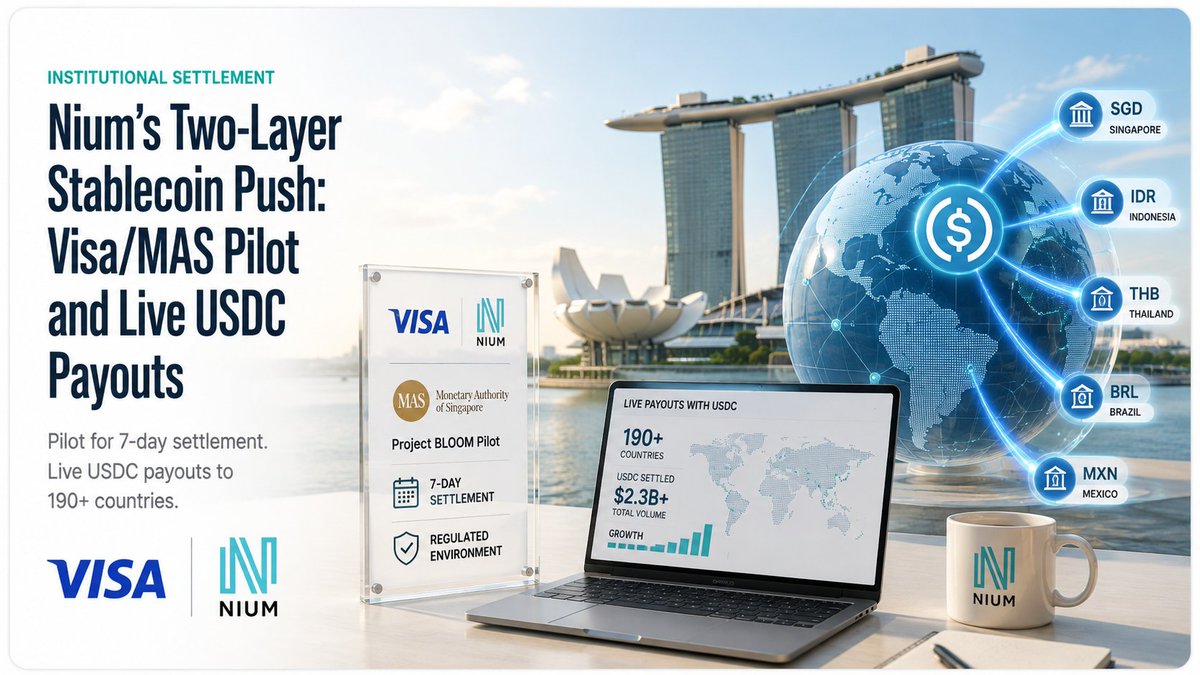
🌍 @NiumGlobal puts base:0x833589fcd6edb6e08f4c7c32d4f71b54bda02913 into live global payouts
Businesses can now fund Nium accounts with @circle’s base:0x833589fcd6edb6e08f4c7c32d4f71b54bda02913. Nium converts it behind the scenes, credits the customer’s fiat wallet in USD and routes local-fiat payouts through its existing network, which reaches 190+ countries.
Separately, @Visa named Nium its first partner in @MAS_sg’s BLOOM pilot to test stablecoin settlement seven days a week.
Introducing EtherFi Borrow.
Earn rewards on idle USDC and ETH.
Borrow against your portfolio at low rates.
Spend, transfer, or reinvest from the same account.
Feeling the heat of EtherFi summer already?☀️ https://t.co/mISw4FLu6D
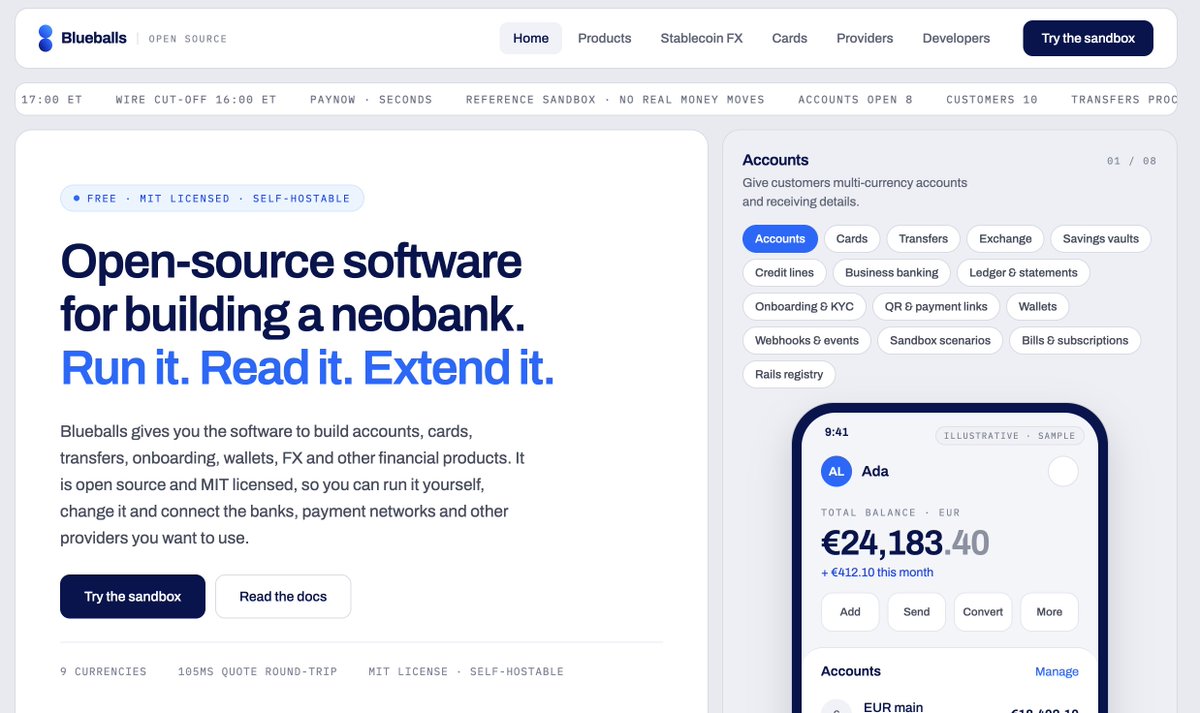
Building a neobank, stablecoin app or financial product?
I open-sourced the code I wish existed when starting from scratch:
https://t.co/dksX3pNFGN
Accounts, cards, transfers, wallets, FX, onboarding, ledger, policies and the infrastructure around them.
Why?
Banking consolidated because financial infrastructure was brutally expensive.
Storing money was expensive. Moving it was expensive. Reconciliation was expensive. Trust, compliance, settlement and operations all required enormous institutions and enormous balance sheets.
So scale became a requirement.
That constraint is disappearing.
Money is becoming software. Stablecoins make settlement programmable. Modern infrastructure has collapsed the cost of payments, identity, cards, custody and FX. AI is going to compress the operating layer even further.
If the cost of building financial infrastructure falls by orders of magnitude, the end state shouldn’t be a handful of slightly better megabanks.
It should be millions of specialised financial institutions.
A bank for a company.
A bank for a university.
A bank for a profession.
A bank for a community.
A bank for a family.
Different products. Different rules. Different economics.
The shift is from banks as institutions to banking as primitives.
So I built Blueballs and opened the stack.
Fork it.
Change it.
Build the bank your market actually needs.
https://t.co/dksX3pNFGN
NEXT CURRENCY NEWS RECAP | Aug 5–20 👇
Full coverage → https://t.co/nKICkAlZHe
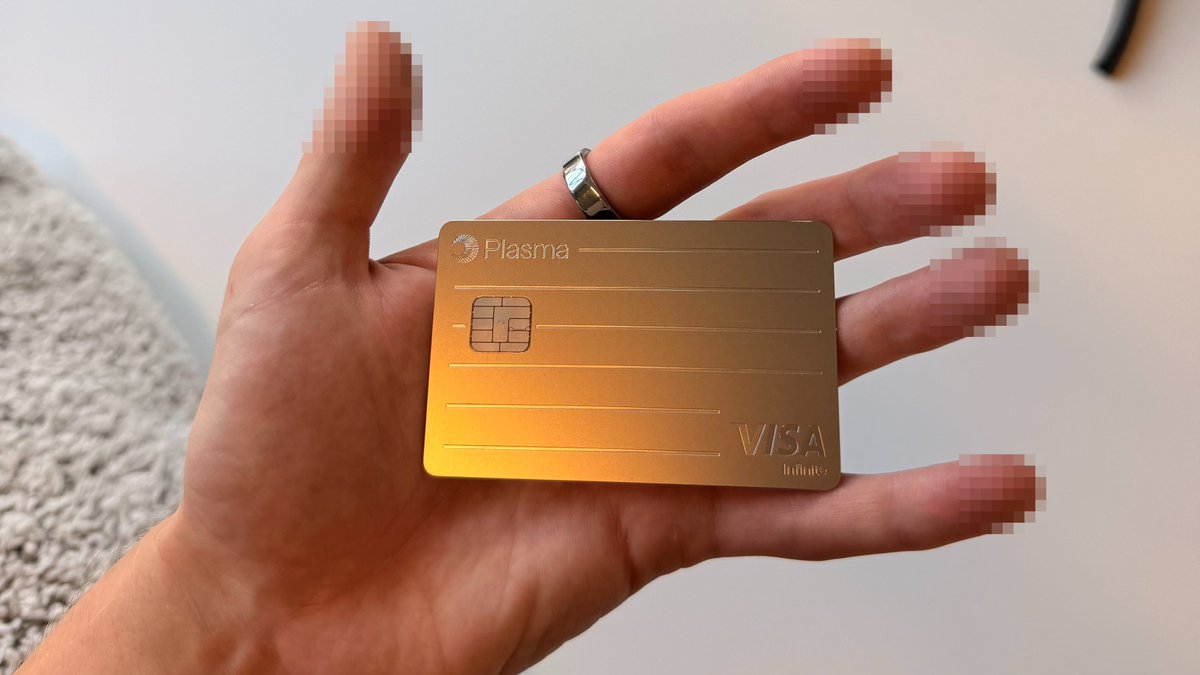
💳 Plasma is taking its stablecoin card upmarket
Plasma One Platinum combines a self-custodial stablecoin account with a Visa Infinite metal card, up to 4% cashback, 10% back on AI services, 10% on eligible flights, airport lounge access, travel insurance, global eSIM benefits and monthly credits for ChatGPT Plus and Claude Pro.
The bigger story: stablecoin cards are starting to look less like crypto products and more like serious competitors to premium banking.
⚔️ Circle put a date on Arc
Public mainnet goes live September 16.
BlackRock, DTCC, Visa, Mastercard, Standard Chartered, ICE and others are among its founding validators.
USDC is the native gas asset, with Arc built around institutional payments, settlement and tokenized assets.
📜 The GENIUS Act is moving into rulemaking
Treasury published its proposed rules on August 18.
One important date: July 18, 2028, when restrictions on offering non-compliant payment stablecoins in the US kick in.
The foreign issuer route under Section 18(a) remains, while issuers now have a much clearer picture of what US compliance will look like.
🚀 USDe keeps growing on Robinhood Chain
Robinhood Chain TVL is above $540M, up more than 45% in August.
USDe has grown to $286M, around 44% of stablecoins on the chain, alongside Robinhood’s own USDG. Another sign that stablecoin competition is quickly becoming one of the most interesting parts of new L2 ecosystems.