Persistent Gender Gap in India's World of Work: The latest #PLFS shows women continue to be a fraction of the workforce.
India's demographic dividend, one of the most talked-about economic advantages of our country, remains incomplete — and Data from MoSPI’s latest Periodic Labour Force Survey (PLFS) 2025 makes that impossible to ignore.
While we are proud of the increased focus on women-led development, the numbers tell a different story:
➡️ For every two men in the workforce, there is only one woman standing beside them – as shown by the huge gaps in both the Labour Force Participation Rate (% of population working or seeking or available for work) and the Worker Population Ratio or WPR (% employed persons in the population.
➡️Men and women share an identical 3.1% unemployment rate — but that number is deeply misleading. Most women never enter the labour force at all. They aren't counted as unemployed; they're simply invisible to the system.
➡️27.4 crore women are outside the labour force – nearly 3× the 9.3 crore men in the same category. Even among those who do work, women are 3x more likely to be unpaid family workers- contributing labour with no income, no recognition and no security.
➡️A striking 60% of women outside the workforce cite childcare and homemaking as the primary reason, affecting over 164 million women. In contrast, only 1% of men cite care burden.
➡️The quality of work matters too - even within the workforce. A higher proportion of men hold regular salaried jobs, while women are disproportionately concentrated in informal, insecure, and low-paying work.
Therefore, the data is clear that bridging these gaps requires more than policy intent; it calls for affordable childcare infrastructure, skilling programmes targeted at women, workplace flexibility, and a fundamental shift in how we distribute care responsibilities at home.
Otherwise, India won't unlock its full economic potential, with half its population on the margins.
What the Budget could do to unlock women’s time, productivity, and participation in India’s growth story
✍️@shrav81, @_tanugoyal and Anjhana Ramesh
https://t.co/GjXDxxcvi5
Skilled women remain out of work as domestic duties restrict labour market participation. PLFS 2023–24 shows rising female salaried jobs and higher education, but 41% of female graduates do only domestic work.
Explore more: https://t.co/nuzcXhOi1u
#CRFLive
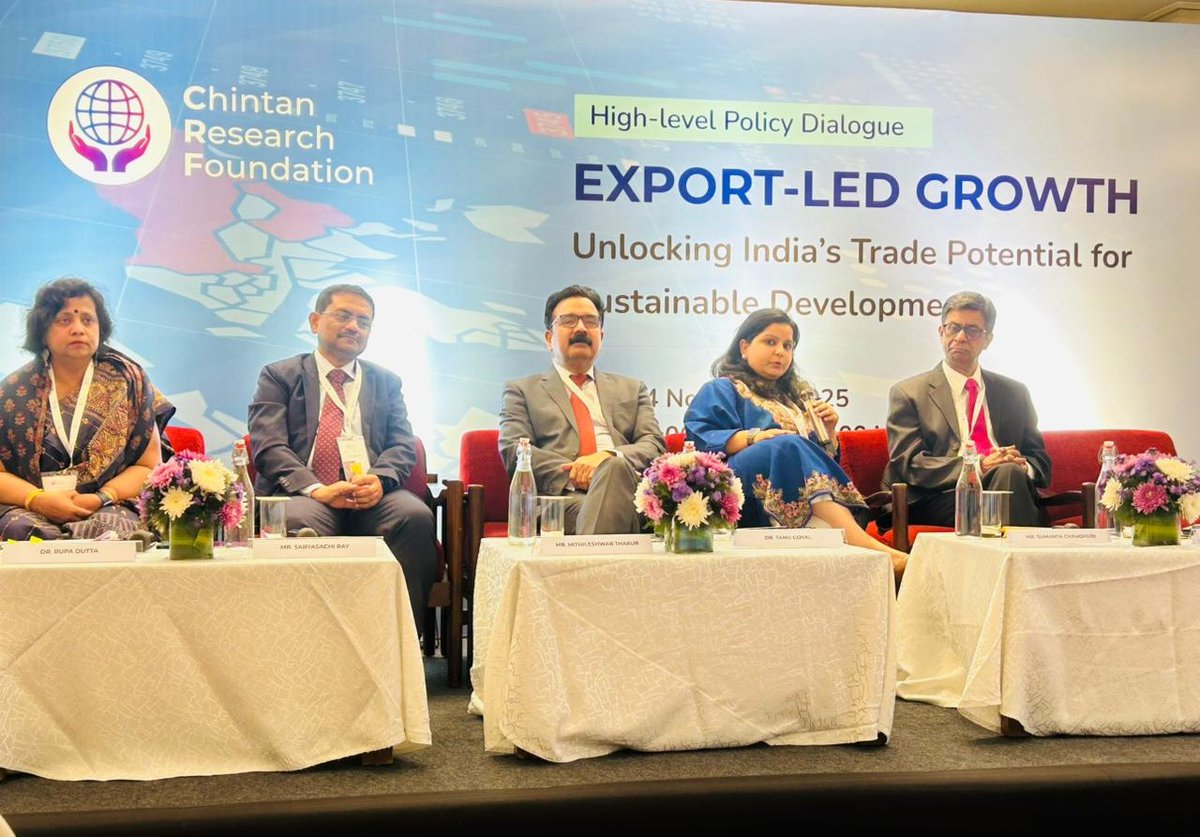
Dr. @_tanugoyal, Senior Fellow, @ICRIER, underscores the scale of India’s trade ambition and the gaps that need urgent action.
Key points:
• India aims for $2 trillion in overall #Trade by 2030, but the last decade’s ~4.5% annual growth is far too slow.
• Meeting the target requires 3× the current growth, even higher for sectors like #Apparel.
• India’s enterprise base is MSME-heavy: 70 million #Udyam-registered units, 99% of them micro or small with low productivity.
• Access to finance remains the biggest barrier due to high borrowing rates.
• India’s digital public infrastructure can help - #MSMEs need new credit-assessment tools, and the Unified Lending Interface (ULI) could be helpful.
#CRFTradeEvent #PanelDiscussion #Trade #GlobalTrade #IndiaExport #EconomicGrowth #SustainableDevelopment #PolicyReform #ChintanResearchFoundation
#CRFLive
Key Takeaways from First High-Level Dialogue on Export-Led #Growth and #Trade!
🌐 India must upgrade its export structure and move up the value chain to stay globally competitive.
🌐 #Textiles and other sectors need stronger value chains, diversified inputs, and modernised capacity.
🌐 Skills must be paired with technology to boost productivity and sustain sectoral leadership.
🌐 #MSMEs face financing gaps and state-level ease-of-doing-business barriers that slow export growth.
🌐 India’s #FTAs need greater ambition, stronger standards alignment, and tighter trade–investment integration.
🌐 Rebuilding the investment–trade–technology linkage is essential for scaling manufacturing.
🌐 AI adoption is constrained by poor data quality; India needs domestic #AI chips and unified digital frameworks.
🌐 Sustainability and compliance with global norms like #CBAM will define export readiness.
🌐 Strategic partners such as the #US, #UAE, #UK, and #Taiwan are pivotal for #FDI, tech transfer, and startup growth.
🌐 State-driven reforms are critical to removing local bottlenecks and enabling strong export clusters.
🌐 India’s innovation ecosystem, youth aspirations, and bottom-up models like #ODOP, women #SHGs will reshape the export basket.
@Bidishabh@priyadarshi_crf@sabyaray@GJEPCIndia @DeepakBagla @NITIAayog@nyuniversity@bhartinews@MithileshwarT@aepcindia@_tanugoyal@ICRIER@CWS_iift@akshmathur@AsiaPolicy@nsitharaman@nsitharamanoffc@PMOIndia
#CRFTradeEvent #PanelDiscussion #Trade #GlobalTrade #IndiaExport #EconomicGrowth #SustainableDevelopment #PolicyReform #ChintanResearchFoundation
India’s Time Use Survey 2024 shows men spend 391 mins on paid household jobs but only 89 mins when unpaid. This gap reveals it’s not about ability—but value. Women still shoulder the bulk of unpaid work, leading to time poverty.
How do we change this?
#EPWD@GoIStats@_tanugoyal
The India–UK Free Trade Agreement includes provisions that could empower women entrepreneurs and workers across borders. Authors @_tanugoyal and Shravani Prakash say it's a bold step toward inclusive trade.
🔗 Read more: https://t.co/NOTDPnc6xZ
@EconomicTimes
New Policy Brief: https://t.co/pajysbcLl3
How can India’s manufacturing sector become more inclusive of women? Based on a roundtable hosted by ICRIER under the EPWD initiative, this policy brief offers actionable insights & a roadmap to close the gender gap in formal employment.
Who sits at the table shapes what gets prioritized. Women now make up 30% of senior MDB roles (up from 5% in 2000), yet gaps remain. 5 of 9 MDBs have ≤25% women on their Boards.
Explore more insights here: https://t.co/YfuztqXPuo
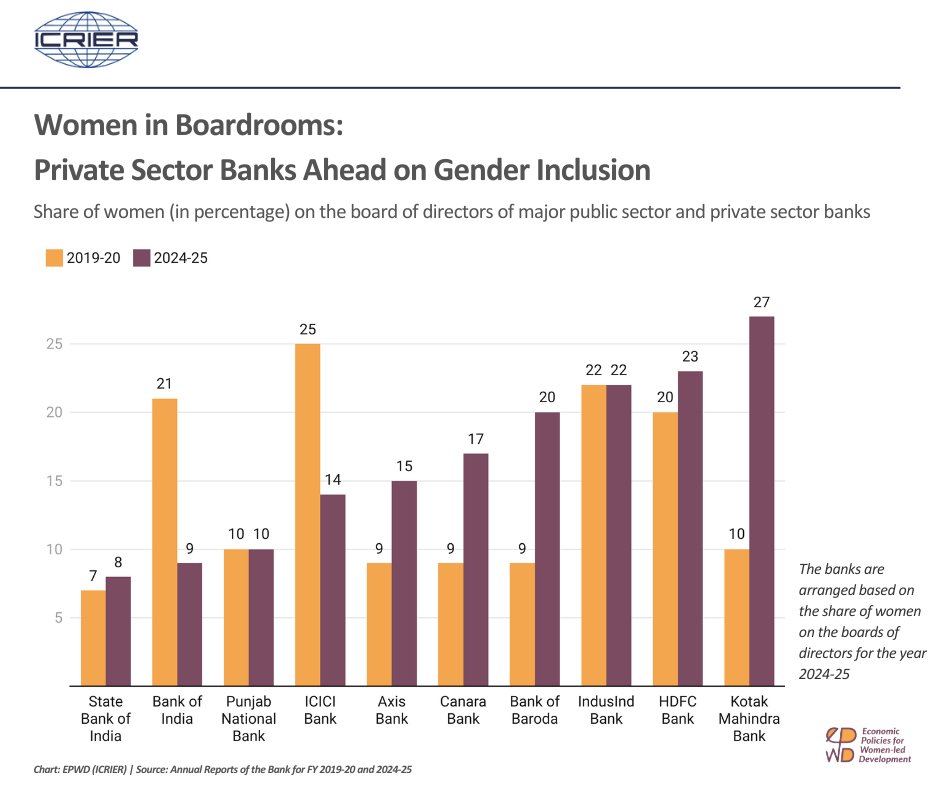
Women on bank boards = stronger, more inclusive institutions. From 2019–20 to 2024–25, women’s representation rose from 11% to 13% in public sector banks & 17% to 23% in private ones.
#GenderDiversity#WomenInLeadership@RBI@_tanugoyal
A milestone for India’s MSME ecosystem!
Today, Hon’ble Union Minister for MSME , Government of India launched the "Know Your Lender, Grow Your Business" handbook — a guide to help MSMEs make informed credit decisions and understand their lending rights in simple language.
@rashtrapatibhvn@jitanrmanjhi@ShobhaBJP
#EmpowerMSME #KnowYourLenderGrowYourBusiness #SimplifyMSMElending
#MSME #MSMEDay2025 #UdyamiBharat #entrepreneurship #entrepreneur #development #enterprises #atmanirbharbharat #cgtmse #ViksitBharat #MSME #PMVishwakarma #scsthub #coir #KVIC #Khadi #NSIC #MGIRI #NIMSME #employment #Empowerment #Entrepreneurship #Entreprenuers #MSMEs
ICRIER is hiring a Senior Fellow to join our Digital Economy, Startups & Innovation (DESI) team. This is a leadership position for experienced researchers looking to influence policy through rigorous evidence-based work.
🔗 Apply here: https://t.co/ZM0I1gk2sj
VVGNLI, in collaboration with MEA, Govt. of India, organized an International Training Programme on Future of Work & Technology (Mar 10-28, 2025) under ITEC. The programme saw participation from 27 delegates across 22 countries.Course Director:-Dr. Dhanya M B #FutureOfWork#ITEC
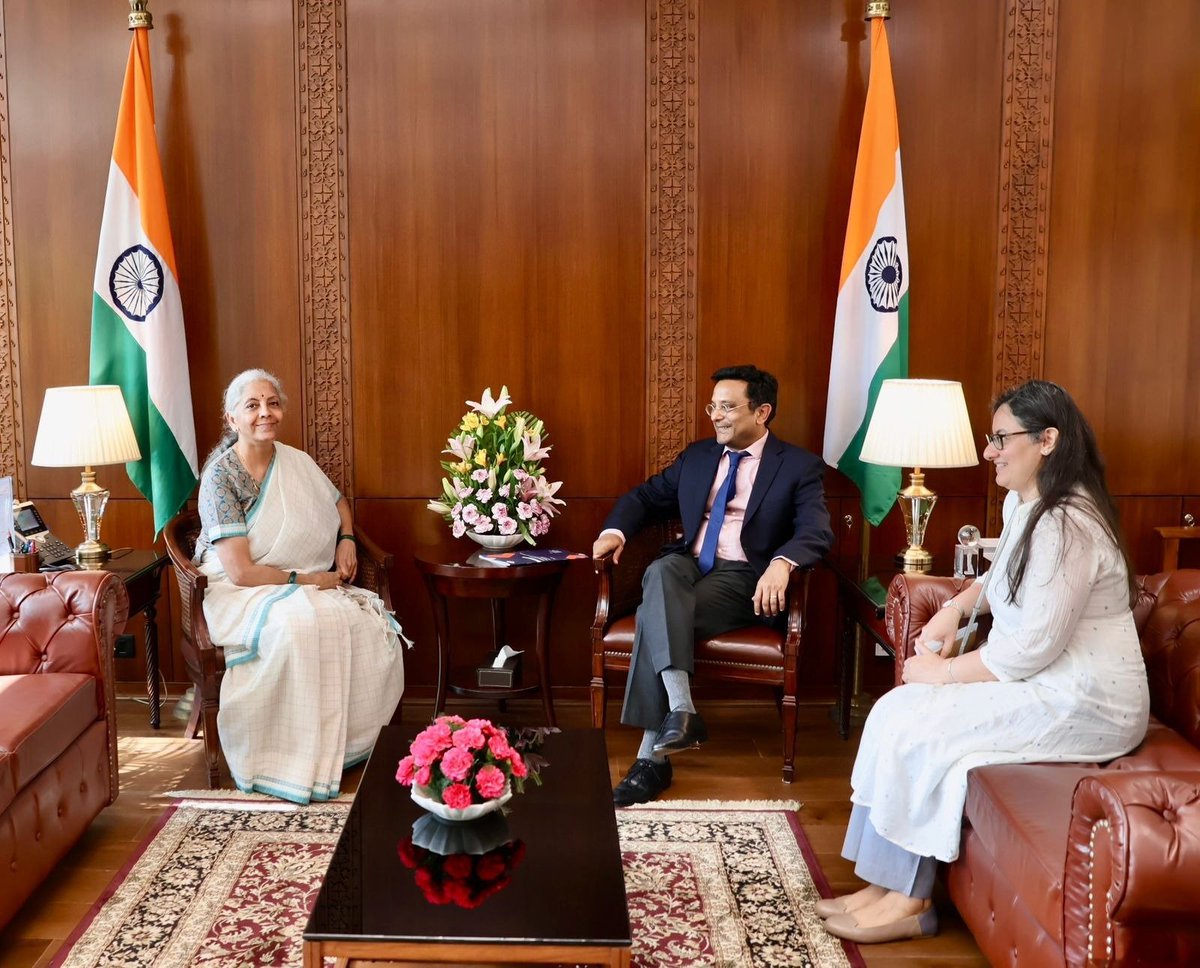
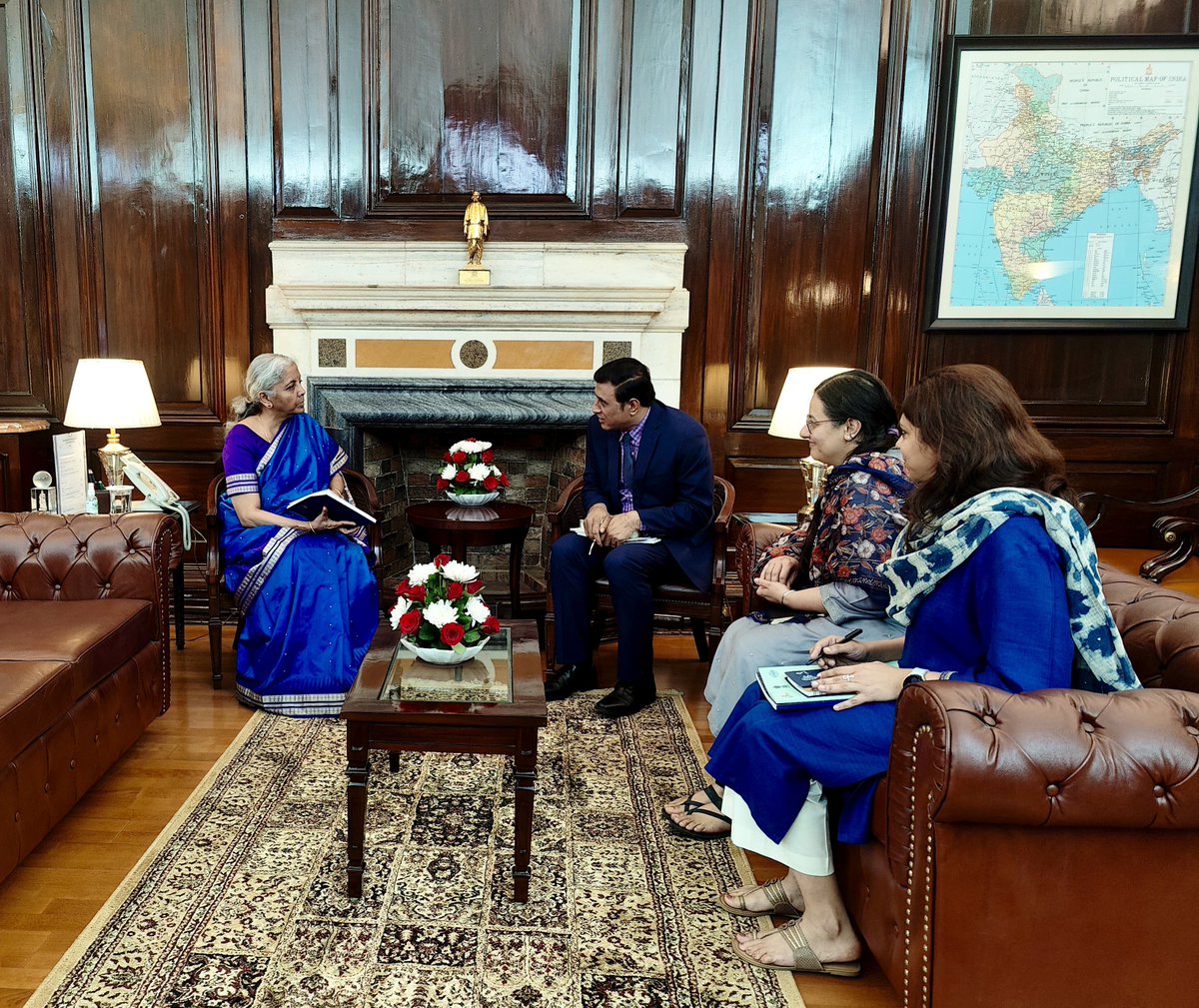
Shri Deepak Mishra, Director and Chief Executive - Indian Council for Research on International Economic Relations (ICRIER), and Smt Puja Mehra, Senior Fellow (Consultant) -ICRIER, call on Smt @nsitharaman.