WSJ: "Germany’s famously open economy was its greatest economic asset, delivering almost 20 years of uninterrupted growth and turning it into one of the biggest winners of globalization."
I think I would have framed this differently.
Germany's trade competitiveness for a long time was based on its ability both to suppress household income growth relative to productivity growth (as it did, for example, after the 2003-5 Hartz reforms), and to keep its currency cheap (as it did, for example, through adoption of the euro).
Under our current form of globalization, in other words, we experience an example of the Kalecki paradox, in which wage-suppression policies that allow one country to grow faster than its trade partners are actually bad for overall global growth – to the extent, anyway, that consumer demand drives investment among its trade partners.
In this system, all countries are under pressure to suppress wage growth in order to expand manufacturing and retain manufacturing employment, but the "winner" is the one who is able to do it most effectively.
For many years, when much of China's high saving was directed into domestic investment, Germany was one of the main winners from this system. But as Chinese investment became increasingly unproductive, Beijing began trying to rein in the debt needed to fund so much unproductive investment.
This process, of course, took off after the 2021-22 property crash, and once that happened, Germany's ability to benefit from the Kalecki paradox evaporated, as it quickly became one of the main losers of the system.
The point is that the problem isn't China. The real problem is a system that rewards countries for implementing policies that undermine overall global growth. The good news is that for many years, when Germany was able to exploit the global trade regime, it was also one of the greatest defenders of this system. Now that it is on the losing side, German policymakers are increasingly recognizing how damaging a system it is.
There is nothing new about this. If you read the economic debates between the UK and the US in the 1920s, a period when US productivity soared even as wages remained stagnant, it was the UK that complained about the trade imbalances. The US insisted that its huge trade surplus was simply the consequence of more efficient manufacturing techniques and harder-working people. The US of course abandoned that argument in the 1970s, when it lost its trade surplus.
In the economic debates of the 1980s, it was the US who complained about trade imbalances, and Japan who insisted (what else?) that its huge trade surplus was the result of more efficient manufacturing techniques and harder-working people. No one in Japan makes such a silly claim anymore.
In the 2000s, of course, Germany rather patronizingly explained to the rest of Europe that if only they could become as efficient in manufacturing and as hard-working as the Germans, they too would be in just as good a shape. So much for that claim.
Meanwhile our trading system continues to reward policies that depress global growth by putting downward pressure on wage growth, or that, alternatively, force the world to encourage rapid increases in debt in order to counter the impact of lower wage growth.
That is why the real solution isn't a global alliance against China. While this may help defuse current tensions, it won't change a system that will continue to reward bad behavior – i.e. household income-suppressing policies – by allowing countries to externalize the costs of this bad behavior through large, persistent trade surpluses. And this means that it will continue to support increases in income inequality within countries.
https://t.co/9g6zh3ET99
Lösung für Deutschlands Probleme:
Den Linken erklären, dass ne Klimaanlage auch nur ne Wärmepumpe ist.
Den Rechten erklären, dass ne Wärmepumpe auch nur ne Klimaanlage ist.
This tweet from Bukele is fascinating, because the graph he posted shows that the murder rate in El Salvador plummeted sharply before he became president, and long before he started throwing tons of people in jail.
Do you imbeciles even know how to *read charts*?
This shows FIFTEEN YEARS of increased incarceration rates having ZERO EFFECT on a SKYROCKETING murder rate, followed by FIVE YEARS of the murder rate PLUMMETING with NO CHANGE in incarceration policy.
How STUPID are you assholes?
Northern Ireland remaining in the EU single market for goods means we have an entire region running as a counterfactual on how much wealthier we’d have been had we stayed. It’s actually outperformed London.
Deutsche Außenpolitik der Vergangenheit bestand darin, es allen recht zu machen, alle Seiten zur Besonnenheit aufzurufen und sich mit (viel) Geld an allem zu beteiligen. Seit 2022 bezieht Deutschland Position und handelt zumeist entsprechend (und hier soll keine Bewertung der 1
Your claim that the top 1% pays 40% of taxes and the bottom 50% only 3% is misleading:
It captures just one tax – the federal income tax – and ignores all the rest: payroll taxes, state income taxes, sales taxes, excise duties, etc., many of which are regressive.
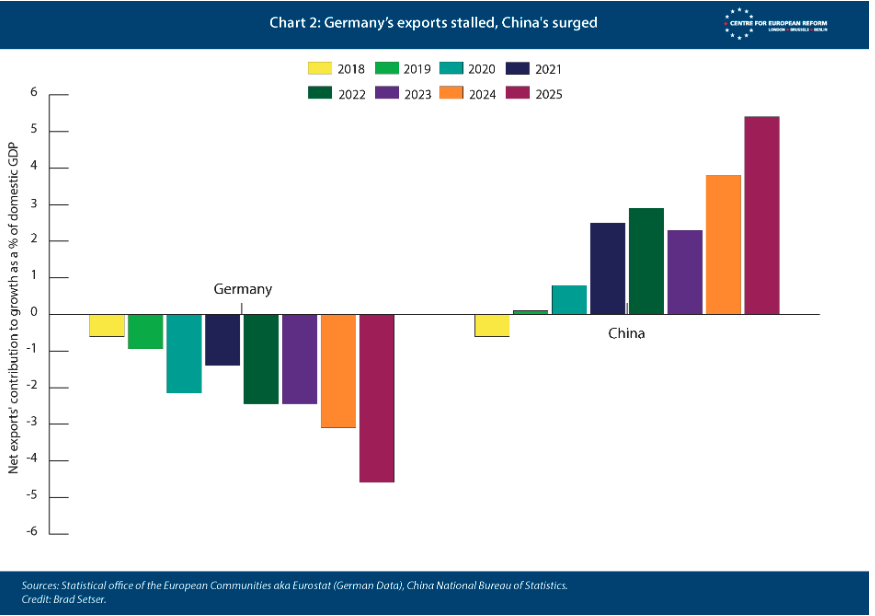
Germany is the epicentre of the China Shock 2.0 reverberating in global markets
In a new paper, @Brad_Setser and I show the shock is a key driver of Germany’s economic malaise. And it's accelerating
Berlin needs to stop admiring the problem, and join efforts to fight back
1/
Ich glaube, der Kern für diese Merz'sche Sicht auf Arbeit (pars pro toto) ist einer der lebensweltlichen Erfahrung. Wenn Merz sich mit seinen zwei Tagen Blackrock als ackernder Leistungsträger inszeniert, liegt das auch daran, dass für diese Menschen gar keine Grenze zwischen /1
the 9-Euro Ticket increased train trips by about 35%, but reduced car traffic by only 1–5%, implying limited car-to-rail substitution. The additional train demand worsened rail service quality: the share of delayed trains rose by 30%, with spillovers to long-distance trains.
I’m asked this a lot in my lectures: Why did the Soviets invest so many resources in propagating antizionism globally? Did they really hate Jews that much?
The answer is that they invested in antizionism because it worked for them, both geopolitically and domestically.
To be sure, there were many individuals in the Soviet antizionist apparatus who were driven by personal antisemitism. The Zionologists — individuals tasked with formulating the key tenets of the ideology — are the prime example.
But at the state level, the demonization of Israel served much bigger, strategic purposes.
It strengthened the Soviet-Arab alliance. It helped mobilize groups and states around the world against the US and the West, pulling them into the Soviet anti-Western orbit, including at the UN.
At home, it functioned as a warning to other minorities: don’t organize around your own national interests, and definitely forget about any emigration demands.
For the Soviets, antizionism was a tool — and a highly effective one at that. That’s why they kept using it, even when internal discussions acknowledged that their antizionist language was echoing the Protocols and Nazi propaganda.
This is useful to understand because antizionism is still a political tool today.
We talk a lot about antizionist hate, and there is no question that much of it is driven by that.
But there are also political entrepreneurs who use antizionism to get ahead: to gain social media followers, raise money, advance socially and professionally, or pursue political goals.
States do the same: witness South Africa filing its case against Israel at the ICJ or China deploying antizionist propaganda online.
When incentives align, antizionism gets used. And right now, antizionism is rewarded. It’s a crucial aspect of its growing popularity, and it’s really important that we understand it as we develop strategies to combat it.
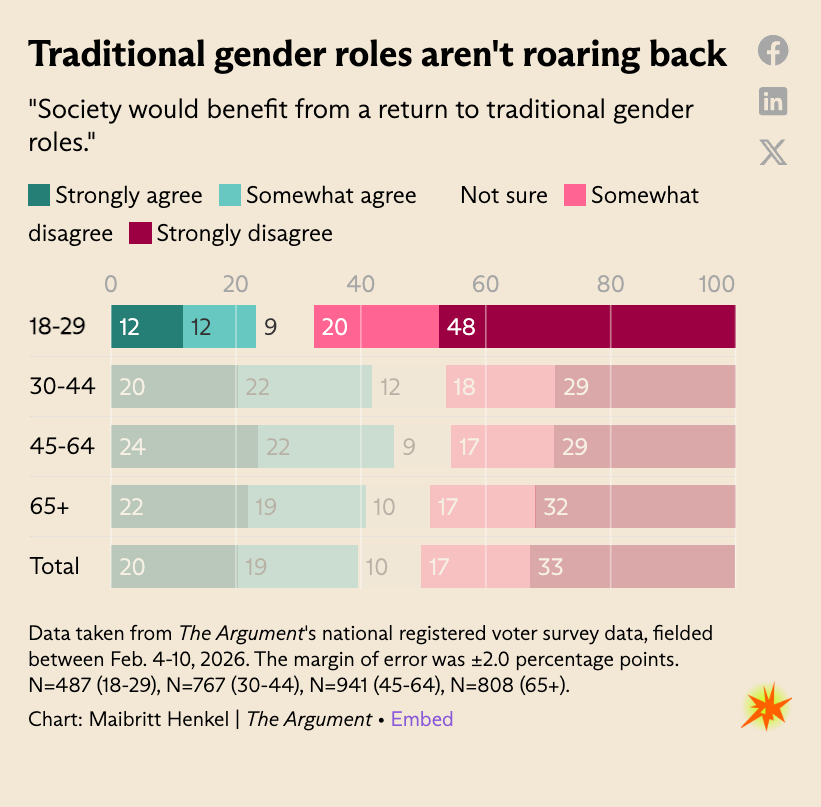
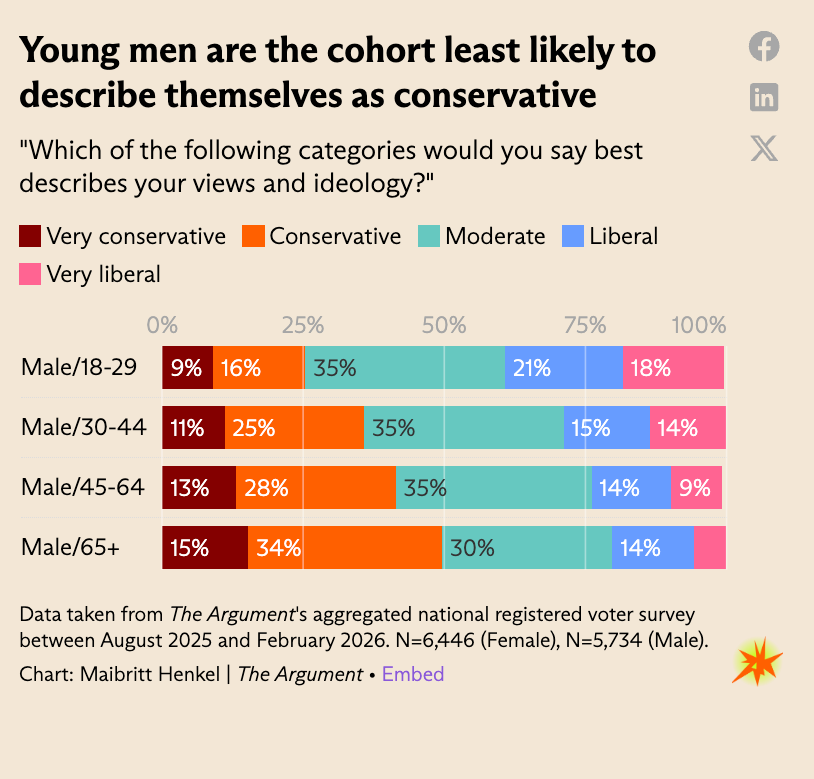
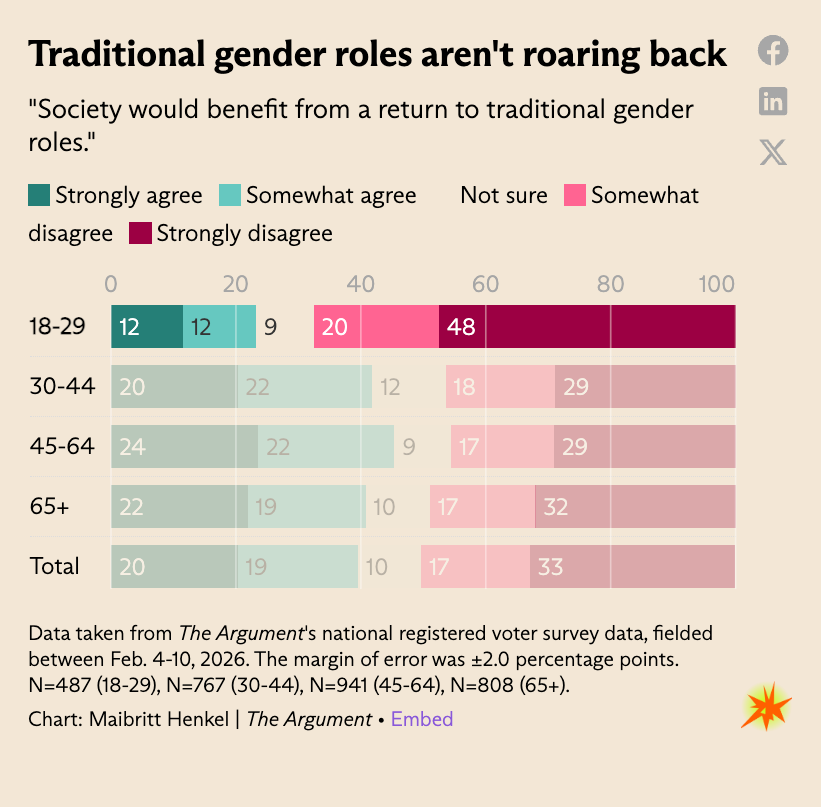
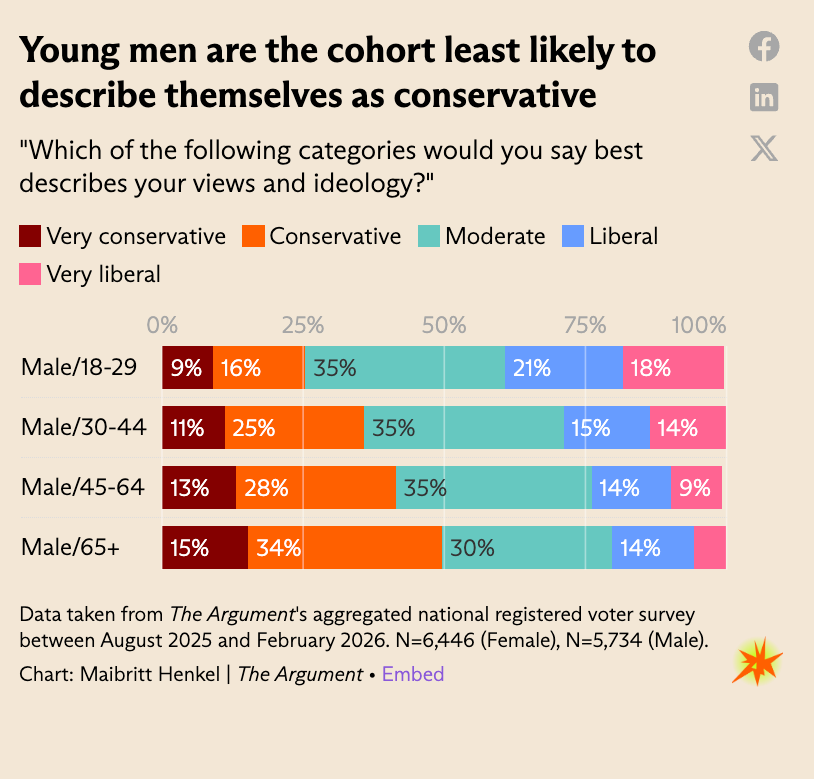
That young men are sexist and hate women and are increasingly conservative has become one of those stylized facts of public debate.
But is it even true?
Maibritt Henkel looked into the question for @TheArgumentMag, using our original polling:
https://t.co/iZJ0wG5noa
Very interesting.
Economists and AI experts have very similar forecasts on what AI will be able to do in 20 years.
But the AI experts think it will have a much bigger effect on the economy than the economists do.
Why? Because economists study this stuff 🤷♂️
Many of us, liberal Europeans, spent decades pushing back against the European extreme left's cartoon version of America ( it's all oil/ imperialism/getting rich at the expense of others) and then one dumb administration walks in and performs the caricature to perfection.
I have been saying this since November 2023: Israel's obsession with military/technological superiority means tactical excellence but strategic drift
@ronenbergman on PBS:
"After two and a half years, nothing is done. Nothing has been brought to a close. So Hamas still controls Gaza.
Hezbollah is still the most important military and political power in Lebanon... Netanyahu thought that at least he would be able to shut down, to close, one of the fronts. So he also supported opening another front with Hezbollah, and Hezbollah fired back.
And the Israelis suddenly got a really strong reminder that Hezbollah is still there. Hamas in Gaza, Hezbollah in Lebanon, the clerical regime in Tehran. They killed the leader, but they have another Ayatollah, with a younger group around him. So nothing is done. Nothing is closed. Nothing is finished."
Die Energiewende wird leichter, als viele denken.
Das liegt an einem weitverbreiteten Missverständnis, das Skeptiker ausnutzen, um Angst zu schüren.
Denn: Nein, wir müssen das fossile System nicht 1:1 ersetzen. Wir brauchen nicht alle Primärenergie von heute.
„Primärenergie“ ist die Energie, die den natürlichen Quellen entnommen wird. Ein Liter Heizöl enthält 10 Kilowattstunden (kWh), ein Kilogramm Steinkohle 8 kWh usw.
Zurzeit verbraucht die Menschheit global 180.000 TWh Primärenergie. Erneuerbare stellen davon deutlich weniger als zehn Prozent. Um die fünf Prozent.
Das ist ein Fakt, aber komplett irreführend.
Denn Primärenergie ist ein bedeutungsloses Konzept in einer elektrifizierten Welt. Es sagt uns, wie viel Energie in Energiequellen steckt, bevor wir sie umwandeln. Aber nicht diese Energie ist für uns wichtig, sondern die erzeugte Energie.
Wir müssen alle Energiequellen umwandeln, damit sie nützlich werden. Schließlich kippt niemand ein Fass Öl (159 Liter) in seinem Wohnzimmer aus und erwartet, dass es wärmer wird.
Und bei der Umwandlung sind elektrische Systeme deutlich effizienter als fossile. Jede kWh Energie, die wir in ein elektrisches System stecken, kommt mit höherer Wahrscheinlichkeit dort an, wo wir es verbrauchen wollen: am Rad, im Ofen, in der Wärmepumpe.
Der Motor eines E-Autos ist 2-4 mal effizienter als ein Verbrenner, weil er weniger Abwärme erzeugt. Eine Wärmepumpe kann aus 1 kWh Strom bis zu 4 kWh Wärme erzeugen, da sie mit der Umgebungstemperatur arbeitet.
Ein Gasboiler wiederum verheizt das Gas und das war’s. Verbrenner-Autos sind eigentlich Heizungen auf Rädern. (AKWs sind gigantische Wasserkocher.)
Wer also mit Grafiken vom Primärenergiebedarf herumwedelt und die Energiewende damit kritisieren will, sitzt einem Trugschluss auf. Es ist, als hätten sich die Leute in den 1920ern vor die ersten Autos gestellt und gefragt: „Und? Wie viel Hafer frisst das Ding jeden Tag?“
In Deutschland schmeißen wir wegen der Umwandlungsverluste jedes Jahr mehr als 30 Prozent unserer Primärenergie weg. Weltweit waren es vor der großen Elektrifizierung mehr als 50 Prozent.
Mal eine Frage: Gehst du in den Supermarkt, öffnest die Packung mit zehn Eiern, siehst darin drei kaputte Eier und zahlst zufrieden?
Du bist ja nicht blöd. Wir als Gesellschaft sind es schon. Wir haben 30 Prozent Verschwendung in unserem System eingebaut und hielten das so lange für normal, wie es keine Alternative gab.
Aber jetzt gibt es eine.
Wer mit Primärenergie-Charts herumwedelt oder Technologieoffenheit in Deutschland fordert, sagt eigentlich: „Lasst uns weiter verschwenden!“
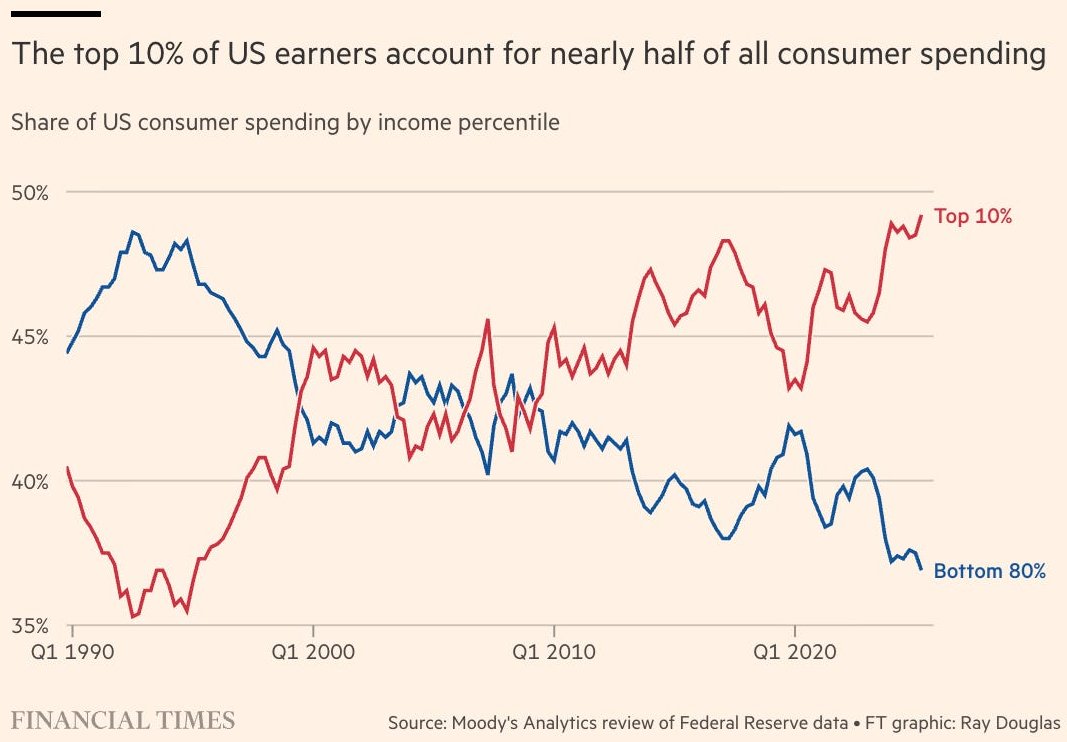
This is 100% completely unsustainable as a society.
Nearly 50% of all consumer spending now comes from the top 10% of earners.
The bottom 80%?
Their share keeps falling.
This is why the economy can look strong in the data while millions of people feel like they're falling behind.
I know that most of these have names with Turkic etymologies, and I don't want to minimize the contribution of Central Asian cuisine Ottoman culinary traditions, or things innovated during the Ottoman Empire, but it's quite common for prestigious food to pick up a name from the prestigious language.
English famously follows this pattern - a pig, what the Anglo-Saxon herdsman would take care of, is an Anglo-Saxon word, while pork, what the Anglo-Norman lord would eat, is an Anglo-Norman word. That does not mean the Normans invented eating pork.
The etymology of the name of a food item does not actually determine the entirety of its history.
How to read this chart: the typical Belgian earns as much as the typical Californian but works about 24% less. Pretty smart move to calculate such data for the “bottom 95%” only. Worth exploring further.
Source: https://t.co/Mfv6fc8DGw