Your brain and immune system are not separate. They speak the same language and they constantly regulate each other.
neurons and immune cells form a single, integrated network sense stress, injury, infection, and social cues in real time.
🔵 Neurons don’t just transmit thoughts
They actively shape immune behavior using neurotransmitters, neuropeptides, and electrical signals that influence immune cell migration, activation, and suppression.
🟣 Immune cells talk back to the brain
Cytokines, chemokines, and immune-derived signals directly alter synaptic function, plasticity, mood, motivation, pain perception, and cognition.
🟡 Stress rewires immunity
Psychological and social stress activate neural circuits that mobilize monocytes, neutrophils, and T cells, shifting inflammation throughout the body and brain.
🟢 Microglia are the translators
They integrate neural input with immune signals, shaping learning, memory, behavior, and vulnerability to neurodegeneration.
🔴 This cross-talk spans the entire body
From meninges to gut to vasculature, neural signals coordinate immune defense across space and time, not just during disease, but during normal physiology.
What this means:
• Mental stress can become biological inflammation
• Immune activation can alter behavior and cognition
• Brain health depends on immune regulation
• Disease emerges when communication breaks down
The nervous system and immune system are not rivals.
They are co-authors of your physiology.
Ref:
Leuning A, Gianeselli M, Russo SJ, Swirski FK. Connection and communication between the nervous and immune systems.
Nature Reviews Immunology (2025)
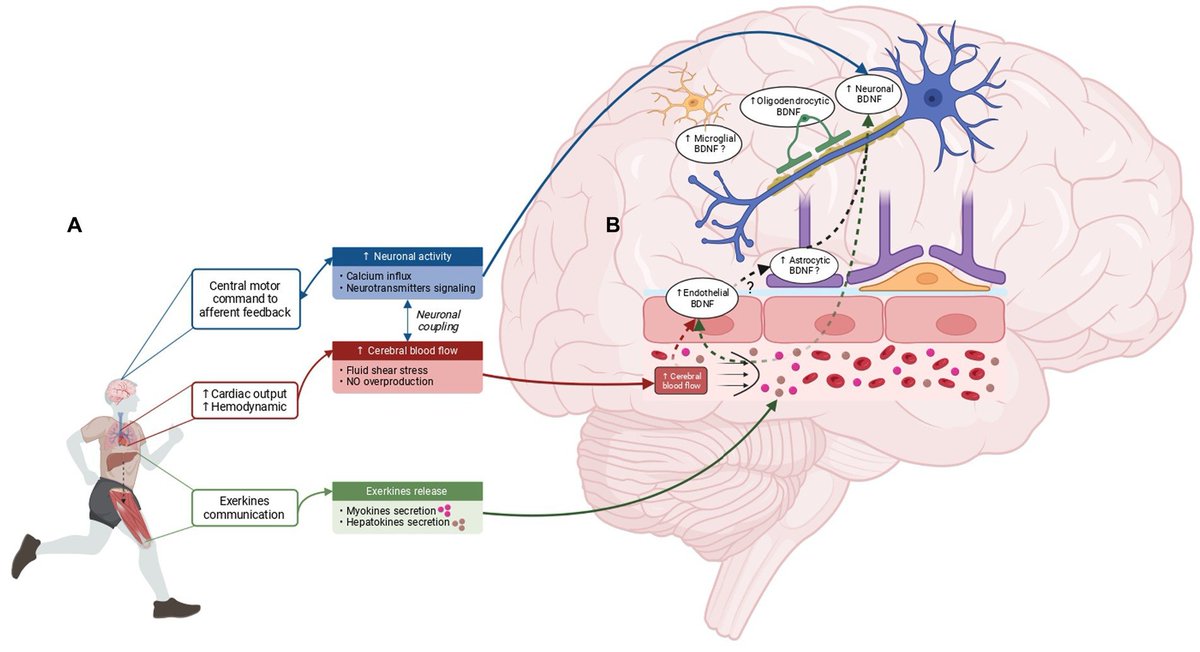
Exercise is a brain drug. Here’s the biology behind it
New review in Frontiers in Molecular Neuroscience breaks down how exercise boosts brain BDNF, the key molecule for learning and memory.
What matters most:
1. Exercise reliably increases brain BDNF, a driver of neuroplasticity and neurogenesis
2. BDNF supports memory, learning, mood, and stress resilience
3. Blocking BDNF signaling removes many cognitive benefits of exercise
How exercise raises BDNF:
4) Neuronal activity increases calcium signaling and gene expression
5) Increased cerebral blood flow activates endothelial BDNF production
6) Muscle and liver release exerkines like lactate, irisin, IGF-1, and ketones that signal the brain
7) Brain BDNF comes from neurons, blood vessels, and peripheral organs working together
Exercise isn’t just movement, it’s a whole body signal that rewires the brain from the inside out.
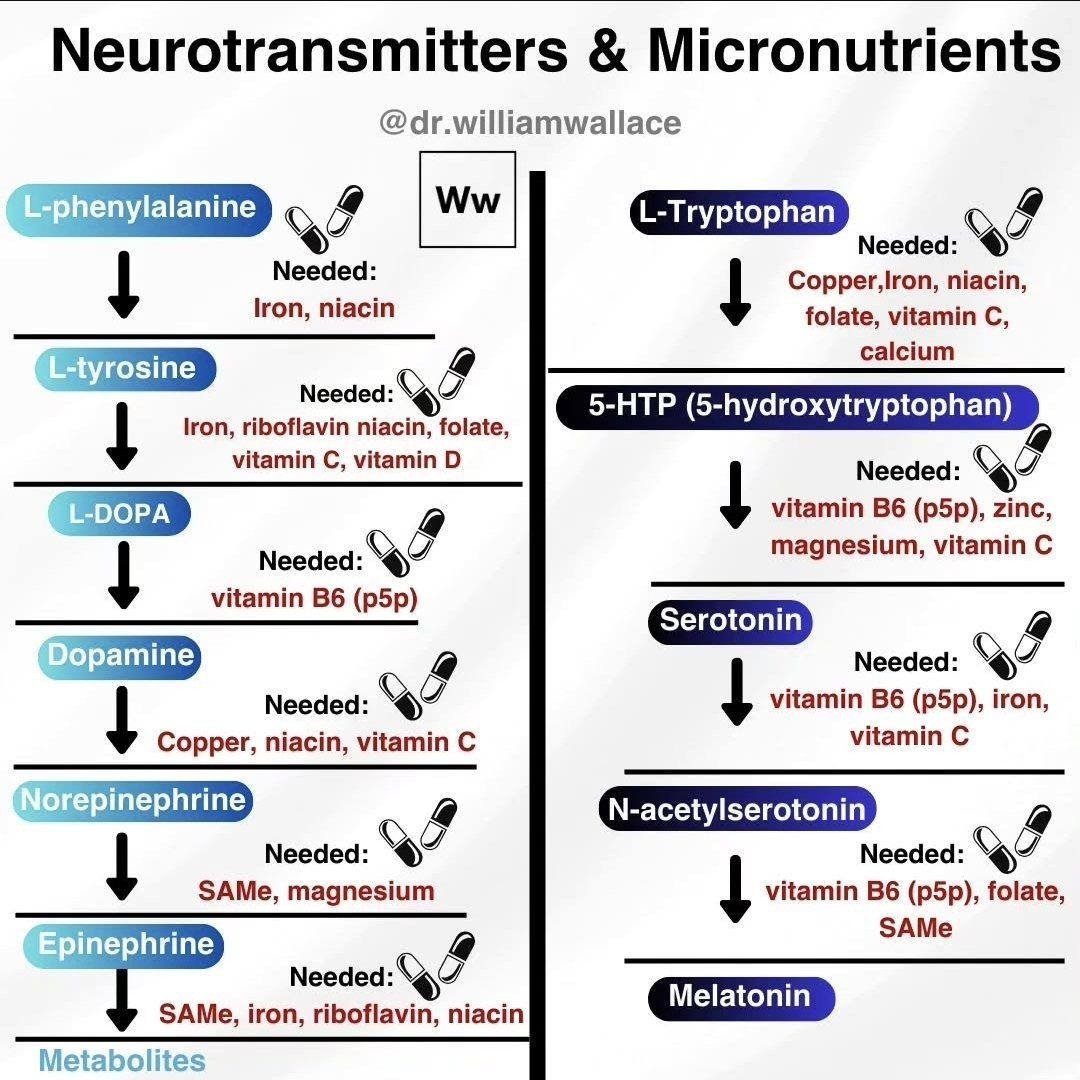
Nutritional Neuroscience: Micronutrients in Neurotransmitter Synthesis and Metabolism- A Simple Illustration.
Understanding the complex interplay between vitamins, minerals, and neurotransmitter pathways highlights the foundational role of nutrition in cognitive health and overall well-being.