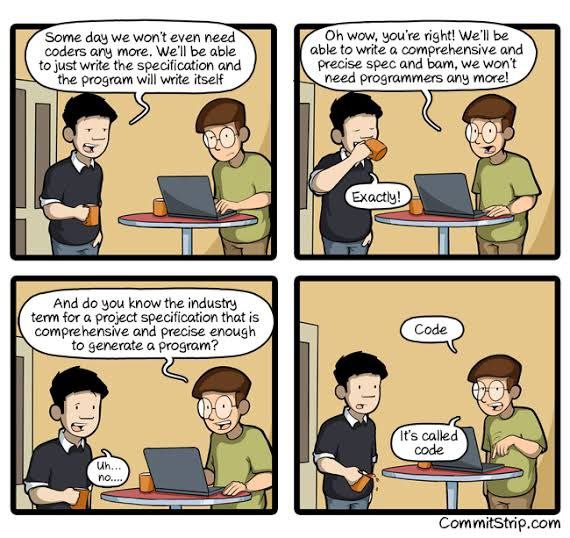
Programar é descrever um objetivo mensurável de forma precisa o suficiente ao ponto de se tornar quase pedante.
Isso é feito, ou descrevendo o resultado e o programa acha o caminho, ou você descreve o caminho pra chegar no resultado.
Mas, o ato de PROGRAMAR é a primeira frase.
We've spent far too much time writing code of questionable quality—overly complicated and endlessly justified for one reason or another. Technical debt kept being pushed forward with the classic excuse: "We'll refactor it later."
Now AI agents can look at that tangled mess and reorganize it in minutes. And yes, that's genuinely impressive. The productivity gains are enormous.
But perhaps there's also a contrast effect at play.
If you're starting from chaotic code, a tool that organizes it almost instantly feels like a miracle. On the other hand, if you've always made an effort to write simple, well-structured, and efficient code, the benefits are still there—but the "miracle" doesn't seem nearly as dramatic.
What concerns me most isn't that AI makes mistakes. That will improve over time. What concerns me is the shift in incentives: some people already seem less worried about code quality because they assume there will always be an AI agent to fix it later.
In my view, AI's greatest potential is not to give us permission to write worse code. It's to help us write even better code by eliminating mechanical work, allowing us to focus more on architecture, design, and the decisions that truly matter.
If AI's primary role has become rescuing chaotic projects, then perhaps the miracle isn't AI itself. Perhaps it's simply masking how much we've normalized poor code over the years.
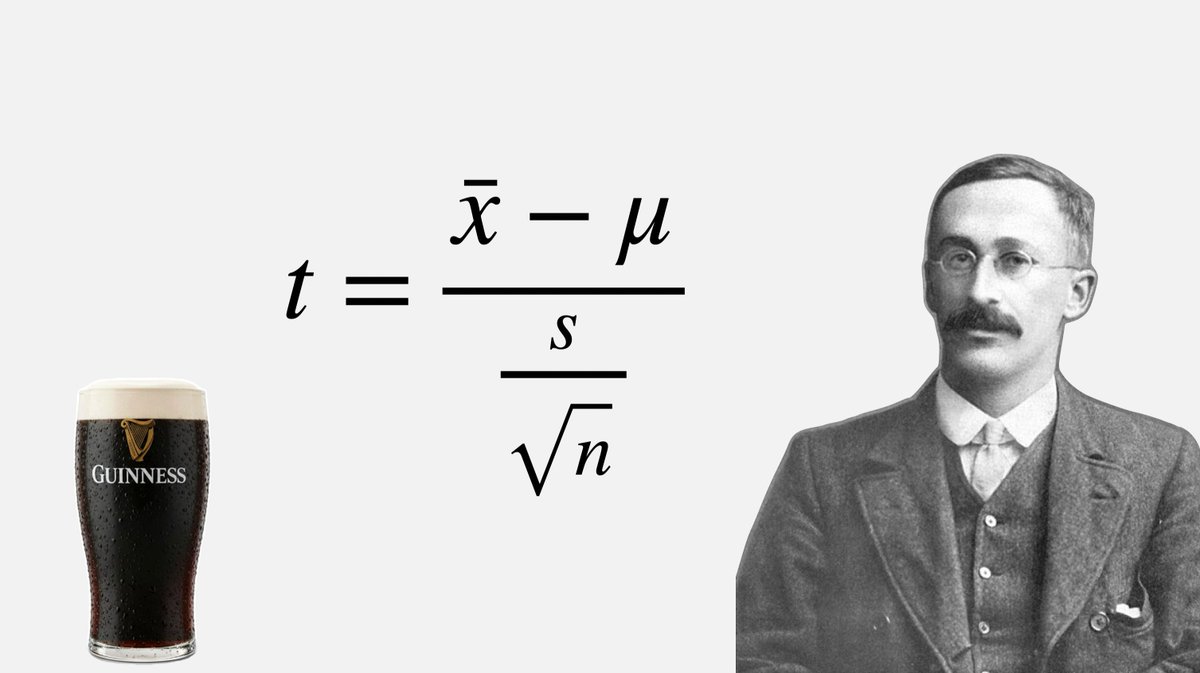
On this day 150 years ago William Sealy Gosset was born. He spent his whole career as a brewer at Guinness, working on a problem the textbooks ignored: how to draw conclusions from tiny samples, like four plots of barley or a handful of hops. The statistics of the day assumed large samples so Gosset invented the statistics of small ones.
Guinness barred its employees from publishing after one of them leaked trade secrets, and did not want competitors knowing it used science to brew beer so when Gosset published his method in 1908 he signed it with a pseudonym: Student.
Every clinical trial, lab experiment and A/B test that runs a t-test today is using the work of Student. The most famous name in statistics is a fake one.
@CamposLVictor@AkitaOnRails 1. For the whole branch, I assume, right?
2. Unfortunately for me my baseline for this is Vim. Really hard to beat it on speed.
3. Again, for the whole branch, GitHub-like, right? Sets of lines and about the whole changeset. Right?
@elise_garcia@ceticismo Meu “primeiro mouse” era um trackball. Branco. Com cantos arredondados, antes da Apple criar os cantos arredondados. Era um 486.
Daí quando usei o trackpad do meu primeiro MacBook foi igual a cena do crítico de restaurante comendo ratatouille, no desenho homônimo da Pixar
@ceticismo@elise_garcia Eu trabalho com um maluco que a primeira coisa que fez em um MacBookPro foi peticionar o HD e instalar um Debian.
A segunda coisa foi ir no InfoBarra comprar um dongle wifi pq não tinha driver na época…