Discovery of Guanfacine as a Novel TAAR1 Agonist: A Combination Strategy through Molecular Modeling Studies and Biological Assays https://t.co/cbjGY3yOPh #mdpipharmaceuticals via @MDPIOpenAccess
Nice review on GPCR intracellualr allosteric modulator sites. Brian Krumme's NTSR1 structure (PDB 8FNO) was used but his paper was not cited (https://t.co/BpI0jPrAxr).
Pharmacologically targeting intracellular allosteric sites of GPCRs for drug discovery https://t.co/UmbWsv5UPA
@zenbrainest "Interestingly, the chemokine ligands CXCL11 and CXCL12 are not able to displace the binding of [3H]VUF15485 to ACKR3." The small ligand is a PAM agonist.
"N-Pyrrolidino protonitazene, ethyleneoxynitazene, N-desethyl protonitazene and N-desethyl etonitazene are potent Mu-opioid receptor (MOR) agonists."
Could the dihydrofuran analog be the odd one out? @Marthevdp
Cool, structure based ligand design for GPR132, an oGPCR for endogenous lipids, once regarded as a proton-sensing GPCR.
Functional screening and rational design of compounds targeting GPR132 to treat diabetes https://t.co/efeVP8sUzS
Chloride ion is an allosteric modulator again, now at fish taste receptors.
Allosteric modulation of the fish taste receptor type 1 (T1R) family by the extracellular chloride ion https://t.co/pXoO9dUVV5
Sucralose (aka Splendra) at GPR52, pEC50 is 0.23 mM and Emax of 3.43 fold change at 4 mM.
The non-nutritive sweetener sucralose increases β-arrestin signaling at the constitutively active orphan G protein-coupled receptor GPR52 https://t.co/9jSvwVnf3j
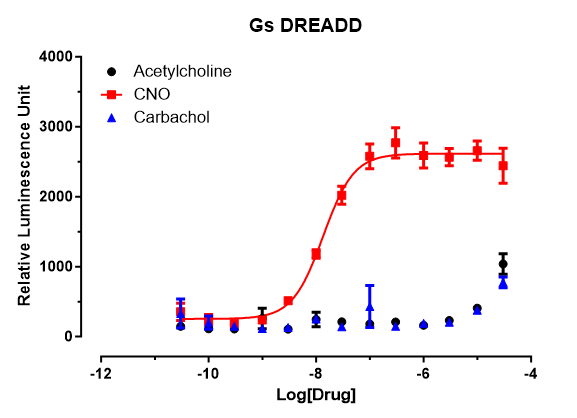
An incredible study and resource with many important findings: including reclassification of group I mGluRs and some DREADDs, to name a few! Many congratulations to Kirill, Ikuo, and team.
@weinberz@LoydaMorales1 At room temperature, proton potency is about pH 7.5 in Gs GloSensor cAMP assays in HEK293 cells. GPR65 is 'constitutively' activated under neutral condition, assuming medium pH is about 7.4. https://t.co/tUrrv1OcN1