i would rather be an optimist and work hard than a pessimist posting about why things won't work.
it's much more difficult and the most likely path is failure, but society fails if people don't try.
no amount of "it will never work" essays will drive society forward.
Starship soared on the second flight of the next generation, deploying advanced Starlink satellites for the first time and providing priceless data as it travelled through air, space, and sea → https://t.co/Rp7VwBzpWx
they did it. the mad lads actually did it.
i never talked about my time at DOGE last year because it was so controversial and contentious (remember that?)
early last year, @jgebbia recruited a handful of his most trusted early Airbnb engineers to embed at the Office of Personnel Management to solve the "retirement paper" problem.
processing a federal retirement took months, and in the extreme retirees could wait up to 6 months for their full pension to arrive. what was the holdup? paper. remember hearing Elon talk about "the mine" in Pennsylvania? we got to visit it. in deep underground caverns blasted out of limestone, there were literally acres of file cabinets, as far as the eye could see, storing files detailing federal employees' employment and paystub history. a simple "case" might be only a quarter or half inch thick, but really complex cases filled up whole filing cabinets. one famously took up a whole pallet.
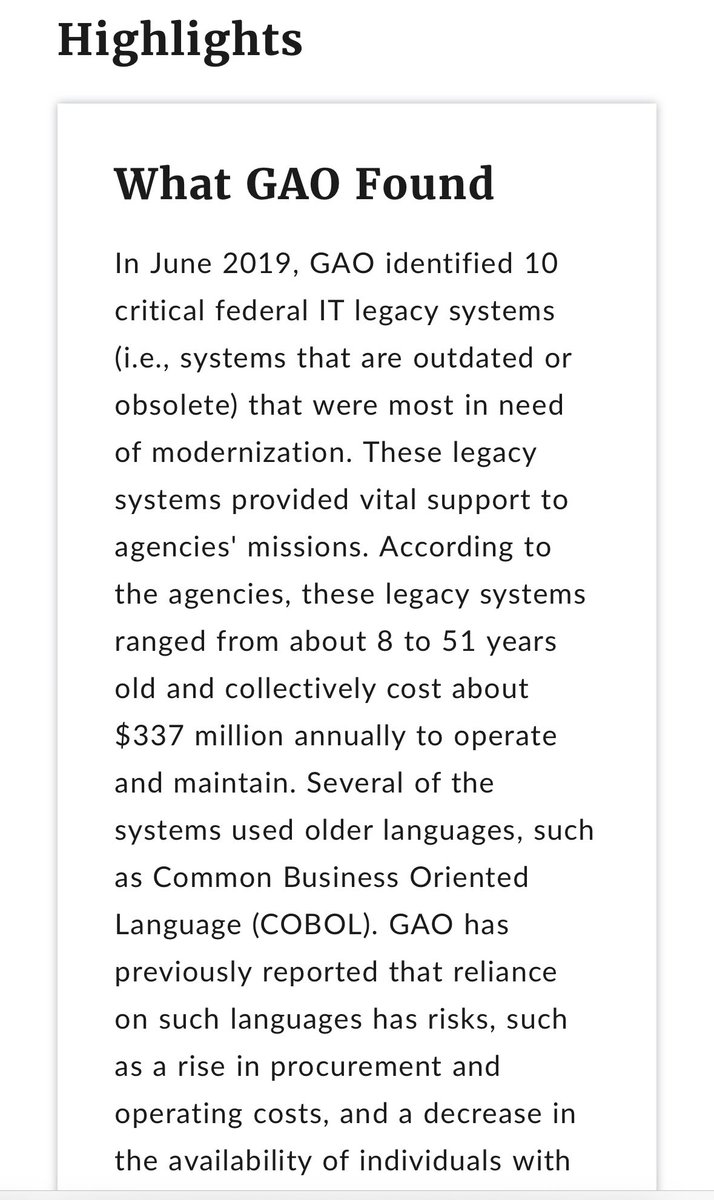
each case was hand processed by case workers in cubicles deep underground. they checked calculations, made sure forms were filled out properly (many weren't), and handled a long tail of complex issues. we'd watch as they keyed data into a black and white terminal, transmitting to the COBOL mainframe built many decades ago.
since cases were processed by hand, there were multiple rounds of human review, and additional rounds for complex cases. case files were walked around between one worker's outbox and another's inbox. sometimes it would sit in one place for days, waiting to be picked up.
to OPM's credit, they'd done multiple rounds of "digital transformation" spanning decades, so some systems were newer than others. there was a big effort in the mid-90s. but the systems were disparate, and it was a total maze getting them to talk to each other. there was a big effort to build a web app where employees applying for retirement could digitally fill out the necessary forms — just to be mailed to the mine and stuffed into the paper file. and few federal agencies were even using it.
when we arrived, OPM was midway through a fresh attempt at digital transformation, delivered by a software contractor.
the blackpill was seeing the terrible quality of the software and interacting with the contractors. coming from silicon valley, i couldn't believe how low the talent and quality bar was for selling software to the government. it's clear, as the OG USDS people explained to me a decade ago, the primary skill these vendors have is securing government contracts. it's a huge moat. delivery of quality product be damned.
we fired the vendor and took over the project. they'd been working on it for more than a year, and there was another year before they were going to deliver it. at first we tried to bend it to our will, to actually connect all the various data sources and get to a decent UX for case workers in the mine to use, but we soon realized we were going to have to rebuild the whole stack from scratch.
it was around this time I had to go back to new york — i had a new job waiting for me, a four month old, and a wife whose patience was running out. but i got to watch from afar as the team cranked day and night, hitting early milestones. and now they've fully done it.
huge congrats to Joe and the team. @yatshitcray was the hero in the trenches. indefatigable, unrelentingly optimistic, and determined to see this project through. when i recruited him for "ok i can do two, maybe three months", he stuck it out over a year making this project a reality.
while the retirement project was under the DOGE banner, it operated different from what you heard from the breathless, negative media — we came in with the attitude of partnering with career OPM employees. we were team members determined to bring our software talents to bear on the problem they've been trying to fix for years, which they hadn't had the resources to solve before. they were wary at first, not sure about us, but they quickly saw how authentic and determined we were to work together toward the same goal. props to Joe for developing those relationships, setting the example of how to collaborate together.
what's the end result? lifelong federal employees, veterans, postal carriers get their full pension installments almost immediately. days instead of months. peace of mind for these people to devoted their careers to serving our country. massively streamlined operations inside of OPM. and NO MORE PAPER 🫡🇺🇸
Slurm vs Ray is the wrong axis now since both run on k8s. The more interesting problem is a layer down: imaging, provisioning etc. Abstract drivers across compute, network, storage, power, cooling: it should be possible to wipe & rebuild any server immediately with one API call.
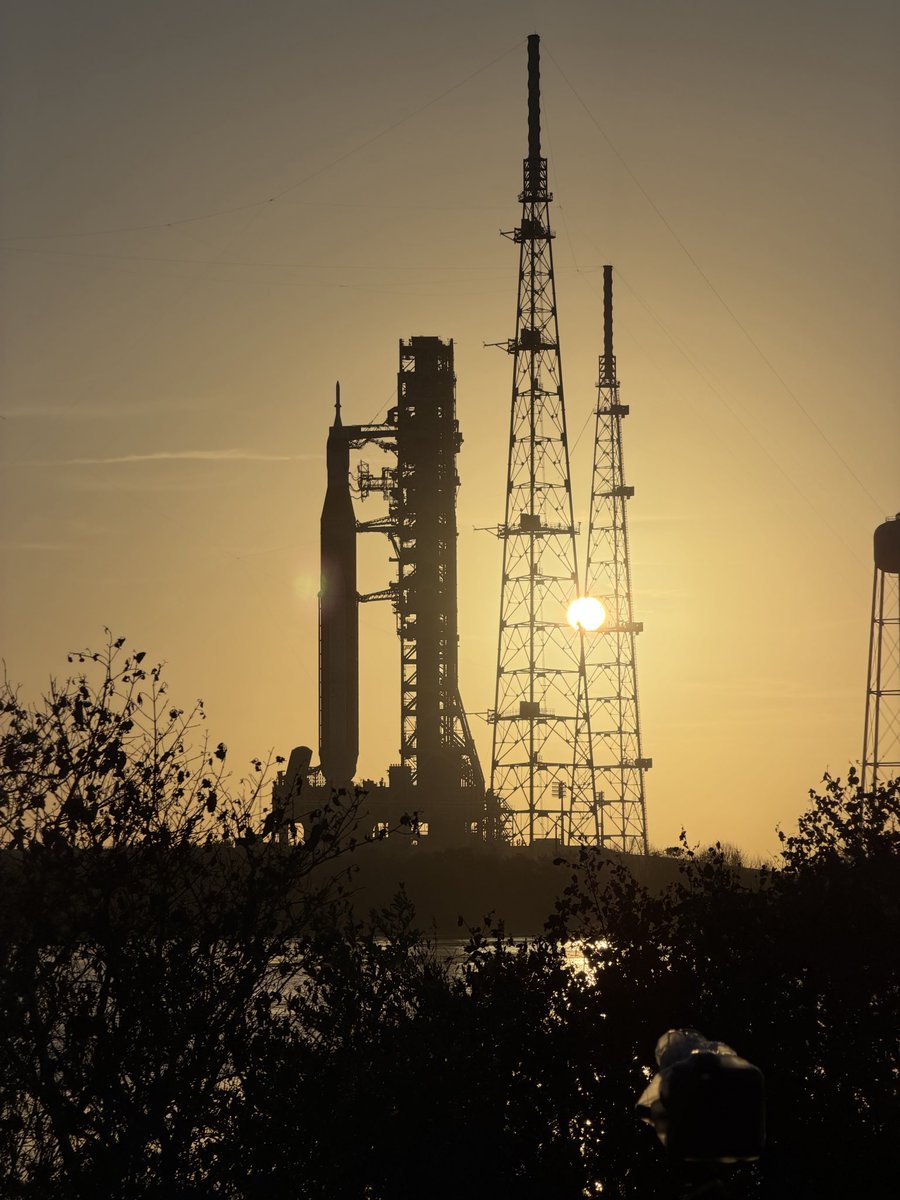
Tomorrow, we launch.
At sunset tonight, Artemis II waits on the pad, ready to carry astronauts potentially farther than any humans have traveled in more than half a century.
The next era of exploration begins.
NASA does not have a top-line problem. We receive roughly $25 billion in annual appropriations, including more than a $10 billion plus-up from President Trump’s One Big Beautiful Bill. If that is not enough to run a lunar exploration program and do all the other things across science and discovery, then what is the right number?
We don’t need to blame budgets or continuity of decision-making as the common excuse, as if a billion dollars is somehow not a billion dollars and troubled programs should perpetually stay troubled programs. NASA, like the federal government, cannot spend our way out of every problem, nor can we perpetuate bad decisions.
That means not getting spread thin across too many imposed endeavors or jumping straight to the “dream state,” which is how everything becomes over budget and behind schedule.
Instead, we concentrate on the needle-moving objectives, the reason NASA exists in the first place. We execute with urgency, in an iterative and safe way, and empower the workforce and our partners to get the job done.
That is how we changed the world on July 20, 1969, and it is how we will do it again. Expect more from NASA and start believing again.
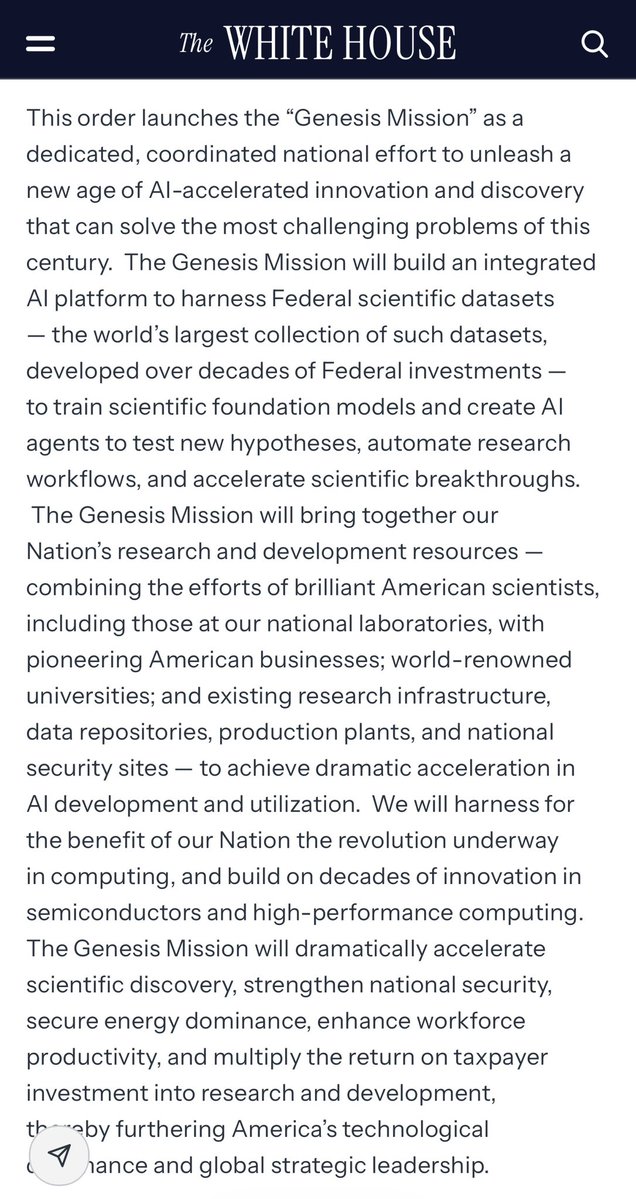
Very excited to see this AI for Science Executive Order—the Genesis Mission. The Administration has appropriately ambitious goals here; we may be on the verge of world-changing breakthroughs. Congratulations to all involved!
There is a pattern across all agencies where IT “modernization” contracts do not pay for outcomes/performance; instead, they pay for time. Therefore, the incentive is for contractors to “never finish,” resulting in incredible waste.
As an example, IRS modernization started in 1990 to be delivered in 1996. Today, the work is not complete and the contractors say it’s still 5 years away. 29 years behind schedule and ~$15b over budget. Everyone loses, except the government contractors.
This must change. This week, the IRS froze ~$1.5B in modernization contracts, none of which have any effect on tax filings. All of those contracts will then either be cancelled or the contract terms will be changed to pay-for-performance.
This is the most exciting time for NASA since Apollo, and Jared is the best choice to lead the way:
"We will never again lose our ability to journey to the stars or settle for second place" 🇺🇸🚀
I am honored to receive President Trump’s @realDonaldTrump nomination to serve as the next Administrator of NASA. Having been fortunate to see our amazing planet from space, I am passionate about America leading the most incredible adventure in human history.
On my last mission to space, my crew and I traveled farther from Earth than anyone in over half a century. I can confidently say this second space age has only just begun. Space holds unparalleled potential for breakthroughs in manufacturing, biotechnology, mining, and perhaps even pathways to new sources of energy. There will inevitably be a thriving space economy—one that will create opportunities for countless people to live and work in space. At NASA, we will passionately pursue these possibilities and usher in an era where humanity becomes a true spacefaring civilization.
I was born after the Moon landings; my children were born after the final space shuttle launch. With the support of President Trump, I can promise you this: We will never again lose our ability to journey to the stars and never settle for second place. We will inspire children, yours and mine, to look up and dream of what is possible. Americans will walk on the Moon and Mars and in doing so, we will make life better here on Earth.
It is the honor of a lifetime to serve in this role and to work alongside NASA’s extraordinary team to realize our shared dreams of exploration and discovery.
Grateful to serve,
Jared
In FY2023, the U.S. Government spent $6.16. trillion while only bringing in $4.47 trillion.
The last budget surplus was in 2001.
This trend must be reversed, and we must balance the budget.
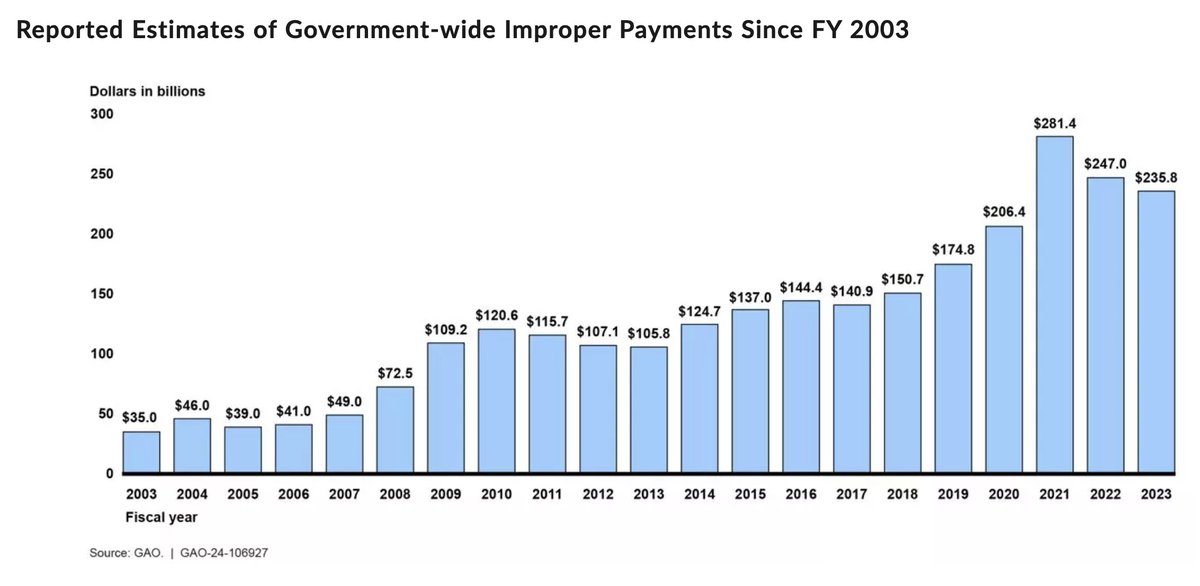
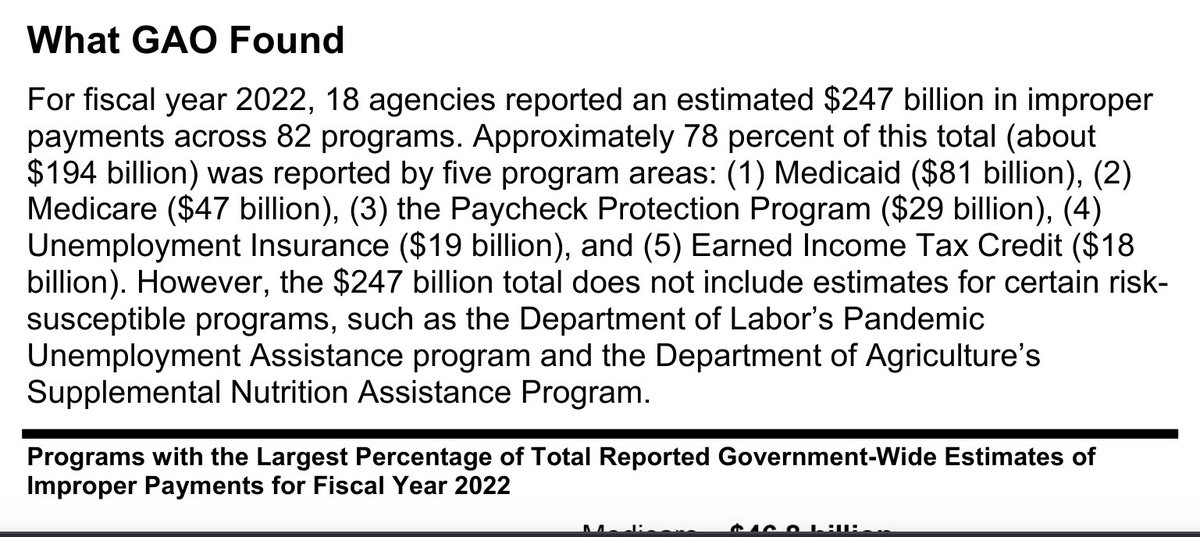
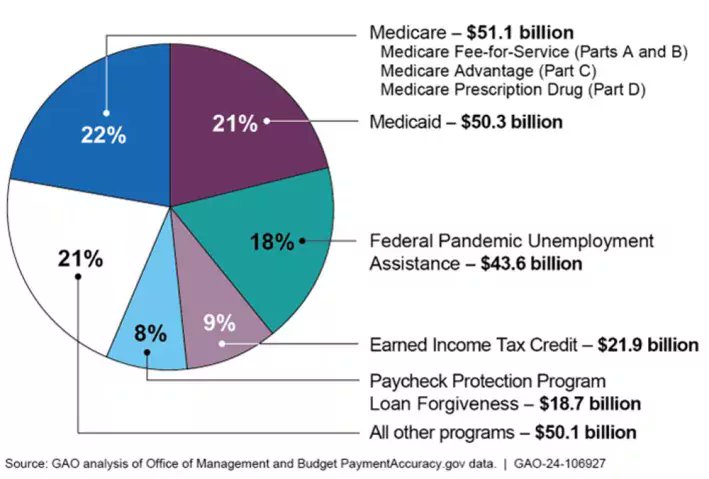
In 2022, the Federal Government Accountability Office found $247,000,000,000 in improper payments made across 82 programs, including $81B from Medicaid & $47B from Medicare.
That's $250B. In one year. That they know about. And publicly reported.
$200B+ is lost annually in improper payments by the US federal gov—100X of SpaceX annual budget!
When I was at Palantir, we cleared the backlog of the UK’s NHS by deploying scalable tech that flagged obvious errors, like ultrasounds scheduled for pregnant patients in their 11th month. How is it possible there’s a US federal agency (GAO) that reports this massive waste every year, yet no one’s eliminated it?
Most of US gov still runs on Powerpoint and Excel. An engineering-first gov efficiency commission by @elonmusk could save trillions annually. Exciting possibilities ahead!