Bob Ryan has been a steady force for the University of Dubuque men’s golf team The Tipton, Iowa native has built his game on consistency and composure, posting multiple rounds under par and proving to be a reliable contributor in the Spartan lineup.
These kids weren’t born this way. We did this to them. We handed them devices during the darkest days of the pandemic and told them it was “education.” We normalized constant connectivity as “engagement.” And now we are shocked that they cannot sit through a 50 to 90-minute class without phantom vibrations pulsing in their pockets.
I am begging you, please, for the love of God and these kids, let us return to what actually worked.
Give them paper textbooks again. Real books with spines that crack when you open them, pages that smell like 1997, margins where they can scribble their thoughts and doodles in pencil.
Let them underline, circle, argue in the white space. Let them feel the weight of knowledge in their hands instead of the weightless scroll of a screen. Hand them pencils, actual wooden pencils, and watch their handwriting slow down long enough for their brains to catch up. The research is clear, but more than that, my daily experience is undeniable… when the screens go away, something in them wakes up. They remember more. They argue more passionately. They sit longer with hard ideas. They endure.
And for the love of everything holy in education, institute a complete, bell-to-bell ban on cell phones. Not “in your bag on silent.” Not “face down on the desk.” Not “only for emergencies.” Banned. Collected at the door, locked away until the final bell. Because every single time that tiny rectangle vibrates in a pocket, it rips another thread from the fragile fabric of their attention. We are not preparing them for the “real world” by letting them live in their pockets; we are training them to be terrible humans, distracted, shallow, unable to listen, unable to wait, unable to be present. They deserve better. They deserve to be here, fully, with us.
I am not anti-technology. I am pro-child. I am pro-future. And right now our students are being robbed of the ability to think deeply, to read deeply, to feel deeply. Their eyes are tired. Their spirits are restless. Their minds are starving for something real in a world that keeps feeding them pixels.
Please. Let us give them back the classroom they deserve. Let us give them paper, pencils, and the quiet dignity of undivided attention. Let us save them from the very devices we once thought would save them.
Because if we don’t act now, we won’t just lose their focus. We will lose them.
“…vocabulary-rich children arrive at school with a hidden cognitive advantage ... They have heard “ridiculous” and “extraordinary” and “investigation” at the dinner table, in bedtime stories, in the overheard conversations of articulate adults. Their minds have been silently sketching the spellings of hundreds of words they have never read..
“Children from language-poor environments arrive without those skeletons…
“It is a gap in prediction. And it compounds: the child who reads more easily reads more, hears more words in the context of text, forms more skeletons, and reads still more easily. The child who struggles reads less, encounters fewer new words, forms fewer skeletons, and falls further behind.”
Jonathan Haidt dropped a pretty blunt warning about giving young kids iPads or phones.
He says we’ve all discovered how incredibly effective they are as pacifiers — they work almost instantly. But that’s exactly the problem.
40% of American two-year-olds already have their own iPad. Once a child gets used to constant stimulation, they basically never learn how to be bored. The moment they have even 30 seconds of downtime, they start screaming for the device.
Haidt’s advice is straightforward: If you haven’t started, don’t. If you already have, take it away. It might take 3–4 weeks for the brain to readjust, but it’s worth it.
He’s even hearing stories of preschoolers crying at drop-off — not because mom is leaving, but because the iPad is staying in the car.
It’s a sobering reminder of how quickly these devices rewire young brains and create real addiction patterns.
Have you noticed this with kids in your life, or are you trying to hold the line on screens with little ones?
When your mind is telling you “I’m too tired. I can’t do it,” it isn’t always telling the truth. Sometimes you have to talk back and push through the pain in order to perform up to your full potential.
“It’s easy for people to be critics or cheerleaders. It’s harder to get them to be coaches. A critic sees your weaknesses and attacks your worst self. A cheerleader sees your strengths and celebrates your best self. A coach sees your potential and helps you become a better version of yourself.” Adam Grant
I was reading this in Grant’s book, “Hidden Potential” (I highly recommend it) and thought about the people I can contact and get the coaching advice from. They have a mix of both the “critic” and the “cheerleader” and often know which one you need in the moment, to help you grow.
When you connect with people who want you to become better a version of yourself, it is not always comfortable, but often is beneficial.
3 More Things I Learned This Week:
1.Don’t hesitate to change a path toward a goal, but be thoughtful of when you change the goal. There are often different paths to the same destination, and it is a matter of finding the direction that works best for you.
2.Sometimes when you are feeling your routine is off or your life is in disarray, find a book or TV show that you have watched several times and know that is good, to give you some comfort. Finding familiarity in chaos can sometimes be helpful for recalibration.
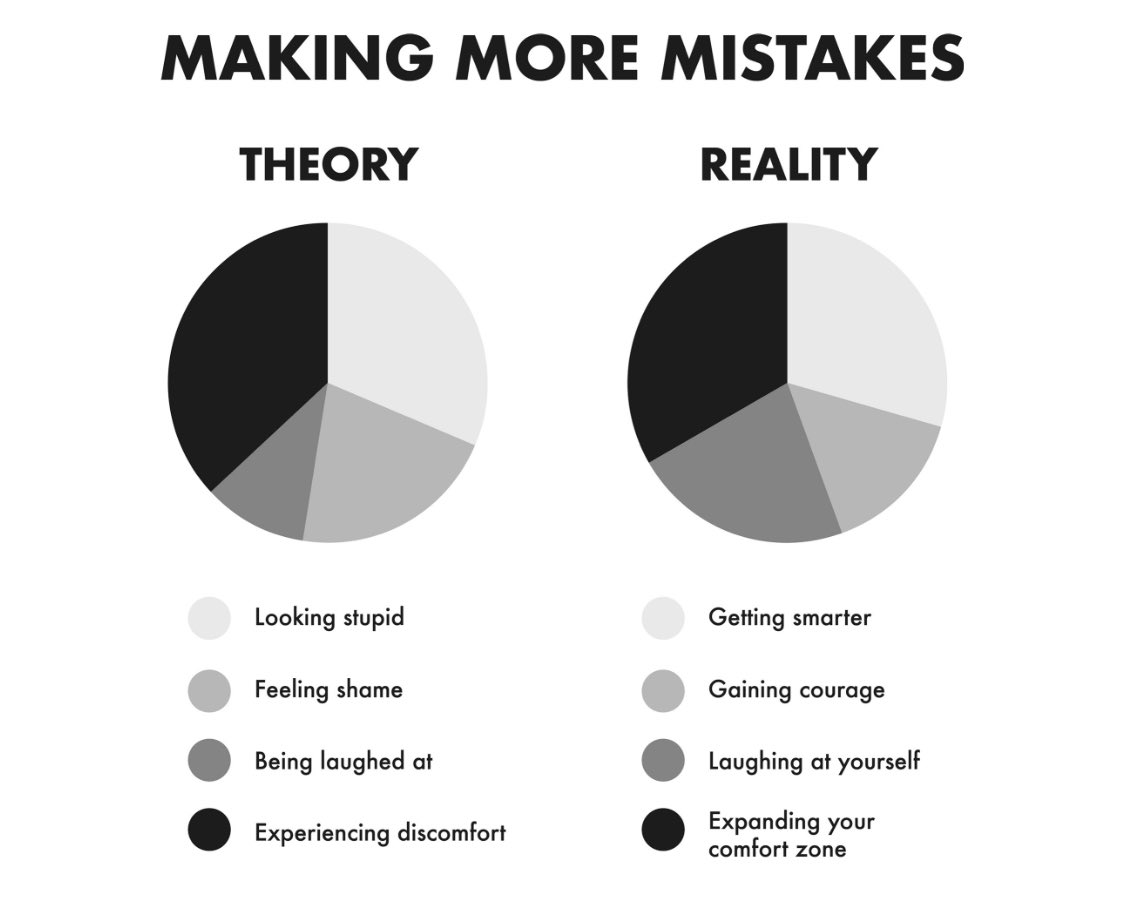
https://t.co/4TOwf0m8oI of my biggest takeaways from Grant’s book is that having a willingness to be embarrassed when learning something new, is often the first step to becoming better. I often share that a huge difference between kids and many adults is a willingness to push buttons to see what happens. Sometimes it will work, sometimes it won’t, but you will always learning something new.
What did you learn this week?
Writing letters by hand leaves clearer memory traces in the brain than typing them does—indicating deeper learning. 🖊️
Learn more about the research here: https://t.co/ZuRECvHlLV
A good strategy for building strong relationships:
Go first.
Be the first to apologize.
Be the first to reach out.
Be the first to take the high road.
Be the first to serve.
Be the first to show you care.
Be the first to forgive.
Happy #TeacherAppreciationWeek! Kids can show their appreciation for their teachers while practicing their literacy skills through writing their teachers thank-you notes! Every word shows how much teachers matter! #ThankATeacher
Assume that you are the reason for everything that happens to you:
the country where you choose to live, the food you choose to consume, the thoughts you choose to absorb, the people you choose to keep around.
Life is quite fair: you make choices, and they have consequences.