It is the deepest honor to have been joined by Michael Levin (@drmichaellevin), Victoria Klimaj, Zahra Sheikhbahaee (@zah_bah), Dalton Sakthivadivel (@DaltonSakthi), Adeel Razi (@adeelrazi), David Ha (@hardmaru), Nick Hay, Kevin Schmidt, Irina Rish (@irinarish), David Krakauer (@sfiscience), Melanie Mitchell (@MelMitchell1), Samuel Gershman (@gershbrain), and Joshua Tenenbaum in organizing this special issue of the Royal Society’s (@RSocPublishing) Philosophical Transactions A:
“World models, A(G)I, and the Hard problems of life-mind continuity: Toward a unified understanding of natural and artificial intelligence”
https://t.co/XMYB2SAofX
This collection was motivated by a question with far reaching implications, ranging from the fundamental nature(s) of mind to choices that may determine the future of our civilization/species: what kinds of world modeling capabilities are likely to be realized by which kinds of minds and what world might we be in with respect to increasingly advanced artificial intelligences?
Will the scaling and refinement of present approaches result in AI with human-like (and beyond) cognitive abilities, or do we need radically different paradigms that more closely follow the principles of natural intelligence? Learning “world models” to predict/compress information may be how biological learners so efficiently learn (to learn) to achieve goals and generalize that knowledge across a broad range of task environments. World models may also be useful for reverse-engineering forms of “System 2” cognition, or the self-reflexive, deliberate, multi-step reasoning associated with cognitive capabilities that may be unique to humans. Predictive models that reflect how the world may be causally modified by actions allow agents to adaptively control their behavior with flexibility and context-sensitivity. Spatiotemporally and causally coherent models of the physical world may not only be the key for creating AIs that we can rely on for real-world deployment, but may even be the (dynamic) core of conscious cognition.
The contributions to this special issue consider the varieties of world models worth modeling from diverse points of view:
Douglas Hofstadter explores whether sufficiently coherent self-referential world modeling could ground meaning, consciousness, and a genuine “I” in future AI systems.
David Krakauer (@sfiscience), Melanie Mitchell (@MelMitchell1), and John Krakauer (@blamlab) examine the principles of emergent intelligence from a complex systems perspective.
Alexander Ku (@alex_y_ku), Declan Campbell, Xuechunzi Bai (@baixuechunzi), Jiayi Geng (@JiayiiGeng), Ryan Liu (@theryanliu), Raja Marjieh (@RajaMarjieh), R. Thomas McCoy (@RTomMcCoy), Andrew Nam, Ilia Sucholutsky (@sucholutsky), Liyi Zhang (@LiyiZhang_Leo), Jian-Qiao Zhu (@JQ_Zhu), and Thomas Griffiths (@cocosci_lab) argue for using the tools of cognitive science to understand and evaluate LLMs across multiple levels of analysis.
Evelina Leivada (@EvelinaLeivada), Gary Marcus (@GaryMarcus), Fritz Günther, and Elliot Murphy (@ElliotMurphy91) test whether LLMs deeply understand language and the “world behind words,” or primarily learn surface statistical regularities.
Pedro Tsividis (@ptsividis), João Loula, Jake Burga, Juan Pablo Rodriguez, Sergio Arnaud, Nate Foss (@_npfoss), Andres Campero, Ajay Subramanian (@ajaysub110), Thomas Pouncy, Samuel Gershman (@gershbrain), and Joshua Tenenbaum introduce a theory-based meta-learning architecture inspired by the remarkable flexibility and efficiency of human cognition.
Eunice Yiu (@eunice_yiu_), Kelsey Allen, Shiry Ginosar (@shiryginosar), and Alison Gopnik (@AlisonGopnik) explore empowerment, controllability, and causal reasoning as means of understanding the remarkable learning abilities of both child and adult minds.
Nadav Amir, Stas Tiomkin, and Angela Langdon investigate how goals shape the structure of experience and how the world modeling abilities of natural intelligences may be inseparable from values.
Vickram Premakumar, Michael Vaiana, Florin Pop (@FlorinPop17), Judd Rosenblatt (@juddrosenblatt), Diogo Schwerz de Lucena, Kirsten Ziman, and Michael Graziano show unexpected benefits of self-modeling as an inductive bias and regularizer for training artificial agents.
Hanlin Zhu, Baihe Huang, and Stuart Russell analyze why model-based reinforcement learning may fundamentally outperform model-free approaches in representational efficiency.
Bradly Alicea (@balicea1), Morgan Hough (@mhough), Amanda Nelson, and Jesse Parent (@JesParent) revisit fundamental cybernetic principles of regulation, adaptation, and world modeling across a wide assortment of complex adaptive systems.
Francesco Sacco (@FrancescoSacco1), Dalton Sakthivadivel (@DaltonSakthi), and Michael Levin explore topological constraints on self-organization and suggest that biological systems maintain long-range coherence in ways that are fundamentally different from current transformer architectures.
Georg Northoff (@NorthoffL), Yasir Catal, and Samira Abbasi examine how biological intelligence may depend on capabilities for flexible “inner time” to ensure adaptive alignment between the dynamics of system and world.
Nicolas Rouleau (@DrNRouleau) and Michael Levin explore whether theories of consciousness generalize beyond brains to unconventional embodiments and living systems more broadly.
Benjamin Lyons and Michael Levin investigate economies and collective intelligence as systems coordinated by “cognitive glues” in the form of shared models of scarcity and value.
Katherine Collins (@katie_m_collins), Umang Bhatt (@umangsbhatt), and Ilia Sucholutsky (@sucholutsky) consider “Rogers’ paradox” to demonstrate ways in which collective learning is impacted by different kinds of human-AI interactions.
Ruairidh Battleday (@RMBattleday) and Samuel Gershman (@gershbrain) distinguish between the “easy” and “hard” problems of science, and describe how while current AI systems demonstrate powerful narrow forms of optimization with respect to well-defined inference-spaces, further developments are needed for achieving capabilities for novel scientific discovery.
Fritz Breithaupt (@FritzBreithaupt) explores narrative world models and the roles of uncertainty and transformative experiences in natural intelligences, suggesting that coherent agency may depend on better understanding human-like meaning-making.
Taken together, these diverse perspectives suggest that while LLMs can clearly learn powerful generative models of language, they likely do so without having world models of sufficient spatiotemporal and causal coherence to achieve human-like reasoning abilities, capacities for generating subjective conscious experiences, or pathways to realizing artificial general superintelligence. However, by further developing world modeling architectures, we may eventually be able to create forms of intelligence that recapitulate the remarkable flexibility and generality of human intelligence. Finally, enhanced (e.g. more coherent/integrated) world models may not only afford expanded capabilities, but could potentially help ensure that increasingly powerful AI systems achieve both inner and outer alignment with human(e) values.
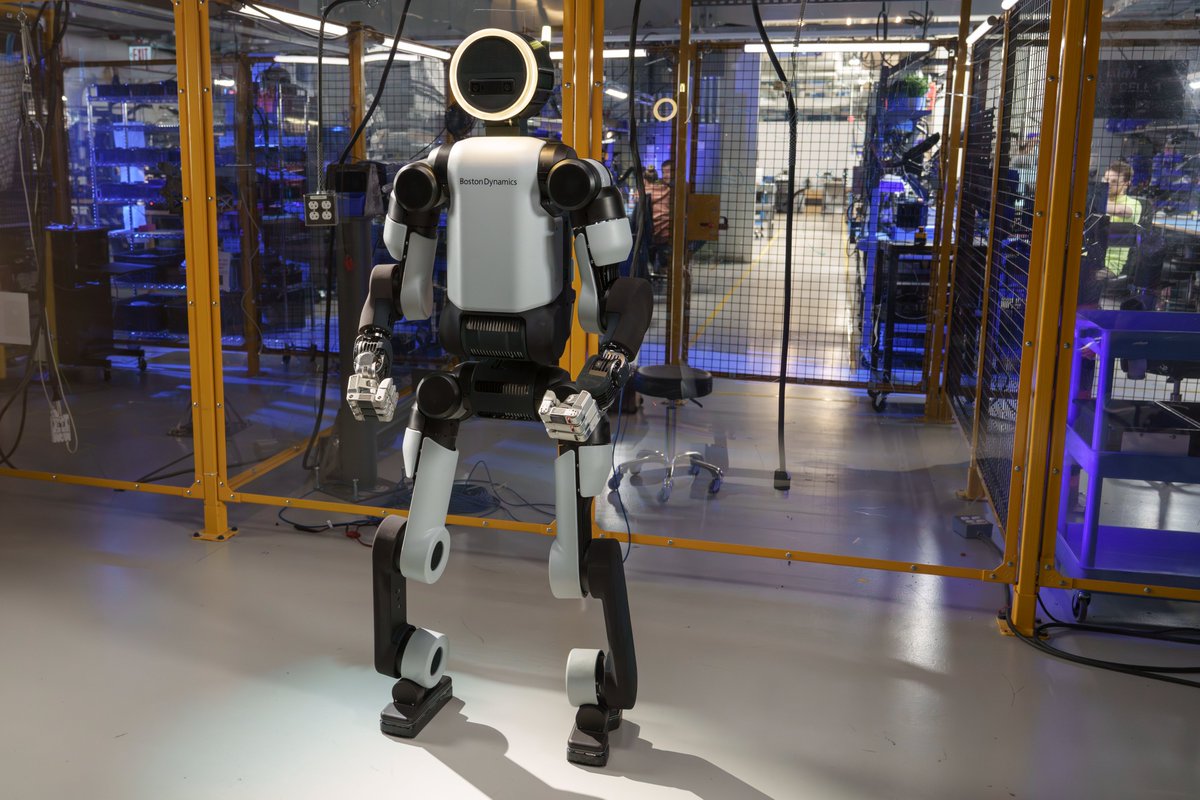
Update: I recently completed my PhD at @nyuniversity and have now joined @BostonDynamics as a Staff Research Scientist to help make Atlas capable of human-like dexterous manipulation. Exciting times ahead!
Cool new JEPA paper from @ylecun's group. But calling this a "world model" (or "LeWorld) is a stretch.
Here's what LeWM actually does: compress frames into 192-dim vectors, then learn to predict where an action takes you in that compressed space. No scene representation, no causal structure, no physics engine.
Just a smooth manifold over action-conditioned transitions, stabilized by a Gaussian regularizer.
This is not modeling the world. It's learning the structure the world stamps into the data stream. A very different thing.
"World models," to most people, means inferring and modeling a causal mechanism that generated the data. Think predictive processing frameworks in neuroscience, where the brain maintains explicit probabilistic beliefs about hidden causes and updates them via Bayesian inference. Or classical Kalman filters, which maintain an explicit state estimate and transition model that gets updated with each new observation. In both cases there is a separable internal structure that represents the world, can be queried independently of the immediate input, and supports genuine counterfactual reasoning.
Despite effective branding, the JEPA approach is not fundamentally different from standard generative models, except that the data stream and generative space are compressed. This is not a model of how the world generates structured data; it's a model of the structured data itself. I've argued this is true of cognition generally: https://t.co/0XW6njSweL
So why do the authors call it a world model? Partly the architecture, partly a result they call "physical latent probing": a separately trained linear probe recovers physical quantities like block location from the latent space. The implication is that the model has internalized physical structure.
But this is the wrong inference. A probe measures linear covariance between a representation and some external quantity. It tells you nothing about whether the model explicitly represents that quantity. Physical quantities are recoverable because they determined the pixels that determined the compression. The causal chain is: world → pixels → compression → probe-recoverable covariance. The model doesn't represent block location. It inherits covariance with block location from the statistics of its training data.
I made this argument recently in a different domain. In a new paper (https://t.co/djhK3SIF8X), I showed that GloVe and Word2Vec — models with no architecture for spatial reasoning — recover geographic structure via linear probe at essentially the same level as models being credited with rich world models. The structure was in the statistics all along. The probe found the covariance. Nobody would say Word2Vec has a world model.
The probe shows the world left fingerprints in the stream. It doesn't show the model built a map.
LeWM works, and works elegantly. But what it learned is competence over continuation in a compressed action-conditioned space.
Which, as I've argued, may be all cognition ever was.
Link to paper: https://t.co/ktmL0DMVnS
Final run: success.
After those fixes, the policy learns a much cleaner and more stable kick. The robot is no longer just matching frames; it is executing the motion in a physically consistent way.
Code here: https://t.co/KxoFuapawk
As a fun pre-weekend project, I built a small humanoid motion imitation pipeline in Isaac Lab: take a human kick from AMASS (https://t.co/da4q5k9UPu), retarget it to Unitree H1 with ASAP (https://t.co/1pBHXdIuAa), then train a PPO policy to reproduce it in simulation.
The fixes were mostly about getting the control formulation right:
-initialize from the correct root body
-include the reference motion in observations
-predict residual actions instead of absolute joint targets
-keep reward scales numerically sane
-add balance/smoothness terms
Excited to share two updates: I’ve defended my PhD at MIT, and I’ve moved to SF to join @Latent_Labs as a Member of Technical Staff.
If you are in the Bay Area, I'd love to reconnect or meet up.
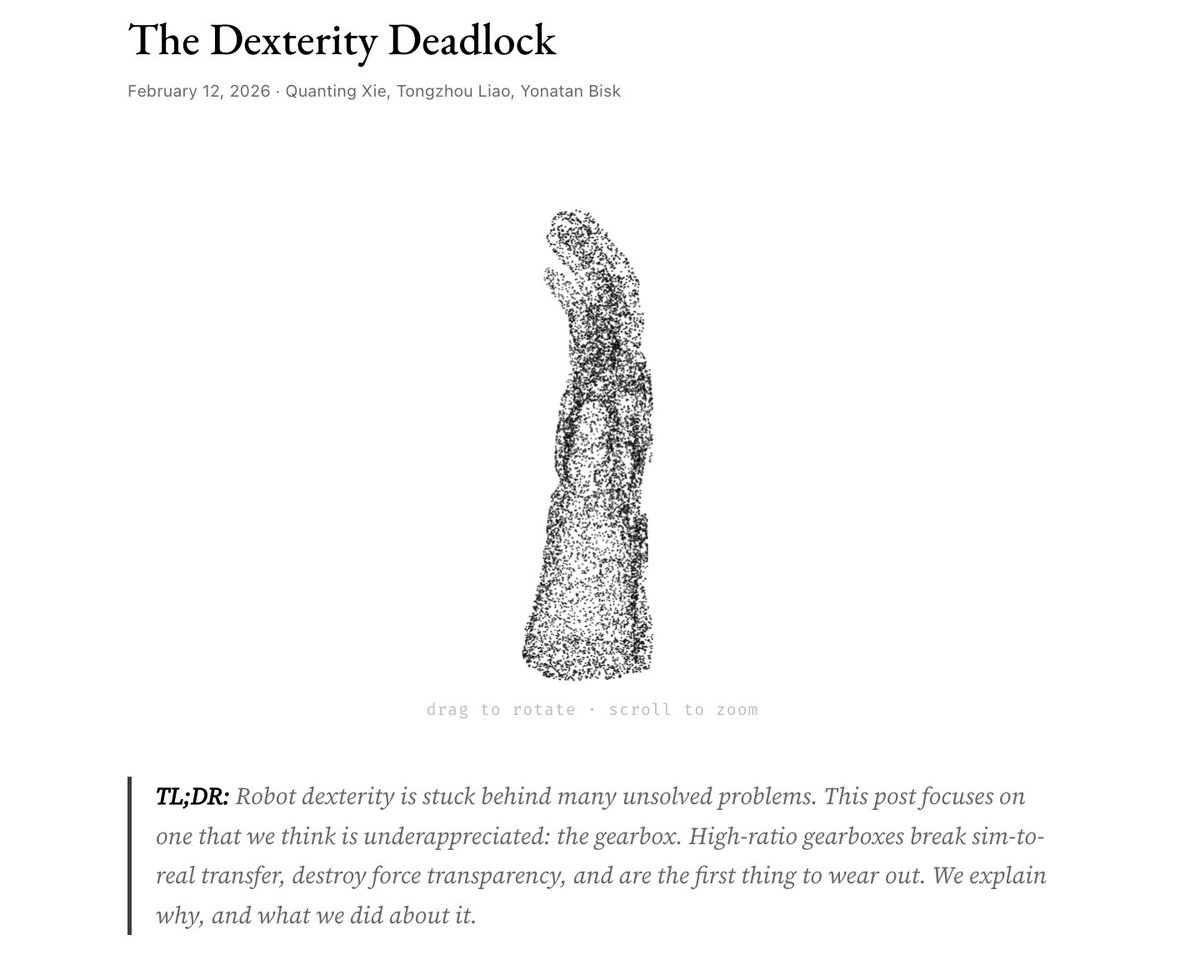
Why does manipulation lag so far behind locomotion? New post on one piece we don't talk about enough: The gearbox. The Gap You've probably seen those dancing humanoid robots from Chinese New Year. Locomotion isn't entirely solved; but clearly it's on a trajectory. But we haven't seen anything close for manipulation. 𝗪𝗵𝘆? When sim-to-real transfer fails, the instinct is to blame the algorithm. Train bigger networks. Crank up domain randomization. Those approaches have made real progress; we don't deny that. But we started wondering: are we treating the symptom or the disease? The Hardware Bottleneck: Fingers are too small for powerful motors. So most hands use massive gearboxes (200:1, 288:1) to get enough torque. But those gearboxes break everything manipulation needs:
• Stiction and backlash are complex to simulate. Policies trained on smooth physics hallucinate when they hit that reality.
• Reflected inertia scales as N². At large gear ratio, the finger hits with sledgehammer momentum.
• Friction blocks force information. The hand becomes blind.
And they're the first thing to break. What we are trying to build at Origami, we cut the gear ratio from 288:1 to 15:1 using axial flux motors and thermal optimization. The transmission becomes more transparent: backdrivable, low friction, forces propagate to motor current. Early signs are encouraging. Still running quantitative benchmarks. Why Interactive? I love how Science Center uses interactive devices to explain complex ideas. I want to borrow this concept and help people understand the hard problems in robotics better visually. The post has demos where you can toggle friction, slide gear ratios, watch the sim-to-real gap widen in real-time. What's inside:
• Interactive demos (friction curves, N² scaling, contact patterns)
• Comparison table: 14 robot hands by sim-to-real gap and force transparency
• The math behind why low-ratio matters
Read it here: https://t.co/imHPaCqNfS We're not claiming we've solved dexterity. The deadlock has many pieces. But we think this one's foundational. Curious what you think.
Thrilled to announce the final preprint of my PhD!
We introduce PackFlow, a flow matching method for generative molecular crystal structure prediction, and post-trained via reinforcement learning on MLIP energies and forces.
Paper: https://t.co/wFbxV7RQb4
@RGBLabMIT
We’re making great progress with our Gemini Robotics work in bringing AI to the physical world - a critical aspect of AGI. As part of our next steps, super excited to announce our partnership with @BostonDynamics, combining our SOTA robotics models with their world-class hardware
Google DeepMind 🤝 @BostonDynamics
Our new research partnership will bring together our advancements in Gemini Robotics’s foundational capabilities to their new Atlas® humanoids. 🦾
Find out more → https://t.co/Z4fL9ixjW3
@simar_kareer@physical_int Congrats on the great work!
The human data you use during finetuning is task-specific. Have you tried using cross-task human data, say as pretraining phase 2? Diverse robot data pretraining -> Diverse human data pretraining -> Task-specific finetuning. Would that help further?
I did similar experiments at Georgia Tech, but didn’t see this level of transfer. The missing piece was that I lacked a strong enough foundation of robot data. More robot data in pretraining -> more transfer from human data
🚨 Appearing as a #NeurIPS2025 D&B spotlight(~3%)
Could VLMs guess your next prompt for a wearable AI agent?
We present WAGIBench, the 1st large-scale Goal Inference Benchmark for Wearable Agents w/ audiovisual, digital & longitudinal context!
Paper: https://t.co/zkaAWd4zU5
1/
@ky__zo Because 1) the world is designed for a human form factor, and 2) with current methods that use human demonstration data, robots that don't resemble humans are very hard to train