Fun story -- circa 2013 when I was a wee newly minted masters student in microbial ecology, I sat next to a prestigious professor in the field at a conference dinner. Back then, Planet labs was taking off and I had spent my undergrad on hyperspectral imaging of lakes. So slightly nervously, I leaned over and asked him: do you think there are any new ways to use the advances in satellites to measure microbes on earth?
He looked at me and said flatly - no. And then added, his voice full of derision at such an absurd question: do you know of any satellites that have the resolution of a cell? And turned away.
Perhaps I was put in my place that day, but the idea never died for me. I've always liked this idea.
I don't know exactly what application makes this commercially viable -- but this makes me very excited to see the idea live on.
Announcing the Hyperspectral Biology Fund:
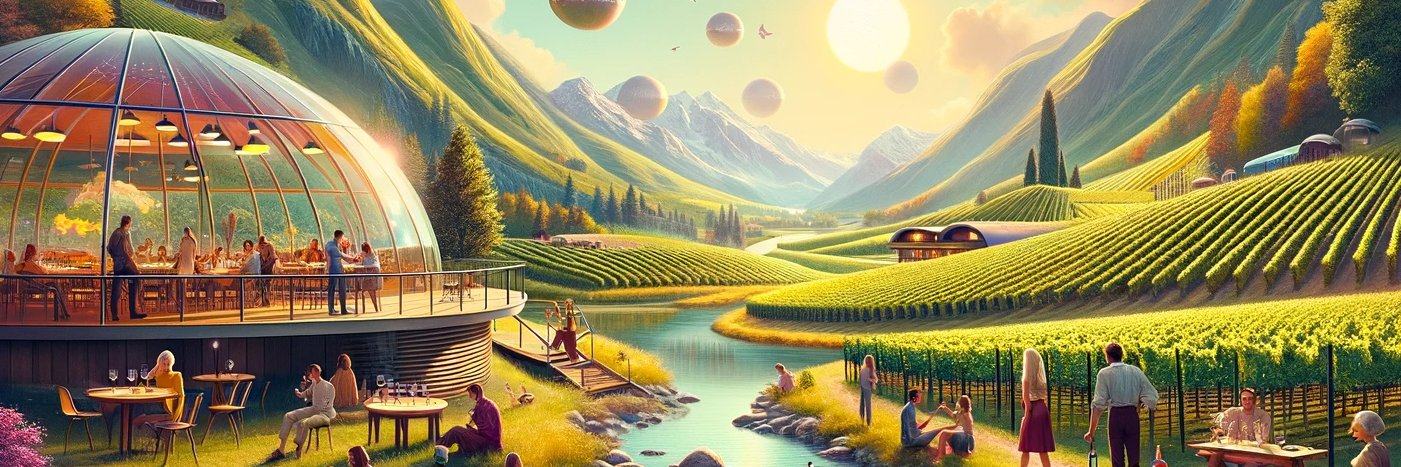
It's possible to see engineered microbes from space; not with the naked eye, but by the distinctive way their molecules absorb light.
The secret is hyperspectral cameras. Whereas a normal camera captures just three colors (red, green, and blue), a hyperspectral camera captures the full spectrum of light at every pixel. When merged with synthetic biology, one can create engineered organisms that sense something (a pathogen, explosive, pollutant, etc) and then monitor them using satellites with hyperspectral cameras orbiting Earth. The end goal is to build a planetary-scale biosensing network.
I'm giving away $75,000 in microgrants to help grow this field. Applications are due by July 10.
Thanks to @davidtlang and the Experiment Foundation for making this possible.
"The destroyer of our species won’t necessarily come in a rain of fire, an apocalyptic plague, or an armada of drones descending on us from the sky. It may be something we excitedly pay $1000 for every three or four years."
https://t.co/zJTt3f3Xma
With a nod to @leopoldasch, we're releasing Biological Awareness - our musings on the next decade at the frontiers of AI and life sciences.
Six ideas we explore:
→ Task-specific experimental tokens are the new gold in biology
→ Bio AI data factories will pioneer new business models
→ Smoothing out the jagged frontier for pharma enterprises is where fortunes will be made
→ Clinical trial intelligence will be financialized before it is operationalized
→ The bioweapons threat is real, accelerating, and underpriced
→ The BIOSECURE Act will fundamentally reshape supply chains
2026 marks ten years of Obvious investing at this intersection. A lot has happened. Even more is coming.
Big thanks to: @kyosu, @syntenyAI, @GabriCorso, @inductivebio, @mithrl_ai , @instancebio , @strangemonad, @exnx and many others for their help!
Reasons to be pessimistic (and optimistic) on the future of biosecurity
https://t.co/mzqsTrS82e
"It was such a fun read (if you can say that about an article on weapons)!"
—a glowing review from an early reader
this is (once again) the longest article I have ever published at 13,000 words. it involves interviews with 16+ researchers/VC's/policy folks in this field, and discusses basically every single facet of biosecurity that i could find. topics include: how machine-learning in rapid response therapeutic design may work, the financial status of the customer base of biosecurity startups, why agroterrorism feels extremely likely to me, and a lot more
i admittedly started the essay pessimistic that this subject matters at all, and i end it surprised that it doesn't keep more people awake at night. im not a doomer about it all, but i can see how people become one. very grateful to the people who decide to spend their career (or some fraction of it) working here, and especially grateful to the ones who helped teach me about the subject
Underrated Ideas in Biotech (Part I)
My list of writing ideas is growing far faster than I can possibly publish. So here are some "half-baked" ideas in biology that I hope others will pick up and run with.
In this first blog, I share three ideas:
1. Hyperspectral Biology — It is possible to see microbes from outer space. (That sentence sounds ridiculous, but it's true.) We can now build planetary-scale networks that would enable us to engineer microbes that sense pathogens, or act as early warning systems for other threats, and monitor using satellites.
2. Biology for Beauty — Nature is often described as the most beautiful thing on Earth, far exceeding artistic works from Monet and Picasso. Yosemite and the Grand Canyon feel as if they were sculpted by the hands of God; all other art is unmistakably the work of humans. Why aren't there entire companies that (like Tiffany or Cartier) aim to make eternal art using biology?
3. Mapping the Air — Microbes can travel thousands of miles, traversing continents by riding on dust motes carried by atmospheric winds. Sand from the Sahara desert travels all the way to New York City, carrying pathogens with it. We have barely begun to study the microbes hitching rides on these atmospheric winds.
On a related note: There is a growing field of AirDNA. Every time you breathe, saliva droplets are released into the air. These droplets contain DNA, which can be captured and sequenced. After the DNA settles onto the ground after about 24 hours, it gets wrapped into dust, and sits there for years.
It is feasible to take the dust from a room and build a genomic record of everyone who has ever entered it. In 2023, researchers at MIT also engineered living cells to take up and permanently record DNA from their surroundings. The bacteria were sensitive enough to distinguish between two sequences differing by a single nucleotide at exceptionally low concentrations — about 4.6 femtomolar.
These “sentinel” cells can be used to figure out what a person looks like, solely by storing the trace amounts of DNA they leave behind in a room.
Many facial features are influenced by single-nucleotide polymorphisms (SNPs), or single-letter variants in the genome that correlate with things like nose width and eye spacing. The MIT team engineered cells to detect five facial SNPs and showed each could be detected independently. Sprayed onto a surface, these cells would capture SNPs and, once sequenced later, reveal who passed through.
This is not science fiction. The authors say it directly in the paper: “we demonstrated sentinel cells on a set of five human SNPs associated with human facial features. One could record this information in a single cell or consortium, recover the DNA, and use artificial intelligence to rebuild the predicted face.”
Much more: https://t.co/NrIEDC8UGr
To go deeper on our new Life Sciences model series, research lead @joyjiao12 and product lead Yunyun Wang joined @AndrewMayne on the OpenAI Podcast to discuss how we’re building models for biology, drug discovery, and translational medicine.
They cover both the opportunity and the responsibility ahead: better research workflows today, more autonomous labs over time, and careful deployment from day one.
There is a hypothesis that birth order effects (on things like income and educational attainment) are in part respiratory pathogen effects: younger kids get more of them from their older siblings. This cool recent paper uses Danish administrative data to argue that this is true and a pretty large part of the story. (They claim 70% of the birth order effect on long-run wages.)
Other work has previously shown that severe infections matter for long-run outcomes, and it's well-established that birth order matters, but I haven't until now seen anyone convincingly show that standard respiratory pathogens impose long-term costs on infant siblings.
https://t.co/jpVYsAczQ7
We used AI to predict the failure of a Phase 3 trial before the results were announced. Today, we're publishing 10 more predictions for the future.
Thread 🧵
AI writing is taking over the internet.
Every fundraising announcement, every X reply, every blog post. It's not just replacing human writing, it's overwhelming it.
The problem isn't that AI writes poorly — it's that it writes plausibly. And plausible-but-empty is the most dangerous kind of noise.
Here's why that matters: when my brain picks up on those subtle AI tells, I write off whatever you're trying to say — even if the idea itself was good.
The antidote for brain rot is books.
The antidote for brain rot is books.
The antidote for brain rot is books.
The antidote for brain rot is books.
The antidote for brain rot is books.
The antidote for brain rot is books.
The antidote for brain rot is books.
Ave person checks their phone 186x a day. That's an interruption every 5 min.
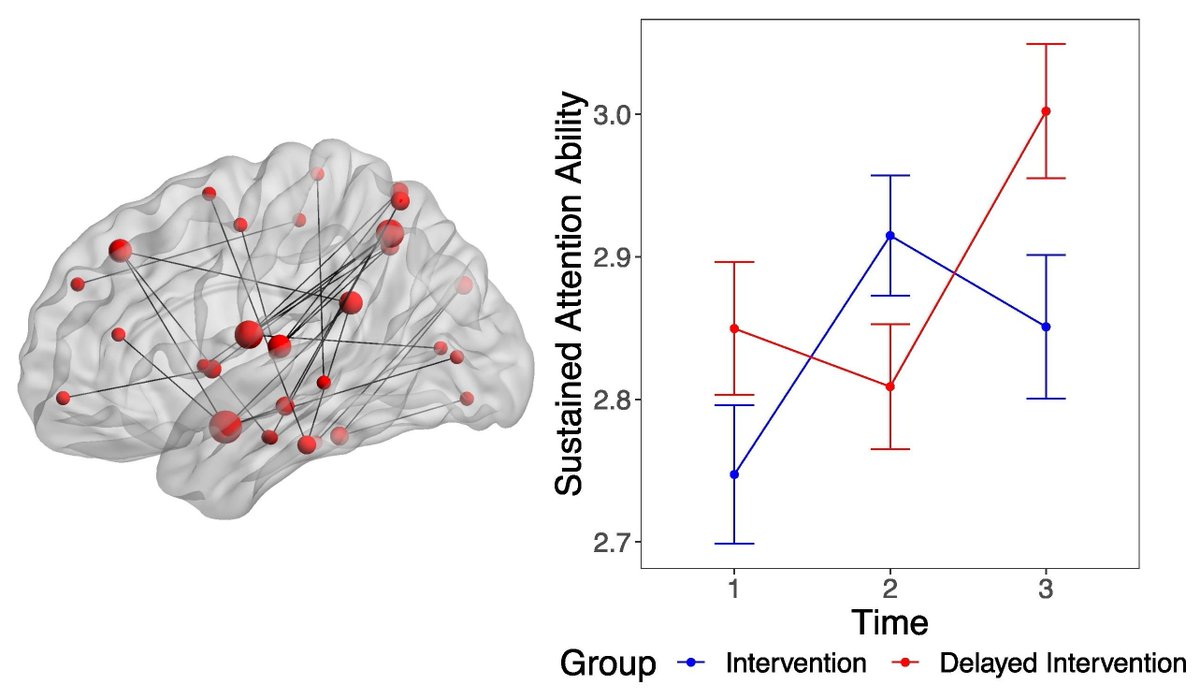
This shrinks the brain, causing lost capacity for deep reasoning and sustained thought.
Deep focus strengths neural networks for complex thought.
Finished a seven day social media fast. It feels like the most effective longevity therapy I've done.
Everything got better: mood, sleep, energy, presence, judgment, relationships, and optimism.
Evidence shows a seven day fast produces a reduction of anxiety (16%), depression (25%) and insomnia (15%). The effects felt bigger.
Conversely, dipping back in, I can viscerally feel that my body metabolizes social media similarly to a fast food meal, corrosive relationship, hangover, and sleep deprivation. My body hates it.
After the previous fasts (40/hr and 70hr), I wrote that social media is pollution. Not a vice or guilty pleasure. It’s closer to water toxins, air pollution and microplastics.
This time, the major insight was that social media is a form of intoxication.
Alcohol is honest intoxication. It clearly tells you what it's taking from you. Social media on the other hand does not disclose itself as an intoxicant.
It produces the sensation of being informed, engaged, and connected while quietly evacuating your capacity for depth and independent thought.
You don’t feel drunk, you feel current. But evidence shows that it causes your brain to shrink. The impairment is real by you can't feel it. Making it the more dangerous type.
If you haven't tried it, I strongly encourage you to try a social media fast. Even if for one day.
I did a 40 hr and then a 70 hr social media fast.
I’ve come to believe that social media is pollution.
Not a vice or guilty pleasure.
It’s closer to water toxins, air pollution and microplastics.
Social media has been on my mind because I can feel how bad it is for me. For my health and agency. I am a professional rejuvenation athlete. For five years, I’ve engineered my life around biological renewal and the elimination of decay. After hundreds of experiments across food, sleep, exercise, therapies, and toxins, I’ve developed both data and intuition about what strengthens or degrades my system.
I can viscerally feel that social media is bad for me. It erodes my autonomy and increases cognitive entropy.
Like other toxins, it accumulates. You can’t unsee or unfeel what you’ve consumed. It settles into mental tissue like heavy metals, producing chronic low-grade inflammation. Evidence suggests even after you stop scrolling, attentional fragmentation and emotional priming persist. Your thoughts begin to mirror the algorithm’s incentives. Independent cognition quietly erodes and you don’t notice the loss.
Time away and getting lost in deep focus is the only remedy.
When something erodes your agency, the rational response is elimination. The problem is, elimination isn’t realistic. “Just put the phone down” is as practical as telling someone in 19th century London to stop breathing coal smoke.
You need to know what’s happening in the world, be in touch with your friends and be part of the tribe.
That necessity is what allows companies to harvest your emotions, intellect and time for their profit. You are their raw material they exploit. Then in an ironic twist, the system gets you to exploit yourself by engineering an environment where it takes more effort to stop than to continue scrolling. Pollution exposure by default.
What specifically makes social media toxic is that value and poison are inseparable by design. You go to hear from friends and you leave an hour later absorbed in outrage that serves no biological interest of yours. The water is real. The lead is in the pipes.
The performance metrics (likes, views, etc.) bleed you of independent thought. They create quantified social proof, triggering ancient hierarchy reflexes. You no longer evaluate signal from noise; the engagement metrics do it for you.
Like all toxins, the damage is cumulative. We live inside the exposure long enough that it feels normal. The 40 and 70 hour social media fasts did that for me. Gave me just enough separation to feel and diagnose the poison. The obviousness of it feels like when I went to India and saw their humanitarian crisis of air pollution which no one sees anymore.
So what do we do?
Neither platforms nor individuals are likely to change on their own. AI may be the countermeasure. An AI layer between you and the feed. Filtering rage, removing vanity metrics and translating sensationalism into calm, factual language. Preserving signal and eliminating noise.
I want social media to become a longevity intervention, not a longevity threat. I never want to see the raw feed. I want an AI agent to read it for me, strip the engagement metrics that hijack my judgment, filter the rage, and return only what I actually came for.
Every generation faces its pollutants. When cholera spread through London's water, the answer wasn't telling people to drink less. It was building filtration. The same logic applies here. Best next move is to design the filter to avoid being the raw material.
“Psychogenic epidemics are terrible and destructive. Fortunately, unlike biological epidemics, which are contracted involuntarily via invisible germs, they are easy enough to recognize and treat—with knowledge and self-management. A new relationship with your device might be all you need to cast off the modern uniform of stress and despair.”
Every era has its social contagions. In the 18th century, it was romantic despair. In 2026, it’s the compulsive scroll—and it’s rewiring our stress response, writes Arthur Brooks. https://t.co/4THmUeimSX
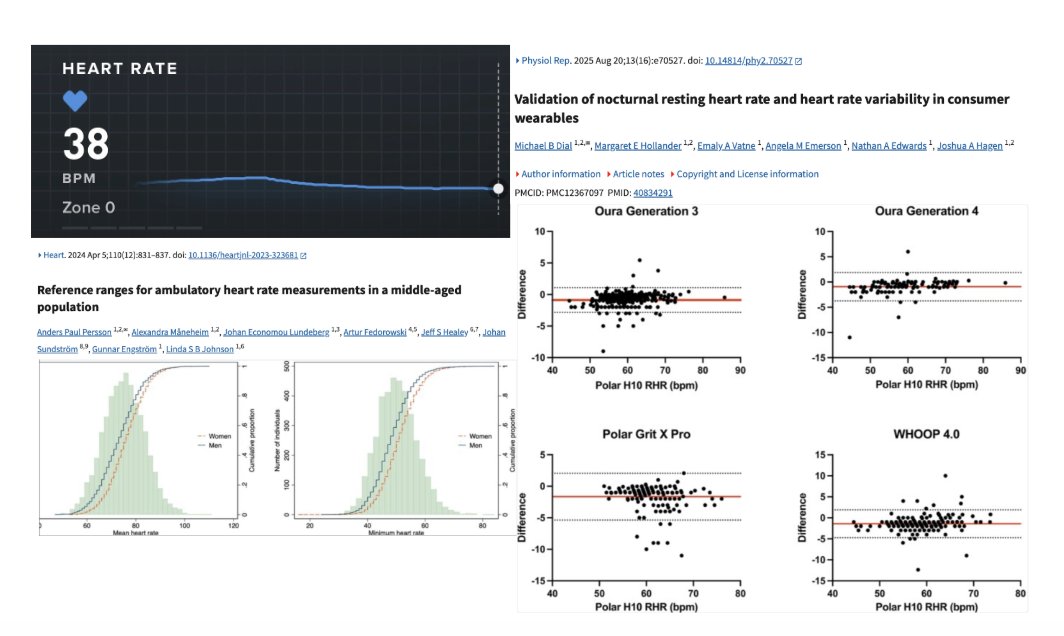
My heart rate before bed last night: 38 bpm
In the 99.9th percentile.
The 40 hour social media fast dropped it by around 10%. Seems social media could be a 10% tax on my nervous system.
RHR is the most important marker I track. It's a tell-all of health and habits. This single number reveals stress, food, screens, fitness, relationships and more. Show me your RHR and I'll see your soul.
Lowing your RHR before bed is the #1 thing you can do to improve your health. A low RHR will boost sleep quality.
High quality sleep:
> Mental acuity up 15%
> Insulin sensitivity + glucose control better by 25%
> Self control up by 20%
> Mood enhanced by 15–30%
> Physical performance improvement by 10%
> Lower injury risk by 20–60%
My suggestions for you:
+ final meal four hours before bed
+ screens off one hour before bed
+ read a book 10 min before bed
+ in bed at the same time every single night
Master these and then you can add on more layers to get even better.