Recent posts on X have led to speculation regarding Reliance Jio Infocomm Limited (AS55836) and a BGP route misconfiguration. We categorically clarify that Jio has not been involved in any such incident. Jio continues to operate its network in accordance with global Internet routing best practices and the highest standards of reliability, security, and transparency.
If you need a website, this is the best website creator on the planet: Ploy by Bryant Chou
Drop everything and use this to improve your website now. A total redesign to your taste is at your fingertips. Try it with a side project and you'll bring it to your main project in 2 weeks or less, I predict.
AI that thinks in India's own languages.
IIT Bombay is proud to present BharatGen to the world: Open, multilingual AI for India's languages and people, at Bharat Innovates 2026 in Nice, France (14–16 June).
BharatGen is built at IIT Bombay's Department of Computer Science and Engineering, led by Prof. Ganesh Ramakrishnan, with Rishi Bal (CEO) and Dr. Maneesh Singh (VP, ML) with a consortium of 9 premier academic institutions. A team of 60+ researchers, engineers and linguists are building AI that includes all scheduled Indian languages, across text, speech and documents.
-> Param2, its foundational text model with reasoning, coding, and tool calling capabilities works across all 22 scheduled Indian languages
-> Shrutam2, for automatic multilingual speech recognition/ STT across Indian languages
-> Sooktam2, a text-to-speech models with zero-shot voice cloning across Indian languages
-> Patram, a document vision model built for understanding Indian-specific documentation
BharatGen powers services in governance, healthcare, education, insurance, finance, and cultural preservation.
A national effort backed by DST and the IndiaAI Mission, BharatGen is India's push for open, homegrown AI, built for 1.4 billion people.
For more information, visit https://t.co/bZul5Lr3yC
Bharat Innovates 2026 · 14 - 16 June · Nice, France
@BharatInnov2026 @EduMinOfIndia
#BharatInnovates2026 #IITBombay #BharatGen #DeepTech
PM @narendramodi Sir we need an India AI Mission under you with @NandanNilekani as vice chair and others from the private sector and govt. to Help India tackle the AI Revolution. We are way behind and need a national mission to get going quickly. Existing govt programs are too slow, way too small to make any large impact. We need an annual 50000 cr fund for deep tech and AI, a 200,000 cr ELGS Guarantee Fund to build Hyper cloud, hardware and chips. @AshwiniVaishnaw@nsitharaman@PiyushGoyal@FinMinIndia@RBI We need a Very Large National Mission. @AmitShah@amitmalviya
The US government, citing national security authorities, has issued an export control directive to suspend all access to Fable 5 and Mythos 5 by any foreign national, whether inside or outside the United States, including foreign national Anthropic employees.
The net effect of this order is that we must abruptly disable Fable 5 and Mythos 5 for all our customers to ensure compliance.
Access to all other Claude models is not affected.
We apologize for this disruption to our customers. We believe this is a misunderstanding and are working to restore access as soon as possible.
Read our full statement: https://t.co/bwn0sximKZ
Lots of people asked how I used Fable to edit its own launch video so I made a video about that!
TLDR it wrote a lot of code & tool calls to use transcription services, ffmpeg, do colorgrading, use the figma mcp, make remotion UI and render it.
I didn't touch a video editor.
How do you get Claude Code to check its own work before handing it back?
Watch how you can encode your manual checks so Claude closes its own feedback loop:
This works really well btw, at the end of your query ask your LLM to "structure your response as HTML", then view the generated file in your browser. I've also had some success asking the LLM to present its output as slideshows, etc.
More generally, imo audio is the human-preferred input to AIs but vision (images/animations/video) is the preferred output from them. Around a ~third of our brains are a massively parallel processor dedicated to vision, it is the 10-lane superhighway of information into brain. As AI improves, I think we'll see a progression that takes advantage:
1) raw text (hard/effortful to read)
2) markdown (bold, italic, headings, tables, a bit easier on the eyes) <-- current default
3) HTML (still procedural with underlying code, but a lot more flexibility on the graphics, layout, even interactivity) <-- early but forming new good default
...4,5,6,...
n) interactive neural videos/simulations
Imo the extrapolation (though the technology doesn't exist just yet) ends in some kind of interactive videos generated directly by a diffusion neural net. Many open questions as to how exact/procedural "Software 1.0" artifacts (e.g. interactive simulations) may be woven together with neural artifacts (diffusion grids), but generally something in the direction of the recently viral https://t.co/z21CP5iQfu
There are also improvements necessary and pending at the input. Audio nor text nor video alone are not enough, e.g. I feel a need to point/gesture to things on the screen, similar to all the things you would do with a person physically next to you and your computer screen.
TLDR The input/output mind meld between humans and AIs is ongoing and there is a lot of work to do and significant progress to be made, way before jumping all the way into neuralink-esque BCIs and all that. For what's worth exploring at the current stage, hot tip try ask for HTML.
the craziest part now is that the modern computer probably has to be entirely reinvented, from scratch. pretty much like how jobs & co brought apple ii to market.
like not improved. not given a chatbot sidebar or something but really from the ground up like the iphone redefined what it meant to be a pocket computer.
the current paradigm for computers was built around a human staring at a screen, moving a cursor, opening apps, managing windows, naming files, remembering where things live, & manually translating intent into interface actions.
that made sense when the human was the runtime. but in an ai native world, it starts to look kinda ridiculous.
you can see this ridiculousness when you use computer use agents… they are useful sure, but they’re also obviously transitional. they’re teaching ai to operate machines designed for humans, which is clever, but also kind of absurd. it’s like making a robot hand so it can use a doorknob instead of asking why the door needs a knob at all. yes i know humans also need to use a door knob, but maybe in the future humans don’t need to use a computer, or at least what we think of a computer today at all.
this all leads to some interesting questions:
- what is a file when the system understands context?
- what is an app when intent can route itself?
- what is a desktop when work can be decomposed, executed, monitored, & summarized by agents?
- what is a browser when the agent can retrieve, compare, transact, & remember?
- what is an operating system when the primary user is no longer just a person, but a person plus a swarm of delegated intelligences? or no person at all.
the old computer assumed navigation.
the new computer has to assume a new kind of intention. the old computer organized information. the new computer has to try to organize agency.
we’re still in the hacky middle stage at the moment with sidebars, copilots, agents clicking through legacy ui, & automation layers sitting on top of 40 year old metaphors.
the new computer is likely one where memory, context, identity, permissions, tools, agents, & interfaces are native primitives. this means desktop, mobile, browser, apps, files, folders deserves another first principles look.
🆕 Harness Engineering: How to Build Software When Humans Steer, Agents Execute
https://t.co/9O8e7RnF5Z
@_lopopolo is one of the emerging class of token billionaires at @OpenAI, and is unapologetically exploring how you can get to 5 -> 50 -> 5000 agents working for you 24/7. Special Q&A moderated by @vibhuuuus.
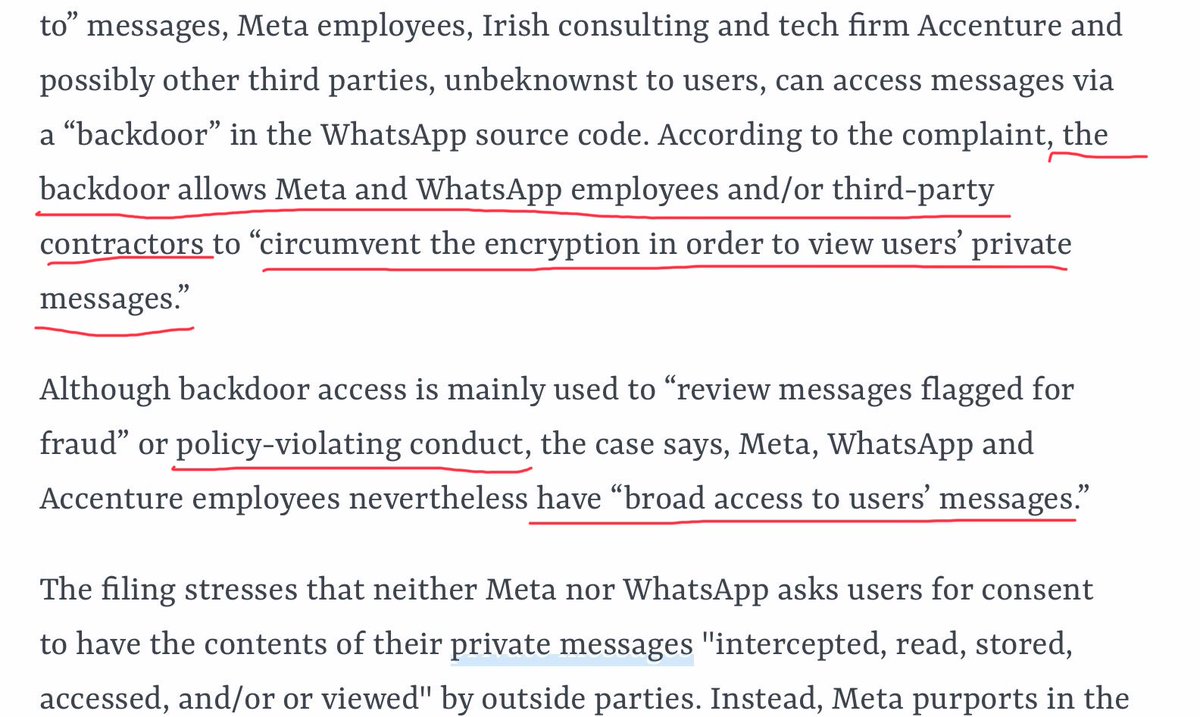
WhatsApp’s “encryption” may be the biggest consumer fraud in history — deceiving billions of users. Despite its claims, it reads users’ messages and shares them with third parties. Telegram has never done this — and never will 🤝
If you want your OpenClaw or Hermes Agent to be able to have perfect total recall of all 10,000+ markdown files, GBrain is here to help.
It's exactly my OpenClaw/Hermes Agent setup. MIT-licensed open source. Hope it helps you build your mini-AGI.
https://t.co/yFpFU4pn5b
How I get my claw to be a durable AI agent I never have to instruct twice
Paste this into your OpenClaw's AGENTS.md or send it as a message:
You are not allowed to do one-off work. If I ask you to do something and it's the kind of thing that will need to happen again, you must:
1. Do it manually the first time (3-10 items)
2. Show me the output and ask if I like it
3. If I approve, codify it into a SKILL.md file in workspace/skills/
4. If it should run automatically, add it to cron with `openclaw cron add`
Every skill must be MECE — each type of work has exactly one owner skill. No overlap, no gaps. Before creating a new skill, check if an existing one already covers it. If so, extend it instead.
The test: if I have to ask you for something twice, you failed. The first time I ask is discovery. The second time means you should have already turned it into a skill running on a cron.
When building a skill, follow this cycle:
- Concept: describe the process
- Prototype: run on 3-10 real items, no skill file yet
- Evaluate: review output with me, revise
- Codify: write SKILL.md (or extend existing)
- Cron: schedule if recurring
- Monitor: check first runs, iterate
Every conversation where I say "can you do X" should end with X being a skill on a cron — not a memory of "he asked me to do X that one time."
The system compounds. Build it once, it runs forever.
Most Al chatbots give you basic "projects." Gemini just built you a second brain. 🧠
Introducing Notebooks: some of the magic from @NotebookLM, integrated directly into @GeminiApp.
Here's what changes for you today:
📚 Upload 100 sources for free
📂 Organize your chats - the wait is officially over :)
🔄 Sources, chats, and emojis sync
People are using Gemini and NotebookLM in tandem, and we'll keep building both.
To manage capacity, we're rolling this out NOW on the web and going from Ultra ➡️ Pro ➡️ Plus ➡️ Free. (Mobile, EU, and Workspace are up next!)
With Google I/O right around the corner, we are just getting started. Enjoy!
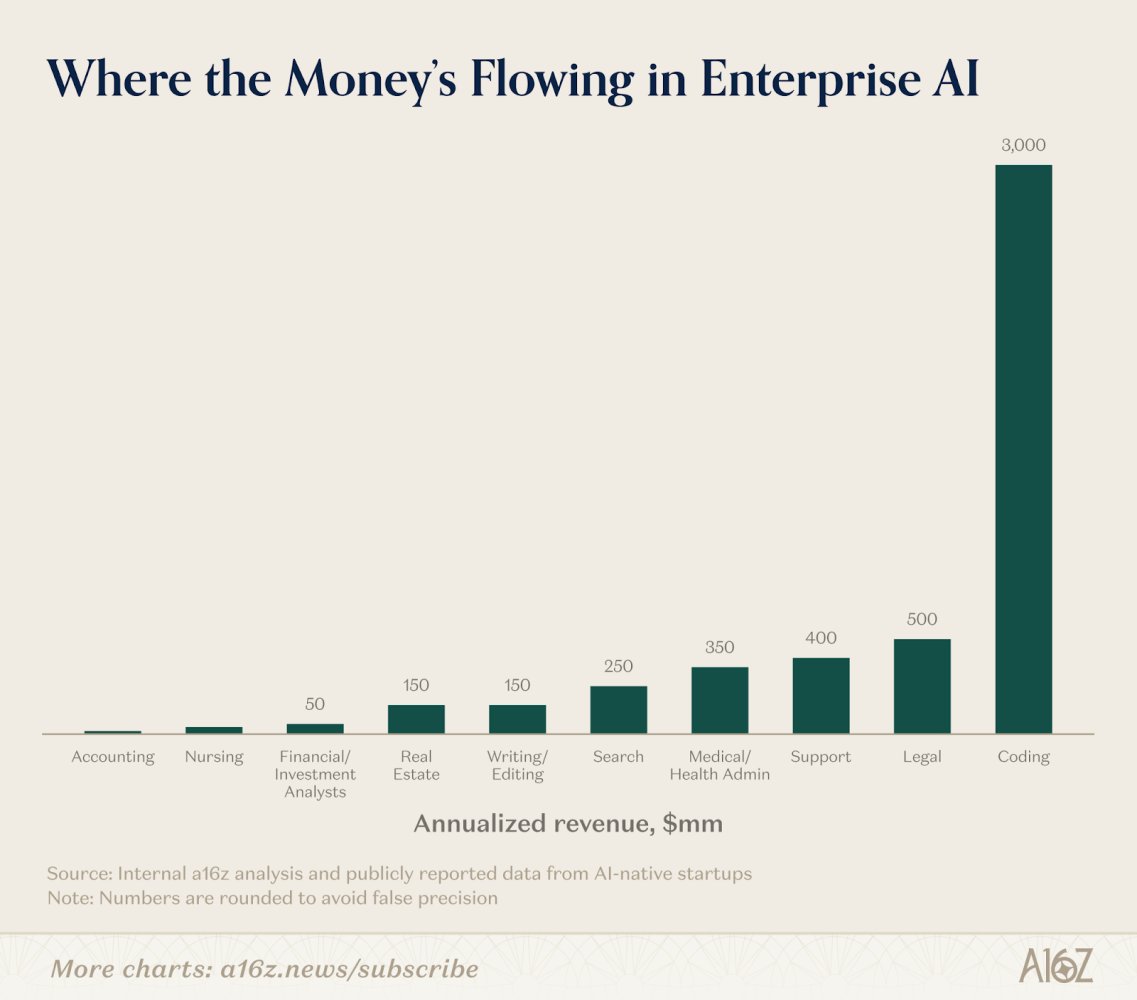
Enterprises are using AI today for coding, legal, support, healthcare, and more.
@kimberlywtan's must-read deep dive compiles hard data on where AI has the most enterprise adoption – and the industries AI is coming for next: https://t.co/uiooUsHrMi
I put a lot of heart into my technical writing, I hope it's useful to you all.
📌 Here's a pinned thread of everything I've written.
(much of this will be posted on the Claude blog soon as well)