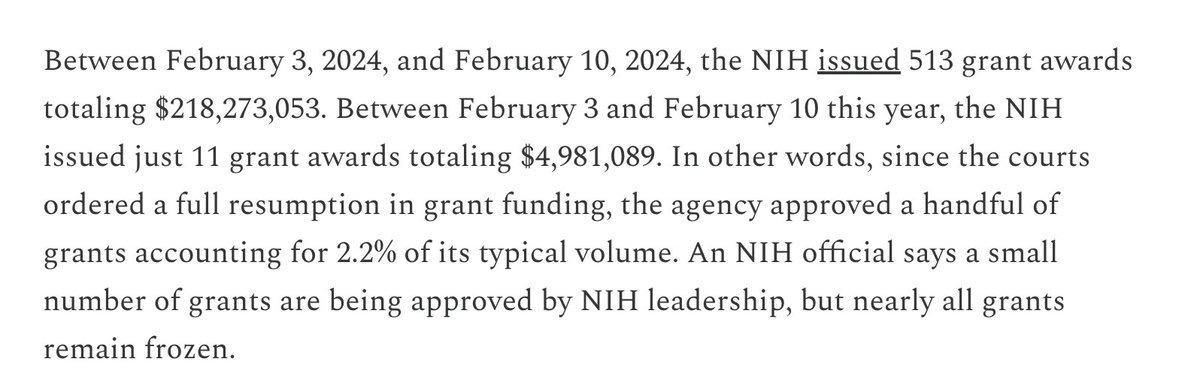
98% of NIH grants that should have gone out this month, didn't. Despite court orders 'unfreezing' the funds, they are frozen. Biomedical research will grind to a halt. Clinical trials will end. All for no reason: the total impact on the US budget is miniscule
GDF15 is turning out to be an extremely important protein (🧵)
It's a stress-responsive cytokine, and the protein that's elevated in the most diseases (by far):
Modulating cytokine microenvironment during T cell activation induces protective RSV-specific lung resident memory T cells in early life in mice
https://t.co/563HzGy261
@DrTregoning
Like other organelles, the heterogeneity of lysosomes within a single cell has been challenging to capture and study in detail. @Melike_Lak et al. (https://t.co/Py99XrU0oB) tackle this question using DNA-PAINT imaging. Spotlight by Chen & @maxgabgut: https://t.co/DZXsFnOwAh
Excited to share our new paper in @MolecularCell! We’ve developed TurboCas, a powerful new CRISPR-based proximity labeling tool that lets us pinpoint the proteins regulating gene expression at specific genomic loci. Check out what we discovered: https://t.co/ZBt3QIb74k
#Immunology out now @ScienceMagazine
An unstructured region within MAVS interacts with cellular, rather than viral, RNA. This alters how MAVS interacts with other proteins and influences antiviral responses.
https://t.co/VVtm7RYX2o
By @nandangokhale, Ram Savan et al.
1. Hi #RNA friends, just in time for the holidays I am excited to share the latest pre-print from my group. We solved the structure of a mysterious viral RNA that resists degradation by host nucleases. A short 🧵 & link below – please also check out the full video! #lovevirology
Noncoding RNA controls the expression of a gene implicated in drug- and stress-induced behaviors.
Learn more in a new #SciencePerspective: https://t.co/4v5bZHdewQ
In a surprising paper published in Nature, scientists accomplished what sounds impossible: using genes from a single-celled organism to create mouse stem cells, which eventually developed into a living, breathing mouse.
Biggest medical discoveries of the week (🧵)
1/8
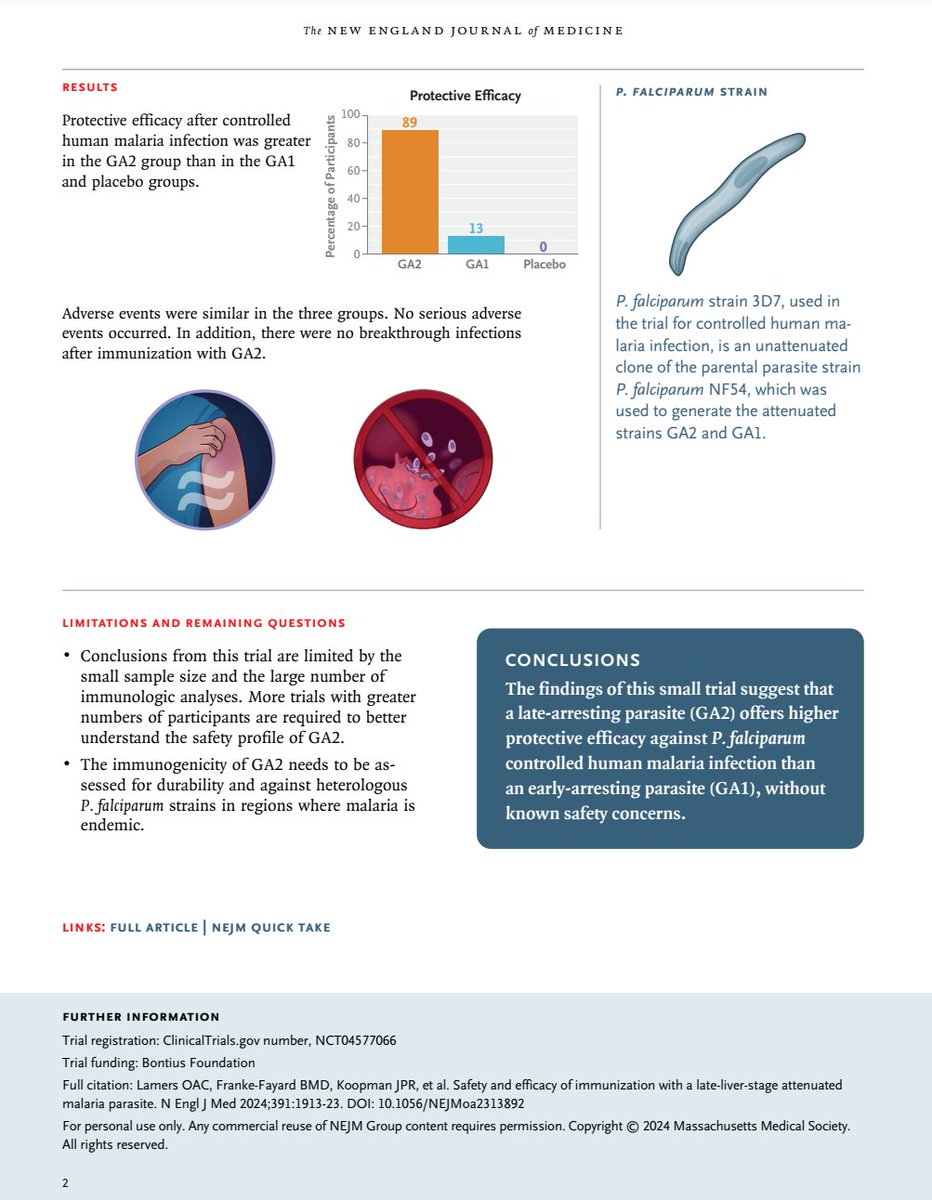
A malaria vaccine - attenuated P. falciparum arrested in the late liver stage - provided 89% protection in a trial of 9 people
This could improve the modest, short-lived protection of current vaccines
https://t.co/E5by1sbgXK
Excited to report that we have discovered a new, endogenous molecular clock in unmodified human cells and tissues. It is ticking away right now in almost every cell in your body.
Specifically, in a new paper on BioRxiv, we show that RNA editing by the near-ubiquitous ADAR1 in unmodified human cells is sufficient to allow us to infer the ages of thousands of species of RNA. This provides a new way to infer past transcriptional dynamics, without any metabolic labeling or genetic engineering, in anything from cultured cells to patient biopsies.
Work by @agreeb66, @JamesBa95200124, @AaronWagen, and many more, and funded by @LNuzhna's Impetus Grants, along with generous support from @ericschmidt and @wenschmidt.
1/