George Soros taught Ron Baron one lesson that made him $20 billion
"if you have identified and done the work on a business that can grow tremendously - you can't own enough of the greatest idea you've ever had"
Baron put $400 million into Tesla and made $7 billion - then put $2 billion into SpaceX and made $13 billion - 54% compounded per year for 9 years
he just placed a $1 billion order at the SpaceX IPO - "I'm 83 years old - I can't imagine ever selling a single share in my lifetime"
bookmark and watch it today ↓
Fascinating to hear the thinking behind Dan's famous activist letters.
"Great writing is really about clear thinking and organizing your thoughts, communicating them to people in a clear way to get a desired outcome.
In activism, you've got a few different levers. You can have a financial lever. You have legal levers.
Social pressure is actually a very effective way. The best way to put social pressure on a company is through writing."
MIT's endowment CIO, Seth Alexander, was on the Going Long podcast a few years ago back in April 2022.
He shared the following key insights on long-term investing.
· Find the Warren Buffett of a given area. Exceptional talent applied to an interesting investment niche matters more than the asset class label.
· Do not start with top-down asset allocation. Drive everything bottom-up from individual fund manager opportunities, rather than setting bucket sizes first and filling them later.
· Evaluate fund managers on two things. The first is do they have a sustainable competitive advantage. The second is being a good fiduciary and good partner. Both must be present.
· Understanding a fund manager's motivation is critical. Are they in it for the craft, for getting as rich as possible, or for building a large asset management business? Two fund managers can look identical on paper and behave very differently once success arrives.
· There is an inverse tradeoff between evidence and duration. A fund manager with a long track record has less future runway ahead of them than one you back earlier.
· Err on the side of less evidence and more duration. Backing fund managers earlier gives the endowment more future runway in the relationship.
· Long-duration relationships free up attention for the rest of the portfolio. Once capital is placed with a great partner, you do not have to revisit that decision every year, which improves the quality of decisions made elsewhere in the portfolio.
· Evaluating fund managers early on requires analyzing personality, motivations, and past decisions rather than track records. The track record simply does not exist yet.
· Fund managers drift over time. Watch for shifts toward growing assets, doubling fees, going into other businesses, or simply losing interest in the work.
· MITIMCo’s investment team is made up of generalists, not asset class specialists. The team has no hierarchy or formal titles, which keeps it flexible and aligned with a bottom-up strategy.
· Great investors notice unusual situations, unusually cheap assets, or an unusual opportunity set created by something happening in the world.
· Annual reporting is too short a window to evaluate results. Five to ten years is a better horizon because that matches the duration of the investment decisions the endowment makes.
· Preserving the purchasing power of donor gifts over decades means a 50-year-old gift can still have the same impact today as when it was given.
· In 1970, MIT owned fewer than 250 securities, mostly U.S. stocks, bonds, and local real estate.
· Of that 1970 portfolio, 25 percent of it was concentrated in just four stocks: Kodak, IBM, Ford, and GM.
· Over the next 50 years, AI assisted decision making will become far more prevalent in investing, ideally with humans still at the center making the decisions.
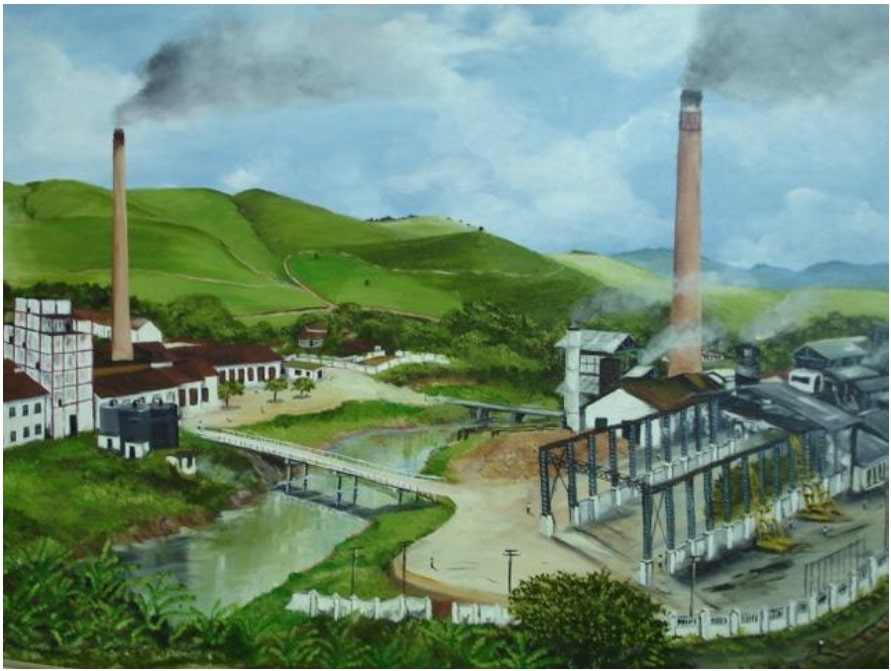
Brazil has produced sugar continuously for nearly 500 years.
The first commercial sugar mill in Pernambuco was founded in 1535 by Duarte Coelho Pereira near Olinda.
By 1549, the state of Pernambuco alone had 30 operational sugar mills.
By the early 17th century, Pernambuco had become the largest sugar-producing region on earth.
The colonial-era engenhos evolved into industrial usinas in the 19th and 20th centuries.
Today Brazil operates over 360 sugar and ethanol mills.
The country produced approximately 44 million tonnes of sugar in the 2024/25 harvest and is projected to reach 45 million tonnes in the 2025/26 harvest.
Brazil exported 35.1 million tonnes of sugar in 2024/25 and accounts for roughly 50 percent of global sugar trade, a position it has held for over 30 years.
The five largest Brazilian sugar groups (Copersucar, Raízen, São Martinho, Tereos Internacional, and Biosev) collectively process tens of millions of tonnes of sugarcane every year.
Raízen alone processes over 65 million tonnes of sugarcane annually across 35 mills in São Paulo state.
American capital markets treat Brazilian agribusiness as a frontier sector.
The Brazilian sugar industry was scaling continental operations before the United States declared independence.
Most US institutional allocators have not modeled the depth of Brazilian agricultural infrastructure.
The oldest industrial agricultural economy in the Americas is now scaling into ethanol, bioplastics, and renewable energy.
The country that started industrial agriculture 500 years ago is now leading the global energy transition.
Singapore, Norway, Canada, and Abu Dhabi have deployed $28 billion into Brazil since 2016.
U.S. pension funds have deployed almost nothing.
In 2025 alone, Brazilian equities returned about 30% in dollar terms.
Your allocation could be doing the same.
Brazilian sovereign credit pays roughly 10% real yield while U.S. Treasuries pay around 2%.
Brazil is the world's largest beef producer, a top-three soybean exporter, and supplies 90% of global niobium.
U.S. public pension funds allocate about 5% to all emerging markets combined.
That puts Brazil-specific allocation under 1% of total assets.
Six reasons keep showing up...
Currency volatility risk, mostly hedgeable through standard FX overlays.
Political risk, often priced in twice and overstated by U.S. financial media.
The country risk premium, anchored in 1980s and 1990s memory.
Corruption headlines, selectively cited compared to U.S. equivalents.
The frontier market mental category, decades out of date.
The China-versus-everything-else narrative that ignores corridor structure.
The largest sovereign wealth funds on Earth saw the structural opportunity 15 years ago.
U.S. pension funds have not.
The question worth asking is why the largest capital pool on Earth is the only one not deploying.
Brazilian agribusiness can do five things no other country on Earth can replicate.
The first: two harvests on the same land in the same year.
About 40% of Brazil's soybean fields are immediately replanted with corn after the soy harvest.
In Mato Grosso, irrigated farms are now growing three crops per year on the same hectare.
The second: eucalyptus that matures in 6 to 7 years.
Pine in the U.S. South takes 22 to 40 years.
Pine in Canada and Scandinavia takes 60 to 100 years.
The third: cattle finished primarily on grass.
About 78% of Brazilian beef still comes from grazing systems.
In the United States, almost all beef cattle pass through feedlots in their final phase.
The fourth: sugarcane that produces both sugar and ethanol on the same crushing run.
Brazilian flex plants switch the output ratio between sugar and ethanol based on which price is higher.
The fifth: coffee, soy, beef, cellulose, and orange juice all grown on the same continental landmass.
Brazil is the world's largest producer or exporter in every single one of those categories.
Brazil functions as an agricultural civilization.
Climate, soil, and decades of breeding research at Embrapa built it.
Three structural advantages no other country can replicate.
The world's quiet bread basket is operating at a scale most investors have never measured.
"My largest positions aren’t the ones I think I’m going to make the most money from. My largest positions are the ones where I don’t think I’m going to lose money." -- Joel Greenblatt
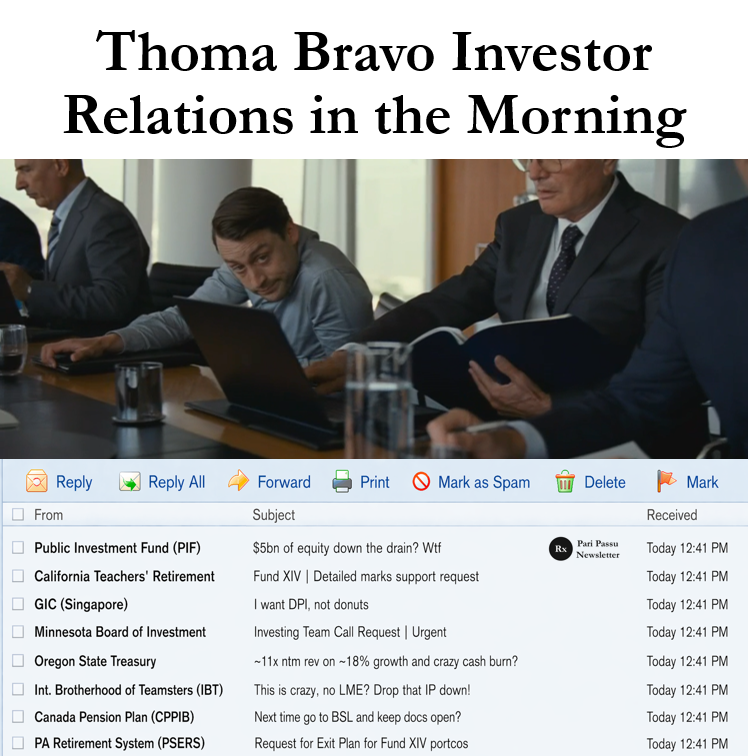
"Party is officially over for Thoma Bravo’s Medallia
The firm is reportedly surrendering the software giant to its lenders, walking away from a $5.1bn equity disaster
After a 2021 acquisition price of $6.4bn, the business is now being carved up by private credit lenders, with Blackstone, KKR, and Apollo leading the charge"
The largest soybean farm in the world is in Mato Grosso, Brazil.
Most people have never heard of it.
Bom Futuro cultivates more than 650,000 hectares.
That is 2,500 square miles, more than twice the size of Rhode Island and larger than the entire country of Luxembourg.
In 1982, the Maggi Scheffer brothers arrived in Rondonópolis to help their uncle André Maggi run a farm of just a few thousand hectares with a single grain dryer.
Forty-four years later, their operation spans 35 production units across Mato Grosso, producing 1.9 million tonnes of grains and 360,000 tonnes of cotton lint per harvest.
They are one of the largest cotton growers in Brazil.
They slaughter 104,000 head of cattle per year.
They run one of the largest integrated crop-livestock projects in the world (31,000 hectares where soybeans, corn, and cattle rotate on the same land).
They operate their own seed processing plants, their own cotton gins, their own hydroelectric power generation, and their own aviation terminal.
The founder, Eraí Maggi Scheffer, is the cousin of former Mato Grosso governor Blairo Maggi (once called the "Soybean King" by international media).
The two cousins competed for years over who was the largest individual soybean producer on earth.
Here is what most people miss about Brazilian agriculture...
The farm operates without government crop insurance, relying instead on geographic diversification across 35 units spread throughout Mato Grosso to manage risk.
Two growing seasons per year (soybeans first, corn immediately after on the same land).
Satellite-monitored operations with precision agriculture and sustainable soil management across every unit.
In 2023, Bom Futuro delivered the first load of carbon-footprint-measured, deforestation-free soybeans in Brazil through Bayer's global PRO Carbon program.
And while producing all of this, the company maintains 380,000 hectares of protected environmental reserves.
More than half its entire cultivated area preserved as native vegetation.
To put the scale in perspective...
Bom Futuro's grain output (1.9 million tonnes) exceeds the entire annual cereal production of countries like Portugal or Switzerland.
A single family operation in the Brazilian Cerrado outproduces entire European nations.
The company expected revenues between R$8 billion and R$10 billion in 2025.
The succession is already underway (Eraí's son Kleverson, 43, is leading the next generation).
The family reinvests in Mato Grosso.
"Producers here will always reinvest," Kleverson told Forbes.
When ten billion people need feeding and the world's arable land is shrinking, this is the country that has more unused fertile soil than anyone else on the planet.
A single farm in Mato Grosso that feeds more people than many entire nations, built by a family that started with a leased plot and a grain dryer 44 years ago.
Volatility is where people give away their winners.
Usually for macro reasons that have nothing to do with it, they sell an exceptional business that could have generated life-changing wealth.
It is one of the easiest and costliest mistakes an investor can make.
Our run-rate revenue has surpassed $30 billion, up from $9 billion at the end of 2025, as demand for Claude continues to accelerate. This partnership gives us the compute to keep pace.
Read more: https://t.co/XgSjL0And7