Building Limen. Today's journal :
- AI coding getting faster now that important decisions were documented in ADRs, but still a lot of room for improvement. "Grill me" skills helping a ton (thanks @mattpocockuk)
- Email tool supports more actions and has a simplified OAuth flow
Today I wrote the first line of code for Limen!
Feels great to finally have something tangible. The first slice only prevents agents from sending emails to recipients outside a list. It's a small scope, but we got to start somewhere!
#buildinpublic
Today I wrote the first line of code on a new project and I want to start building it in public. I hope it helps me keep the momentum and perhaps get my first users when it's time
How can I do it while being useful to you guys? What format works best? Any advice? I'm new on X
This YC video outlines a framework for building an AI-native company. It gave me clarity on what I was already trying to do.
Core idea: a queryable company running on a closed information loop, where the AI both produces and consumes the data.
https://t.co/nxFn1H6sfB
You can't give the key to the thief and ask him not to use it.
That's what prompt-based guardrails are. "Don't delete the prod table." "Don't email random people." "Don't refund more than $X." The agent reads it, agrees, and gets prompt-injected three turns later.
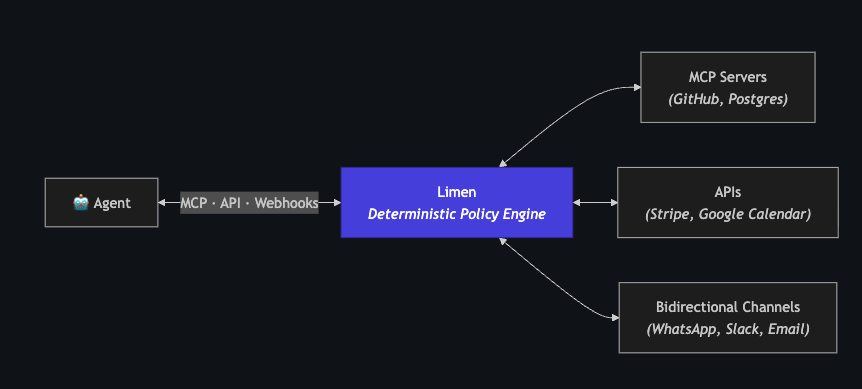
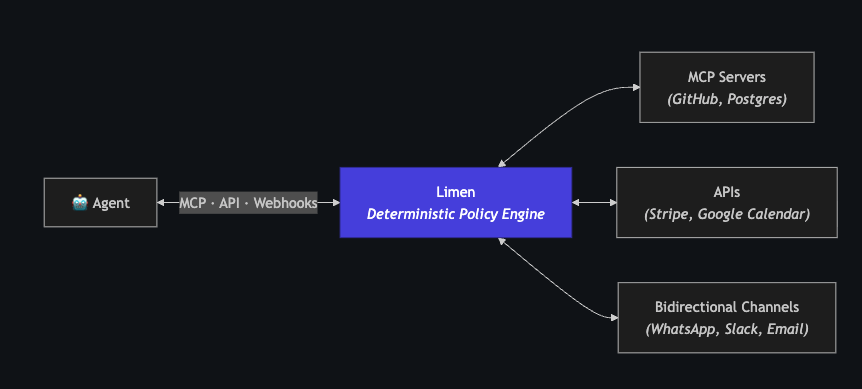
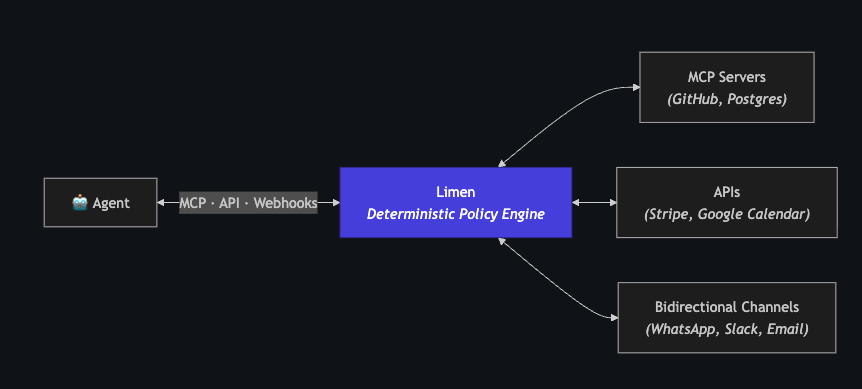
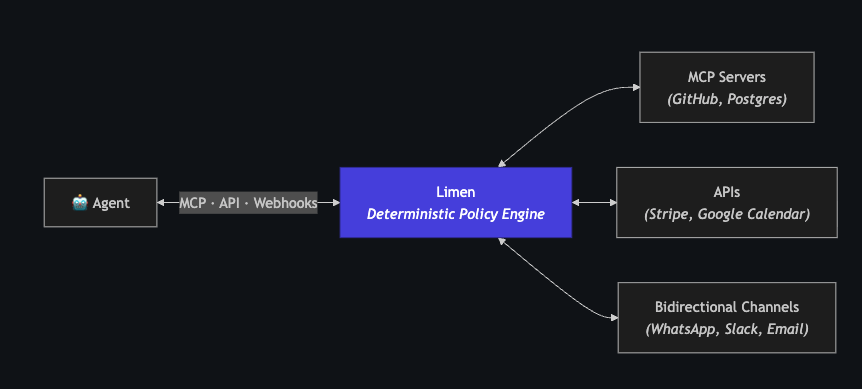
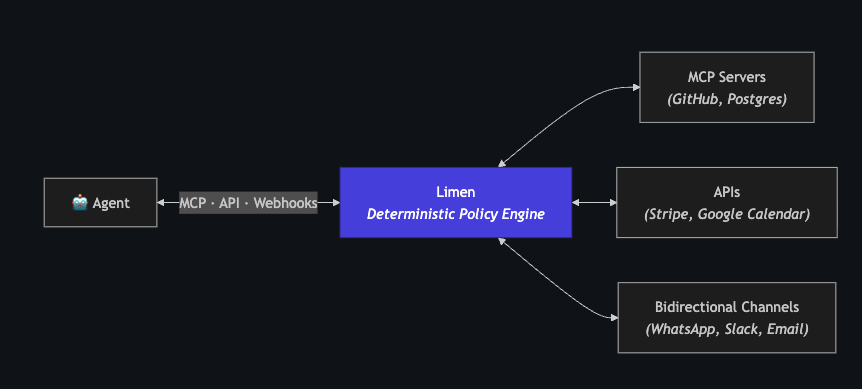
I don't trust OpenClaw (or any other agent) enough to give it access to my email, calendar, or personal WhatsApp. Not while the only thing stopping it is a sentence inside the same context window everyone else can write into. So I'm building Limen.
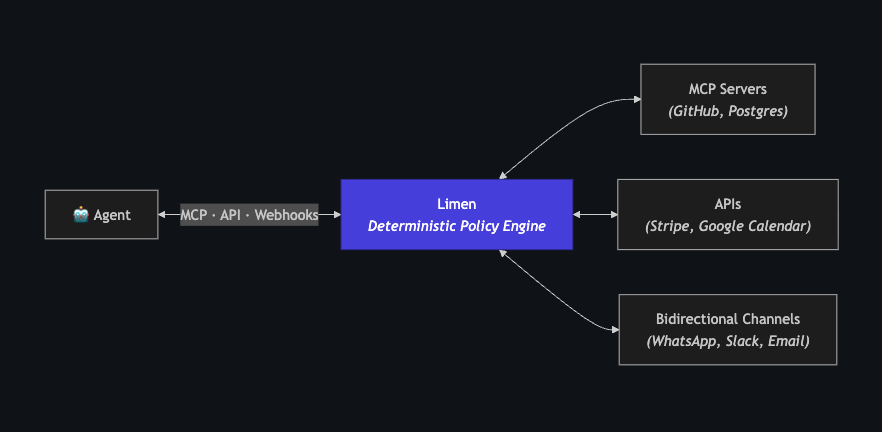
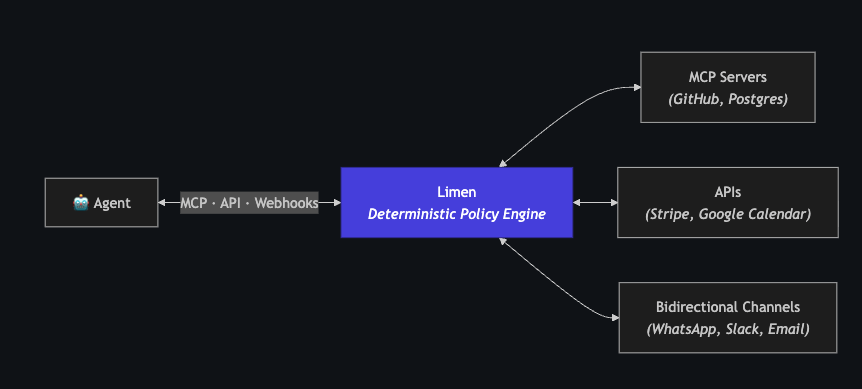
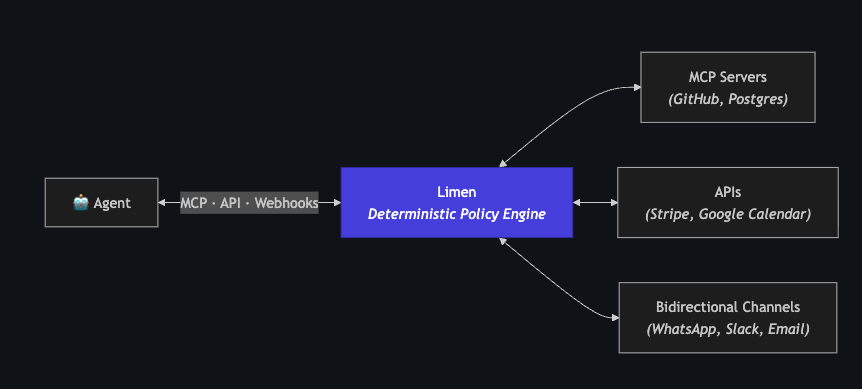
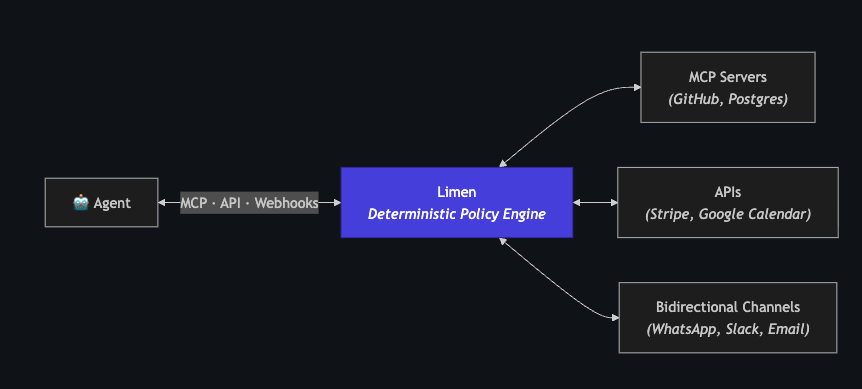
A deterministic permissions layer that sits between the agent and the tools. Rules defined by the user, enforced outside the model, impossible to talk past with prompt injection. They specify what the agent can do, can't do, and what needs a human in the loop.
Examples:
1. Personal WhatsApp: can read messages, can only send to myself.
2. Email: max 5 sends per hour, 20 per day, so it can't blast a cold outreach campaign on its own.
3. Customer service: refunds up to $10 are automatic, anything bigger needs me.
Three things I want to know before I burn another weekend on this with Claude:
1. Do you actually feel this pain, or am I solving a problem only I have?
2. How are you handling it today? Sandboxes, scoped tokens, manual approvals, any tools (and which)?
3. If this existed, what's the first integration and rule you'd set up?
@agentstack_dev I recently started building Limen in public. It's a permissions layer for AI agents.
LLM mistakes are cheap. Tool calls are not. Limen enforces policies so your agents can act without you losing sleep
https://t.co/ECdSO3Y55N
Let's connect!
@izzycodev Building Limen for this and the coming weekends. It's a permissions layer for AI agents
LLM mistakes are cheap. Tool calls are not. Limen enforces policies so your agents can act without you losing sleep
https://t.co/ECdSO3Y55N
@mchulet I recently started building Limen in public. It's a permissions layer for AI agents.
LLM mistakes are cheap. Tool calls are not. Limen enforces policies so your agents can act without you losing sleep
https://t.co/ECdSO3Y55N
Let's connect!
@IamYashKapoor I recently started building Limen in public. It's a permissions layer for AI agents.
It gives you deterministic control over tools so you don't lose sleep when they act.
Open source: https://t.co/ECdSO3Y55N
Let's connect!
@realameerdev Building Limen, a permissions layer for AI agents. It gives you deterministic control over tools so you don't lose sleep when they act.
Open source: https://t.co/ECdSO3Y55N
Let's connect!
@foxtomb232 I'm working on Limen, an open source permissions layer for AI agents tools.
Give your agents access to your tools without loosing control
https://t.co/ECdSO3Y55N
Let's connect!
@DMSCoding11 Limen is an open source permissions layer for AI agents tools.
Let your agent reason, but control its execution
https://t.co/ECdSO3Y55N
Let's connect!