Sorry, seething librarians, but I think this is gonna be badASS. Brace yourselves for MANY iconic photos of men enjoying humiliating beatdowns in front of the world's most famous building.
A reminder about "heat advisories": The threshold to reach heat advisory status was significantly lowered some years ago. What in the past was just a warm, muggy summer day can now qualify for an advisory. Thought you might like to know.
Sheryl. Your article exemplifies the biased reporting we have come to expect from you and @nytimes. It was unfair, inimical, and inaccurate. All one needs to refute your argument is to glance at my publicly available calendar and to review my unprecedented list of accomplishments on a wide range of issues, all of which I drove. You evidently never undertook these foundational due diligences. Why let facts obscure a good story?
You fault me for missing a couple of monthly counselor meetings. However, I meet one-on-one with my counselors every day to decide policy and strategy. We schedule the monthly meetings to give the divisions a chance to keep each other informed about HHS-wide policies with which I’m already intimately familiar. Had you read my calendar, you would have seen that I have back-to-back meetings all day, every day, with both career and political staff, with my counselors and with outside stakeholders, interspersed with press conferences and other policy announcements.
I am knowledgeable and active on every issue in every division of my department, and I always make the final decisions. I meet with the principals at FDA, NIH, CDC, and my senior counselor every morning, something, I’m told, is unprecedented in HHS history. I try to get out of the office between 4:30 and 6:00 PM, so that I can spend three hours, in quiet, responding to emails. I normally work until 11 PM every night, mostly on phone calls to staff.
In order to prove your preconceived case for my disengagement, you quote anonymous employees, some of whom I fired or who quit to avoid being fired. You also deceptively quote HHS employees without identifying whether they were among those I fired, thereby depriving your readers of the opportunity to make an independent judgment about their credibility.
I came into this job to change the culture of a broken agency that has presided over the worst decline in public health in American history. Of course I fired people—lots of them! It's an easy task for even the laziest journalist, to comb that flotsam and jetsam for malevolence toward the Trump administration. And of course, this species of journalist will always be able to find disgruntled individuals among the 70,000 employees of the Department from whom to cherry pick "facts" to flesh out a preordained hit piece. All that is required for this brand of journalism is the ethical elasticity that you seem to have in spades. You had a preconceived thesis, and you set out to prove it. This is a widely accepted technique in journalism today, but I grew up in an era when it would not have been tolerated by the New York Times.
Ultimately, God puts us all on this earth to search for existential truths. I've tried to instill this mission at HHS by implementing gold standard research to end the regime of politicized science that COVID exposed to the American public. There was a time that journalists were proud to be the fearless and uncompromising champions of truth. Standards have devolved, and journalism is dead. The Times now employs propagandists. Your capitulation to partisanship further compounds your journalistic challenges; since we all are aware of your predictable bias, we at HHS are unwilling to talk to you about the topics that are important. The fact that you have minimal access to decision makers leaves you covering trivia and relying on your own capacity for invention.
Btw. When I took this job, the building was empty. About 90% of the employees were not coming to work. I changed that, but your newspaper never covers my reforms. Nor did you cover the fact that my predecessor almost never showed up for work here during his four years in office. When we came in, there were still artifacts from the first Trump administration in many of our office drawers because no one showed up for work during the Biden years. Just as Rochelle Walensky spent her entire term as CDC Director in Cambridge, Xavier Becerra reportedly spent most of his term as HHS Secretary in California. (I live in California, but I’ve only been there once in fifteen months).
His only notable accomplishments here were losing 300,000 children, referred to HHS for custody and care, to human traffickers and drug runners, encouraging transgender surgeries, and disabling the entire program-integrity apparatus, allowing hundreds of billions of dollars of theft from my agency. I have set out to find the children Becerra lost. He is now the front-runner for the governor of California. These are not invented stories; they are genuine scandals that the Times will never cover, presumably, because the malefactors are Democrats.
Finally, you criticize me for spending time with the Indian tribes in Alaska. I consider that part of my job. I run the Indian Health Services, and I’ve had unprecedented success in transforming IHS from a backwater to a top priority for this department. I’ve made more trips to Indian country and to Indian health clinics and hospitals than any HHS secretary in history, and I’ve brought Indians into high positions on the sixth floor for the first time in agency history. This is another success story that the Times will never cover.
🇺🇸Hank Bauer’s older brother, Herman, was killed fighting in Normandy.
He too was a ballplayer. According to Hank, he was the best in the family.
Herman A. Bauer (1918-1944) was the rising star catcher.
Signed by the White Sox in 1939, he batted .305 as a rookie with the Grand Forks Chiefs, then exploded in 1940: .294 average, 12 HR, 86 RBI, and was named the league MVP while leading them to the Northern League championship.
He even got kid brother Hank his first pro tryout.
In 1941 he jumped to AA with the St. Paul Saints. AA was the highest league in the minors at that time.
He was on the brink of entering MLB.
But he never got the chance to prove it in the big leagues.
After Pearl Harbor, Herman enlisted in the Army.
Staff Sergeant Herman Bauer, 33rd Armored Regiment, 3rd Armored “Spearhead” Division, landed at Omaha Beach and was mortally wounded by mortar and artillery fire at Les Haut Vents near Saint-Lô on July 12, 1944. He died that day.
He is buried at Normandy American Cemetery, Colleville-sur-Mer, France (Plot J, Row 22, Grave 15).
Hank named his first son Herman in 1956.
Two Bauer brothers. Two different theaters. One came home to become a Yankees World Series legend. The other stayed in Normandy so the rest of us could.
WILD
An african migrant from Mauritania entered our country illegally under Biden and claimed to be gay to get asylum in the U.S.
He then got a job as a corrections officer at a prison in Indiana.
There’s just one problem…
He married the Sheriff’s daughter!
He’s now in ICE custody.
Nattokinase is truly a remarkable supplement.
At 10,800 FU daily, it reversed arterial plaque in 66.5% of patients over 12 months, with no side effects.
The rest of the data is even more insane.
Researchers tracked 1,062 people with confirmed hyperlipidemia and carotid artery plaque.
These weren't just healthy volunteers.
Every person had an ultrasound at the start and another after 12 months of daily nattokinase.
The study used two dose groups: 3,600 FU and 10,800 FU per day. The low-dose group saw almost no change in their plaque or lipid markers.
Even though it was the same supplement for the same amount of time, the dose made the difference.
At 10,800 FU, carotid artery plaque shrank by up to 36%. The arterial wall thickness decreased by 21.7% on average.
These are physical, structural changes that doctors measured and confirmed on ultrasound.
77.7% of participants showed measurable improvement in arterial wall thickness.
66.5% showed measurable reduction in plaque size.
Improvement rates across all markers ranged from 66.5% to 95.4% for the majority of over 1,000 people, not some few lucky responders.
The participants lipid results moved in every right direction simultaneously.
- Total cholesterol: down
- LDL: down
- Triglycerides: down
- HDL: up
No adverse effects were recorded at any point across the full 12 months.
Lifestyle also amplified everything.
Participants walking more than 5,000 steps daily responded better than sedentary ones, and those with higher BMI saw larger relative improvements, likely because they started from a higher risk baseline where there was more room to move.
The study also tested co-administration.
Vitamin K2 and low-dose aspirin taken alongside nattokinase produced a synergistic effect, outperforming nattokinase alone across cardiovascular markers.
If you're building a stack, that's the combination the data points to.
The researchers found the effective range is 6,000 to 12,000 FU daily. Most supplements in Europe are only 2,000 FU. That's a huge gap.
The data shows 2,000 FU does almost nothing to plaque, while 10,800 FU actually shrinks it.
All in all, truly an incredible enzyme.
🇺🇸 Most Badass Ballplayers: Combat Veteran Edition #1 Hank Bauer
Hank Bauer, United States Marine and eight-time World Series champion, was one badass ballplayer.
Born July 31, 1922, in East St. Louis, Illinois.
One month after Pearl Harbor, he enlisted in the United States Marine Corps.
He volunteered for the elite Marine Raiders and was sent to the Pacific Theater.
He fought in some of the bloodiest campaigns of the war, including Guadalcanal, Guam, and Okinawa.
On Guam, Bauer went ashore on the very first day.
He earned his first Bronze Star for demonstrating exceptional valor during intense, close-quarters jungle warfare.
He was wounded in the back by enemy shrapnel from an exploding shell. He refused to leave the battlefield.
It was his first Purple Heart.
Years later, pieces of shrapnel from that wound were still embedded in his back. His Yankees teammates would sometimes pick metal fragments out of him in the clubhouse.
The fighting he experienced on Okinawa was even more brutal.
Bauer was a platoon sergeant leading 64 Marines.
Only six of them survived the battle.
On April 15, 1945, under heavy mortar and machine-gun fire, he repeatedly exposed himself to evacuate wounded men.
When stretcher bearers were no longer available, he carried casualties himself to the aid station. For that action he earned a second Bronze Star.
He was also wounded in the thigh by an artillery shell, tearing a massive hole in his left thigh. He received his second Purple Heart.
As he was being carried off, he turned to a buddy and said, “There goes my baseball career.”
Throughout his time in the Pacific, Bauer also battled malaria, contracting it twenty-four separate times (that’s not a typo).
After the war he returned to baseball.
He made the Yankees in 1948 and became a key part of their dynasty, winning seven World Series titles as a player over 14 seasons.
He hit safely in a then record 17 straight World Series games.
He later managed the Yankees to the 1964 pennant and the Orioles to a World Series championship in 1966.
32 months of combat. 11 campaign ribbons. 2 Bronze Stars, 2 Purple Hearts. 8 World Series Championships.
Thank you, Hank! 🫡🇺🇸⚾
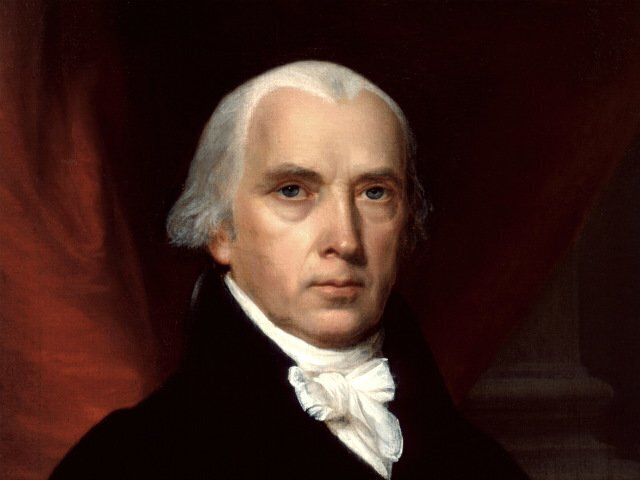
On this day in 1789, James Madison stood up in Congress and proposed the Bill of Rights.
What most people don't know: he thought it was a terrible idea.
Madison had spent years publicly arguing that a Bill of Rights was pointless, even dangerous. His logic was actually sharp. If you list specific rights, you imply those are the ONLY rights people have. What about the ones you forgot to write down?
So he didn't want to write it.
Then Patrick Henry ruined his life.
Henry was the most powerful political operator in Virginia and he despised Madison. He personally blocked Madison from the Senate. Then he redrew Madison's Congressional district to guarantee he'd lose that race too.
Madison was cornered. So during the brutal winter campaign of 1788-1789, he made a public promise: vote for me and I will personally deliver a Bill of Rights in the first Congress.
He won by 336 votes.
Here's the part that should blow your mind: Henry didn't even want a Bill of Rights. He thought it was too small. What Henry actually wanted was a second constitutional convention that would gut federal power entirely, strip Congress's ability to tax, claw back its war powers, fundamentally restructure the whole government.
So Madison wrote a Bill of Rights he didn't believe in, to defeat a man who didn't want it either.
Then Henry spent the next two years trying to block Virginia from ratifying the very amendments Madison had just written.
The First Amendment. The Fourth. The Fifth. The right against self-incrimination. The protection from unreasonable search and seizure.
All of it traces back to a petty political feud in 1788 Virginia.
History isn't made by visionaries with a plan. It's made by stubborn men backed into corners.