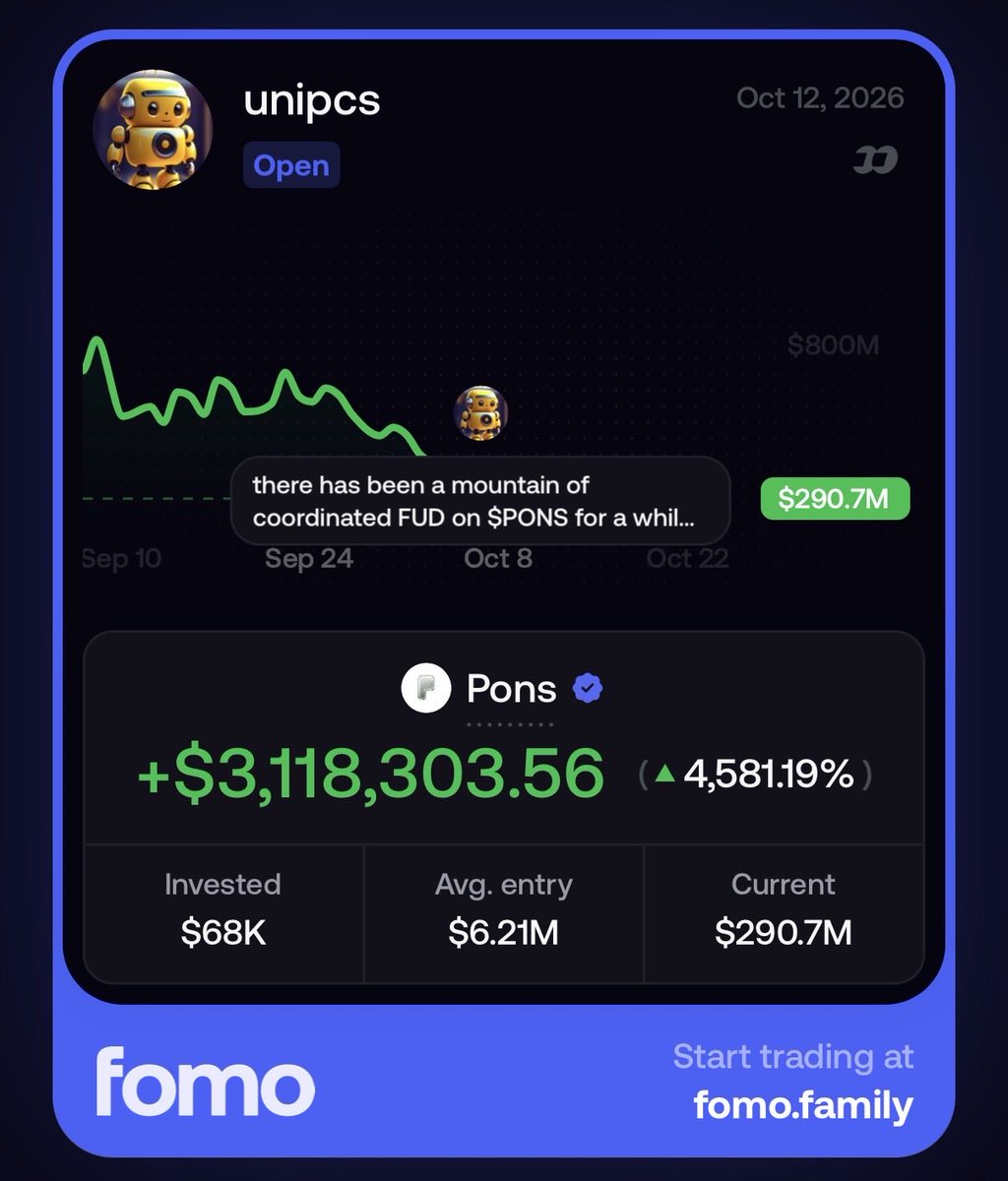
you will outperform 80% of CT "traders" by:
i) muting them
ii) holding 2-3 positions you have conviction in to not get shaken out by panicans
iii) doing nothing
it is absolutely that easy
problem is that people need constant stimulation and start looking for ways to chimp out
@clementetv_ any one who crosses 50k followers mostly larp now-a-days , very few who are genuine , mix that how impatient people are , perfect cokctail and x is a reflection of it - one day its the end next day we are so back .
@Crypto_peet I always copy blindly whatever you say , you are my Ansem bro , was holding for last 12 years just becasue of you selling it , thank you for being so transparent .
which one - everyone is in preps no one buys spot any more , people don't even hold more than a single day + the constant chat + slop from influencers + social trading - a deadly combination of everything going to zero .
selling during capitulation is one of the worst mistakes you can make.
some of the best memes out there are literally capitulating right now.
you can literally buy them now and potentially lock in 20-50-100x profits when real liquidity comes back.
all everyone is saying is you should have ignored it , your name was not even mentioned in the initial thread , instead of helping it just did the reverse . Lets stop here .
people have very short memory specially in crypto , everyone forgot what happened with Binance in october in past , the effect is still there with what happened with Binance now but it is just slow . Crypto will be crypto .
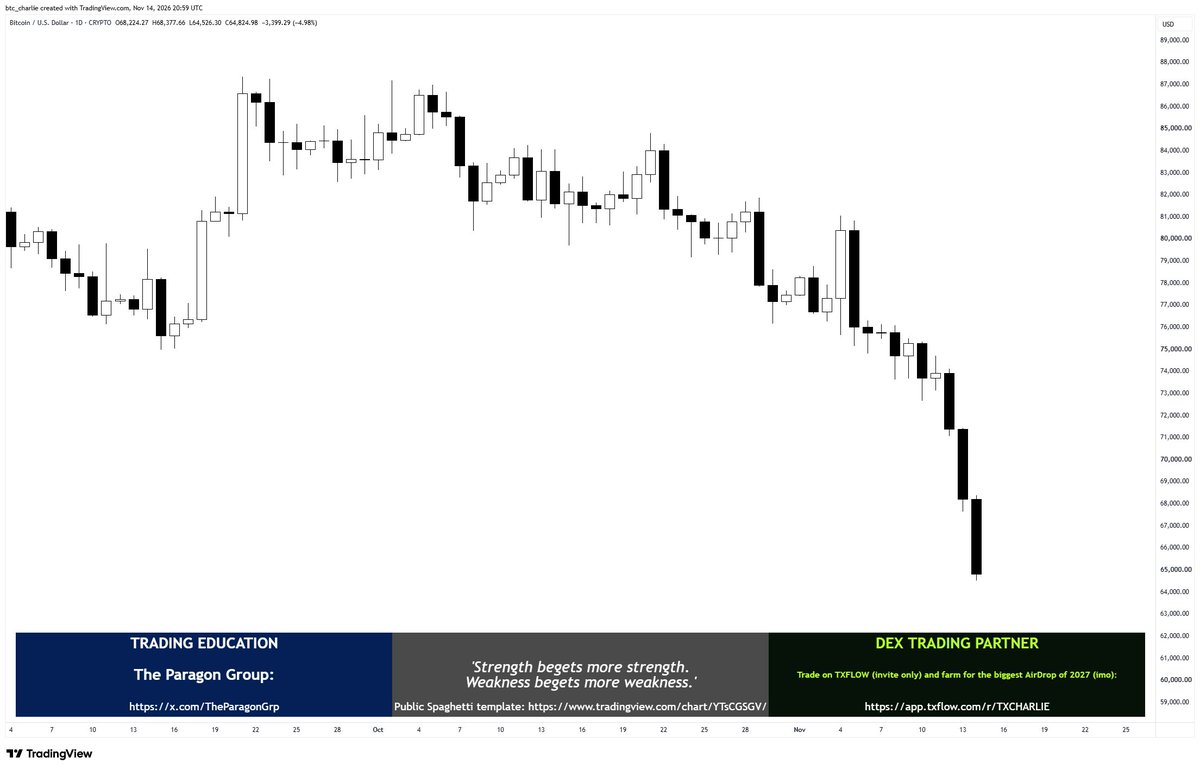
Crazy to see BTC revisit the old 62-67k range
I guess you can start filling out of sympathy here but really it feels like something is completely and utterly broken in the crypto markets and you're going to be rewarded for being patient.
Crazy to see BTC revisit the old 62-67k range
I guess you can start filling out of sympathy here but really it feels like something is completely and utterly broken in the crypto markets and you're going to be rewarded for being patient.
again what the value to token - last cycle they were laughing , promised many things , zero value to token holders . Don't fall for these number traps as long as there is no value to token holders .
Assuming these are all billable requests with a variety of difficulty
4m request a day would annualise to $1-2m ARR
solana:Grass7B4RdKfBCjTKgSqnXkqjwiGvQyFbuSCUJr3XXjs LCR was launched just 4 days ago…
That’s a narrow way of looking at it. Customers aren’t paying Adobe just for the software; they’re paying for support, adaptability, and the confidence that comes with a reliable vendor. Obsidian is a useful comparison: the software itself is only part of the value proposition. In an enterprise context, purchasing decisions are as much about due diligence, accountability, and managing risk as they are about features .
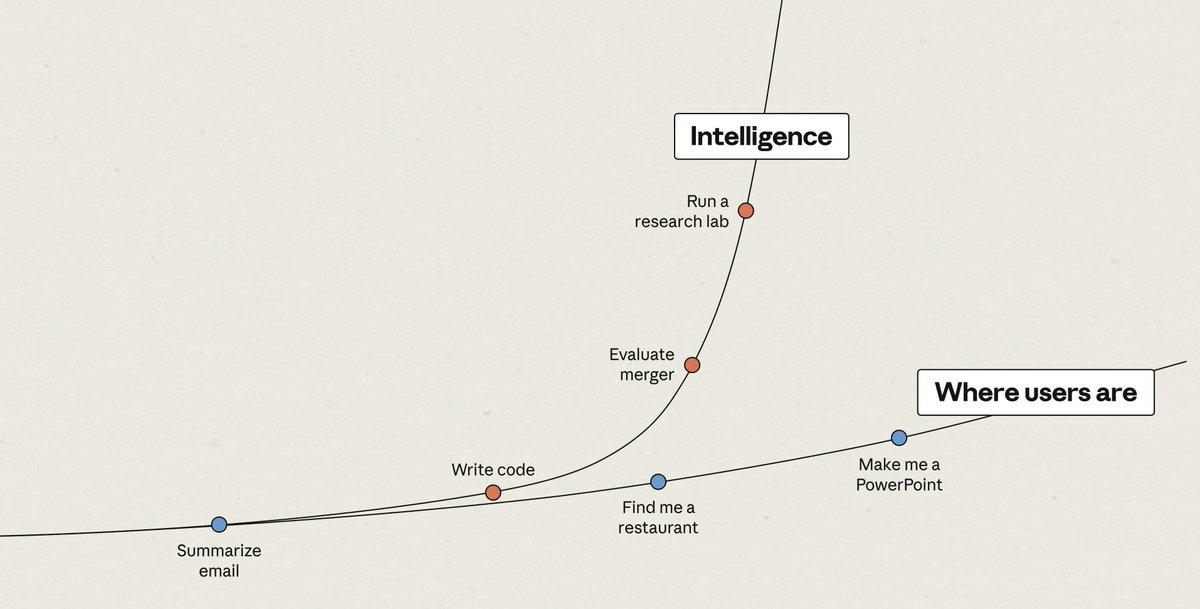
The real world abounds with recursively self-improving systems, but one in particular deserves attention: Science, modeled as a system (perhaps even as an agent, with goals and resources). If you want to really understand AI RSI, science should be your reference point.
Science is an intelligent system, and it is obviously recursively self-improving:
1. Scientific discoveries unlock new technology that helps build better experimental tools. This is a top driver of progress in nearly all fields.
2. They unlock new conceptual advances (ideas, theories) that help solve more problems.
3. They increase society's economic output, leading to more resources flowing into science.
4. They unlock better faster tooling (e.g. more compute via better chip & networking technology).
As a result, many measures of scientific *input* grow exponentially:
1. Headcount (doubles every ~15 years)
2. Global R&D spending (doubles a bit faster, every ~13 years)
3. Papers and patents (technically this is a measure of headcount)
4. Compute dedicated to science (doubles every ~2 years)
But is scientific progress exponential? Historically, the rate of scientific impact over time has remained roughly constant since the start of the industrial revolution (i.e. scientific progress is *linear*). 1850-1900 was about as dramatic as 1900-1950 or 1950-2000.
1850–1900: Evolution, germ theory & antiseptic surgery, thermodynamics, electromagnetic field equations, the periodic table, pharmaceuticals, electricity, telegraph and telephone, internal combustion engine, skyscrapers, mechanized agriculture...
1900–1950: special and general relativity, quantum mechanics, nuclear fission & atomic energy, antibiotics, genetic theory, electronic computers, information theory, synthetic polymers and plastics, the transistor, aviation...
1950–2000: DNA, genetic engineering, integrated circuits, microprocessors & personal computing, the Internet, crewed spaceflight, moon landing, satellite communications & GPS, standard model of particle physics...
In real terms, like life expectancy, which has increased in a remarkably linear fashion of roughly 3 months per year since 1840, progress is a straight line. This is especially apparent for fields where impact is easy to measure, like biology, medicine, and agriculture.
I first wrote about this phenomenon and its causes in 2012, and a steady stream of research has confirmed it in the years since. Examples include the 2018 paper by Nielsen and Collison, "Science Is Getting Less Bang for Its Buck," and the 2020 economic paper, "Are Ideas Getting Harder to Find?" (In fact, I believe the Nielsen paper stemmed from a conversation I had with him about this exact idea six months earlier)
In short, the primary cause is that research solves the highest-impact, easiest problems first, and every subsequent problem is either harder or lower-impact. Exponentially so. The paper that presented information theory wasn't very hard to write (single author!) but you'd have a hard time ever writing a CS paper that beats it in impact.
This is why science as a system requires exponential resources (input) to produce linear impact (output). It gets exponentially harder over time.
Worth thinking about if you're pondering RSI for AI. I fully believe AI RSI is already happening and will accelerate in the future. But I do not believe this leads to an "intelligence explosion" -- that would fly in the face of everything I know about intelligence and everything I know about recursively self-improving systems.
solana:Grass7B4RdKfBCjTKgSqnXkqjwiGvQyFbuSCUJr3XXjs already serves the top labs training data.
Wouldn’t be hard for them to suggest the new Contents API as a solution, especially now their core product bets are running into access issues.
Someone who used to bully me in school asked me for trading advice
I wanted him to lose money so I told him to do the exact opposite of me
He made $25,000 and I got liquidated
It will bottom when people will stop bidding and everyone will say RH chain is done , there are still some believers left ( low confidence ) . My bet is after mid term it will bounce .