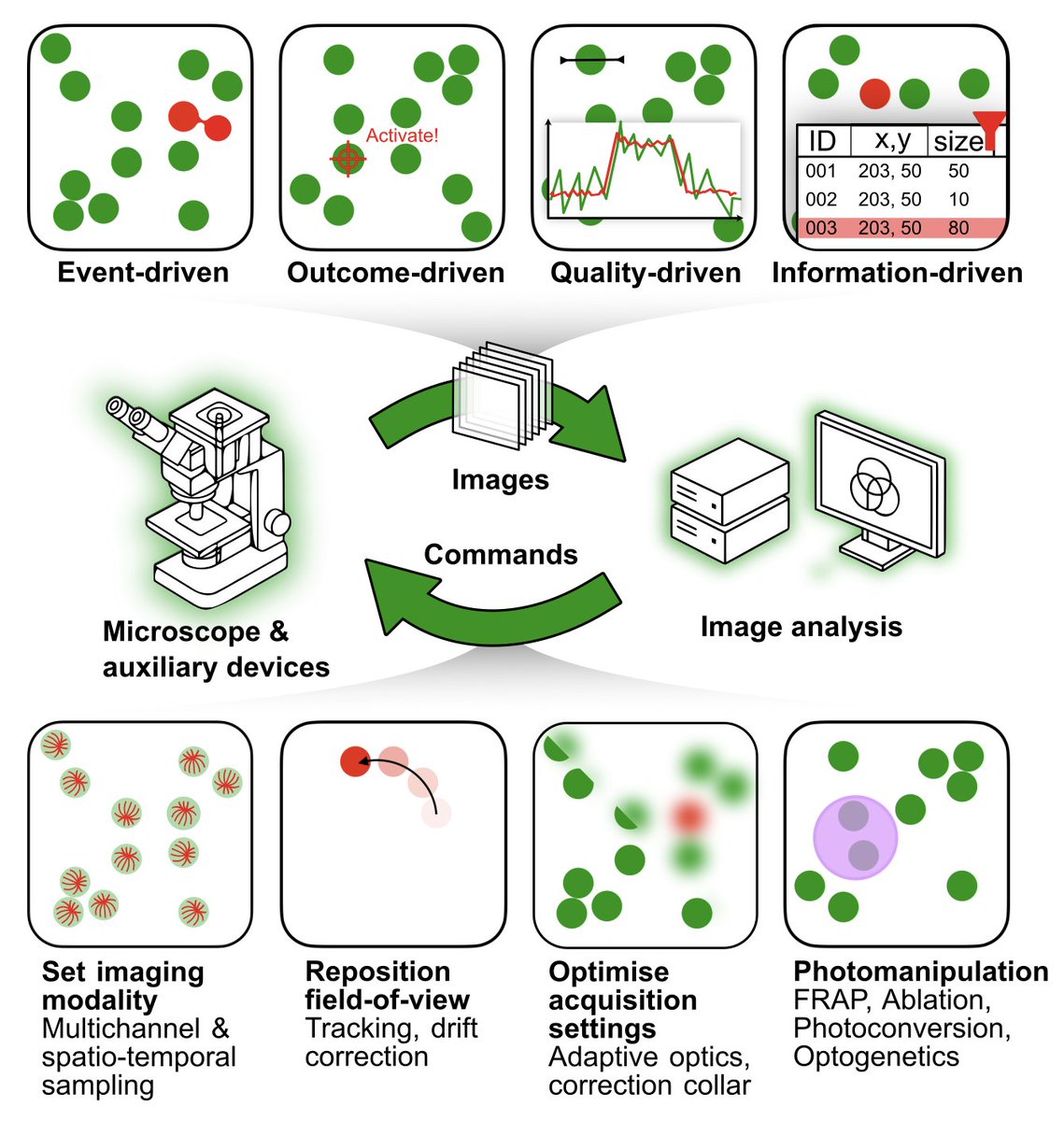
🔬🧠 Our paper on smart microscopy & the issue of interoperability! https://t.co/Zlf0JZDHsu LONG THREAD WARNING: Smart microscopy uses real-time image analysis to automatically guide the acquisition or perturbation (closed feedback-control loop). Many applications exist:
Pleased to share that a SLM can achieve multiple FRAP to HILO to TIRF. https://t.co/5f1inZ7Ouv (to appear in Opt Exp https://t.co/YdnWfu1Ys5). Great work done by @aviupadhya and Daniel https://t.co/R9jzcu5cEb from the team.
Now published in @NatureComms! 🥳
👉 https://t.co/h43toETbSI
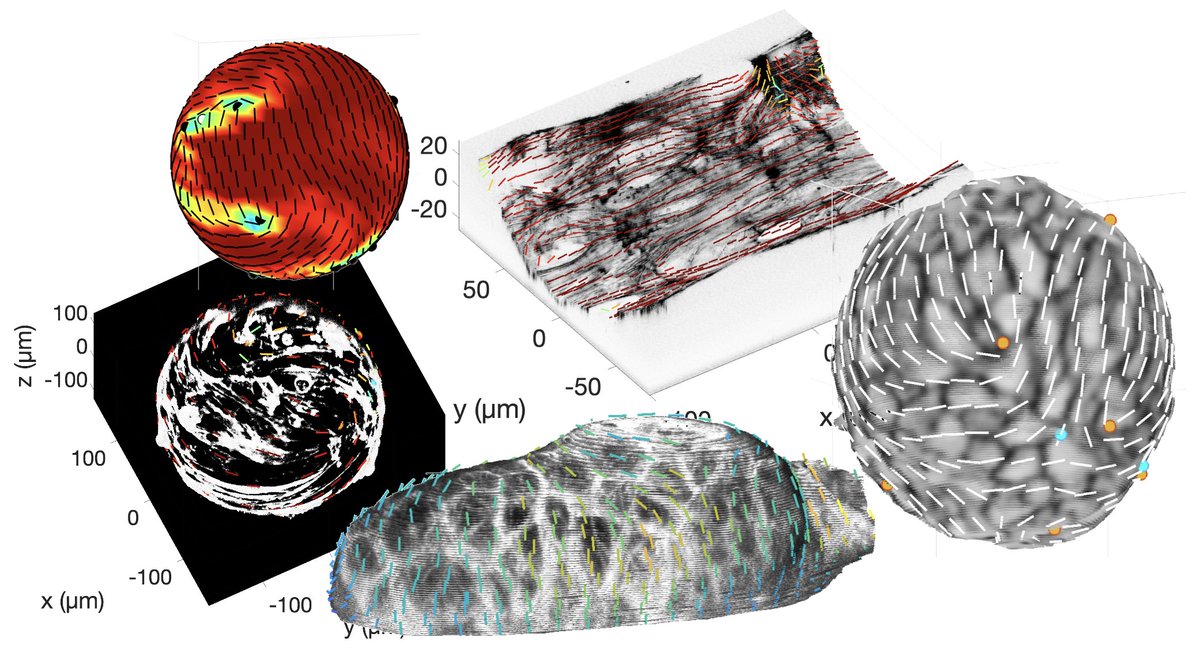
We developed image analysis tools to capture the nematic orientation field of 3D tissue surfaces and combined soft matter physics with experimental biology.
1/n
Fast, flexible, learning-free organoid quantification and tracking with OrganoSeg2
Cameron J. Wells, Najwa Labban, Shayna L. Showalter, Roza K. Przanowska, Kevin Janes
https://t.co/BVVZV466LV
Hawkins, Fernandez-Gonzalez et al. @UofT introduce ReSCU-Nets, recurrent neural networks for integrated segmentation and tracking of three-dimensional #microscopy images. https://t.co/9jp0HJzcQg
📢 PRFluids Editors' suggestion: When coughing or sneezing, mucus forms bag-like structures that break into droplets. Experiments and simulations show that viscoelasticity makes these bags larger and thinner, which reduces the droplet size upon rupture.
https://t.co/a1e9ZQTTzM
3D fibrin gel-generated mechanical signalling allows robust expansion of stem-like CAR T cells within 4-5 days.
Mechanical signaling via β2 integrin decouples T cell proliferation and differentiation for generating stem cell-like CAR T cells: Immunity https://t.co/tX0vZxztCv
@focalplane_jcs are looking for ECRs to speak in their mini-symposium, run together with the popular membrane trafficking webinar series organised by
@Fran_Bottanelli@felixmendu & @ishier_raote.
https://t.co/jNrlj2psQY
Apply by 24 August
🎉 We are excited to announce the 'Consortium for the Equations of Life and Living-Systems' (CELL), an open collective dedicated to building the rigorous mathematical core that biology needs. The principles are based on #OpenScience. We will publish the blueprint soon.
Please follow here for further announcements and logistics: https://t.co/iADlsDLtHp
For every generation, there is a frontier. In the last century, physics gave us the equations for the cosmos. In this century, we will write the equations for life.
This is the great scientific challenge of our time. While biological data grows exponentially, our ability to predict the behavior of living systems lags behind. The gap isn't a lack of data; it's a lack of unifying theory.
We have published a teaser that introduces the concept of “Mathematical Organisms,” outlines the eight universal operator families, and shows how a rigorous algebra can turn biology’s raw data into predictive equations.
We are looking for community leaders, leading experts in mathematical biology, biophysics, computational biology and life sciences to help grow the consortium. If this mission resonates with you, I invite you to read the full post and reach out.
Memberships are free for now. We shall meet soon in San Francisco.
Read Article: https://t.co/lvYQb9p3Lm
#MathematicalBiology #Biophysics #ComputationalBiology #AI #Innovation
For those interested in the role of cancer-associated fibroblasts in the tumor microenvironment, please check out our review focused on recent discoveries related to CAF biology in the context of immunotherapy, metabolism, and extracellular vesicles: https://t.co/DqcKLyrXP3
Following on from their successful meeting in 2023, @J_Cell_Sci are delighted to announce a second iteration of the Imaging Cell Dynamics meeting to be held in 2026. Find out more and sign up for registration and abstract updates at
https://t.co/JOemNCgNQF
#JCSimaging
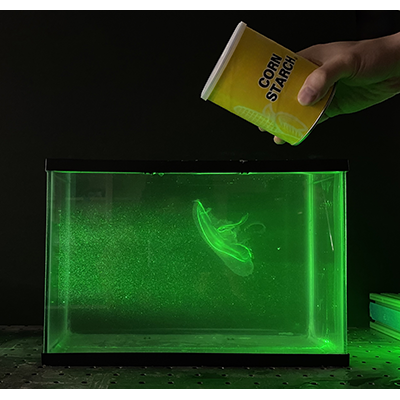
Flow visualization often relies on synthetic particles like glass microbeads, but biodegradable starch particles from plants offer a safer, sustainable, and cost-effective alternative that has been successfully tested with foils, jellyfish, & brine shrimp!
https://t.co/OndaFmytnf
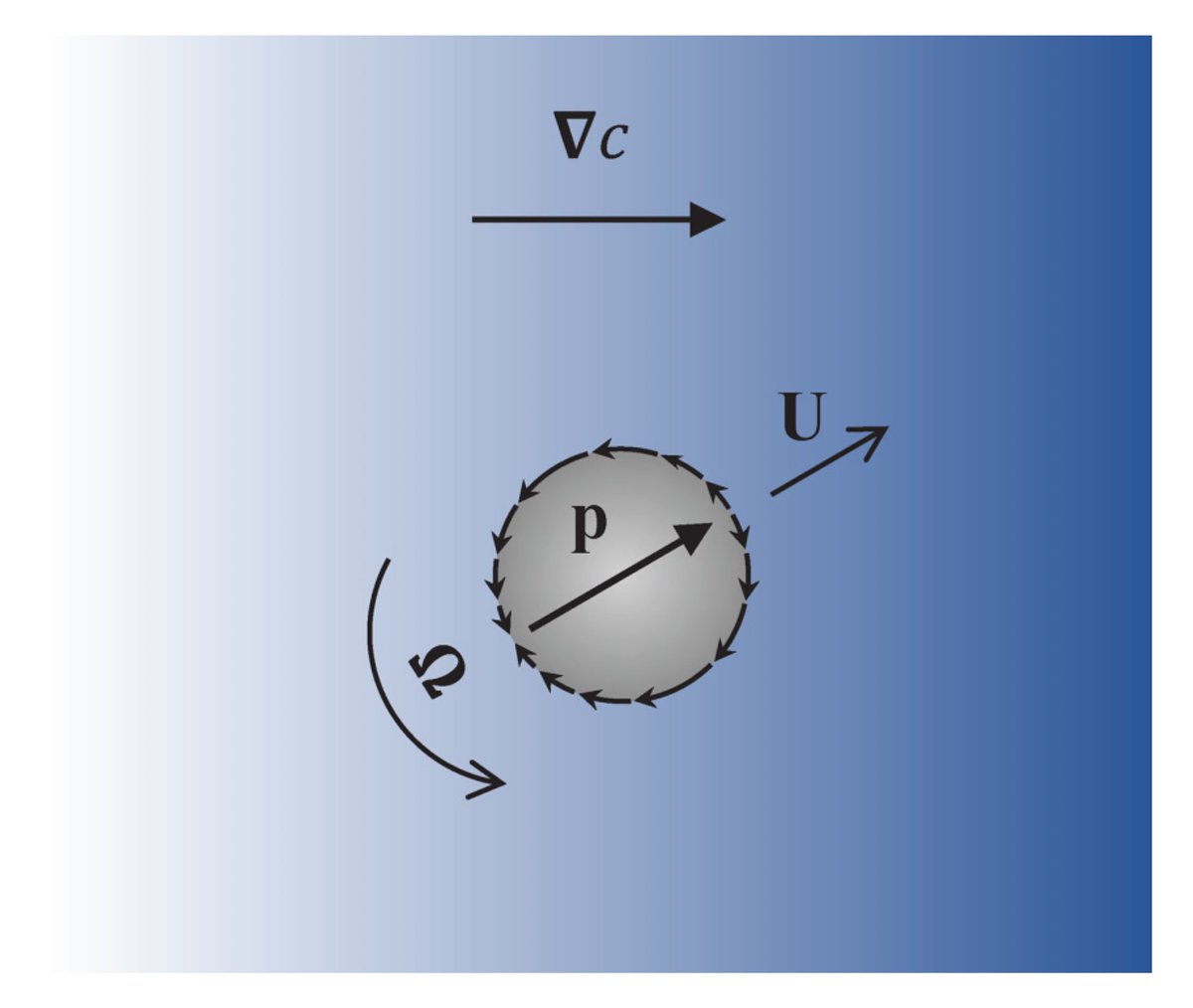
Organisms often swim through inhomogeneous environments, such as viscoelastic fluids, where gradients in viscosity and elasticity may arise.
A new Letter shows that spatial variations in fluid relaxation time induce durotactic behavior in active particles.
https://t.co/JwmBIyrynM
A simple flow of gas over water may have helped kickstart life on early Earth.
Research shows how evaporation and fluid flow in a narrow channel can drive isothermal DNA replication, offering a plausible, low-temp setting for early molecular evolution.
https://t.co/TJdV1QpTH5
4.13/ However, in practice most modes would get very little use if one could not switch effortlessly between them. Indeed, the speed of mode switching in MOSAIC enables correlative imaging of the same specimen across multiple modes during a single dynamic times series, something few other microscopes can boast:
Finally here! Our preprint on the MOSAIC, a multimodal adaptive optical microscope enabling non‑invasive in‑vivo imaging from molecules to organisms, is out.
https://t.co/B2GHHP5b0K
@Eric_Betzig@legant_lab
One month left to apply for a funded early-career researcher place at our Workshop 'Macro to Micro: Quantitative Plant Imaging Across Scales' organised by Mark Fricker, Alexander Johnson, Joseph McKenna and Markéta Šámalová
https://t.co/wtJo2g6q5S
#BiologistsWorkshops