🚀 One API. 100+ AI models.
GPT, Claude, Gemini, DeepSeek, Qwen, GLM, Hunyuan, MiniMax and more.
⚡ Switch models with one API
💰 Transparent pricing
🎁 Free credits to start
See a model trending? Try it in minutes.
👉Start with free credits: https://t.co/51DCdm2DK9
@XiaomiMiMo 46 on the Artificial Analysis Intelligence Index is impressive, but the open RL stack may be the bigger story here.
Open weights + training environments + harnesses could make MiMo-V2.6 much more interesting for builders than another benchmark win.
@OpenRouter@XiaomiMiMo $0.13/task at an Intelligence Index of 46 is the number that stands out here.
The model race is getting less about “who has the highest score?” and more about how much intelligence you can buy per dollar.
AI models are starting to specialize again.
One model routes the request.
Another writes the code.
Another handles vision.
Another evaluates the result.
The future AI stack may not be one model that does everything.
It may be many specialized models working together.
The interesting part is choosing the right one at the right time.
@LangChain This is probably the bigger Jev use case: not just routing, but cheap evals after every agent run.
If judging is this fast and cheap, you can afford to verify far more of the workflow.
@OpenRouter@typesafeai This is what makes Jev interesting for model routing.
If the routing decision is >5× faster without giving up much accuracy, you can make it on every request without turning the router itself into the bottleneck.
@OpenRouter@typesafeai This is exactly where multi-model systems get interesting.
Use Jev for the cheap routing decision, then send the task to DeepSeek, GLM, GPT or Claude based on what it actually needs.
@OpenRouter@typesafeai This is exactly where multi-model systems get interesting.
Use Jev for the cheap routing decision, then send the task to DeepSeek, GLM, GPT or Claude based on what it actually needs.
@ChatGPT “Share instead of describe” feels like the right direction.
Give the system the context, describe the task, and let it figure out the rest — including which model should handle it.
“Which AI model is best?” is becoming the wrong question.
A real AI workload depends on more than the model:
→ Model
→ Inference provider
→ Agent harness
→ Tools / MCP
→ Context
→ Retries
The same model can behave very differently depending on the stack around it.
Maybe we should start benchmarking AI systems, not just AI models.
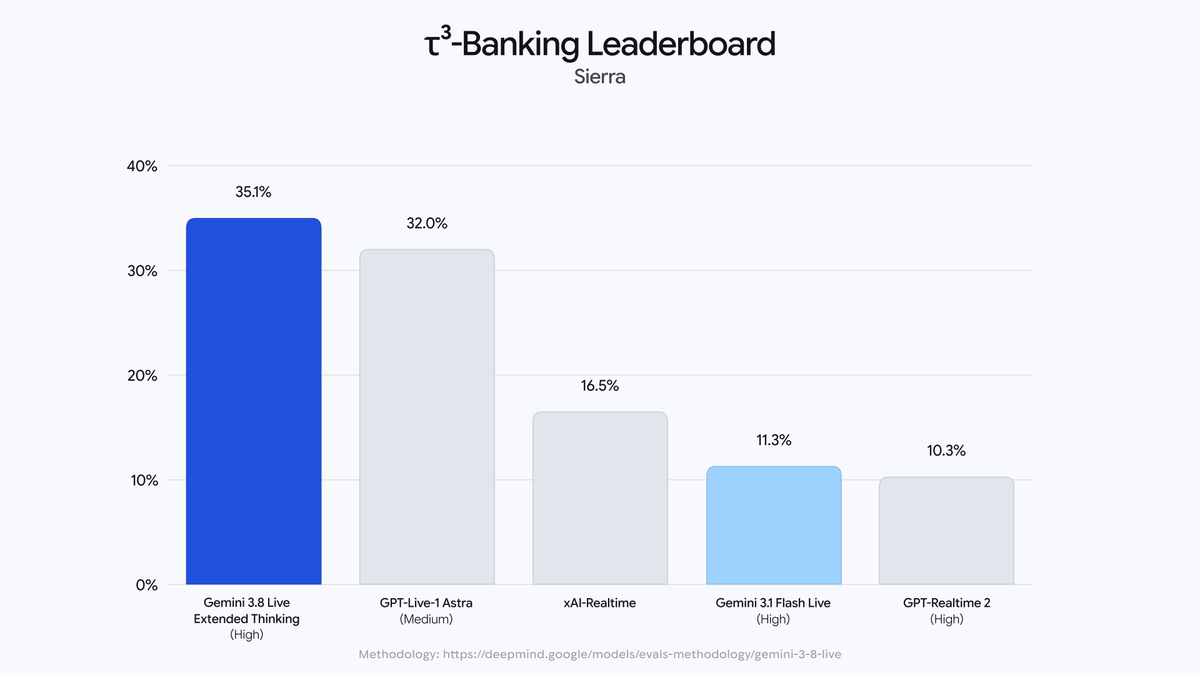
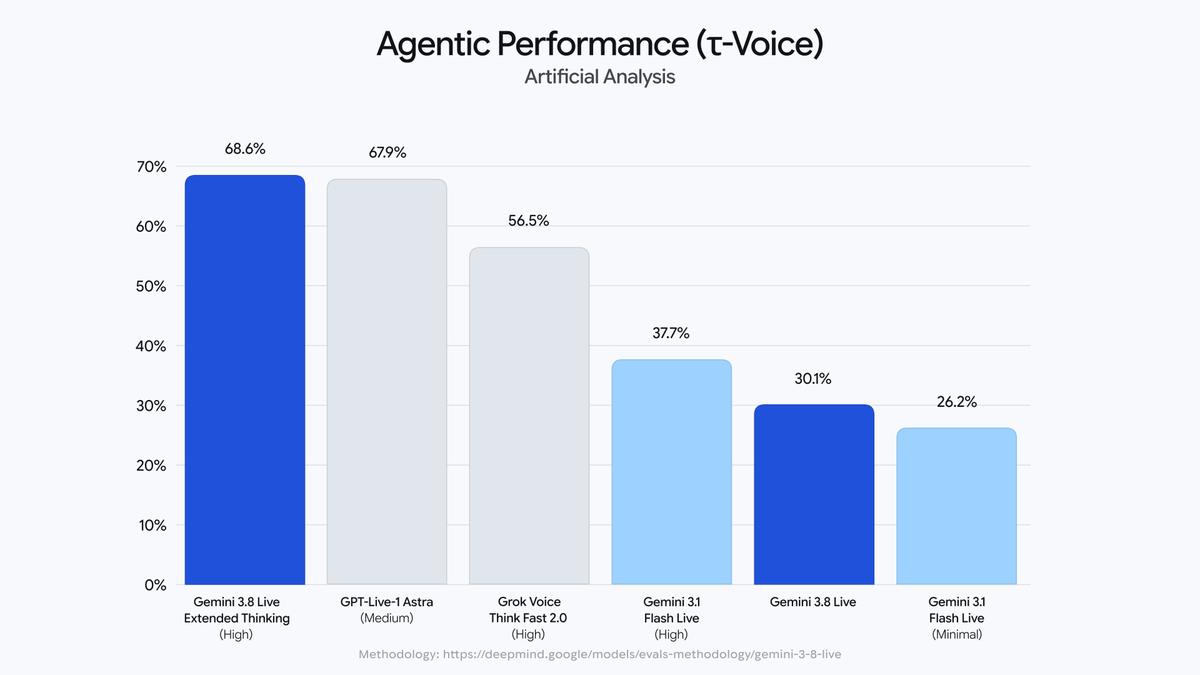
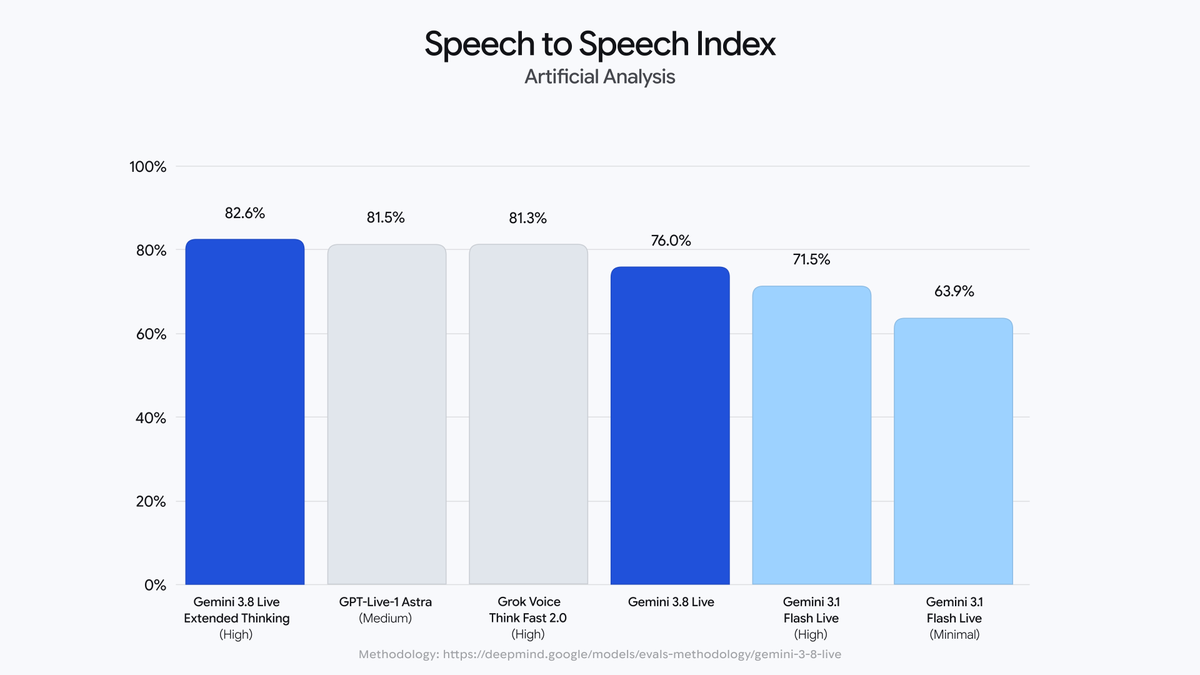
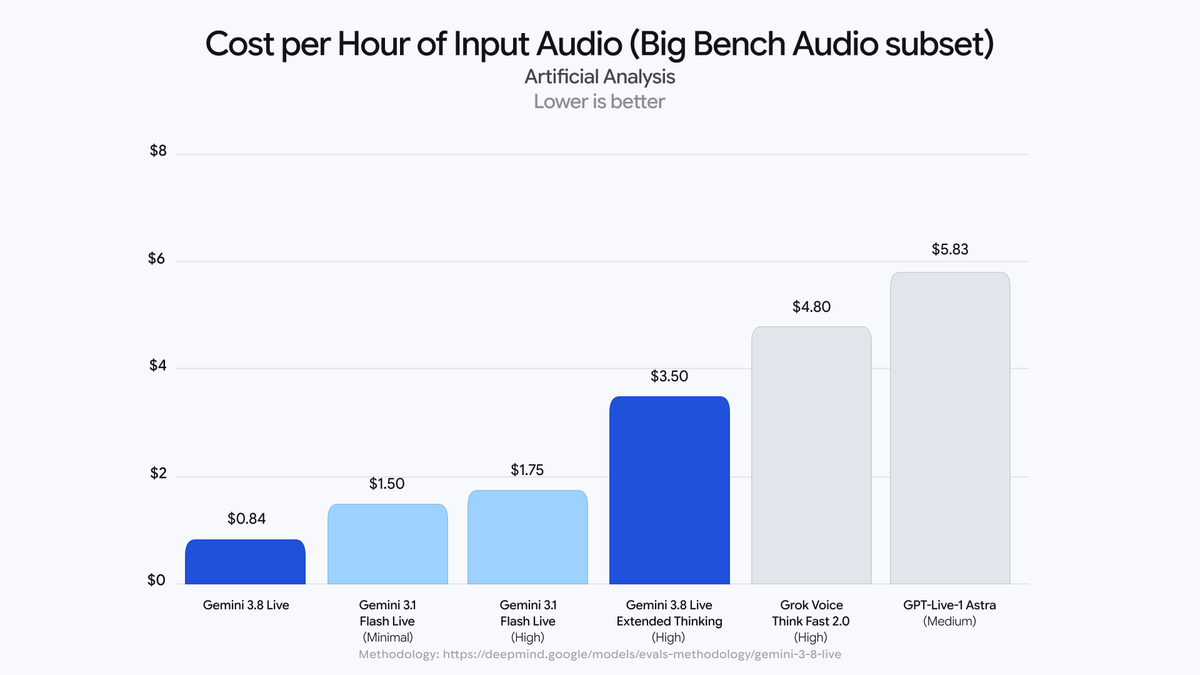
Voice agents now have a model routing problem too.
Cheap, fast conversations and complex multi-step voice tasks don’t necessarily need the same model.
The “right model for the workload” idea is expanding beyond text.
We’re introducing Gemini 3.8 Live and 3.8 Live Extended Thinking – our best conversational AI.
The models talk, think, and handle tasks in the background without breaking your flow. 🧵
@MiaAI_lab At this price and speed, the real question is how it performs on actual tasks. That’s exactly what we’re testing with ApiHub — run the same workload across different models and compare the results.
$/M tokens is only part of the story for AI agents.
Cost per task, success rate, latency and retries matter too.
That’s why at ApiHub, you can try different models through one API and compare what actually works best for your workload.
New users get free credits to test them.
One API. Multiple models.
DeepSeek-V4.1-Flash (Max) is a breakthrough in performance to cost efficiency. With +4.87% net improvement at $0.07 cost per median task, it’s reshaped the Pareto frontier for Agent Arena!
Among the top 3 open models, DeepSeek-V4.1-Flash (Max) has the lowest median task cost. For comparison, it retains:
- 98% of Hy4 preview’s net improvement, at 73% lower cost
- 76% of Kimi K3 (Max)’s performance, at 92% lower cost.
Against models as powerful as Fable 5 or stronger, DeepSeek-V4.1-Flash (Max) retains 35–54% of their net improvement at 97–99% lower cost. Those top models cost 37–76× more per task.
Net improvement over Arena baseline | Median cost/task:
- Claude Fable 5.1 (Max): +13.90% | $4.54
- GPT 6 Astra (Max): +11.90% | $4.09
- Claude Opus 5 (Max): +11.09% | $3.52
- Claude Opus 5 (High): +10.49% | $2.24
- Claude Fable 5 (High): +9.03% | $2.19
- Claude Opus 4.8 (High): +7.75% | $1.36
- GPT 5.6 Sol (xHigh): +7.40% | $1.09
- Kimi K3 (Max): +6.39% | $0.77
- Hy4 preview: +4.96% | $0.22
- DeepSeek-V4.1-Flash (Max): +4.87% | $0.06
With this release, GPT-5.6 Luna (xHigh), GLM-5.3-Flash, and DeepSeek-V4-Flash fell off the Pareto frontier for Agent Arena.
Congrats again to the @deepseek_ai team on this release!
@AestherML The architecture shift makes a lot more sense when you look at agent workloads: huge reusable context, relatively small outputs, and cache cost becoming a first-class constraint.
@supezen Do you assign these models manually per task type, or does the coordinator agent route tasks automatically? That feels like the next interesting step.
DeepSeek listened.
V4 Pro is staying.
DeepSeek originally planned to phase it out after launching V4.1 Flash — but after user feedback, V4 Pro will remain available.
And that says something important:
The newest model isn’t always the right model for every workload.
Some teams optimize for speed and cost.
Others care about consistency, coding quality, or existing production workflows.
That’s why we believe developers should have a choice.
DeepSeek V4 Pro. V4.1 Flash. GLM-5.3. Qwen3.8-Max. Hy4 Preview.
Different workloads. Different models. One API.
🎁 Free credits for everyone to try them.
@buildwithhassan Have you compared total tokens and retries on the same task? If DeepSeek is faster and needs fewer turns, that’s a much bigger win than a small benchmark gap.
@sama Agreed it shouldn’t stop. But capability shouldn’t sit with one lab either. Multi-model access and free credits at least let teams sort out monitoring, switching, and cost first.
Pacing may make sense. Enterprises are not going to stop using models. What will change is evaluation, fallback plans, and how often teams switch providers. Developers need one place to use Claude, GPT, open-source, and international models, with free credits to benchmark and build a downgrade path. If the frontier slows, the teams that can switch models fastest stay ahead.