Watching Upsello Bot run the store today. Several workstations were moving at once.
Social already had a plan from real numbers: 13 posts in 30 days, 1 like. The recommendation was not to add volume.
Then it got to paid traffic for Black Friday and didn't spend on its own. It stopped and asked me: test $20 today, get the product data ready first, or spend nothing this week.
Adding another agent is easy. The hard part is whether it stops when it should ask.
This conversation with @tobi is incredible. One of the best I’ve had on the podcast so far.
Tobi on the miracles of entrepreneurship, technology, AI, free markets, and why now is the most exciting time in history to build products and services that make other people’s lives better.
0:00 Why founders like Jensen are irreplaceable
1:22 Donating blood 3 times to buy a Riva TNT
7:15 Tim Cook was still extending Steve's runway
10:47 Only founders can reinvent their companies
13:14 The 95% of Shopify he doesn't own
15:16 Rising violence will make founders opt out
16:07 Bezos wants a different rich list than the Forbes 400
24:33 Markets are the original superintelligence
26:58 Jensen reserved chips for the little guys
30:16 The computer programmer job is over
35:59 Insufficiently ambitious prompting
45:45 Software is about to become nearly bug-free
48:58 AI as an instrument
54:51 A weekend rewrite that used to take years
1:02:23 Why computers shouldn't make you feel bad
Includes paid partnerships.
uilding an Upsello bots for e-commerce taught me one brutal truth: "fully autonomous agents" are a myth.Merchants don't want an unpredictable intern freestyling in their Shopify backend. They want an auditable, deterministic growth https://t.co/KBp5msjOVo we refactored our entire execution pipeline. We stripped the LLM of decision-making power, leaving it only with expression.
🧵👇
Deterministic state machines > black-box reasoning
No more letting the LLM "guess" what's wrong with a store. Deterministic queries pinpoint funnel gaps $\rightarrow$ map strictly to P0/P1 playbook actions.
The LLM's only job: translate raw diagnostics into human language and write high-converting copy.
Close the loop between front-end sales & back-end infra
We redefined our "Store Manager" agent. It doesn't just route tasks—it handles live pre-sale shopping guidance and feeds real-time customer objections directly into product page optimization.
Front-end chat data fueling back-end conversion. That's a real flywheel.
Kill "status-confirmation" friction
Once our system detects a completed store OAuth connection, the onboarding to-do self-destructs. Forcing paying users to manually check off an event that already happened is a lazy UX tax.5/54. Be ruthlessly honest about current AI boundaries
Commercial-grade image/video generation isn't reliable enough yet. So we cut "auto content creation" from our Social module and doubled down on multi-channel scheduling & https://t.co/XqFa4mEF8Q B2B SaaS, restraint beats fake all-in-one magic.#buildinpublic #AIAgents #Shopify
In the AI era, engineering skill may no longer be what's most valuable.
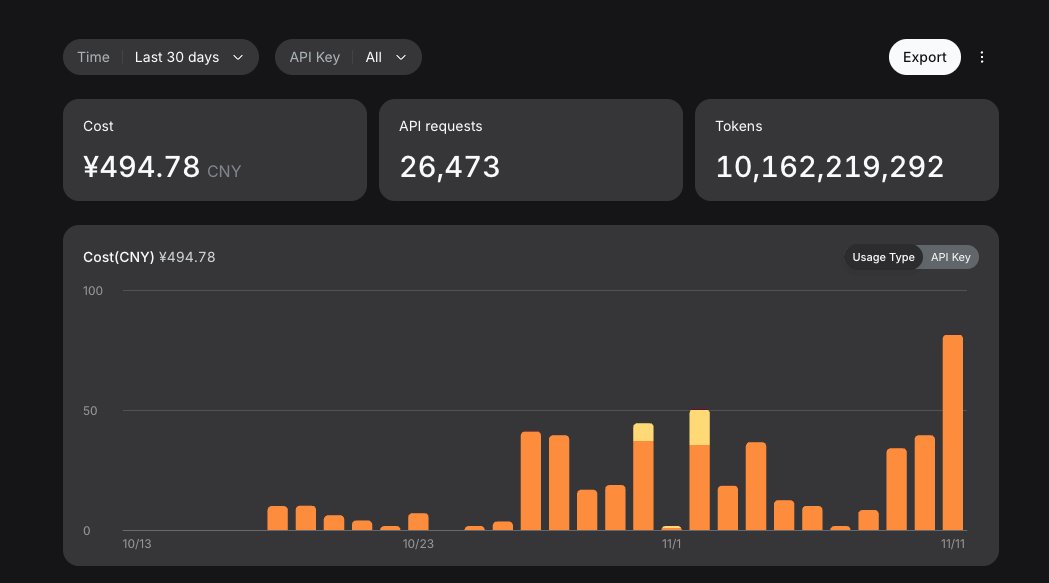
During recent product iterations, I spent around 20 billion tokens, all told.
My biggest takeaway: writing a feature really is no longer a barrier.
It used to take an engineer days to ship a feature. Now AI can often help you build it in minutes. If you want to make something, it can basically make it for you.
That's why I increasingly feel that in product work today, the real constraint isn't engineering ability. It's your idea, your industry know-how, and your understanding of the product.
A lot of people say AI still can't handle the details — that the UI isn't refined enough, or the interactions aren't quite right.
I think that's a major misconception.
A lot of the time, it isn't that AI can't do it. You just haven't described the requirement clearly.
You only tell it: "Make this UI look a bit nicer."
Instead of: "Here's how the motion should work, which component to use, how long the interaction should take, and how the shadows and spacing should be adjusted."
The deeper your understanding of the details, the more likely AI is to give you the result you actually want.
AI is lowering the barrier to building things. It is not lowering the value of professional judgment.
But that's only the first layer.
When more and more people can use AI to ship a product, what happens next?
I think one direct result is this: the supply of products will explode. User attention will not.
In the past, the hardest part of starting up was often getting the product built. Now a product can go live in a few days. And then what? Where do the users come from? Why would they choose you? How do you get them to keep using it?
That's what made me rethink the value of distribution.
Facebook once spread quickly through campus networks. Pinduoduo rode social sharing in WeChat groups. A lot of today's AI products also get their cold start from founder influence, social media hits, and existing user networks.
You start to see it: a good product only earns you a ticket to compete. It doesn't mean users will show up on their own.
More realistically, once a proven growth method is something everyone can learn, it quickly becomes a red ocean. Channels get more expensive. Acquisition gets less efficient.
So what may actually be valuable isn't finding a growth method everyone already knows, but finding a distribution path that's hard for others to copy.
It might come from your industry relationships, your community, your content, or from a distinctive way the product itself spreads.
This is a judgment that's been getting clearer for me about building in the AI era:
AI makes production easier. It does not make commercial success easier.
In the past, engineering ability decided whether you could build the product. Today, AI is flattening that gap.
But product judgment decides what you build, and distribution decides whether you can sell it.
I increasingly feel that what's most worth accumulating in the AI era isn't one specific technology. It's your understanding of an industry, your feel for the product, and your ability to find users.
When everyone can build a product, the real competition is only just beginning.
After 20 billion tokens, Upsello Bot can finally run toward a goal on its own.
I set a weekly target, and it started working on social and ads.
It doesn't just keep going. The return page still says we don't accept returns, while the product pages promise a 30-day window — so it stopped and asked me to decide.
You set the goal. It runs. When your own store contradicts itself, it has to ask. That's the autopilot I actually wanted.
ChatGPT just gave businesses a door in. The real fight is where the decision happens.
OpenAI just launched Businesses in ChatGPT in beta. I’m not watching this because it’s another merchant dashboard. I’m watching it because OpenAI is finally spelling out why a business should show up: people are already looking for products and comparing options. You can supply information, take the conversation, and see some of the results.
Here’s what actually shipped. Through Business Hub, a company can claim its organization, keep its information current, add product feeds with pricing and availability, and see aggregated insights: mentions, website clicks, and Discovery Topics — common themes in conversations where its website is cited. Insights only appear after they clear volume thresholds. User conversations are not shared with businesses.
Eligible U.S. ecommerce and online service businesses can also build a Business Agent to answer questions about products, pricing, and policies. After opening a company’s ChatGPT profile, a customer can keep talking with that agent. The chat is clearly labeled, and it can also be the landing destination for ChatGPT Ads. Claiming a business does not automatically qualify you for an agent. Shopify merchants can connect from Business Hub or the Shopify admin, and eligible products are already in ChatGPT through Shopify Catalog.
My read is one sentence: ChatGPT is trying to keep discover, compare, and “is this a fit?” inside the chat. Businesses are no longer only competing for a website click. They’re competing for a place in that decision.
For independent stores, that changes two things. The acquisition door is shifting: will you get mentioned, is your information accurate, and can you explain yourself once someone clicks through. Discovery Topics are still coarse — this is not Google Search Console, and you don’t get individual queries or the original prompt — but it is a feedback window.
The second change matters more. Even if more comparison happens in ChatGPT, people still arrive at a store to buy, often with a specific situation and constraints. A generic pitch won’t pick up a conversation that already started somewhere else. The stronger the AI on the customer’s side gets, the more a store needs an AI that can speak for that store.
Will the next step be aggregated demand, with more resolution than a keyword? That’s a guess, not a shipped feature. I also don’t expect platforms to hand raw conversations to merchants. The valuable part was never the word. It was the situation, the constraints, and the required outcome.
So the contest is no longer “do you appear in ChatGPT.” It’s whether you’re still in the room when the decision is already halfway done. Before over-reading a new dashboard, get your own product information and on-site handoff in order.
https://t.co/QJVkrEQNhR