Iran’s January uprising was the largest since the establishment of the Islamic Republic following the 1979 revolution. The state responded with a crackdown that killed tens of thousands.
But days before nationwide calls for protests on January 8 and 9, one small town in southern Iran was already burying its dead.
In Nourabad Mamasani, witnesses describe snipers positioned on rooftops, machine-gun fire directed at a crowd trapped outside the local courthouse, and blood running down the stairwell. Authorities later charged the families of slain protesters for the bullets used to kill them.
Iran International investigates one of the towns where state security forces began killing protesters.
شش ماه از مرگبارترین کشتار تاریخ ایران میگذرد.
بیش از ۴۰ هزار ایرانی، تنها برای مطالبه آزادی، کرامت، و حق انتخاب آینده خود، به دست جمهوری اسلامی قتلعام شدند.
در کنار مردم ایران بایستید.
Six months ago, tonight, Tehran went dark. All of Iran went dark. And into that darkness, millions of Iranians walked out of their homes anyway.
January 8th and 9th were not just two nights of protest. They were the night Iran's silence broke. Millions came into the streets, into the squares, onto their rooftops — but the regime answered them with bullets. Tens of thousands of my compatriots were killed in those forty-eight hours. Tens of thousands more have been arrested, tortured, and sentenced to die since.
They came out, determined and brave. I think of them every day. On those two nights I lost countrymen I will never get to meet. I do not hear a statistic when I hear the number 40,000. I see a son who did not come home to his mother. A daughter who will not sit at her family's table again. I think of each of them the way I would think of my own child, my own brother, my own sister. I carry the weight of every one of those names. But the families of the fallen I meet with, week after week, hearten our nation's will to carry on. Their children did not die in vain. They died for freedom, and they died with pride.
History will remember what these men and women did; I will make sure of it. Like the resistance who stood against tyranny in occupied Europe, and like the revolutionaries who fought for liberty in America. But theirs was a particular bravery. They had no army, no air cover, nothing but the belief in what they stood for. They stood anyway. A united nation choosing to face the guns together rather than live one more day in fear. The men and women of the 8th and 9th of January will be remembered in Iran's history as the greatest generation that preferred to die free and standing than to live cowered on their knees.
To the international community, I ask this: do not let a negotiating table in Geneva or Islamabad erase what happened in the streets of Tehran, Mashhad, and Kermanshah. They died for freedom. And when they are free, the Strait of Hormuz will open. The nuclear threat will end. And we will have true peace.
I have told my compatriots: what you did on January 8th and 9th cannot be undone. Together, we will reclaim our country’s rightful place in the world, our national dignity, and honor the lives of our heroes. Now is the time to reassess, regroup, and rededicate ourselves to victory.
We honor the fallen by finishing what they started. A free Iran is no longer a matter of hope. It is a matter of fact.
And know that my brave compatriots are not just fighting for their own liberation but for the peace and stability of the world.
As we approach the six-month mark of Iran’s national uprising on January 8–9, the world must hear the truth once again:
in just 48 hours, the Islamic Republic massacred more than 40,000 unarmed Iranians.
As the Islamic Republic prepares to participate in the World Cup, we remember the countless football players and fans who were murdered for calling for freedom.
On Jan. 8–9, Iranians took to the streets en masse demanding an end to the Islamic Republic. The regime's forces massacred tens of thousands of them.
Sahba Rashtian, 23, a soccer referee and an artist, was one of them. This is a glimpse into her story.🧵
#صهبا_رشتیان
Exciting breakthrough technology from the lab, now live in @CellCellPress ! Instead of cutting the genome where proteins bind (e.g., Cut&Tag), D&D-seq scars the DNA with a deaminase, allowing single cell genome mapping of TFs and chromatin remodellers!
A holy grail for our lab has been tracking myeloid cells in human tumors in the same way that we track T and B cells with TCR/BCR.
@vincentzliu and @CalebLareau solved it!
We developed Mitotrek using scATAC-seq + mitochondrial DNA to do exactly this. Using Mitotrek, we find that new myeloid cells clones constantly infiltrate the tumor via circulating monocytes — and that their macrophage or dendritic cell fate is epigenetically programmed before tumor entry.
@10xGenomics@parkerici@CancerResearch@TheMarkFdn
https://t.co/Y37qbyw3F5
The Islamic Republic continues its killing spree at full force.
This morning, the regime executed Fathollah Avari after arresting him during protests in January.
The regime's massacring of Iranians didn't end in January, and it will not end for as long as it remains in power.
Out now in Science! Our new study challenges long-standing assumptions about transcription factor specificity in eukaryotes. Novel single-molecule measurements of TF behavior in living cells reveal an independence of locus-specific binding from DNA sequence recognition.🧵
https://t.co/w5mYmh4I1G
On Jan. 8–9, Iranians took to the streets en masse demanding an end to the Islamic Republic. The regime's forces massacred tens of thousands of them.
Mehdi Eskandarian, 44, a loving father and hardcore soccer fan, was one of them. This is a glimpse into his story.🧵
I was pleased to be in Odessa for the Black Sea Security Forum to discuss the common enemy that Ukraine, Iran, and the free world face: the axis of chaos.
A sovereign Ukraine and a free Iran will replace chaos with peace for our regions and the world.
My keynote remarks:
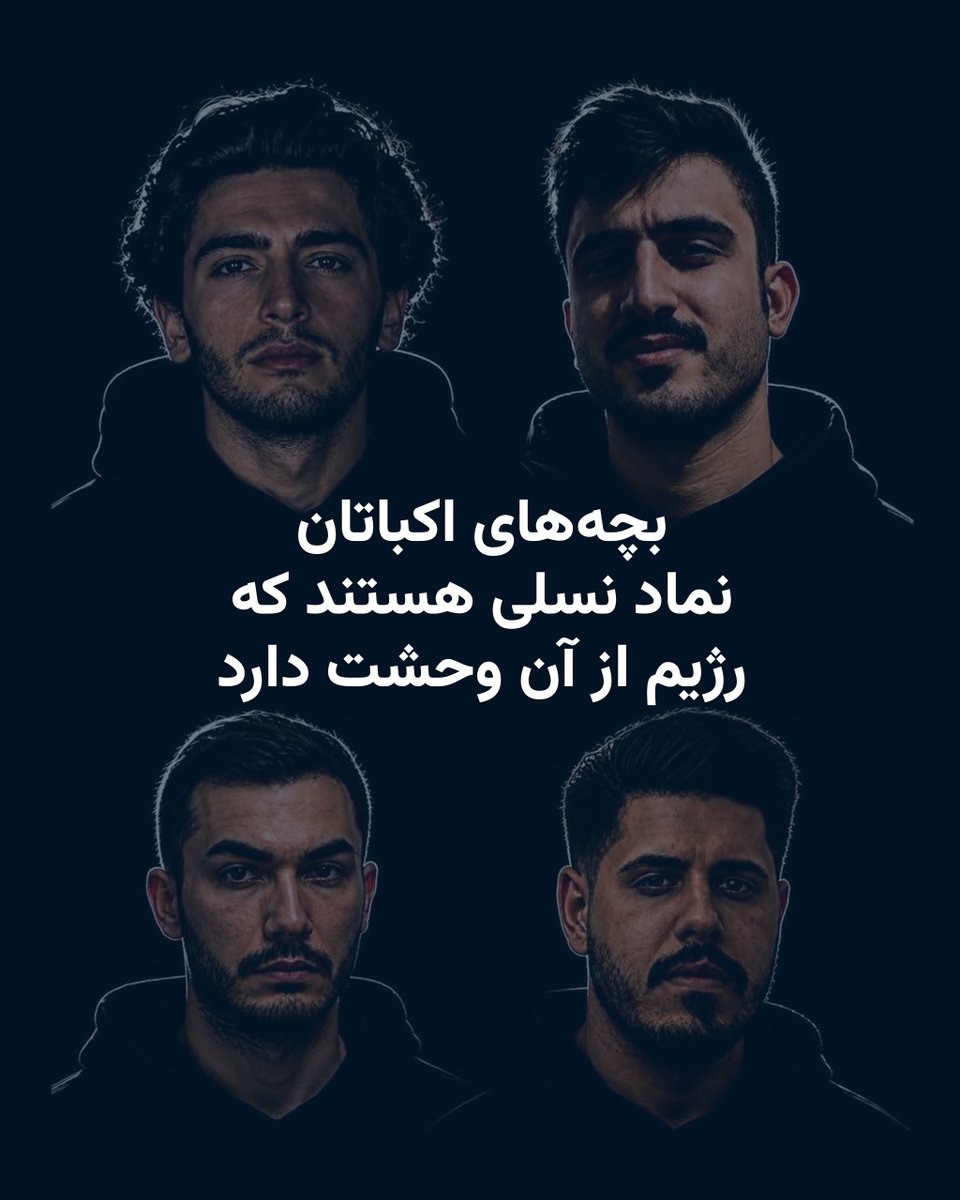
Vier politische Gefangene, die im Zuge der “Frau, Leben, Freiheit”-Proteste 2022 festgenommen worden sind, wurden nun erneut zum Tode verurteilt: Navid Najaran, Milad Armoun, Mehdi Hosseini und Mehdi Imani wurden wegen “Krieg gegen Gott“ verurteilt. #Iran#Ekbatan
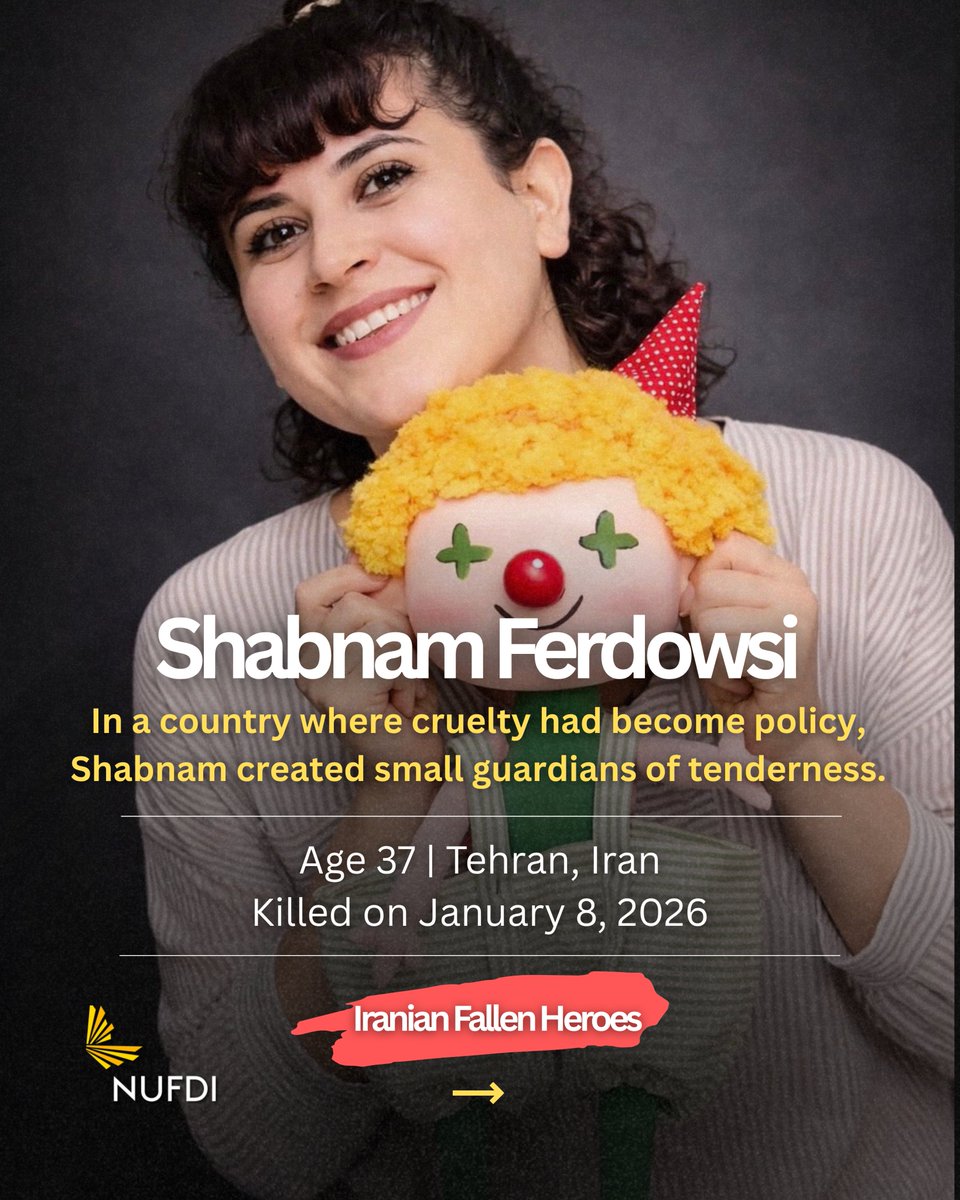
On Jan. 8–9, Iranians took to the streets demanding an end to the Islamic Republic. The regime's forces massacred tens of thousands of them.
Shabnam Ferdowsi was one of them: an artist who brought joy into people’s lives through dollmaking. This is a glimpse into her story.🧵
صدور دوباره احکام اعدام برای چهار تن از بچههای اکباتان، میلاد آرمون، محمدمهدی حسینی، مهدی ایمانی و نوید نجاران، سند دیگری از ماهیت جنایتکار رژیم جمهوری اسلامی است که برای حفظ قدرت، جوانان ایران را به قتل میرساند و از خون مردم برای بقای خود تغذیه میکند.
رژیم ضحاکی جمهوری اسلامی، دادگاه را به ابزار سرکوب تبدیل کرده و اعدام، سلاحی برای ایجاد وحشت در جامعه است.
سکوت جهان در برابر اعدام معترضان ایرانی، یک شکست اخلاقی و سیاسی است. هر روزی که جامعه جهانی در برابر این رژیم مماشات میکند، جمهوری اسلامی با جسارت و قساوت بیشتری جان جوانان ایرانی را میگیرد و سرکوب را گسترش میدهد.
تا زمانی که این رژیم اهریمنی پابرجاست، تروریسم، گروگانگیری، افراطگرایی و کشتار حکومتی در ایران، منطقه و جهان پایان نخواهد یافت.
این رژیم سرچشمه بیثباتی و خشونت در خاورمیانه است و بهای بقای آن را مردم ایران با جان خود میپردازند.
بچههای اکباتان نماد نسلی هستند که جمهوری اسلامی از آن وحشت دارد؛ نسلی که دیگر حاضر نیست زیر سایه ترس و سرکوب زندگی کند.
We will never forgive,
We will never forget.
After nearly 90 consecutive days and roughly half of 2026 overall, spent in internet blackout and darkness, a small percentage of Iranian users are finally regaining access to the global internet.
This is nothing more than the long-overdue restoration of a basic right, following months of suffocating repression. It comes after the destruction of countless businesses, lives, and silenced voices, just one fragment of the crimes and tyranny of the Islamic Republic regime.
In these fragile moments, we remember the thousands of honorable and innocent Iranians who, due to the bullets of this bloodthirsty regime, will never come online again.
#IranMassacre
#DigitalBlackoutIran
Rauf Derakhshani-Mehr, a 19-year-old university student killed during January protests in the southern city of Dezful, #Iran, was buried at night under pressure from security forces after his family located his body in a morgue, according to information obtained by @IranIntl.
He was struck by a live bullet in the side and had also suffered metal pellet wounds to the left side of his body before the fatal shooting, the source said.
https://t.co/7iFqg84wMx
Iran executed a protester who took part in a nationwide uprising in January, over accusations of armed action in the central province of Isfahan, the judiciary’s Mizan News reported on Monday.
Abbas Akbari Feyzabadi had been convicted on charges including “enmity against God” (moharebeh) and collusion to commit crimes against internal security, according to the report.
The report accused him of being an armed leader during protests on January 8 and 9 and added that his sentence had been upheld by the Supreme Court before being carried out.
The report alleged that he took part in an attack on the governor’s office in the city of Naein and fired a handgun toward security forces.
https://t.co/dofvfHbJyP
The 40,000 Iranian heroes who died on January 8th and 9th are not at the negotiating table. They died for freedom, not opening the Straits of Hormuz or even a nuclear deal. The tens of millions Iranians who took to the streets will rise again, with or without foreign support. The latest twists and turns don’t change the fundamentals: this regime is weaker and more fractured than ever - and there will be no peace if it survives. Power to the people.
نزدیک به ۸۶ روز است که جمهوری اسلامی تماس مردم ایران با جهان آزاد را قطع کرده و در خاموشی به جنایات خود ادامه میدهد.
در قبال طولانیترین قطعی اینترنت تاریخ سکوت نکنید.
صدای مردم ایران باشید.
https://t.co/stzvBgS8aR