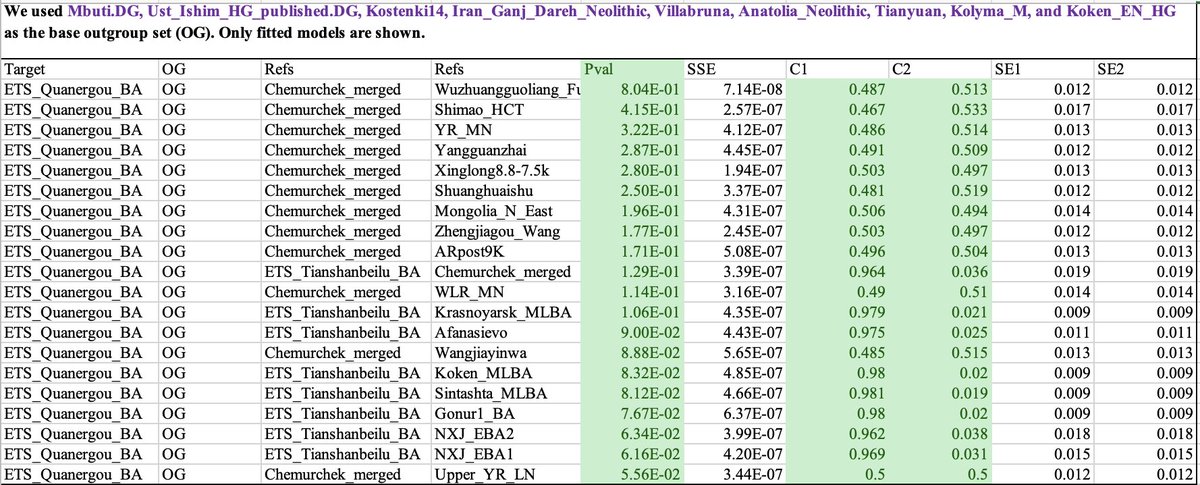
Very interesting from the perspective of the origins of Arsikuchean (Tocharian)
We now have a clearer picture of how Afanasievo ancestry, via Chemurchek, persisted through the Iron Age
Congrats on the fantastic work @jlu_ningchao@kwangwangk@wwTianyiww and all other coauthors
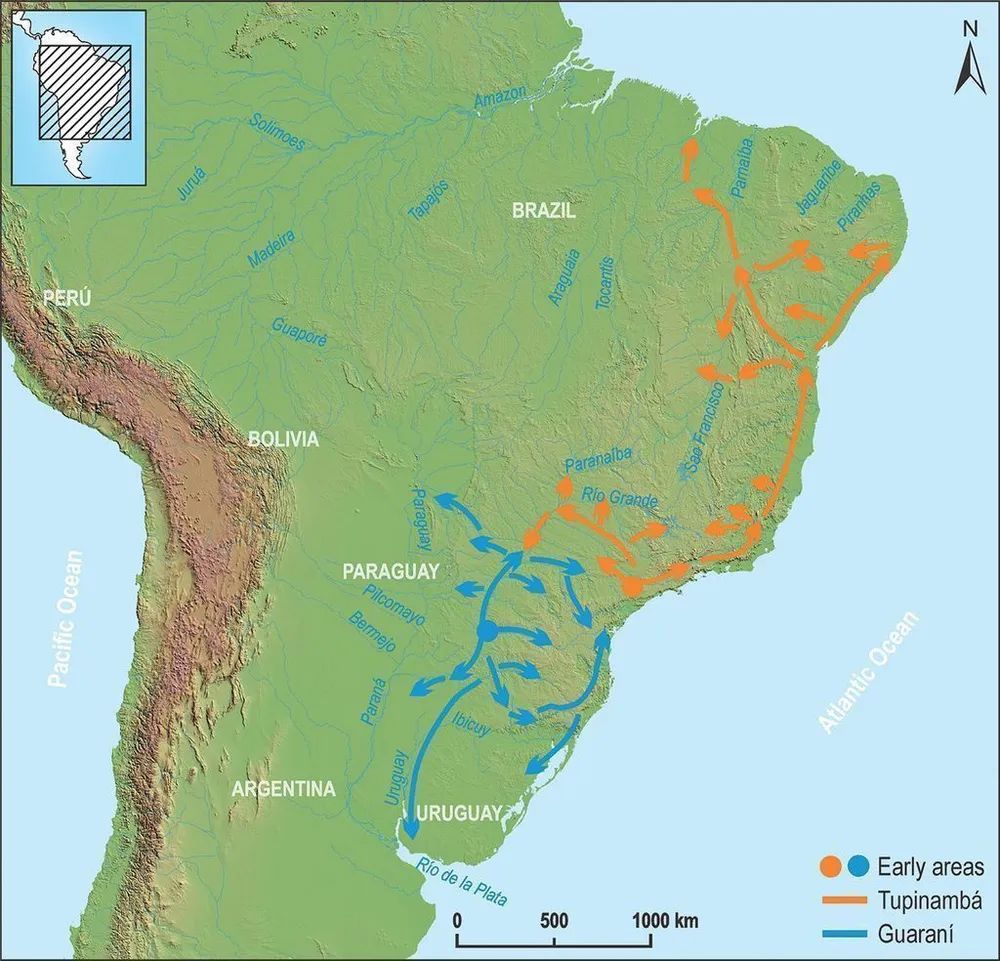
The Tupí linguistic group is one of the most widespread in South America, but its origins and spread through migration are debated. For the first time, #archaeology helps trace the dispersal of Tupí-speaking peoples from 80 BC to AD 1700.
(£) https://t.co/vlFqisnPiy
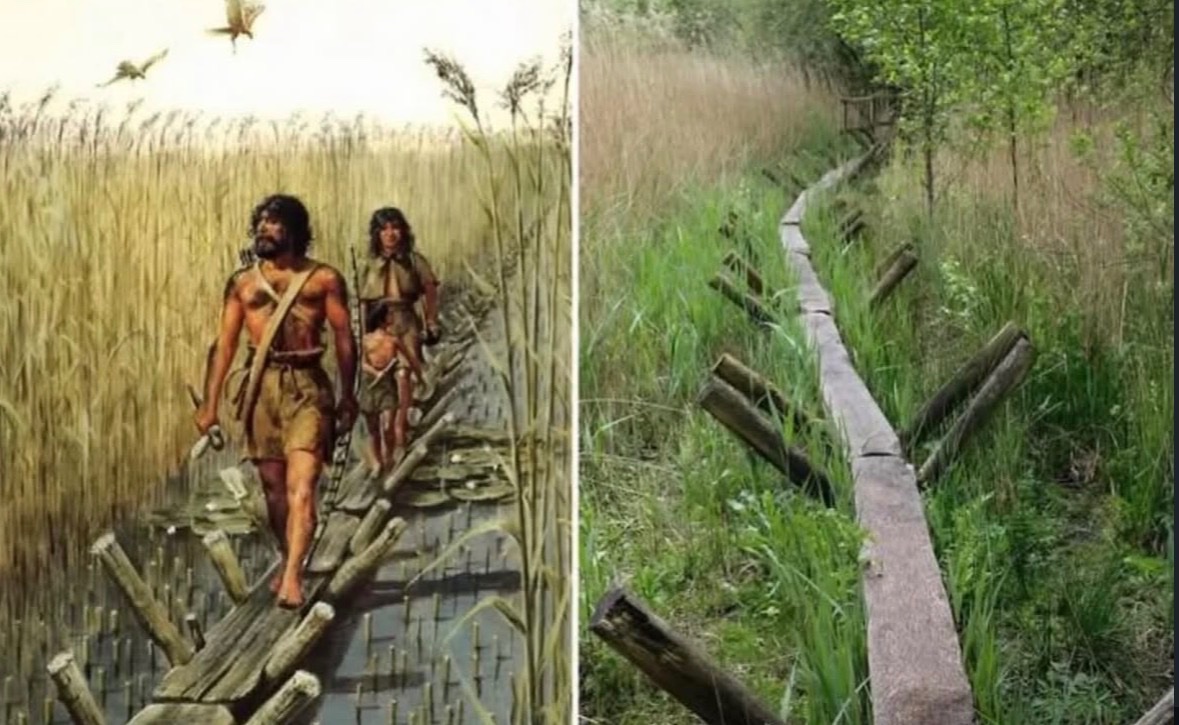
The Sweet Track is a 6,000-year-old Neolithic timber walkway, located in the Somerset Levels in England and discovered in 1970. It was originally part of a network of tracks built to provide ancient people a dry path across the marshy ground
The Blackfoot Confederacy is four related nations on the northwestern Plains: the Blackfeet in Montana, and the Kainai, Piikani, and Siksika in Alberta. They are one people. The line that now splits them is the United States–Canada border, drawn in the nineteenth century by Washington and London along the forty-ninth parallel. The Blackfoot did not negotiate that line, and it cut through country they already used as a single homeland.
When writers say “the Front,” they do not mean a battle line or a weather map. They mean the Rocky Mountain Front: the eastern face of the Rockies, where the Great Plains come to an abrupt end and the mountains rise in a wall of foothills, limestone reefs, canyons, and high peaks. In northern Montana and southern Alberta that meeting of prairie and mountain is especially sharp. You can stand in open grassland and look west into a sudden range.
The Blackfoot know those mountains as the Backbone of the World. Their older stories are set along that edge of grass and stone, not in the eastern woodlands.
The argument was never about whether the Blackfoot exist. It was about where they came from, and how old that presence is.
For a long time the standard account said they were late arrivals. Blackfoot is an Algonquian language. Most of that family is spoken around the Great Lakes and in the Northeast. Linguists and anthropologists treated the family tree as a trail. If the closest linguistic relatives lived in the woodlands, then the Blackfoot, the thinking went, must have migrated west onto the Plains only in recent centuries and become bison people after they got there. That version settled into textbooks as if it were settled fact.
Behind that local story sat a larger one about the whole continent. For much of the twentieth century, archaeology taught Clovis First. Clovis is a culture named for distinctive fluted spear points first recognized near Clovis, New Mexico. The points, and the people who made them, date to a narrow window at the end of the Ice Age, a few centuries on either side of thirteen thousand years ago. The model said these hunters were the first people south of the Canadian ice sheets. They were supposed to have walked down from Beringia through an ice-free corridor that opened between the two great glaciers, then spread across the interior with remarkable speed. If Clovis was first, then a deep Blackfoot presence on the Front was hard to take seriously. Everyone, in that picture, was a latecomer.
The Blackfoot never told the Great Lakes story, and they never needed Clovis to begin their history. Their oral traditions do not remember leaving the woodlands. What they remember is older weather and country: ice standing against the mountains, meltwater in the valleys, animals that no longer live on those plains.
Archaeology along the Front has long suggested people were in that region earlier than a late woodland migration would allow. The language evidence was never as simple as the arrow on the map. Blackfoot is Algonquian, but it is a deep and unusual branch of the family, not a recent dialect. Languages can move without whole nations packing up and walking west.
So two origin stories sat side by side. One came from a language map, and behind it from Clovis First. The other came from Blackfoot memory and pointed back into the Ice Age. For a long time, only the first was treated as the scholarly default.
The nations finally put the question to genetics. Working with archaeologists and geneticists, they compared DNA from living Blackfoot people with DNA from ancestors buried in Blackfoot country after European contact. The study answered two different questions, and it helps to keep them separate.
The first question was recent. Are today’s Blackfoot the same people who were already living along the Front when the written record begins? The DNA said yes. Living community members and those near ancestors belong to one lineage. That rules out a quiet swap of populations in the last few centuries. The Blackfoot on that plains-and-mountain edge now are descendants of the Blackfoot who were there at contact.
The second question was much older. Where does that lineage sit among the other Indigenous peoples of the Americas? Here the genomes did something neither the Great Lakes story nor Clovis First predicted. The Blackfoot samples do not cluster with the other Native American branches already mapped from north to south. They look like their own early branch.
To see why that matters, it helps to know what geneticists mean by Ancient Beringians.
During the last Ice Age, Siberia and Alaska were joined by dry land. That whole region, land bridge included, is called Beringia. The ancestors of Native Americans formed there, or just behind it, from a mix of older East Asian and Ancient North Eurasian ancestry. They did not immediately pour south. Many researchers think they paused in Beringia long enough to become genetically distinct from the populations still in Asia. That pause is the Beringian standstill.
Then that founding population itself began to split. The first known split produced two sister groups. One stayed in the far north. The other became the source of almost everyone later sampled in the rest of the Americas.
The northern sister group is the Ancient Beringians. We know them from the genome of an infant buried at Upward Sun River in interior Alaska, given the name Xach’itee’aanenh T’eede Gaay by the local Healy Lake Village Council. She lived after the Ice Age had begun to wane, but her ancestry was already old. Her people had branched off from the ancestors of other Native Americans while ice still dominated the north. Ancient Beringians remained in Alaska and eastern Beringia. They are a basal Native American lineage: related to everyone farther south, but not the direct source of the later northern and southern branches. Their line is not the one that fills most of the continents. In Alaska it later fades from the record as other Native American groups move in.
Everyone else in the usual maps comes from the other sister group, the one that did not stay behind as Ancient Beringians. That group later split again, most researchers think south of the ice, into Northern and Southern Native American lineages. Athabaskan and many Algonquian-related peoples are generally placed on the northern side of that later split. Most groups from farther south sit on the other side.
The only Clovis-associated genome we have sits on that southern side. It belongs to a child buried with Clovis tools at the Anzick site in western Montana, not far, in continental terms, from Blackfoot country. Anzick lived around the time Clovis points were being made. His ancestry is Native American, and it aligns more closely with the southern branch than with the later northern one. Clovis, in other words, is not a unique founding people from whom all later nations descend in a simple line. It is a toolkit and a moment, carried by people who already belonged to a branch that had formed earlier.
The Blackfoot genomes do not fall where the language map said they should, and they do not fall with Anzick either. They do not sit with other Algonquian speakers inside that later northern branch. They are not Ancient Beringians. In the family tree used by the study, the Blackfoot lineage splits after the Ancient Beringians have already gone their own way, but before the rest of the Native American tree divides into those northern and southern branches.
That timing is the problem for both the old Blackfoot migration story and Clovis First.
Clovis First needed a late door. People wait in Beringia until the Canadian ice sheets pull apart. A corridor opens between the glaciers. Hunters walk south and invent, or bring, the Clovis point. Then the continent fills.
The trouble is the door. The ice-free corridor did not become a usable interior road until after the worst of the Ice Age had passed, and some studies put a living landscape in that gap even later than the first Clovis dates. Meanwhile archaeology has been turning up sites and technologies older than Clovis, from the Pacific Northwest to South America. Not every early claim has held. The pattern has. People appear to have been south of the ice before those fluted points become common.
A Blackfoot lineage that is already separate before the northern-southern split does not look like a population that waited for that inland door, picked up Clovis along the way, and then drifted west from the Great Lakes in recent centuries. It looks like a people whose ancestors differentiated in glacial time, earlier than Clovis, earlier than the corridor story allows, and earlier than a late woodland migration requires.
That is not the same thing as saying the Blackfoot predate every crossing out of Asia, or that we have Ice Age Blackfoot skeletons from the Front. Ancient Beringians and the ancestors of other Native Americans still share that older Beringian root. The historic bones in the study are only a few centuries old. The early date is a split on a family tree, not a dated hearth in the foothills. What the tree can say is narrower and still sharp. By the time Clovis points are being buried with a child in Montana, the Native American population is already old enough to have grown several deep branches. One of those branches, on present evidence, leads to the Blackfoot. Clovis is too late to be the beginning of that story.
Put the two genetic results together and the controversy changes shape. The first result says there was no late replacement along the Front after contact. The second says the ancestors of those people were not late woodland migrants, and not simply the descendants of the first Clovis hunters through the corridor. Their beginnings belong to the same deep American radiation as the Ancient Beringians, but on a different early branch, older than the chapter in which Clovis was supposed to explain everybody.
None of this means one community never moved from one creek. People travel, marry out, leave, and return. What it does mean is that the assumed origin was the weaker story. The evidence now points to an earlier people: descendants of an Ice Age lineage already distinct before the inland route from Beringia opened and before Clovis became the face of the first Americans. The old arrow on the map was drawn from language, and from a spear point. The deeper record was pointing somewhere older.
This 1899 A. Miller cabinet card is titled “Apache Medicine Chiefs.” Miller was selling souvenirs in Silver City. The two men are dressed as Gaan, Mountain Spirits, for the ceremony Edward Curtis called Gaun Bagudzitash.
The Gaan are not a costume genre. In the stories they come from the mountains because the Creator sent them to teach hunting, healing, and how to keep sickness and enemies off a camp. A dancer who puts on the hood and the slat crown is not impersonating a spirit in the theatrical sense. For that night he is understood to be one. Usually there are five: four for the directions, and a Messenger or Clown who starts things with a bull-roarer, drives off what shouldn’t be there, and is allowed to be funny because that, too, is part of the power. The wands are lightning.
What the dance meant depended on the night, but the work was the same. It was a healing and protection rite. The Gaan swept illness and hostility out of a person or a camp, asked for rain or calm weather, and put a blessing back on the ground they had just cleaned.
When the dance sat inside a girl’s four-day Sunrise Ceremony, Na’ii’ees, it also marked her passage into womanhood. She is identified with Changing Woman. The community is not watching a pageant. It is watching her become a source of strength for everyone present. At the close the Gaan surround her and brush pollen and ochre over her: pollen for growth and children, ochre for the earth. That is the celebration; A public transfer of power, health, and adult standing.
Outsiders called it a devil dance. That tells you more about the observers than the rite.
By the time this photo was taken the pressure was already on. The 1883 Code of Indian Offenses treated most ceremonial dancing as an offense. Agents disliked the cost and the crowds. Boarding schools went after language and Na’ii’ees.
Curtis, writing a few years later, said the Gaan dance was still the ceremony Apaches cared about most, and also that it was being performed less. Mid-century fieldworkers on Fort Apache and San Carlos were seeing only a few Sunrise Dances some summers.
The songs and the crowns did not disappear. They went quieter.
Policy shifted in pieces. The Indian Reorganization Act of 1934 (Wheeler-Howard, Collier’s bill) ended the allotment era, let tribes form governments the BIA would recognize, and backed off the old “kill the Indian, save the man” line enough that some superintendents stopped treating every dance as a problem. It was not a religious-freedom statute. It did not repeal the earlier bans in so many words, and enforcement still depended on who sat in the agency office. What it did was change the weather.
Ceremonies that had been driven indoors or onto back roads had more room. The statute that actually said Native people had a right to their own rites was the American Indian Religious Freedom Act in 1978.
What brought the Gaan dance back into the open was not the Federal Register. It was families and medicine people teaching boys the step again and making new crowns.
White Mountain, San Carlos, Tonto, Mescalero: the pattern is the same even when the crowns and the clown’s paint are not. Some of it is still closed. Some groups will dance at a heritage weekend so kids see the headdresses move instead of only seeing them in a museum case.
Miller shot this in a studio. Backdrop, dirt at their feet, two men holding the sticks they would have carried around a fire and four small cedars.
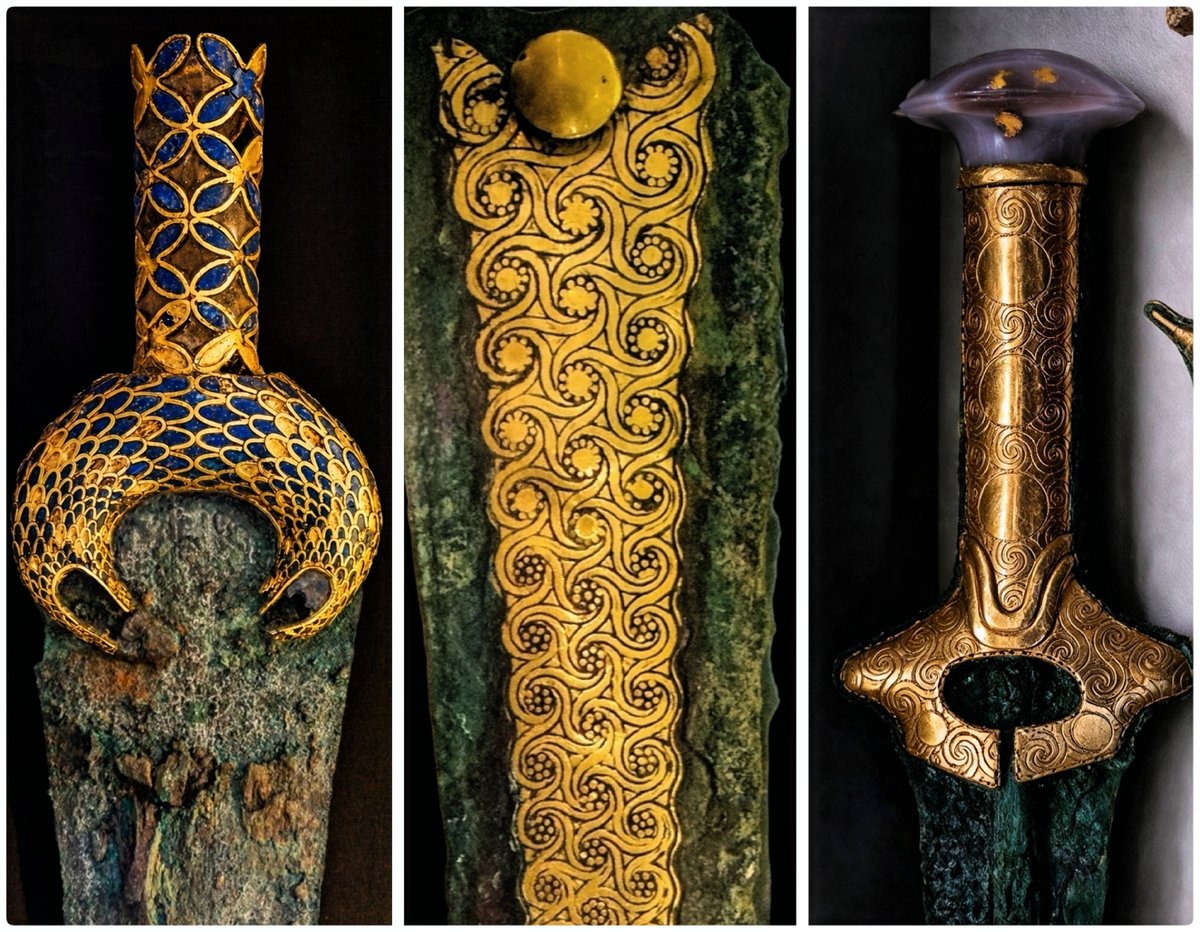
The Swords of Mycenaean Kings (c. 1600–1500 BC)
Masterpieces of Late Bronze Age Mycenaean Greek craftsmanship: bronze swords adorned with exquisitely decorated gold hilts and grips. Among the most magnificent surviving works of prehistoric European metalwork.
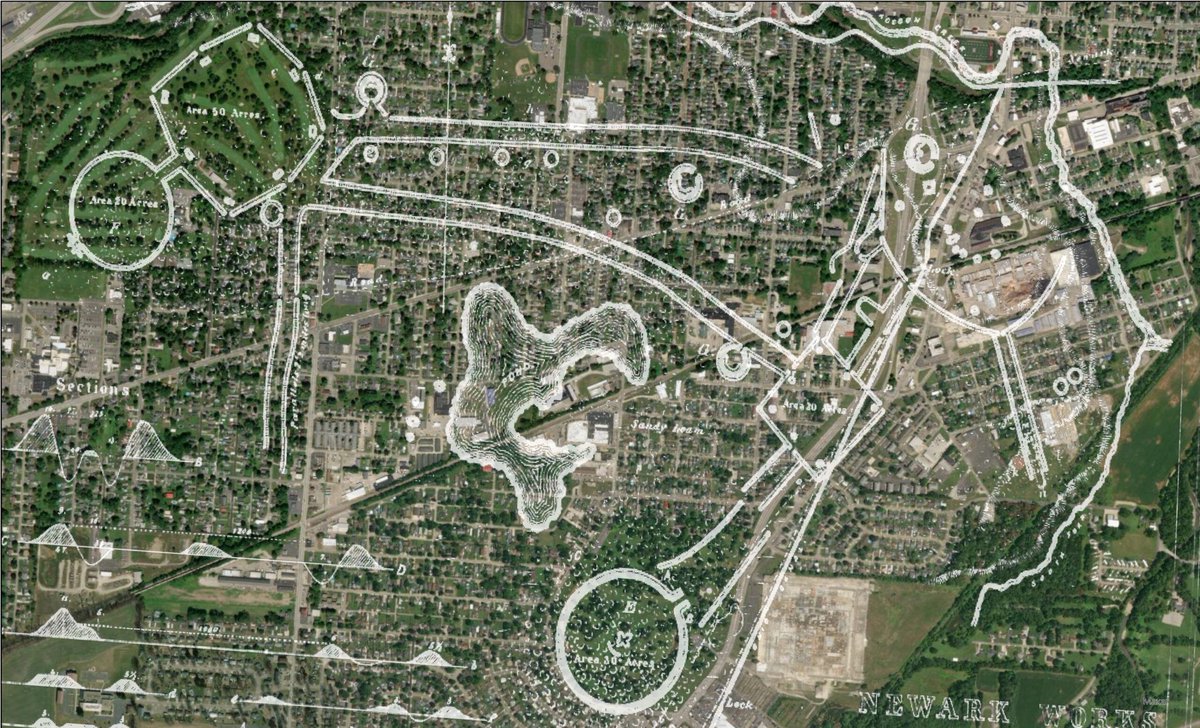
The Newark Earthworks in Newark and Heath, Ohio, stand as the largest known complex of geometric earthen enclosures in the world.
Built by the people of the Hopewell culture roughly between 100 BCE and 400 CE, these massive structures were created by communities who lived in small, scattered settlements across the Ohio River Valley. “Hopewell” is simply the name archaeologists gave them; we don’t know what they called themselves. They weren’t a single unified tribe or empire, but rather a network of related groups who shared ceremonies, trade, and cultural practices across a wide region. Their descendants include many modern Native nations with ties to Ohio, such as the Shawnee, Delaware, Miami, Potawatomi, Ottawa, Seneca, and Wyandot.
Originally the complex stretched across more than four square miles. To build it, people moved an estimated seven million cubic feet of earth—about twenty-one million basket loads—using only digging sticks and baskets. The walls and embankments were carefully layered and engineered with remarkable skill. Today only a fraction remains, roughly 206 acres, preserved in three main sections.
The Great Circle is nearly 1,200 feet across, large enough to fit several football fields or even the Great Pyramid of Giza inside its walls. Those walls rise as high as fourteen feet in places and are paired with a deep interior ditch. At its center sits Eagle Mound.
Nearby, the Octagon Earthworks feature an eight-sided enclosure covering about fifty acres, connected by parallel walls to a nearly perfect circle about 1,054 feet in diameter known as the Observatory Circle. A small remnant of a square enclosure, called the Wright Earthworks, also survives. Much of the rest of the original complex—including a large oval filled with burial mounds, a square, and long parallel-walled avenues—was destroyed over the centuries by farming, canals, railroads, and the growth of the city. For more than a hundred years a golf course even sat on top of the Octagon, though public access has expanded significantly in recent years.
What makes the site especially remarkable is how precisely it was designed. The Octagon and Observatory Circle align with the moon’s 18.6-year cycle, tracking key rising and setting points across that long lunar period. Researchers in the early 1980s showed that the northernmost moonrise lines up almost perfectly with the main axis of the earthworks. The geometry itself is equally impressive—certain measurements repeat across different structures, and the overall layout reveals sophisticated mathematical relationships.
Archaeologist Bradley Lepper has compared the builders’ geometric and astronomical understanding to that of the ancient Greek mathematicians.
This was clearly a major gathering place. People traveled here from across eastern North America for ceremony, social connection, trade, and the honoring of the dead. They brought exotic materials from great distances: copper from the Great Lakes, mica from the Appalachians, marine shells and shark teeth from the Gulf and Atlantic coasts, and obsidian from the Rocky Mountains—some of it traveling more than a thousand miles. Different parts of the complex likely served different roles within a larger sacred landscape, connected by processional avenues that may once have linked to even longer roads.
The entire complex stands as powerful evidence of advanced planning, large-scale cooperation, deep knowledge of the sky, and skilled engineering—all achieved without metal tools, the wheel, or draft animals. What remains is carefully managed by the Ohio History Connection and open to visitors, offering a rare and direct connection to this extraordinary Indigenous achievement.
This map overlay shows the original full complex on top of modern Newark:
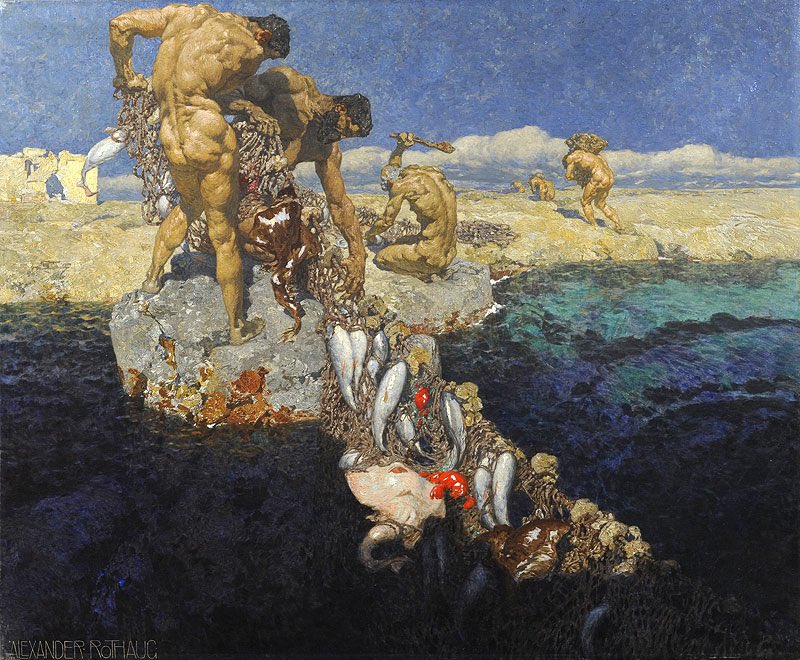
Eroticism is culture. There is no culture without it. The people who complain about the 'male gaze' or want to make women in videogames and movies ugly are the same people who've been making buildings, paintings, music and religion ugly for the last century.