Official Twitter account of the Advanced School on Exoplanets. Taking place in the enchanting #amalficoast, the school is focused on all aspects of #exoplanets
Interested in an internship at @mpi_astro ? Apply for our summer program! this is a paid internship for bachelors and masters students anywhere in the world. Come join us for a summer of science in Heidelberg!
https://t.co/baUnY0dbci
I'm hiring a postdoc to work on planetary thermal evolution modeling with me at @ucsc. Topics will likely include sub-Neptunes, gas giants, and brown dwarfs. Please apply! Deadline is Jan 22nd. https://t.co/kIpg8nKt7F
#AAS243
First announcement of Exoplanets by the Lake II:
https://t.co/6H576VWPzF
Registration is now open. Only 20 participants!
(Plus 2 invited lecturers and 4 invited workshop speakers.)
ESO/HARPS Radial Velocities Catalog
Mauro Barbieri
-> 289843 observations of 6488 unique astronomical objects
-> using the HARPS pipeline, with a typical precision of 0.5 m/s
-> Additionally, independent radial velocities measured on Hα
https://t.co/ajaYciG3MZ
Attention, all those enthusiastic about high-resolution spectroscopy, planets, stars, and/or horses, the registration for:
🐴Two HoRSEs🐴
High-Resolution Exoplanet and Stellar Characterization Today and in the ELT Era
Berlin, 15-19 July 2024
is open!
https://t.co/BTTv2OSMGD
High resolution spectroscopy fans, join us for 2HoRSEs as the series continues next year in Berlin! You can even enter the logo contest 🐎🐎 Registration by Feb 16th
Registration is now open for the next #JWST JWebbinar – JWST NIRSpec Time-Series Observations: From Uncalibrated Data to Transit Light Curves using CalWebb – to be held on December 14th and/or 15th. Get the details: https://t.co/cabxJ89kcl
We have a new paper out today diving into the architectural facets unique to Hot Jupiter systems:
Hot Jupiters Have Giant Companions: Evidence for Coplanar High-Eccentricity Migration
https://t.co/V1p1efzVxr
This is an incredible paper, with the discovery of a pile of free-floating planets in a young star-forming region (Orion/Trapezium).
The craziest part: 9% are binaries! Like, two Jupiters orbiting each other -- but not orbiting a star!
https://t.co/c0OTkwc6LH
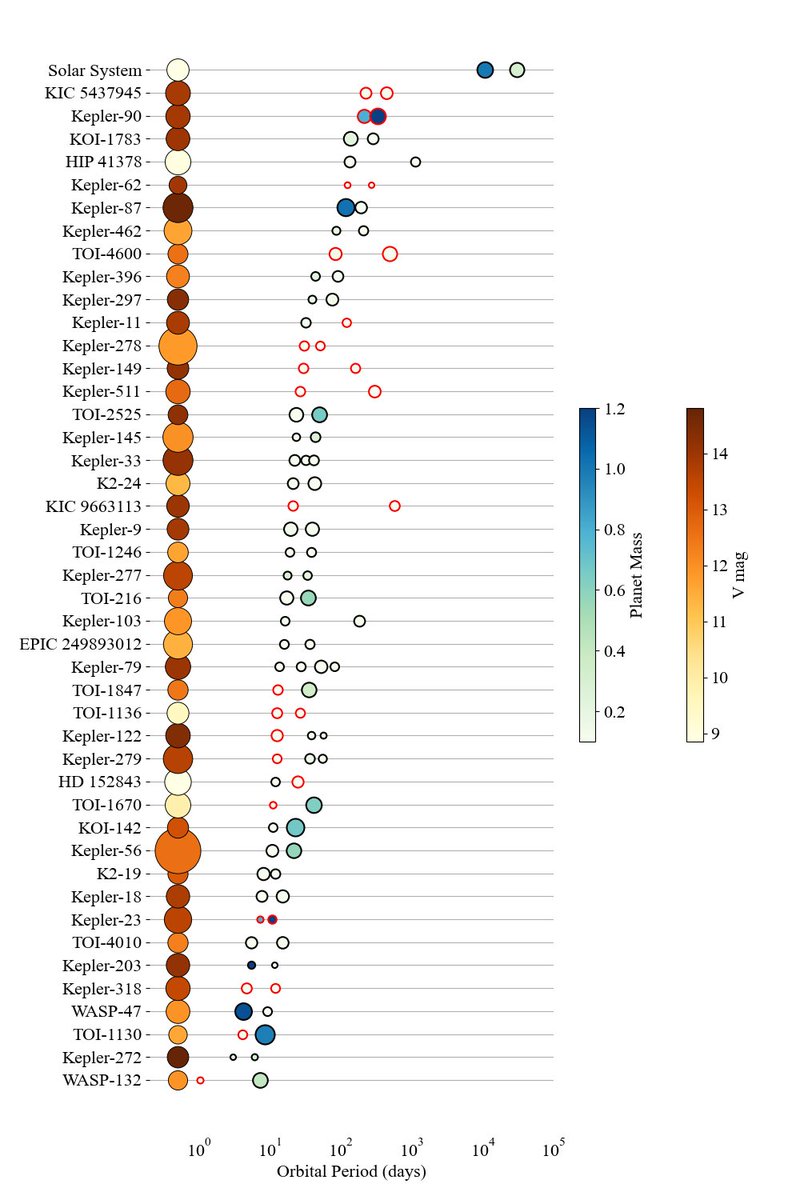
I made a plot for all systems hosting more than one transiting giant planets (R>0.3RJ or M>25Me). The small ones are not plotted, but all giants in each system are shown here. They are so close to each other! 1/n thread
A very exciting result from our Alien Earths team and @MartinSchlecker! With Bioverse, we predict an observable planet size discontinuity at habitable zone's edge. Check out the short video abstract! @nexssinfo@EOSNExSS@ESA_Plato
We found the methane! (in transiting planet atmospheres!) In transmission and emission! #JWST
https://t.co/HZrkXSMnQD
A great paper from the MANATEE collaboration, led by @taylorbell275!
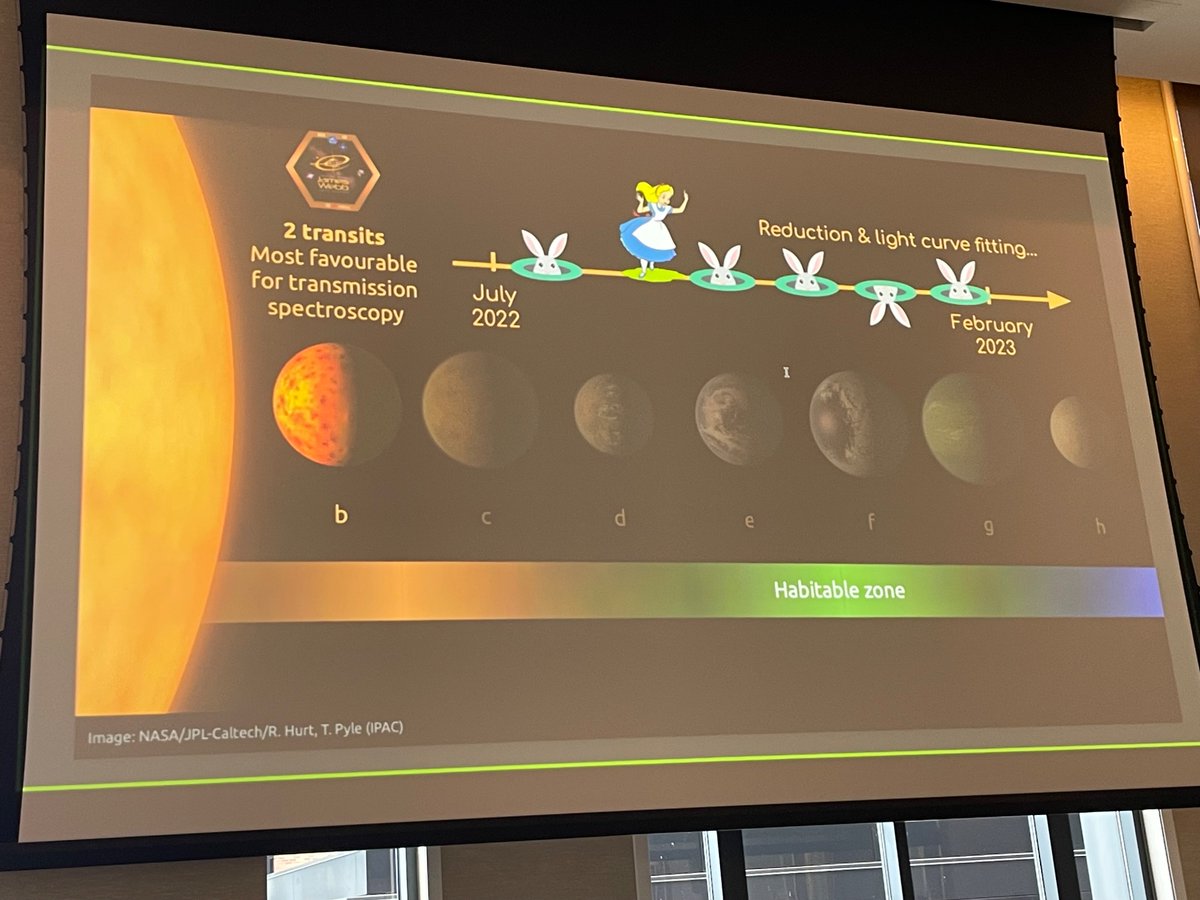
Olivia Lim is showing us JWST spectra of TRAPPIST-1 b. No photos of spectra to share, keep watch for paper, but I do like the Alice in Wonderland analogy for data reduction 🐇 #GiantMagellan2023
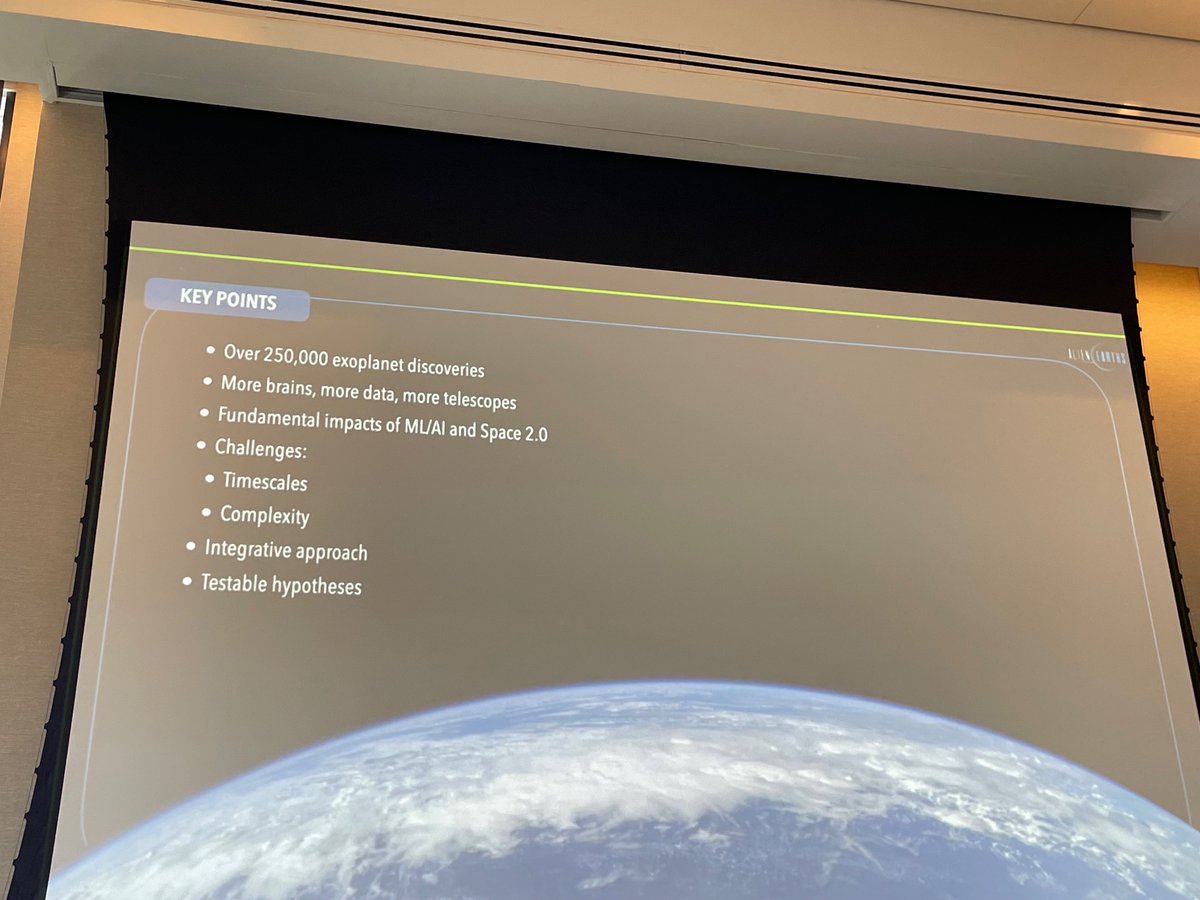
Our final speaker at #GiantMagellan2023 was Daniel Apai with a look to the future of exoplanets. Really thoughtful & thought-provoking talk. Timescales & complexity are challenges. Space missions are changing. Rapid field needs full integration of instrument teams.
@danielapai
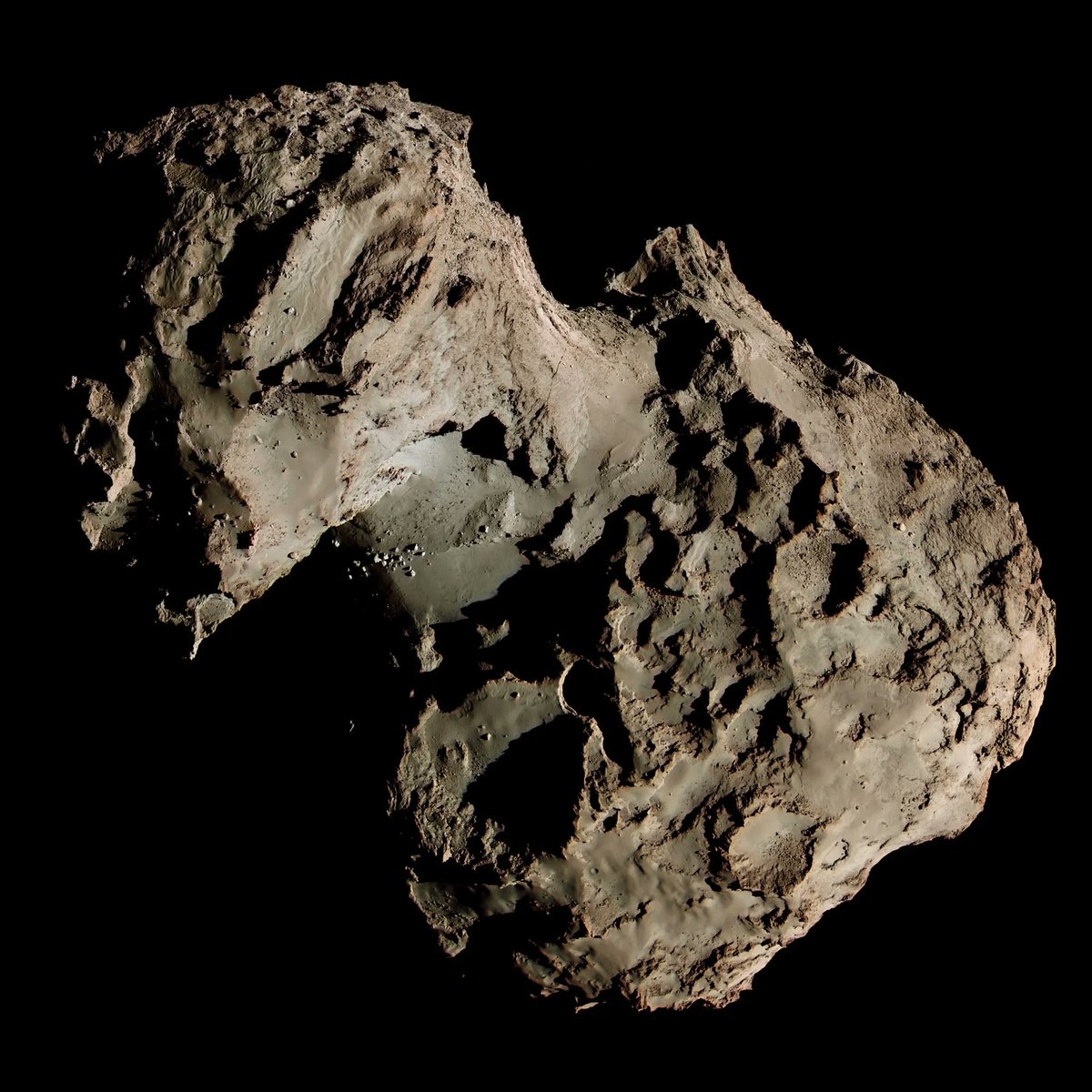
#PPOD: An approximate true color image of comet 67P taken by @ESA_Rosetta's OSIRIS Narrow Angle Camera on March 17, 2015. Rosetta was located roughly 82 km from the comet's center. Credit: @esa MPS for OSIRIS Team (MPS/UPD/LAM/IAA/SSO/INTA/UPM/DASP/IDA) / Justin Cowart