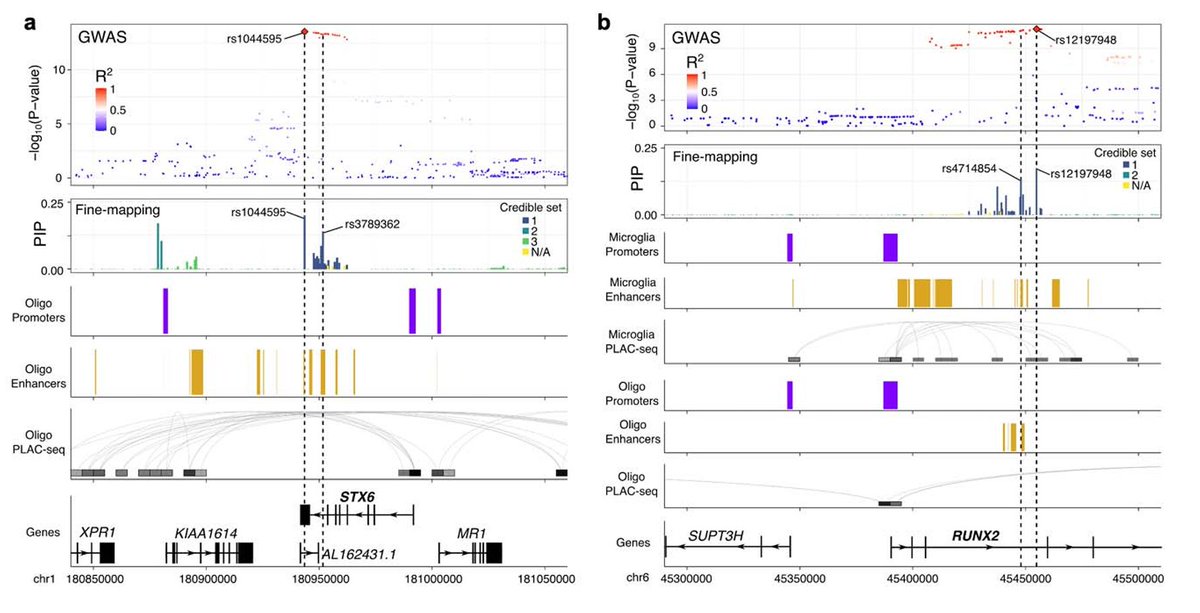
Ecstatic to see our paper "Long-read RNA sequencing atlas of human microglia isoforms elucidates disease-associated genetic regulation of splicing" now published in @NatureGenet with @towfiqueRaj@panos_roussos@SinaiBrain https://t.co/B0qIQJoIuA
Day #7! So grateful to Tony Capra @capra_lab for talking with our high school students and sharing how #AI#ML can be leveraged to find causal gene dysregulation in rare diseases!
Not sure what's the causal gene at your favorite GWAS locus? Ask ChatGPT :)
Interesting preprint on the value of LLMs in causal gene prediction by 23andme scientists (@suyashss et al.)
"Here, we demonstrate that large language models (LLMs) can accurately identify genes likely to be causal at loci from GWAS."
The authors claim GPT-4o outperforms the state-of-the-art methods like nearest gene, PoPs, Open Target's L2G etc. However, the performance seems to be biased towards genes that are well studied in the literature. The prediction accuracy increases with increase in the number of publications for the gene (but that's true for other methods too)
And, like any other methods, ChatGPT struggles to predict causal genes when there are so many genes in the vicinity. The prediction accuracy drops with increasing number of genes in the locus.
Interestingly, there are few scenarios where ChatGPT perform very poorly. When phenotype names are not informative enough. It's obvious to us that 'total protein' is total protein levels in the blood, but not to ChatGPT.
ChatGPT doesn't know that a locus can have multiple GWAS signals, each pointing to a unique gene, which can be sometimes obvious based on coding variants.
Finally, ChatGPT hallucinates occasionally (<1%) predicting causal genes that are not even there in the locus.
Causal gene prediction is an obvious application for LLM, and it was only a matter of time before someone looked into it. Glad to see that 23andMe team did it.
@adamauton
https://t.co/yGQzpsZlse
Our most recent work is now published at @NatureGenet. Epigenetic variation impacts individual differences in the transcriptional response to influenza infection. Great collab with @guilbourque lab and huge congrats to the lead author @katiearacena. Link: https://t.co/DxdxSVOqeg
🚨First preprint from the lab🚨 Check out this new clustering method from @cathrinepet. CHOIR makes identifying biologically relevant cell populations from sc data automated, statistically grounded, and free of manual input. No more futzing around with the resolution parameter!
@towfiqueRaj, @panos_roussos and I are very pleased to announce the release of the isoform-centric microglia genetic atlas (isoMiGA), a successor to last year’s MiGA project, now available on medRxiv as a preprint: https://t.co/fBJAg5n5yV
This was a really wonderful collaboration with @kurtmountain and @JohnCraryMDPHD. What really excited me about this work is how we could link 3 of the 6 PSP GWAS loci to oligodendrocytes (thanks @nottalexi), one of the cell types that undergoes tau pathology in PSP!
Really excited to share this work and grateful to have been a part of this collaboration, congratulations @kurtmountain! Very exciting findings and implications from this work.
Interested in LLMs for genomic research but don't know where to start? looking for a review/survey to get started in this field? 👇👇😀
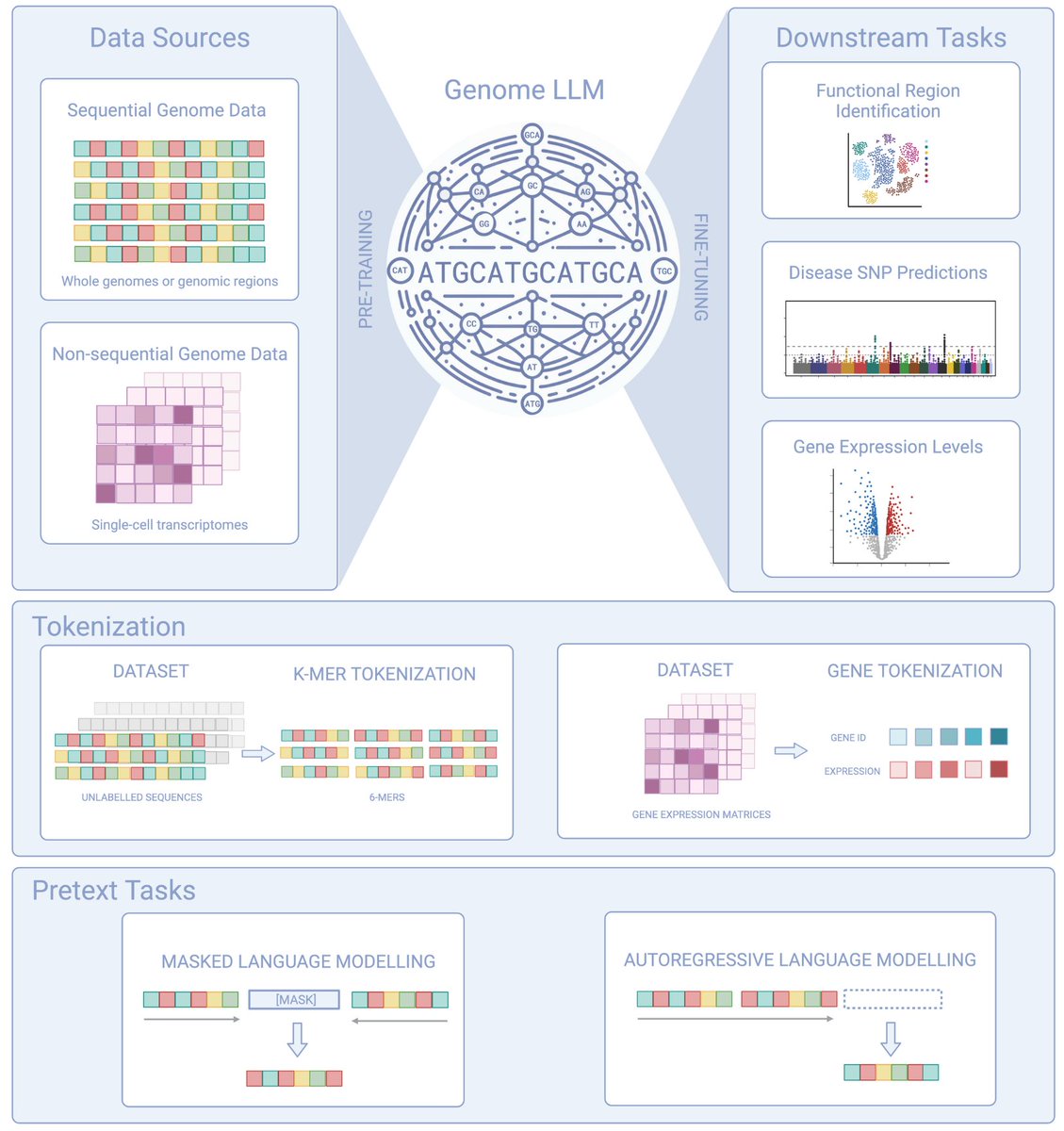
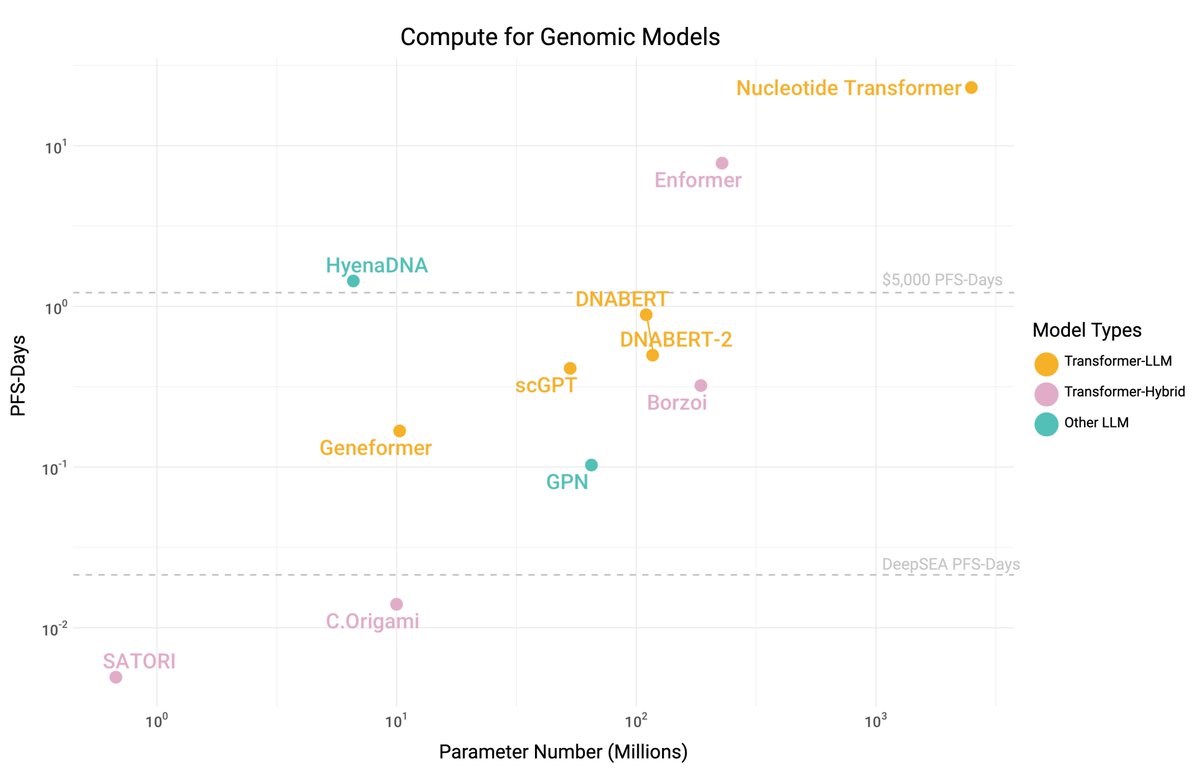
I am very excited to share that our review paper titled "To Transformers and Beyond: Large Language Models for the Genome" is now available as a preprint (https://t.co/U24TUSseNr)! Our review unveils a revolution in genomics analysis with Genome LLMs. 🧬
🔍 What's Inside:
✅ The power & challenges of transformers in genomics.
✅ Cutting-edge models like HeynaDNA and scGPT & their impact.
✅ Deep dives into Enformer, DNABERT, and other Genome LLMs.
🌍 Why it Matters:
1. GPT-4's influence reshapes AI in genomics.
Unmatched insights into transformers' role in genomics.
2. Critical analysis of new models, addressing interpretability, privacy, & computational needs.
3. Essential for computational biologists & computer scientists to navigate the future of genomic data analysis.
This is a work led by the amazing PhD student, Mica Consens, in the lab! Also, a huge collaborative work with lots of field leaders @fabian_theis@genophoria@MKarimzade@michaelwainberg and Alan Moses!
@UofT@VectorInst@UofTCompSci@UofT_LMP@UHN@pmcc_ai@UHNAIHUB
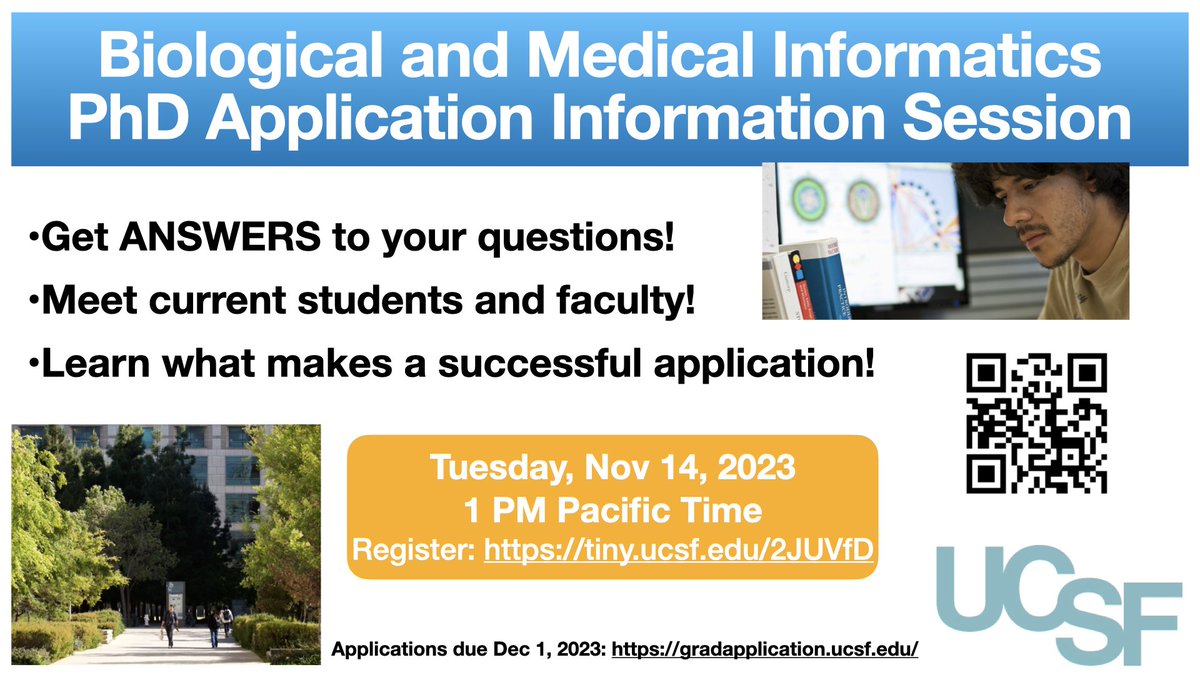
Are you considering applying for PhD positions in bioinformatics or computational biology? Consider the https://t.co/dHTSPGTtH6 program! We are hosting an info session on Tues Nov 14 at 1pm Pacific. Register: https://t.co/Jj0GcxoYQ5. Come meet faculty and current students!