We are hiring! Multiple funded postdoctoral positions are available on projects at the intersection of bioinformatics, evolution, genetics, and electronic health records. Please share!
https://t.co/oToKR57ntO
I am excited to share our recent work published in @GenomeBiolEvol. We report that human enhancers have both ancient cores and recently evolved DNA. This combo is important for enhancer activity and functional variation across human populations. Check it out!
How does human enhancer DNA evolve?
Ancient core & younger DNA can combine to form a biochemically active substrate! Distinct TF binding, stronger purifying selection, less common variation hallmark cores v. young DNA. Check out @capra_lab's new work👇
https://t.co/tHGR9Pcjaz
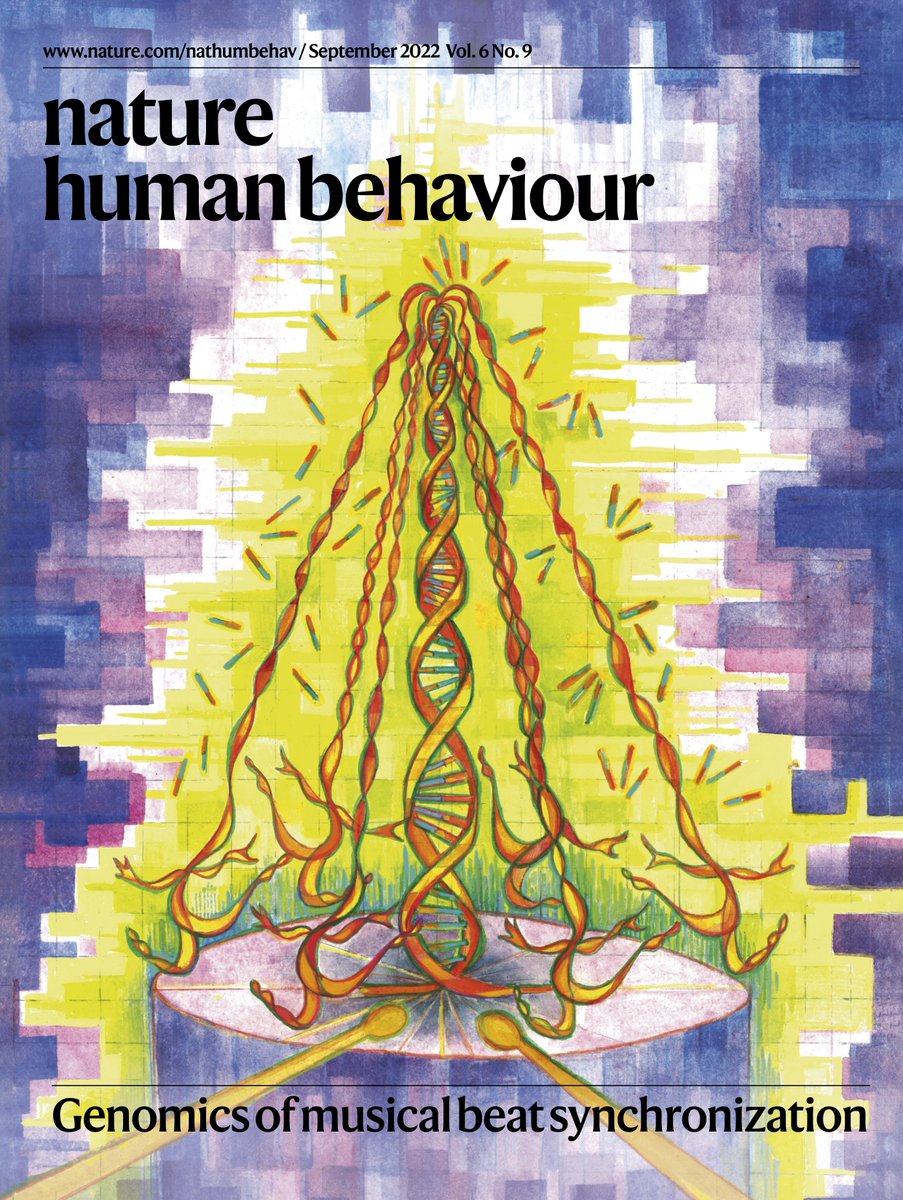
Thrilled to share that our beat synchronization GWAS is featured on the September 2022 cover of @NatureHumBehav! This massive project was co-led with @MNiarchou, Lea Davis & @NoriJacoby and supported by @VUMC_Genetics @VanderbiltENT@NIH_CommonFund https://t.co/LvSlxb6xWK
In #BMCEcolEvol researchers @capra_lab find examples where the same genetic differences have been maintained in both human and chimp. These are linked to our response to pathogens, body size, alcohol intake, cognitive performance and risk taking behavior. https://t.co/2myNVM0RRW
I am very pleased to (belatedly) share the publication in @NatureComms of our recent work integrating population genetic and protein structural perspectives to quantify mutational constraint in 3D.
https://t.co/8VqyZ1suEo
Check it out and let us know if you have questions. Scores and code available here: https://t.co/Z0KVnj2qws .
And a web app here: https://t.co/uTR9Bav8EO
We find pervasive 3D constraint and demonstrate that incorporating the structural perspective improves performance at several variant interpretation tasks. We hope that COSMIS will complement existing methods for interpreting protein-coding variation in evolution and disease.
We are very excited to share our newest #musicscience findings on the genetic architecture of musical rhythm, published today in @NatureHumBehav, co-led with @MNiarchou, twitterless Lea Davis, and @NoriJacoby https://t.co/LvSlxb607c
@VUMC_Insights @VUMCgenetics
A thread 1/n
We are very excited to share our newest #musicscience findings on the genetic architecture of musical rhythm, published today in @NatureHumBehav, co-led with @MNiarchou, twitterless Lea Davis, and @NoriJacoby https://t.co/LvSlxb607c
@VUMC_Insights @VUMCgenetics
A thread 1/n
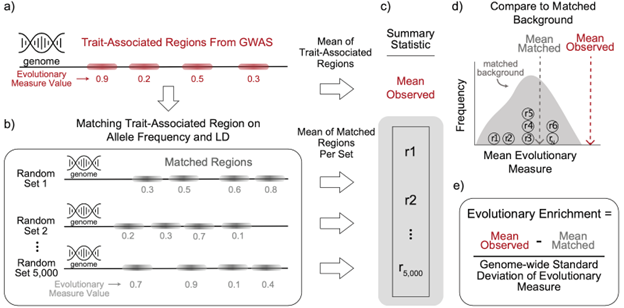
Check out this thread on new work lead by @abin_abe and @Lab_LaBella from the @RokasLab to quantify evolutionary signatures on genomic regions associated with traits from hundreds of GWAS. And @abin_abe has put together a package if you want to try it out yourself!
Preprint Alert!
We @abin_abe@Lab_LaBella@RokasLab@capra_lab asked which evolutionary forces have influenced genomic regions associated w/ human traits?
We analyzed >900 GWASs to quantify enrichment for 14 evolutionary measures
Paper: https://t.co/9bSHbn6r56
Img: our approach
Ever sit down to write a manuscript and get feelings of dread? 😰 Hate organizing figure/citation references? 🤬 Try to use #LaTeX but feel immediately overwhelmed? 😵
Check out the @capra_lab manuscript template with tips https://t.co/lKekpNV93f 📝!!
1/6
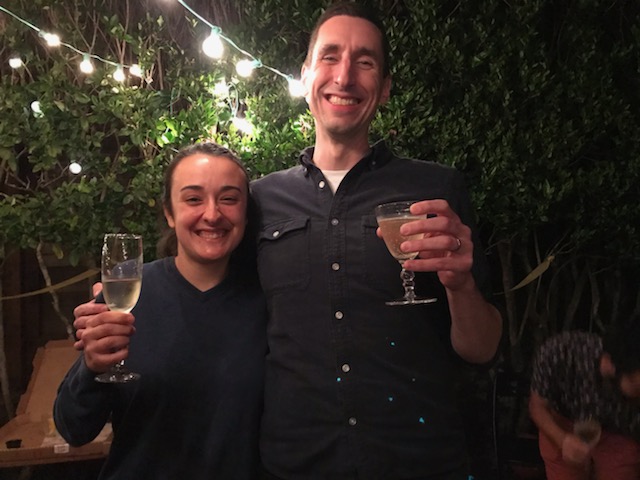
Experiencing a rollercoaster of emotions since defending my PhD. But these faces capture the best one, pure JOY!!🤗🍾I could not have asked for a better mentor than Tony @capra_lab. The entire journey was amazing and the few extra letters after my name don't hurt either🙃🎓
Check out our preprint and @EvonneMcArthur's thread below. We apply deep learning to reconstruct Neanderthal and Denisovan 3D folding patterns and then ask some cool questions about how this might have affected recent human evolution!
https://t.co/M9QbjVnJR8
Ever wonder what the #3Dgenome folding🔺of a Neanderthal looked like?! Could it hold any clues as to where and why we have DNA 🧬and trait differences?
Check out our @capra_lab, Pollard lab & @gfudenberg lab collaboration @biorxivpreprint https://t.co/wec0qZiFWy
1/8
What? 3D chromatin organization in Neandertal and Denisovan genomes! From my @GladstoneInst and @UCSF colleagues in Tony Capra @capra_lab and Katie Pollard's labs! https://t.co/IGfUNqtokO
Brilliant new preprint from the @capra_lab and the Pollard lab on the 3D genome organization of a Denisovan and three Neanderthals. Well done @EvonneMcArthur and the rest of the team! https://t.co/4CmNN9mAVF
Nice new work by @EvonneMcArthur@capra_lab and colleagues further probing changes in gene regulation between us and our closest extinct relatives (Neanderthals/Denisovans):
https://t.co/BHpoMNx7CD