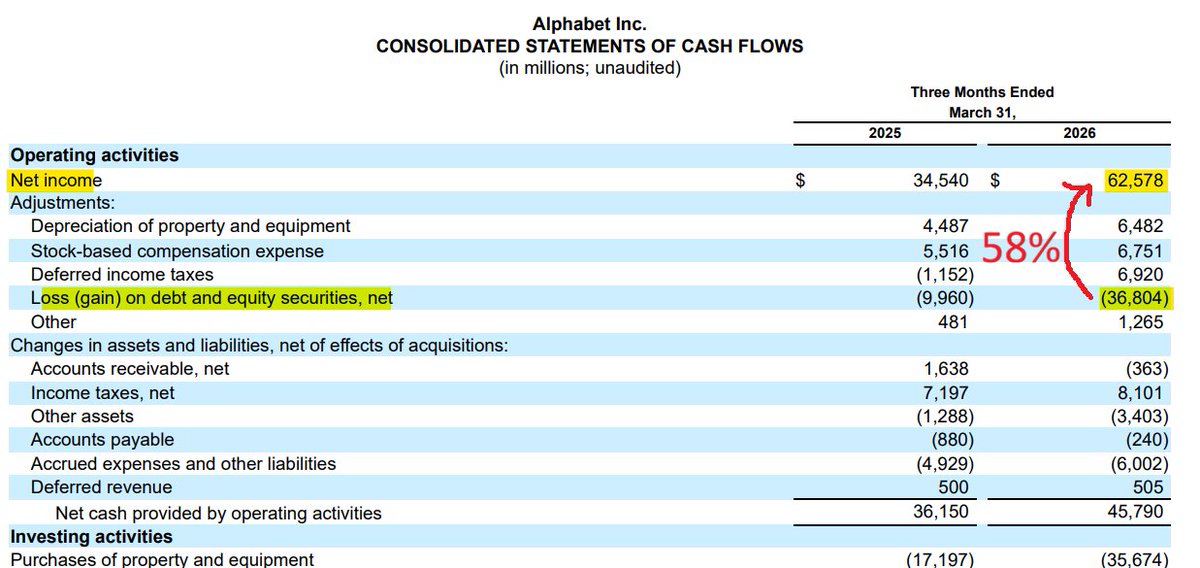
Google which is cash surplus, just announced an additional capital raise of $80 bn.
Google annual profit is $160 bn, last quarter $62 bn, and market cap $4.5 trillion. That is close to total profits and market cap of all Indian listed companies put together.
It’s a wake up call to all companies to invest into the future, whatever the present maybe.
Now that IPL is done and dusted, time for India to focus on business of business.
What @coatue_thomas learned about TSMC work culture when visiting Taiwan:
"I'm driving back to Taipei City with my host from TSMC and we're on the highway and there's a golf course and it's nighttime, so there's lights and people playing."
"I very innocently turned to him and said, 'Wow, you guys play golf at night here?'"
"He looked back at me and said, 'Well, when do you play?'"
And that's when I realized we're in a different level of work here... It just became obvious you didn't have to necessarily worry about who was going to win. The the whole infrastructure layer will win."
From his appearance on the show last month.
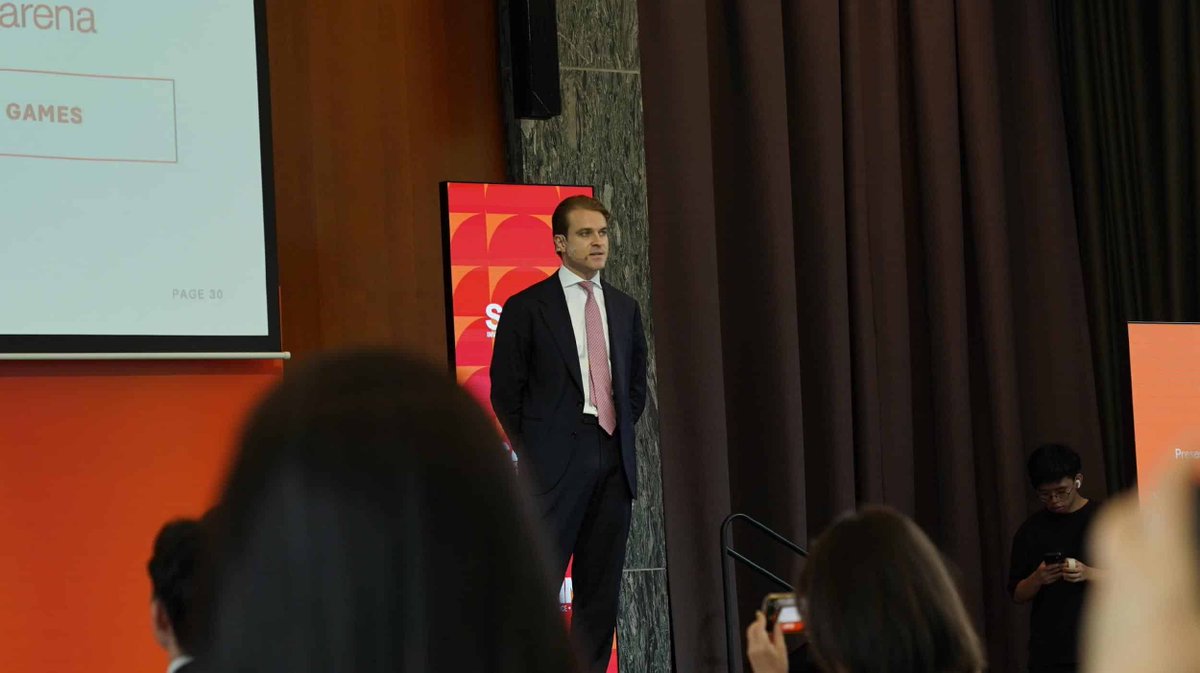
1/ At Sohn Hong Kong 2026, Sandstone Capital’s Harrison Moot called one Asian ecommerce giant “the most asymmetric opportunity” in public markets today. 🧵
Claude Code is about to release a feature called /workflows that I think will be extremely significant.
Especially for Enterprise AI.
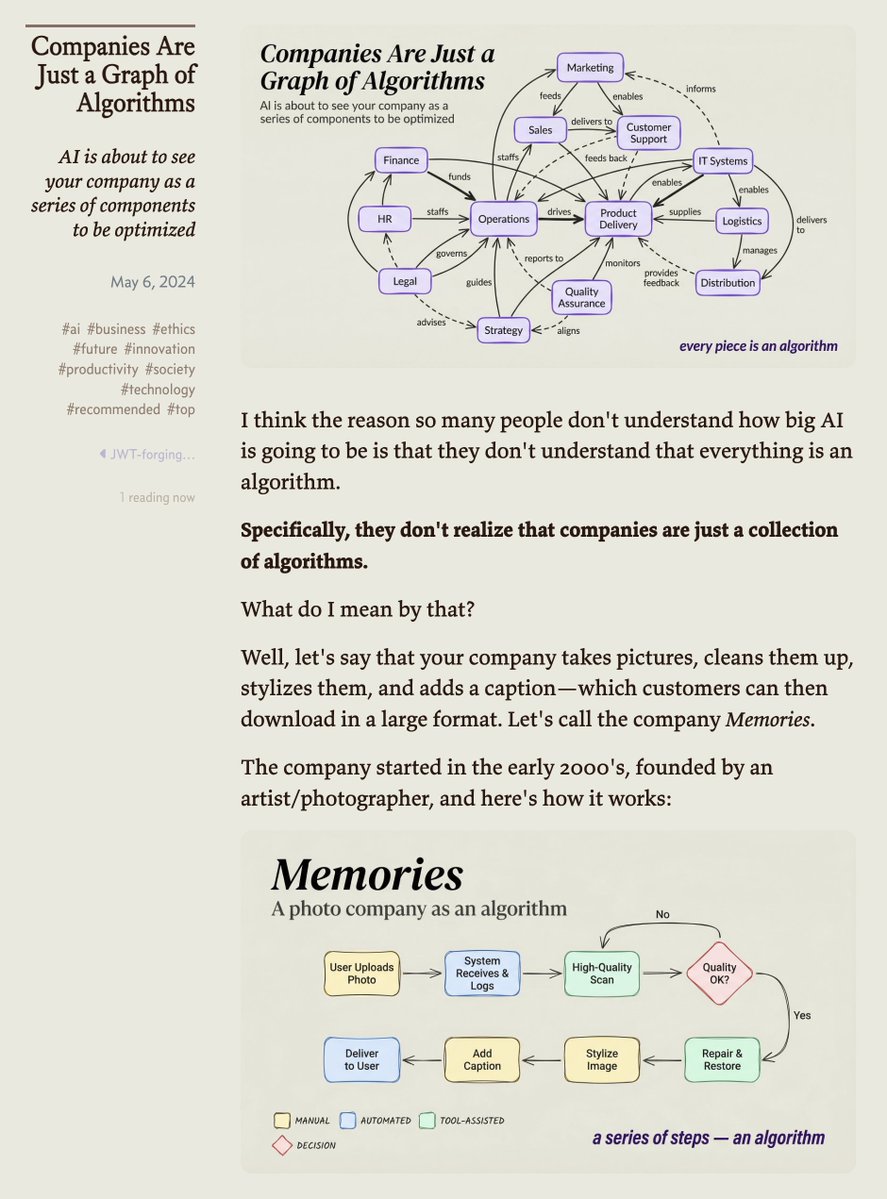
I talked about this in 2024 in a post called Companies Are Just Graphs of Algorithms.
Basically the idea is that all work is just an algorithm, i.e., a series of steps to accomplish a goal.
Skills and Cowork have been heading in this direction already, and we've seen what that's done to company valuations in various spaces.
Well this is closer to the final form.
It's turning the regular, expected work that's done in companies into pseudo-deterministic workflows that follow defined SOPs.
The human role will be determining what problems to solve (taste, expeirence, etc), building new products from that, and then optimizing these workflows from above.
But the work itself will be these workflows executed according to SOPs.
Paperwork is better when you can just talk through it.
With Images in ChatGPT and voice mode, you can upload a form, say what to fill in, and get back a completed version.
Interesting that in three of my recent conversations with Krishna at Anthropic, @dylan522p, and @GavinSBaker, each said that frontier tokens are capturing the majority of the economic value.
Gavin: "An overwhelming amount of the economic returns to AI at the model layer have been at the frontier. That's surprising to me, and I think it's been surprising to a lot of people. This is one of the most important questions to be answered, and you need to have a hypothesis on it as an investor."
Krishna: "We think the returns to frontier intelligence are extremely high. Customers invest really heavily in more tokens with the newer models. The ones at the frontier clearly are capturing this economic value, driving meaningful ROI for customers. The returns to frontier intelligence are not slowing down."
Dylan: "No one gives a crap about GPT-4 class models. They want the frontier because the frontier lets them create the economically valuable things."
Today, we share a breakthrough on the planar unit distance problem, a famous open question first posed by Paul Erdős in 1946.
For nearly 80 years, mathematicians believed the best possible solutions looked roughly like square grids.
An OpenAI model has now disproved that belief, discovering an entirely new family of constructions that performs better.
This marks the first time AI has autonomously solved a prominent open problem central to a field of mathematics.
Semianalysis published a table last night that does more for the demand side narrative than 6 months of analyst commentary lol.
Token cost vs human labor cost on 9 real internal workflows. and EVERY SINGLE ONE had ROI over 10x (most landed between 60 and 90x)
The workflow that stuck was an initiation note on $HPE, covering roadmap, balance sheet, and capex sustainability. The cost in tokens was 21,33$.
The cost in analyst time, at 20 hours and 50 dollars an hour, was 2k dollars (so ROI of 93x)
You can argue about how generalizable a single workflow is but it's hard to argue with the moment the analyst sees the receipt. The workflow does not go back. The senior analyst will not return to a process that costs 90 times more, and the junior will not be allowed to.
The reason this is not cyclical demand is the reason the cotton gin did not roll back. Once the labor cost of a task drops by 90 plus percent, the unit of work changes.
The old workflow is not slow, its gone.
The buyers of intelligence at every desk in finance, law, consulting, and biotech are about to spend the next 2 years rediscovering that they have been paying 100x more than the new floor for the same answer.
The other line in the SemiAnalysis post that stuck out was that banks are not using this yet. Most enterprises are not. The token bill of the next 24 months is going to be funded by people who saw a 21 dollar receipt and could not unsee it.
The demand curve does not bend until the supply curve does
Nick Sleep returned 921% over 13 years at Nomad by mastering a single, counter-intuitive concept:
Scale Economies Shared.
To measure it, he invented the "Robustness Ratio" – a tool that calculates exactly how much value a company gives back to its customers relative to what it keeps for shareholders.
Costco $COST famously operates at a ratio of around 5:1 (back when Sleep did his calculations at least).
"At Costco, we think the customer saving is around five dollars, compared to shopping at most supermarkets, for every dollar retained by the company."
But there’s a fintech disruptor that just listed in the US that is weaponizing this exact formula today at an even higher clip; a firm led by @kaarmann that just listed on the NASDAQ last week. In $WISE's NASDAQ listing presentation, we got some fresh numbers, helping me to update the robustness ratio Wise produces.
So let’s update my calculations on Wise ($WISE) from around two years ago (I'll link my post from back then in a comment below).
Back then, in FY23, Wise saved its customers £1.5 billion while retaining £114 million in net income – yielding a jaw-dropping robustness ratio of 13.2.
It was a textbook example of a company aggressively choosing market share and customer goodwill over short-term margin gouging.
How does that "moat" look today? Let's refresh the math using their latest financial disclosures:
✅ Customer Value Proposition (Savings): $3.3 billion
✅ Preliminary FY26 Revenue Estimate: $2.5 billion
✅ Net Income Margin: 18% (based on their H1 FY26 financial profile)
✅ Estimated Net Income: $450 million
Robustness Ratio = $ Retained for Shareholders / Customer Value Proposition (Savings or Benefits)
So when you divide that $3.3 billion in customer savings by the estimated $450 million in shareholder profit, Wise lands at a current robustness ratio of 7.33.
This decline in the Robustness Ratio isn't a sign of Wise losing its edge – it's the footprint of a business successfully diversifying its empire. Back in FY23, cross-border remittance was Wise's main engine, driving around 70% of total revenue. Today, cross-border has stepped down to 52%, while Interest Income and Card Services have scaled up to command a massive 48% combined share of the mix. Even with these new profit centers lifting shareholder returns, a robustness ratio of 7.33 is an absolute powerhouse. It means that for every $1.00 Wise retains in profit, it still leaves over $7.00 in its users' pockets compared to traditional banks.
Hong Kong's best-kept secret isn't a property tycoon. It's a $1.1B router company that became Starlink's first Authorized Technology Provider.
A holding of Graham Rhodes @longriver_hk at Longriver. $1523.HK Plover Bay Technologies. (1/10)
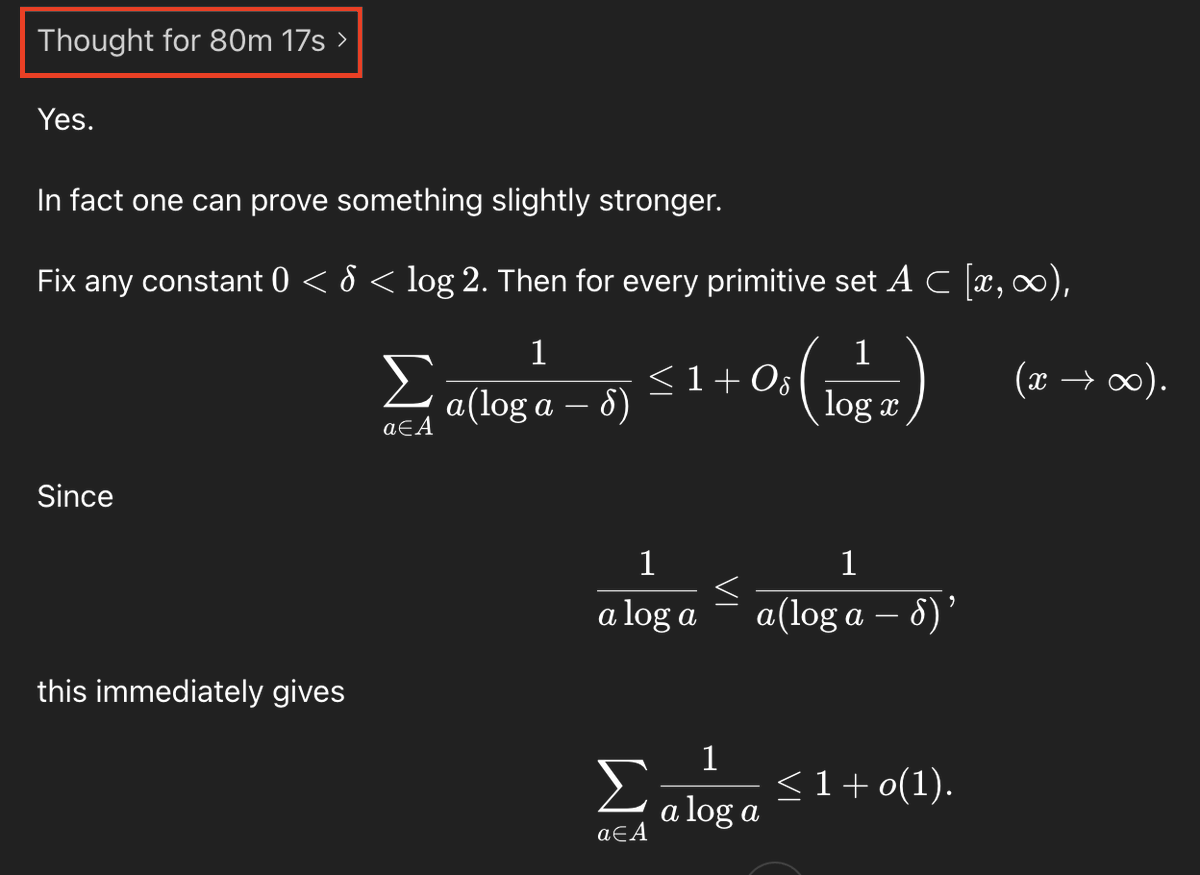
23 yaşında bi genç 60 yıldır çözülemeyen Erdös problemlerinden birini chatgpt 5.4 pro ile çözmüş.
hem de tek atışta.
chatgpt'nin soruyu çözmek için harcadığı süre 1 saat 20 dakika.
işin ilginci ai, herkesin bildiği ama kimsenin bu probleme uygulamadığı bi formülü kullanarak problemi çözmüş.
burada chatgpt yazışması;
https://t.co/FftwT3Hg9Z
bu da problem;
https://t.co/wXJrn2dmat
GPT-5.5 Pro is really on the next level.
In the past 3 days there are like 8-10 claimed solutions to new open Erdos problems with GPT-5.5.
That doesn't mean all are valid and will be accepted, but the last time we had a similar activity was in December/January with GPT-5.2 (and even then there was less claims and not as fast).
Also these claims right now are for harder problems, because all Erdos problems were scanned with GPT-5.2 at least briefly. This means that GPT-5.5 is a level above 5.2, and probably half a level above 5.4.
Solutions that surface are more involved/interesting.
I've browsed a couple and they all seem plausible.
5.5 got considerably better at synthesis of various arguments from various sources and doing it in a more effective way.
I'm pretty sure we're going to see even more spectacular applications soon.
However we're still pretty far away from AI being at a proper research-level.
My move 37 in mathematics would actually be a new definition, not a proof. I need to see an LLM define a new concept that would simplify or connect various existing structures and give raise to a new theory. But perhaps this would be synonymous with AGI.