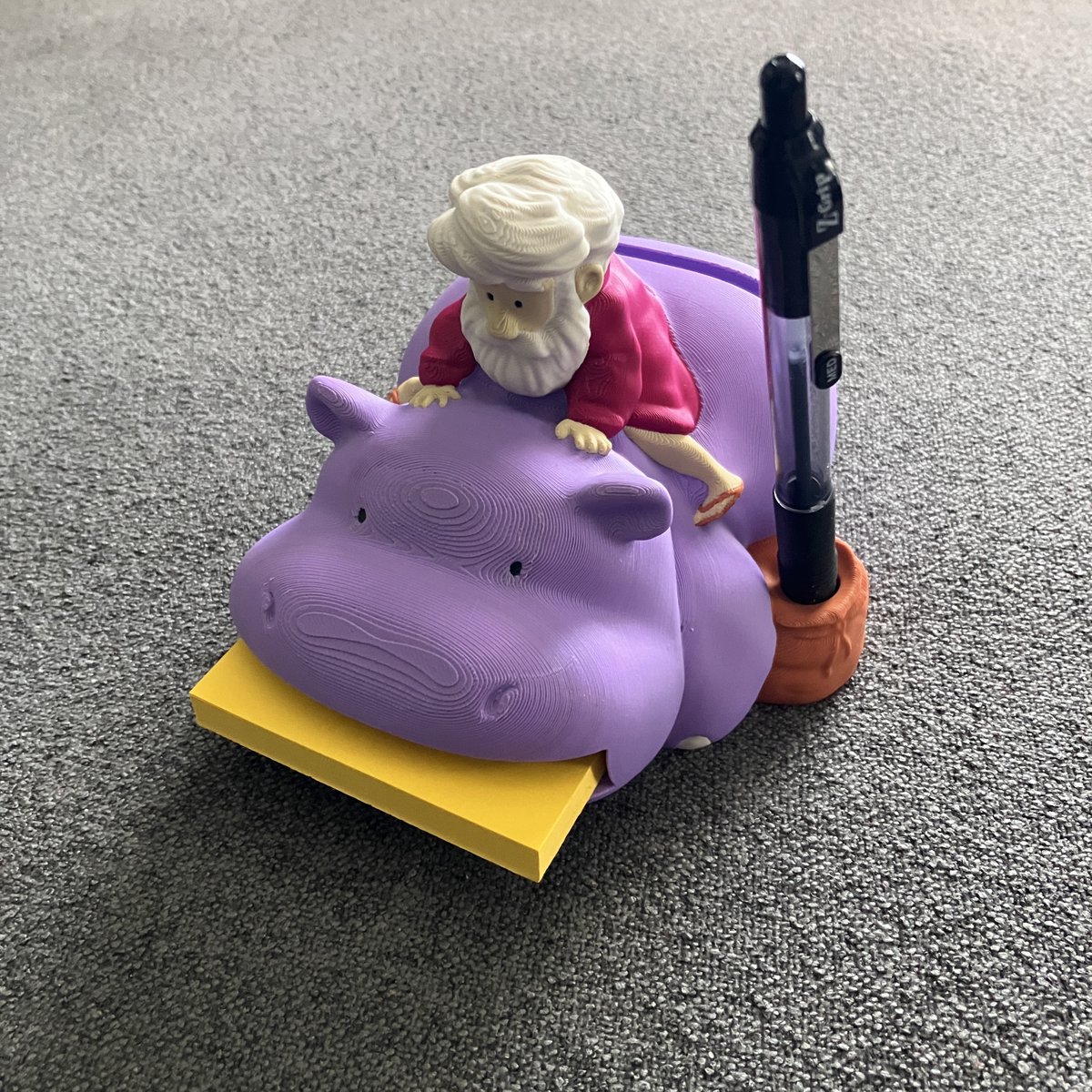
Having too much fun with the 3D printer. This is definitely not quality enough to mass produce using a 3D printer, but it's a fun little test prototype!
Where did all 1 billion zETH go?
@zerufinance posted the final numbers.
396,147,803 were burned during the race by Ethereum activity.
180,742,949 were sold in the auction.
181,568,369 went unsold and were burned too.
So more than half of the original supply is gone. The rest is what buyers took plus the part set aside for the pool and Miner options according to the docs.
Claims are open now and trading is live on Uniswap v4. The raise was only 2,993 dollars from 91 bidders so liquidity is thin and the price can swing a lot.
Also be careful. Other tokens use the zETH name. Take the contract only from the official docs.
Not financial advice. Only use money you can afford to lose.
Claim page here https://t.co/JkPqGFZ80W
Too tiny for a commercially available wheelchair, a developmentally disabled Gillette 15-month-old now gets around with a custom 3D-printed one after the community rallied to make it for him. “He lit up,” said Colton Laruass’ mom about his first ride.
https://t.co/V357k2VAPc
He looked at a company whose profit had jumped from Rs. 1 crore to Rs. 358 crore and whose stock had gone from Rs. 9 to Rs. 334. Three lines of its cash flow statement were enough for him to walk away.
He made a 91% CAGR on Tata Motors after buying it in 2020. It barely moved his portfolio, because he had put only 2% of his money in it.
That mistake changed how he invests. Today, about 85% of his money sits in just 4 stocks, and he says his returns over the last 4 years are upwards of 40% a year.
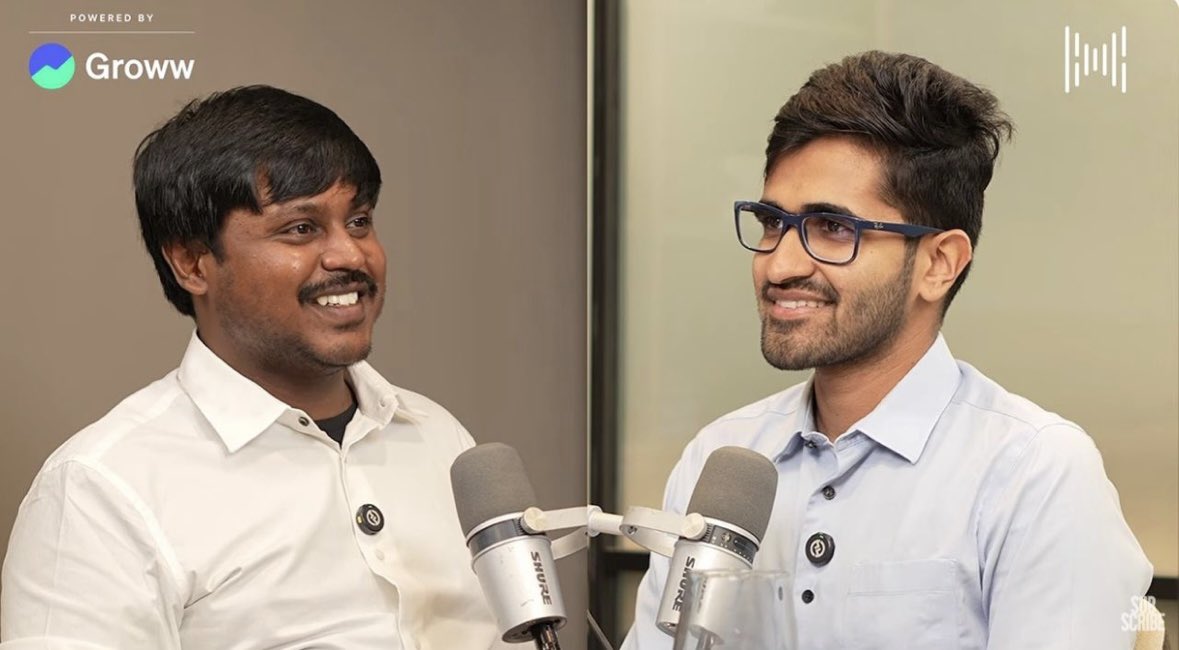
He is none other than Mr. Koushik Mohan (@mohan_koushik1), author of The 100x Formula.
In my recent podcast, he showed me how he catches companies that are dressing up their numbers, why he no longer believes in diversification, and what he learnt from investing in PI Industries and APL Apollo:
→ "Cash is king, profit is stupidity." In that company with the Rs. 358 crore profit, receivables had gone from Rs. 18 crore to nearly Rs. 2,000 crore, payables were Rs. 1,700 crore, and operating cash flow was negative. His article on it came out in October 2021 and was picked up across the media including CNBC.
→ The three ratios he checks before reading anything else. Cash tax paid should be at least 0.6x the tax expense in the P&L. Operating cash flow should be at least 50% of EBITDA. Cash return on capital employed should be above 15%. The first test alone knocks out about 70% of listed companies.
→ Two simple checks anyone can run. Add up 20 years of profits, subtract dividends, and it should roughly match the company's reserves. Add up all the capex, and it should roughly match the gross block. In 20-30% of listed companies, the numbers don't match. That's when you ask management where the money went.
→ Why he calls APL Apollo his biggest mistake. He bought it in 2018 at a Rs. 6,200-6,500 crore market cap, after new technology cut its production cycle from 50-60 days to about 40. He made around 34% but never added more, even as sales went from Rs. 5,000 crore to
Rs. 13,000 crore.
→ How he tracked PI Industries through one number: order book divided by sales. It rose from 1.6x to 3.3x, about three years of visibility. He also checked it in dollars to make sure the growth wasn't just the rupee falling. When the ratio started dropping, he exited in March 2022.
This episode is powered by @_groww.
Check out the full episode with Mr. Koushik Mohan on my YouTube channel!
So normally I’m firmly in the “the Christmas Tree doesn’t go up until after Thanksgiving” camp… but I’ve been working on this for a few weeks now and I really couldn’t wait to put it up.
Also, here’s reason 7,652 on why you need a 3D printer.
How many people would tune in, if I live streamed my trading?
The public signals on X average 700-100k per trade. But live streaming is a lot more effort so I never tried
Been on the road 7 months this year
Regional conflict, euro summer and 2 US podcast tours
But there’s no place like home. Locked in, in one place until years end (I hope)
Everyone's arguing about whether AI is a bubble. i think they're asking the wrong question
Citrini's research made me look at this differently
Here's the part that stuck with me
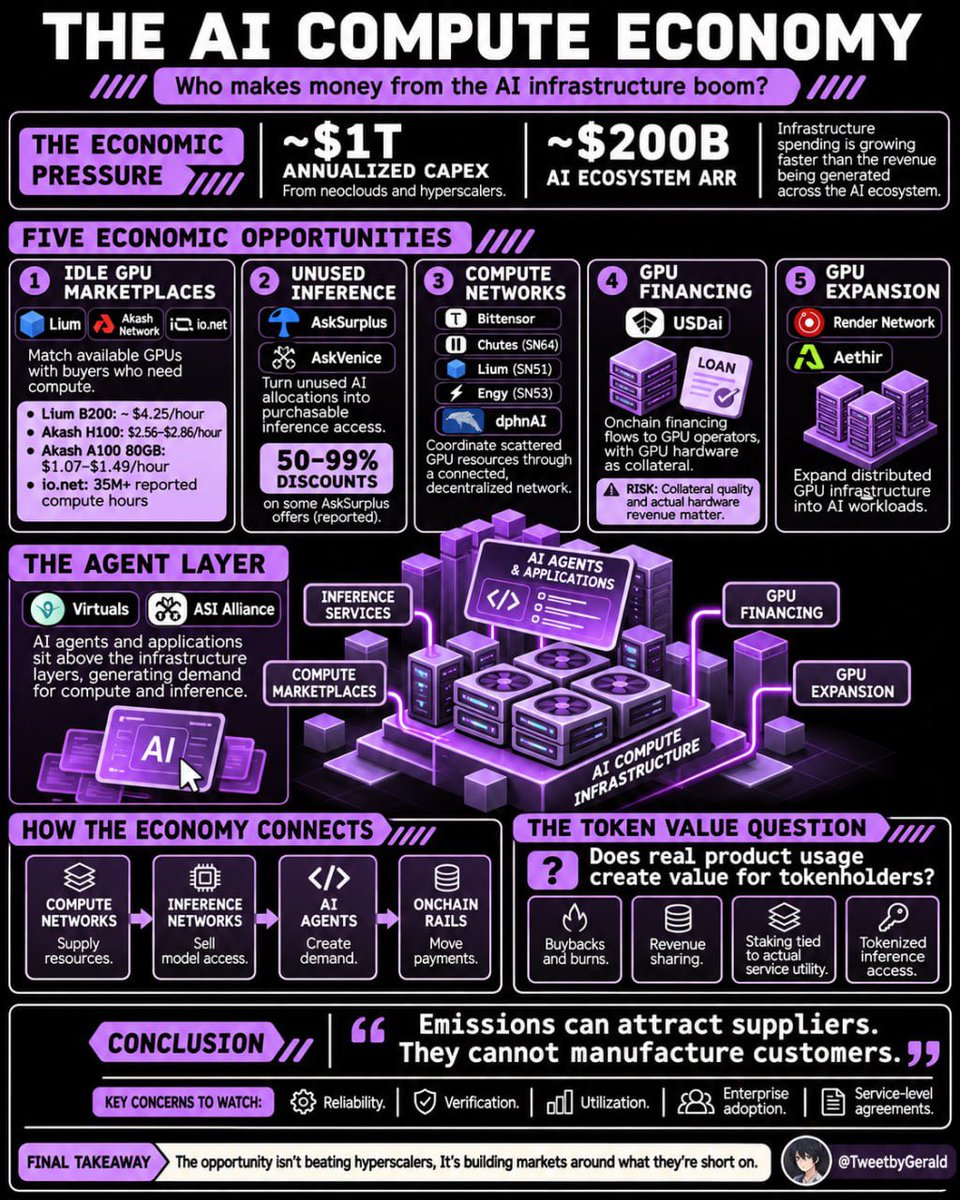
Neoclouds and Hyperscalers are heading toward $1T in annualized capex.
the whole ai ecosystem makes around $200B in ARR, and it's getting harder to close that gap.
Power is limited, financing is tight, and model prices keep dropping
demand isn't the problem.
People want ai. the problem is the people building it are spending way more than they're making.
So i started asking two simple questions:
how do operators make money from the capacity they already have? and how do buyers get cheaper compute?
That's where onchain AI got interesting to me
here’s what i’m watching:
➣ idle gpus
this is the most obvious piece. there's hardware sitting around and buyers who want it
• @lium_io connects the two sides. B200s are listed around $4.25/hr
• @akashnet is doing the same thing for cloud compute. in its november snapshot H100s were $2.56 to $2.86/hr and A100 80GBs were $1.07 to $1.49/hr. that's the price pressure i'm talking about
• @ionet pulls distributed gpus together and has reported 35M+ compute hours, that's real usage.
➣ Then there’s unused inference
this one is stranger and i like it more
lots of people pay for ai access they don't fully use.
• @AskSurplus turns that leftover allocation into something buyers can purchase. some offers are 50 to 99% cheaper than listed api prices
• @VeniceAI goes a different way and turns platform credits into DIEM, so inference access becomes something you can trade
➣ Compute networks
How does all of this get coordinated?
this is where Opentensor comes in.
• @opentensor uses subnets to organize who does what, and pays them for it
• Chutes (SN64) does serverless inference
• Lium (SN51) is the gpu marketplace
• Engy (SN53) handles decentralized compute
• @dphnAI is also working on decentralized inference
basically it's an attempt to turn scattered hardware into something that works like one network
➣ gpu financing
who pays for the hardware?
gpus cost a lot. @USDai_Official is lending onchain capital to operators, with the gpus as collateral
if it works, smaller operators can finally scale.
But i'd watch collateral quality and actual hardware revenue closely, because that's where this can break
➣ gpu expansion
what about growth?
• @rendernetwork is taking its distributed gpus into ai workloads.
• @AethirCloud is building decentralized gpu cloud for heavy jobs
➣ The agent layer
the agent layer and on top of all this sit @virtuals_io and @ASI_Alliance, building the agent and application layer
So when you zoom out, it makes sense
• compute networks supply the resources
• inference networks sell model access
• agents create the demand
• onchain rails move the money
Personally, i'm tired of token + gpu marketplace = ai narrative. putting a token on something doesn't make it a business
What i want to know is simple
When people use the product, does the tokenholder see any of it?
• buybacks and burns
• revenue sharing
• staking tied to real service utility
• tokenized inference access
Emissions can bring suppliers in but they can't bring customers in. someone has to actually pay for the compute
and the hard stuff isn't solved yet: reliability, verification, utilization, enterprise adoption, SLAs. some of these will fail on exactly that
I think, Citrini isn’t saying decentralized AI replaces hyperscalers. neither am i
But the economic pressure is real, and these are all attempts to solve it from different angles.
The opportunity isn’t beating giant data centers. it’s building markets around what they’re short on..
besties son got a 3D printer for his birthday, told her to leave his printer going while he was at school today cause “I’m making something for vick” received it after work and 🥹♥️
Morgan BY FAR has been one of the hardest workers I’ve seen on the team for a bit. While others whined or played victim, she got to work.
Constantly asking questions about trade setups, attends every voice chat, and tags me with questions.
I’m not surprised one bit by her success in this tough market.
The best rewards will always come to the hardest workers.