UBS: AI/DC memory spend split
Hyperscalers and neoclouds spend the most on DDR, with a projected 55% of memory spend going to DDR in 2026 and 57% in 2027.
$MU $DRAM $EWY $SKHY $SNDK
Goldman Sachs raises its forecast for global data center capacity to 273 gigawatts from 217 gigawatts by 2030.
Estimated at 50B per GW of CapEx; the majority is likely attributed to compute costs.
Jensen estimates much higher, at around 60B to 80B per GW, which is more reasonable as a metric for peak pricing power.
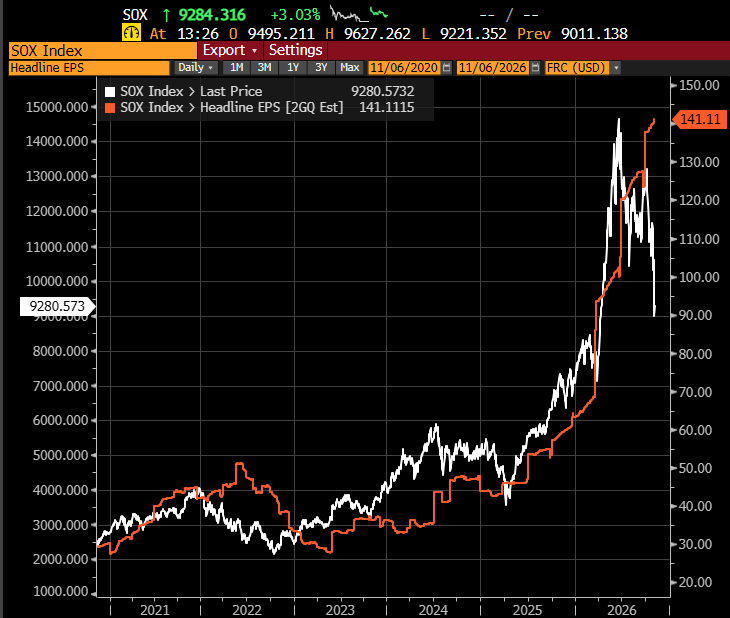
Never seen this much dislocation between valuations and fundamentals in 20+ years of investing… which includes GFC and Covid because those crashes were triggered by serious shocks to the economy and our livelihoods.
Another unexpected comparison: one of our data centers uses about as much water in a year as a single Krispy Kreme store.
Not the whole chain. One store.
The governor-elect of Texas, Gina Hinojosa, has explicitly said that all currently permitted datacenters in Texas will be allowed to finish construction. This essentially covers all of the 2027 and likely well into 2028.
She is going to pass laws that ensure that all *newly* permitted datacenters going forward for delivery in 2028/2029 will pay taxes, commit to no increase in power prices for consumers, don’t impact water availability for people, be constructed with union labor and give “Texans a seat at the table.”
Sounds reasonable. She doesn’t want to lose a lot of good blue collar jobs and property taxes for small towns in rural Texas.
Datacenter commentary starts at 6:30 in this interview.
Also attaching her official campaign position from her website in the next post.
Sidenote: After watching a bunch of her speeches and interviews, I do think she is a political talent and probably has a future in national politics.
https://t.co/shCGNcdu9d
DRAM has been a garbage cyclical business for 40 years.
With AI, the RAM that's goes in to the servers and the HBM on the accelerators define the performance of the LLM.
Memory is now worth more than gold.
Micron, Samsung and SK Hynix will continue to absolutely mint. $MU
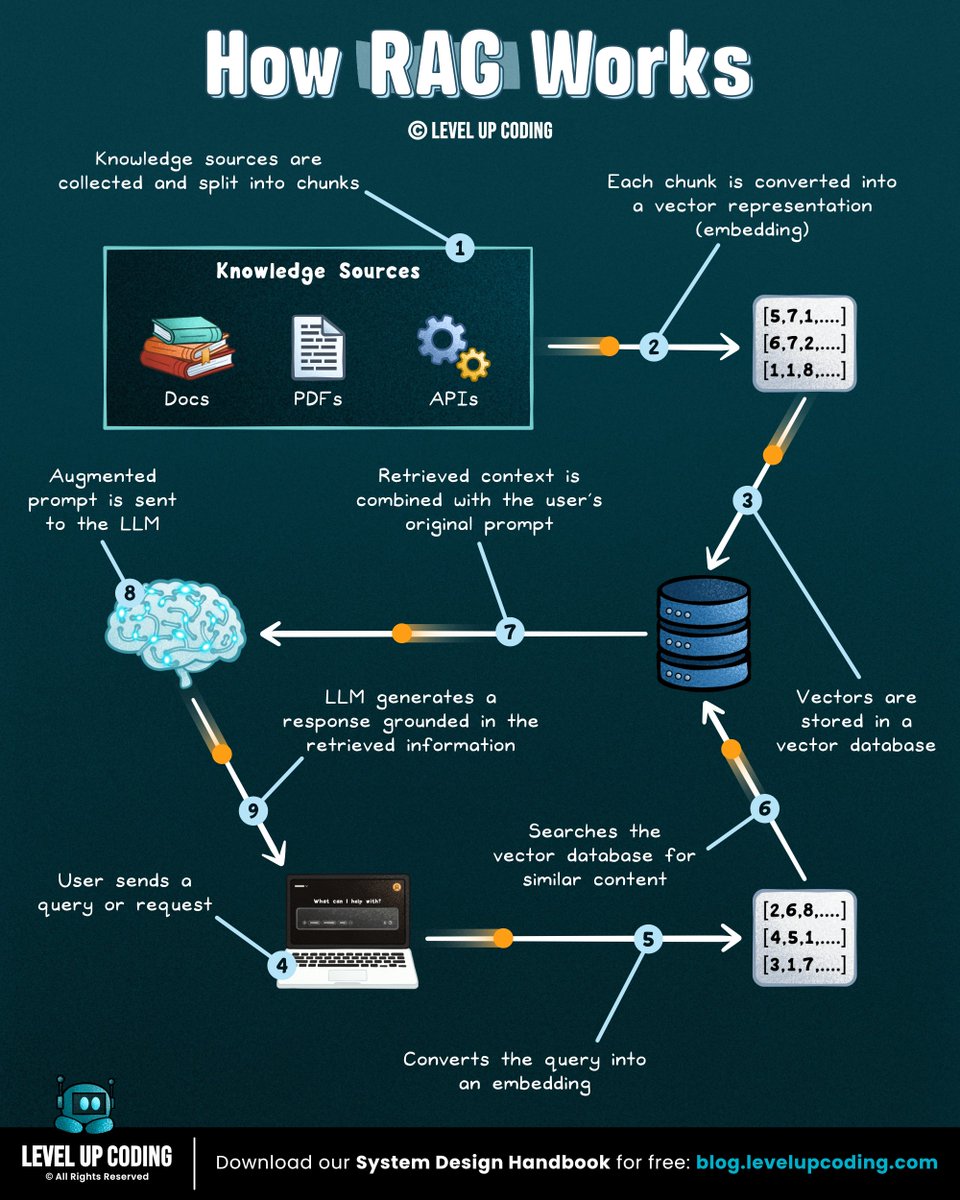
𝗛𝗼𝘄 𝗥𝗔𝗚 𝗮𝗰𝘁𝘂𝗮𝗹𝗹𝘆 𝘄𝗼𝗿𝗸𝘀
(clearly explained in under 2 mins):
LLMs are powerful, but they only know what’s already in their context.
RAG changes that by retrieving relevant external knowledge before the model answers.
Here's how it works:
𝟭) 𝗜𝗻𝗴𝗲𝘀𝘁 𝘁𝗵𝗲 𝗱𝗮𝘁𝗮
↳ Collect documents, PDFs, or other data sources
↳ Clean and split the content into smaller chunks
𝟮) 𝗖𝗿𝗲𝗮𝘁𝗲 𝗲𝗺𝗯𝗲𝗱𝗱𝗶𝗻𝗴𝘀
↳ Convert each chunk into a vector representation
↳ Semantically similar content produces nearby vectors
𝟯) 𝗦𝘁𝗼𝗿𝗲 𝘁𝗵𝗲 𝘃𝗲𝗰𝘁𝗼𝗿𝘀
↳ Save embeddings in a vector database
↳ Index them for efficient similarity search
𝟰) 𝗥𝗲𝘁𝗿𝗶𝗲𝘃𝗲 𝗿𝗲𝗹𝗲𝘃𝗮𝗻𝘁 𝗰𝗼𝗻𝘁𝗲𝘅𝘁
↳ Convert the user's query into an embedding
↳ Find and retrieve the most relevant chunks
𝟱) 𝗚𝗲𝗻𝗲𝗿𝗮𝘁𝗲 𝘁𝗵𝗲 𝗮𝗻𝘀𝘄𝗲𝗿
↳ Combine the query and retrieved context into a prompt
↳ The LLM uses that context to generate its response
The harder part is connecting chunking, embeddings, storage, retrieval, and generation into one working pipeline.
MongoDB's free RAG course walks you through the entire process, from preparing data and generating embeddings to implementing vector search and connecting everything to an LLM.
You'll build a working RAG application using LangChain and MongoDB, with a Skill Badge to earn along the way.
𝗦𝘁𝗮𝗿𝘁 𝘁𝗵𝗲 𝗙𝗿𝗲𝗲 𝗥𝗔𝗚 𝗖𝗼𝘂𝗿𝘀𝗲 → https://t.co/CCKvpdoebm
What else would you add?
——
💾 Save it
🙏 Thanks to @MongoDB for sponsoring this post.
➕ Follow me ( Nikki Siapno ) to improve at system design and AI.
Bill Ackman of Pershing Square released his Q3 shareholder letter today.
It is essential reading on AI, hyperscalers, neoclouds and financial markets.
https://t.co/Jrq0b3rOXe
. @BillAckman got this one right too 👏
"We estimate that one gigawatt of AI data center capacity currently costs approximately $40 billion to $50 billion to build using the latest generation of chips. We believe a hyperscaler can generate $15 billion to $20 billion in annual revenue per gigawatt of compute capacity, which, at a 50% incremental operating margin, would generate $7.5 billion to $10 billion of incremental operating income, implying a pre-tax return on invested capital of 15% to 25%."
Oh no. Bad news for the memory bulls. SK Hynix only made $62 billion dollars of profit in one quarter. For perspective, that’s about 7 years worth of Tesla profits. Or 15 years worth of PLTRs current yearly profits. Or 6 years of AMDs current yearly profits. All in one quarter. Not one year, one quarter. But it really doesn’t matter, because memory is cyclical. And cyclical money is like Monopoly money. All of these really really smart people on X taught me that cyclical money doesn’t count. The memory bears are going to teach those memory bulls a lesson. The cyclical guys are so smart. They know what’s best. $60 billion dollars of profit in one quarter doesn’t matter when it’s from selling memory stuff that is sooooooo cyclical. Oh, and BTW, SK said their HBM will be sold out until 2030. It may be longer, but they can’t see out past that. But don’t worry, memory is so cyclical that I’m sure it will peak soon. I’m so happy I follow so many smart guys that taught me about the cyclicality of memory. Good thing they were all predicting memory stocks to crash. Even the really smart guys with those charts and squiggly lines. They knew it. I can’t wait to see MU at $600 a share soon like they predict. And DRAM at $25 a share. lol. 🤡
Fuckin cyclical clowns out there. When will they figure out that this time really is different? Ai never existed during the past cycles. So, by definition, it is different. That’s ok. I hope they figure it out when MU passes $5000 a share. lol.