Join us for the ESC Academy Alumni Symposium — a session designed by alumni, for alumni, with interactive discussions, thought-provoking sessions, networking
opportunities, and a chance to reconnect with the Academy community. Register now #ESCCongress#ESCAcademy
I’m a little biased, but this is important. I’d like to thank the team of the scientific documents committee for this initiative. Please take the time to fill the survey. https://t.co/Y0pxGu6f4u
Great to see our manuscript published @hrs_journal
✅ Temporary accentuation of EMW negativity is a marker of impending VT in LQTS and diQTP patients.
Thanks to my mentors and all collaborators:
@RachelterBekke , @KathrinRahm , @OdeningLab , @AviSabbag
Check out our work: Characterizing Sustained Arrhythmias in Patients With Arrhythmic Mitral Valve Prolapse: Insights From the SAVE-MVP collaboration | JACC: Clinical Electrophysiology https://t.co/gSA5nYQNm1
Thanks to all the collaberators!
🏃♂️ Join the Pulse Day Run in Vienna!🏃♀️
Run 5KM with the Austrian Cardiac Society at EHRA 2025 to raise awareness for cardiac arrhythmias! 💙
📅 March 31 | ⏰ 7:00 AM | 📍 Messe Wien
🆓 Free registration
⚠️ Limited spots – sign up by March 23!
🔗 More info: https://t.co/VT0APw51ed
🚀 #EHRA2025 is almost here!
Join us at the biggest arrhythmia congress of the year in Vienna from March 30 – April 1 and stay ahead with groundbreaking science! 🔬✨
Get ready for game-changing late-breaking clinical trials, including SAVE-MVP, CHAMPION, HeartSync LBBP RCT, EMBOL-AF, and many more surprises!
🔎 Explore the full scientific programme here 👉 https://t.co/TtjkiVNIMc
See you in Vienna! 🇦🇹 #EHRA2025
How to predict ventricular arrhythmias in patients with Mitral Valve Prolapse?
Excited to share that the SAFE-MVP results will be presented in an LBCT session at #EHRA2025!
Huge thanks for the submission & congratulations to the authors! @EHRAPresident@simovicst@SteliosTzeis
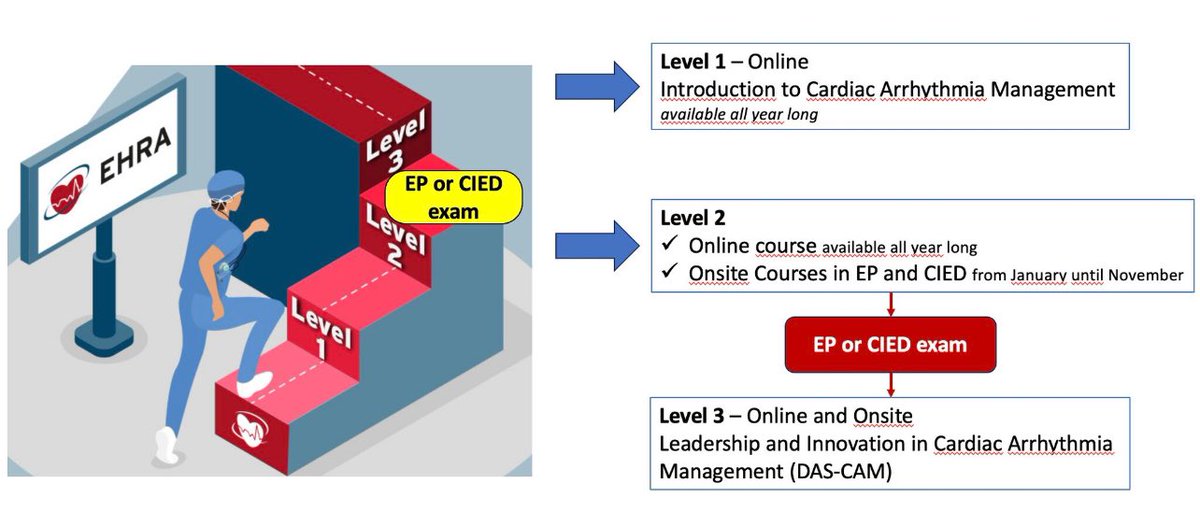
#EHRA_ESC Level 3 - Leadership & Innovation in Cardiac Arrhythmia Management @DASCAMaastricht is now open for applications! 🎯
Curious about what the DASCAM programme has to offer? 🎥 Watch @micaela_ebert & @ManningerMartin share their first-hand experiences and insights!
🔗 Apply now and take your expertise to the next level 👉 https://t.co/G7rLgBxUad Deadline is May 5th 📅
@escardio
Just 1 month to go until #PulseDay 2025! ⏳
Unite with us on 1 March to raise awareness and empower our patients, friends, and family to prioritise heart health!
Why is Pulse Day important?
❤️ With 1 in 3 people at risk of developing a serious #arrhythmia, early detection can save lives
❤️ Preventive action matters, so encourage those around you to adopt lifestyle changes such as an improved diet, exercise and stress management
Learn more and get involved 👉 https://t.co/Qmrk4yqH9I
#EHRA_ESC @simovicst@Dominik_Linz@JacopoImberti@EHRAPresident@jongichun@Mel_Gunawardene
Discussing atrial secondary TR with the electrophysiologists during our meeting "ATRIAL FIBRILLATION. CHANGING THE PARADIGM: FROM THE TREATMENT OF ARRHYTHMIA TO THAT OF THE ARRHYTHMIC PATIENT" was great. This condition is not even cited in the latest ESC GL about AF.
#PFA vs Mapping: "When a Wise Man Points at the Moon, The Fool Looks at the Finger"
While the electrophysiology community is increasingly focused on PFA—often promoted by companies as a revolutionary tool to tackle atrial fibrillation—we must remember that true understanding goes deeper.
As cardiac electrophysiologists, we should prioritize research into EP mapping over ablation technologies, which are best left to companies and those driven by commercial interests. While new ablation methods certainly have value, the real wisdom lies in decoding the underlying mechanisms that drive AF.
For decades, researchers have concentrated on mapping the atria during AF, hoping to unlock the secrets behind this complex arrhythmia. With advancements in high-density mapping tools such as the HD Grid, Orion, and Octaray/Optrell, we are now better equipped than ever to gain new electrophysiological insights. The characterization of electrograms (EGMs) has reached a new level of sophistication. Furthermore, excellent software - hardware advancements like Omnipolar techonlogy (Abbott) enhances our understanding of real-time wavefront direction and speed.
During the golden era of mapping (2002–2015), the search for the "holy grail" of AF was heavily reliant on mapping during AF itself, as sinus rhythm was considered unreliable due to the limitations of low-density mapping catheters like the LASSO and ablation catheters with bipoles.
But what if we revisited AF by studying sinus rhythm and pacing with advanced 3D mapping systems and high-density catheters? Sinus rhythm mapping may actually hold the key to unlocking a deeper understanding of AF.
Lessons from ventricular studies offer valuable insights. Seminal works by @EdwardCiaccio, along with recent research by myself and @DrRoderickTung , have demonstrated that functional phenomena are crucial for the initiation and maintenance of ventricular tachycardia reentrant circuits.
The question now is: isn’t it time to apply this knowledge to the atria?
Atrial fibrillation involves fibrillatory waves at 300–400 bpm, making the atria even more prone to developing functional phenomena. These dynamics could play a critical role in both the initiation and maintenance of localized reentrant circuits in AF.
So, let’s not just focus on the finger—let’s look beyond and understand the moon.
Are you ready?
Soon #HeartRhythmJournal #Afib #FunctionalPhenomena #EPeeps
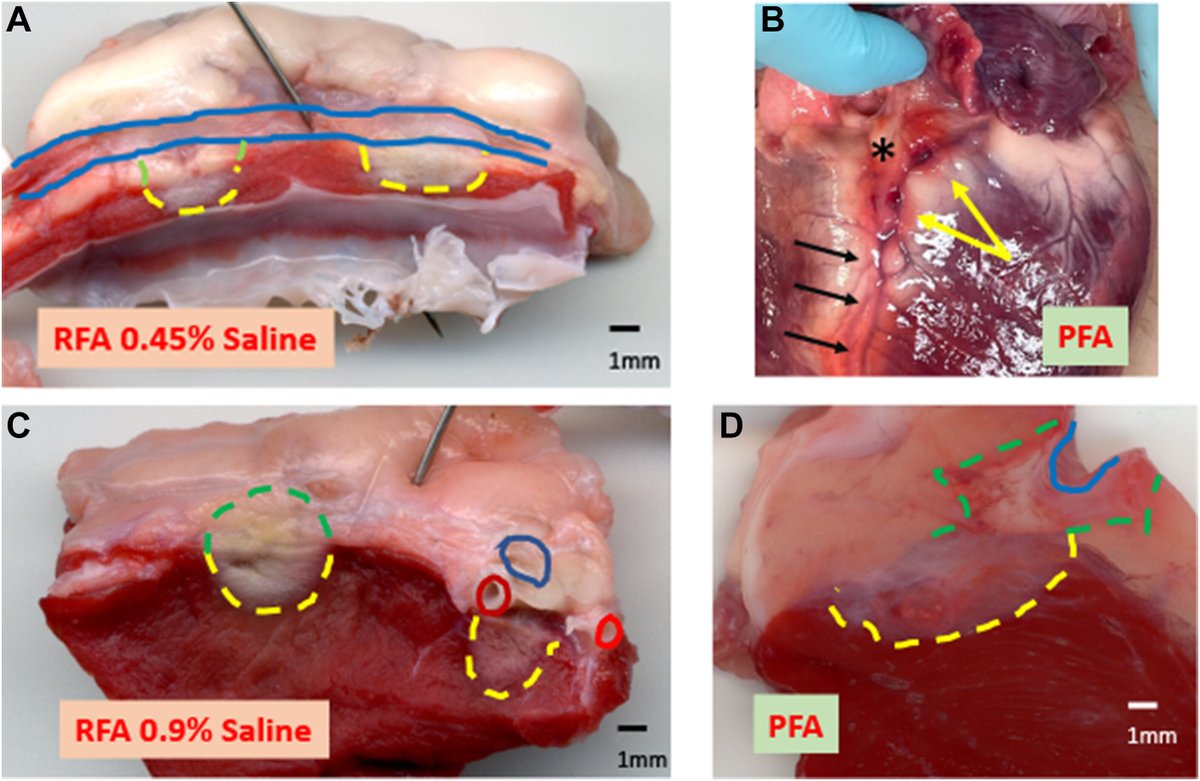
Comparative Efficacy and Safety of PFA Versus RFA of Idiopathic LV Arrhythmias - PFA outperformed RFA in challenging locations like Papillary, LV summit via distal CS and direct epicardium. https://t.co/pVonhJNmd0 Congrats to star fellow @arwayounis2@CleClinicHVTI@omwazni