A detailed guide on anticoagulation conversion protocols, outlining how to switch between different anticoagulant medications based on the current medication and the target medication.
https://t.co/VrfmMY7VMA
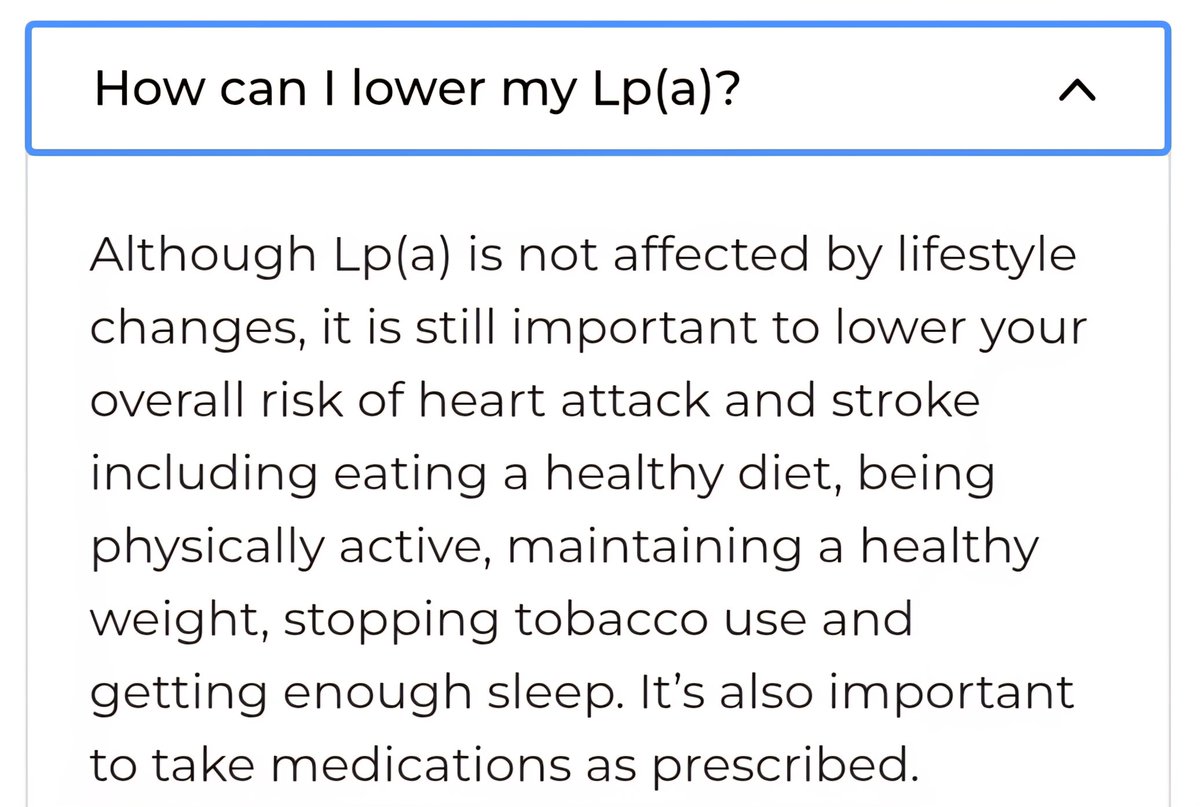
Fascinated, and puzzled, by the countless discussions on Lipoprotein a
We know:
- Lp(a) is genetically determined
- ⬆️ Lp(a) = ⬆️ risk MI / stroke
- No drugs currently ⬇️ Lp(a)
- ⬆️ exercise ≠ ⬇️ Lp(a)
1/3
“Anaconda LIMA”. What is the basic diagnosis? (Once our CVTS surgeon called me from OT during a CABG and told he is seeing the largest LIMA in his life. I asked him to put venous grafts instead of LIMA and I later fixed the basic issue with a big balloon). may be useful sometime!
1/
A middle-aged man presents with acute sudden-onset dyspnea and hypotension. He is sitting upright.
What do you notice? Let’s see if we can figure out the cause of hypotension.
Elon Musk is a big believer in Mental Models.
Not only Musk— Charlie Munger, Jeff Bezos, and Steve Jobs too.
I've collected 20 of the most powerful mental models from the greatest thinkers throughout history: 🧵
In 1997, UG govt was considering breaking Microsoft as it was a single large monopoly company. It needed Apple or any other company to have a significant market share so that Microsoft didn’t get broken into smaller companies. This thread does not mention that at all!
The Monstera deliciosa fruit, often playfully referred to as the "delicious monster" fruit, is a fascinating tropical delicacy that tastes like a blend of pineapple, mango, and banana. This fruit, known for its unique ear-of-corn appearance, is a treat for those who are patient enough to wait for it to ripen.
However, one must exercise caution when dealing with this fruit. The unripe Monstera deliciosa fruit contains calcium oxalate crystals, which can cause severe throat irritation and even a burning sensation. It's only when the fruit is fully ripe and the scales have fallen off, revealing the soft, sweet flesh inside, that it becomes safe to eat.
The Monstera deliciosa plant itself is a popular houseplant, known for its large, fenestrated leaves. It's native to the tropical rainforests of Central America and is part of the Araceae family. The fruit of this plant is not only delicious but also packed with nutrients, including a high amount of Vitamin C and a good amount of protein.
Many residents of doctors of Maharashtra who had worked in the COVID pandemic in all the waves ,by risking their lives at the least amount of stipend ,It is now almost 2 years post GR but , still many Government hospitals have not released their hard earned money.
What is stopping you from releasing this money ?
When are you going to release it. ??
You request you to release ASAP.
@mrhasanmushrif@CMOMaharashtra@AjitPawarSpeaks@Dev_Fadnavis@mieknathshinde@supriya_sule@PawarSpeaks
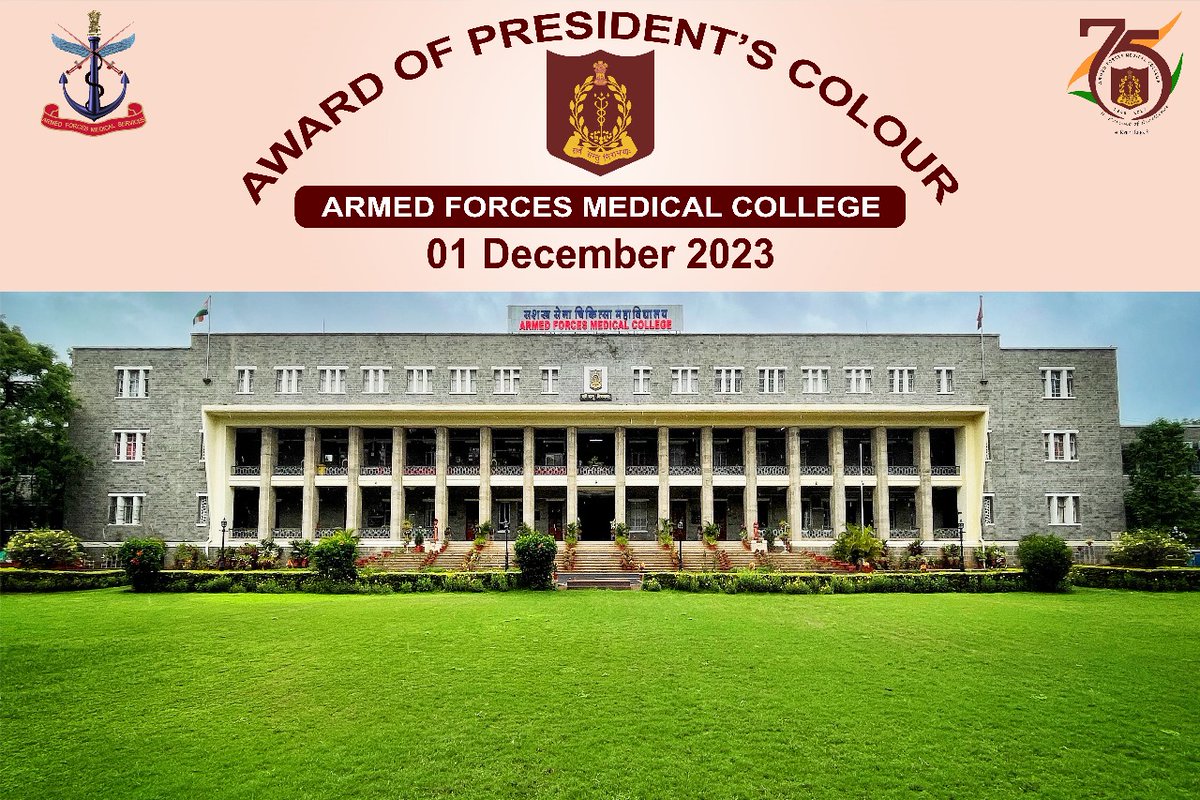
Hon'ble President
Smt Droupadi Murmu, will confer President’s Colour to Armed Forces Medical College, on 01 Dec 2023, in its platinum jubilee year. AFMC is a premier Armed Forces Medical Services (AFMS) establishment and one of the leading medical colleges of the country.
Yesterday was a really good day.
Maybe even a career high.
I should be popping the 🍾.
But with every high has to come a low, right? That’s how this works.
Have you been getting your mammograms like you’re supposed to?
I haven’t. 🧵
#KidneyWk#WomenInMedicine
Remember the name : Ajit Doval, IPS (1968 batch)
-Only citizen who was awarded with Kirti Chakra during a Shantikal
-Spent 7 years in Pakistan posing as a Mullah, which helped R&AW to counter ISI & Pakistan sponsored Terrorist groups
-Posed as a Pakistani agent to gain the trust of KhaIistanis & helped Indian security agencies during operation bluestar
-In 80s he managed to create a rift in terr0rist group Mijo National front & forced them to sign peace agreement with GOI
-Successfully carried out surgical strikes in Myanmar, Pakistan
If today our R&AW is being compared to Mossad, it's because of this particular man. He's a hero, he's a gem, he's a living legend...
Cancer is the emperor of all maladies. The only thing worse than fighting this formidable foe, is fighting it alone and poor. Imagine you have a stable career as a Professor of Surgical Oncology in one of Asia’s most renowned hospitals in Chennai. Your wife works for the US consulate and you have a daughter studying class 5. Will you risk your idyllic life to give poor cancer patients in a remote part of India, a shot at least, at dignified death?
That’s exactly what Dr Ravi Kannan did. One fateful day in 2006, Dr Kannan, then a surgical oncologist in Adyar cancer institute, got a call. Dr Chinmoy Choudhury, from Cachar cancer center in Silchar, Assam had called to discuss about a case - but he also asked whether Dr Kannan would like to work in Barak Valley, Silchar. Dr Kannan wasn’t sure - he however agreed to visit the hospital once.
What he saw there, made him realise the dire situation - to reach the nearest cancer center people had to travel nearly 15 hours through serpentine roads. Cancer treatment required multiple visits to the hospital. It was expensive. The outcomes weren’t always great. People had imbibed the fatalistic idea that there is little one can do about cancer - it is too powerful. So when a family member got the dreaded disease, the family had to choose between which life to save - the patient’s or their own.
Initially, Dr Kannan tried the usual silver bullet - free treatment to poor patients. He asked his IT friend to help him track patients - to his shock, he found that more than 50 % of patients never came back for the second visit. Unlike Chennai, these people hadn’t gone doctor shopping - for there were no doctors to shop! It turned out that even to access free health care, the patient and the attender had to lose out on daily wages. If the family had only one earning member this meant trouble.
They came up with an innovative idea - ad hoc jobs for the attenders in the hospital itself ! Not only that, but the attenders who were employed in cleaning, cooking etc - got free accommodation and nutritious meals. No one had to go hungry, just to get treatment. Having solved the first problem, Dr Kannan set out to solve the cost of treatment.
Some suggested making the rich pay more to subsidise treatment for the poor. Dr Kannan refused - fearing that the paying “customers” will eventually elbow out the “free” ones. He instead devised a flat lifetime fee of Rs 500 - which included unlimited visits to hospital, dental care and treatment ! Even with a flat fee, free food and stay, some people were still falling through the cracks. He then realised that treatment for the poor had to be faster - because there was no one to take care of elders or kids at school. To reduce time to diagnosis and treatment, Dr Kannan replaced the time consuming standard biopsy with frozen sections.
Patients started coming in large numbers. This made Dr Kannan wonder - why do these people get cancer in the first place and what can we do about it? Lifestyle is a major contributor, but hard to change. So he settled for the next best thing - to pick up cancer early, by screening people in their homes itself. Since there weren’t enough doctors , he trained volunteers to do the job - fighting a lot of skepticism. The idea paid off - examining patients in their own homes meant everyone could be screened for cancer.
One day a trainee doctor told Dr Kannan, “Sir, many patients are actually well off. They don’t want to pay. They are gaming the system”. He was quiet for a couple of seconds, then went with the trainee doctor to homes of random patients. The abject poverty of their homes hit the trainee doctor like a ton of bricks - perhaps there were people who gamed the system, but the vast majority did not.
The effort bore fruit and Silchar mounted a counter attack against cancer. Indian govt gave him Padmashri
Dr Ravi Kannan’s life shows what one man can do, if he cares enough.
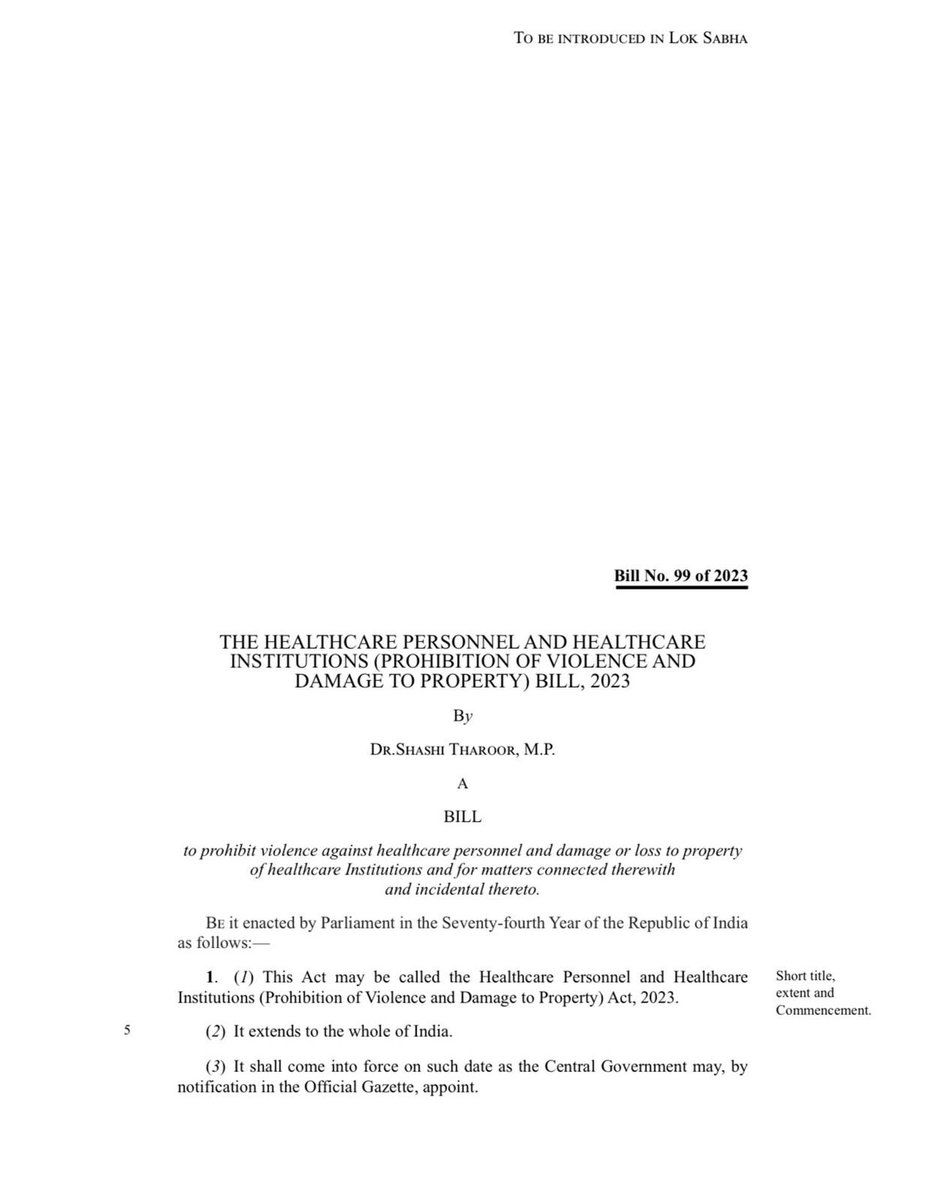
Today I introduced The Healthcare Personnel and Healthcare Institutions (Prohibition of Violence and Damage to Property) Bill, 2023 in the LokSabha.
On May 10, 2023, Dr Vandana Das, a young doctor driven by a commitment to serve humanity, tragically lost her life at the hands of a patient she was caring for in the emergency room. While recognising that nothing would bring back their only child, I had pledged to her parents that her death would not be in vain. She is not alone: It is currently estimated that 75% of doctors face physical &verbal abuse during their service. No doctor should have to fear for their safety while fulfilling their duty.
As promised, I have thus moved a private member’s bill in Parliament to protect medical personnel. It makes acts of violence against healthcare personnel, including paramedical students &workers, administrative staff & ASHA workers, a cognisable and non-bailable offence. It requires speedy investigation and sentencing within a specified time frame & the establishment of designated special courts in every district.
If passed, my Bill should be known as the Vandana Das Act, in honour of the brave young medical martyr. @mansukhmandviya
Prema was a eight year old happy go lucky girl. One fateful morning, she was playing in the kitchen, when the stove burst on her face. It was 1965. Half of her body was burnt. No one knew if she would survive. The burns were so deep , neither her face, nor her life would ever be the same. The shell shocked parents, took her to Christian Medical College, Vellore.
Prof L.B.M Joseph reassured the parents that he will do his best, but the rest was upto God. Luckily providence had a different plan for the little girl. She survived, but required 14 surgeries over the period of several years. Spending her childhood in hospital, she hated the sterilised walls, the doctors and above all her own loss. Prof Joseph was patient with his young patient, encouraging her that someday it will all be fine. He said, “If you allow me to treat you, I will give you my hair”.
Slowly but surely, Prema improved. What doesn’t kill you, makes you stronger. The fire didn’t just burn her skin, it crept inside her - as a spark, that ignited a burning passion for medicine. After doing MBBS in Hubli, Dr Prema Dhanraj eventually landed in the same CMC , Vellore as MCh plastic surgery resident ! Guess who was the teacher? Dr Joseph himself ! It’s then that she remembered Dr Joseph’s promise that he would give his hair - only to find him totally bald ! A white lie, but not a baldfaced one - it saved the young girl’s life.
She had no time for marriage or frivolity. Dr Dhanraj was on a mission to transform the lives of burns victims. She became the Head of Plastic Surgery in CMC Vellore, the very same hospital that pulled her life from the jaws of death - some bonds are forged in fire. Dr Prema Dhanraj was a visiting professor to University of Texas, sharing her expertise. Her only regret was her parents passed away, before they could see her phenomenal success.
She didn’t stop working after retirement - but then, no one expected her to.
In 1999, she startedAgni Raksha , India’s only not-for-profit organization dedicated to the total care and rehabilitation of burns victims, mostly women and children from poor families. Agni Raksha works towards 360 degree socio -economic transformation. It instils hope in those with burns that a life devastated by fire is not the end, but a beginning.
Even as I write this, she is probably working in her Agni Raksha home - tending to the poor and unfortunate. Her indomitable spirit lights up the lives of those who need it most.
Her life is a powerful reminder that there is a life beyond scars. That we are bigger than our scars. That no fire is stronger than the fire within.
#MedTwitter
It was the 1950s. India was a fledgling new democracy. Madras was a Mecca of Medicine, home to some of the brightest minds and ablest hands. Those were the days before MRI or steroids.