Alzeihmer’s disease doesn’t effect individuals. It affects families with huge social, psychological and financial burden.
More awareness is the the key to many if not all of these issues.
#WATCH | Delhi: On the joint event by Eli Lilly and Company and Fortis Healthcare to mark World Alzheimer's Day, Interventional Neurologist at Fortis Hospitals, Dr. (Prof.) Vinit Banga says, "Normally, there are multiple neurons in the body, and they keep communicating with each other... In Alzheimer's disease, these cells stop communicating with each other and begin to deteriorate due to ageing and the deposition of proteins in the brain. What these drugs, which are the newest therapies for Alzheimer's, known as monoclonal antibodies, do is dissolve this protein and prevent it from accumulating in the brain... Memory is preserved for a much longer period... We call this protein amyloid. Monoclonal antibodies target amyloid and prevent it from forming... These therapies have to be given at an early stage of Alzheimer's disease..."
PHOTO | Eli Lilly and Company (India) and Fortis Healthcare, marked World Alzheimer’s Day (September 21) with a call to prioritise brain health, recognise early signs of changes in memory and cognitive health, and seek timely medical guidance. Former Miss Universe and Actor Lara Dutta Bhupathi joined the initiative to drive greater awareness and encourage open conversations around memory and brain health. Alzheimer’s disease, the leading cause of dementia, is a progressive neurodegenerative condition that affects cognition, communication, decision-making, independence and everyday life, placing a significant burden on individuals, families and caregivers.
#WorldAlzheimersDay #LaraDuttaBhupathi
This week is peripheral neuropathy awareness week so here are a few useful articles about PN
Ten steps in diagnosing PN
https://t.co/sYjpAhUqjI
The 10 P's
https://t.co/tV6tdqueLX
PN JAMA Review
https://t.co/dsQKfG5oRl
Tests for treatable small-fiber PN
https://t.co/xcNlgFNaXf
CHILL ART study reports improved outcome with EVT plus hypothermia vs EVT alone. Only 0.4 degree difference in treatment groups. Replication in other populations needed #ESOC2026 @svinsociety
HOPE trial reports improved outcome with post EVT SBP management tailored to reperfusion status. Needs to be reconciled with earlier negative trial results with BP lowering following EVT #ESOC2026 @svinsociety
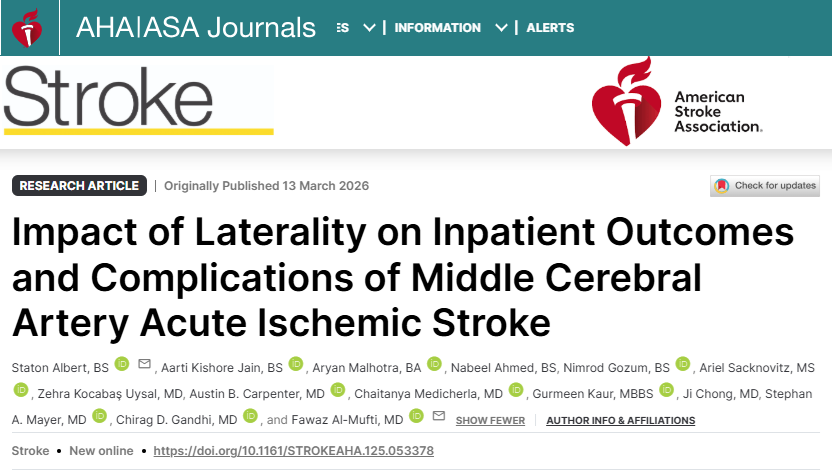
The right hemisphere would like a word. Turns out the right brain has been getting robbed.
Our new paper in @StrokeAHA_ASA shows right MCA strokes actually have worse inpatient outcomes than left.
Higher mortality.
More edema.
More complications.
Yet these patients often score lower on the NIH Stroke Scale.
If your stroke does not affect speech, the system sometimes thinks you are doing just fine.
Translation: patients with right hemisphere strokes can look “better” on paper while actually doing worse.
#Stroke #NeuroTwitter #Thrombectomy #MedTwitter
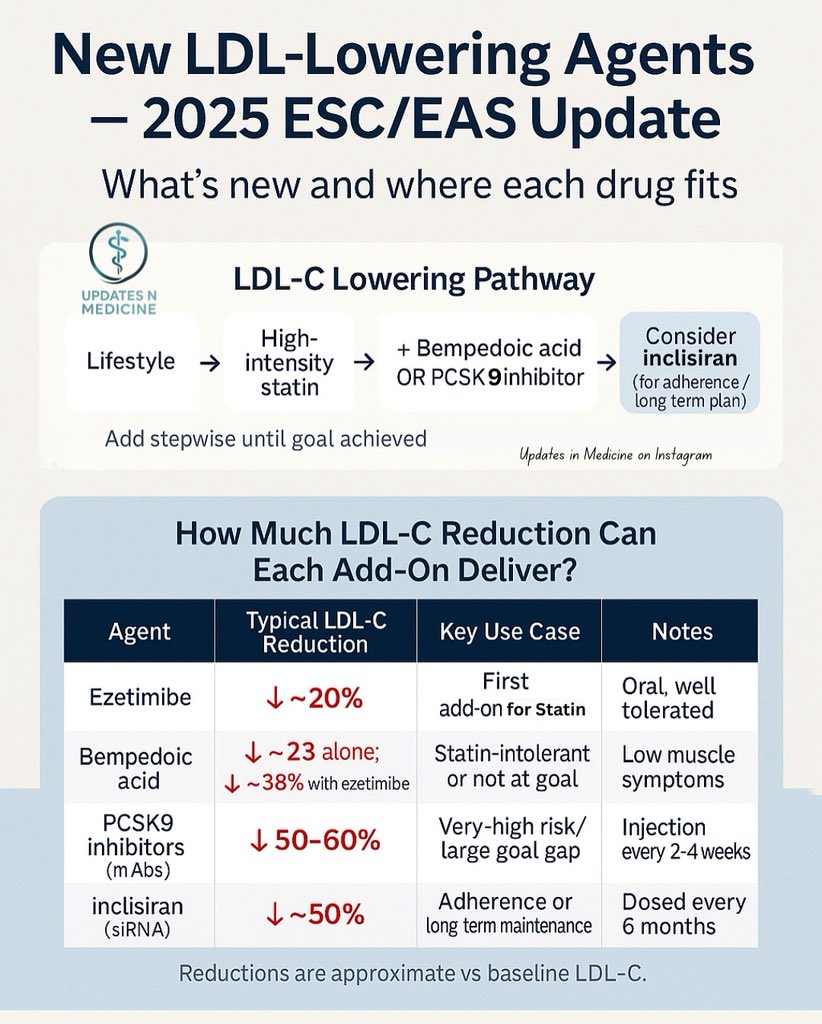
Patients with intracranial athero should now be targeted to LDL<55 mg/dl, given the new ACC/AHA lipid guidelines. This should be adopted in CAPTIVA and other ongoing trials, as well as routine practice @BrianHoh1@ESOstroke@WorldStrokeOrg@AHAScience
About 12% of AIS patients eligible for IV lytic therapy don't get treated, mostly because of rapidly improving or minor deficits. Nonetheless almost 40% of these folks end up with moderate or severe disability at 3 months.
Potential Missed Opportunities to Administer Intravenous Thrombolysis to Patients With Acute Ischemic Stroke @StrokeAHA_ASA
https://t.co/iZP13wuae0
Do you know all the updates on restless legs syndrome (RLS) 2026? Are we getting the diagnosis right and the treatment smarter. Spoiler alert: ‘Gabapentinoids’ now take center stage. What does RLS mean? RLS or restless legs syndrome is a movement disorder marked by an urge to move the legs that worsens at rest, improves w/ movement and is strongest in the evening or night. Winkelman and Wipper describe in a just dropped paper in JAMA what is new in understanding, diagnosing and treating RLS in 2026.
Key points:
- RLS affects about 3 percent of adults and frequently disrupts sleep mood and quality of life.
- Abnormal brain iron handling, genetic risk and dopamine system changes appear central to RLS biology.
- Gabapentinoids are now first line therapy, while dopamine agonists are no longer preferred due to augmentation risk.
My take: RLS is frequently misdiagnosed or treated in ways that make symptoms worse over time. This review provides a clear practical reset. The message is simple, but powerful. Get the diagnosis right, check iron thoughtfully and treat in a way that protects folks long-term, rather than chasing short term relief. In our MDS Aspen course, the experts have been chirping for 3-5 years to shift away from dopamine agonists and to ‘gabapentinoids.’ The time has come! Here are 5 points that resonated w/ me:
1- RLS is a clinical diagnosis and sleep studies are not required for most folks.
2- Iron deficiency in the brain can exist even when blood iron looks normal.
3- Gabapentinoids help many folks and avoid the long term risks seen w/ dopamine agonist and dopaminergic drugs.
4- Augmentation is a real and a frequently underrecognized complication of dopamine agonists.
5- Thoughtful stepwise care by health care providers can markedly improve sleep and daily function for folks living w/ RLS.
https://t.co/lFXaqWFt1w @ParkinsonDotOrg@FixelInstitute@movedisorder #RLS @JAMA_current@JAMANeuro
Carotid artery stenting for the win for asymptomatic severe carotid stenosis. Very impressive trial by the CREST-2 team. Congratulations! @ChaturvediNeuro#SVIN25 https://t.co/cYJQxW4DYL
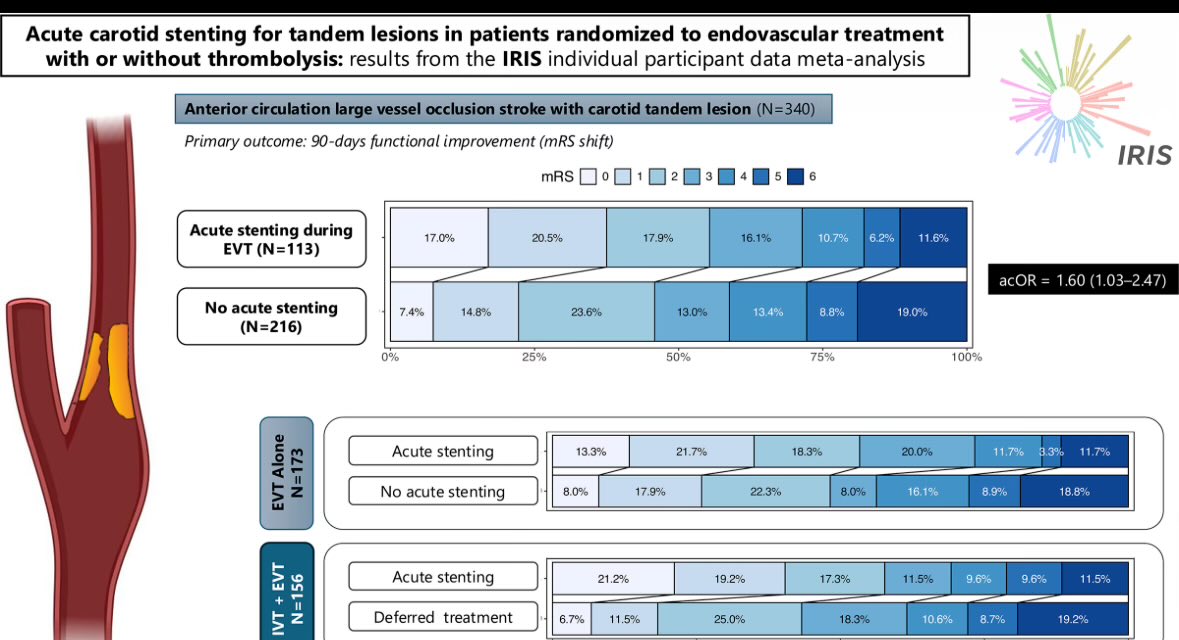
This graph sums it up. In acute stroke with tandem lesions (ICA + intracranial occlusion), acute carotid stenting during EVT was associated with better 90-day outcomes than EVT without stenting.
Outcomes were similar with or without prior IV thrombolysis (IVT).
Caveat: secondary (post-hoc) IPD meta-analysis of 6 RCTs - stenting wasn’t randomized, so results are associative, not causal.
𝗗𝘂𝗿𝗮𝗹 𝗩𝗲𝗻𝗼𝘂𝘀 𝗦𝗶𝗻𝘂𝘀 𝗦𝘁𝗲𝗻𝘁 𝗳𝗼𝗿 𝗧𝗿𝗲𝗮𝘁𝗶𝗻𝗴 𝗜𝗱𝗶𝗼𝗽𝗮𝘁𝗵𝗶𝗰 𝗜𝗻𝘁𝗿𝗮𝗰𝗿𝗮𝗻𝗶𝗮𝗹 𝗛𝘆𝗽𝗲𝗿𝘁𝗲𝗻𝘀𝗶𝗼𝗻
To place a dural venous sinus stent, with the patient under general anesthesia, an interventional radiologist threads a stent across the stenosis affecting the dominant transverse sinus after first verifying that a sizable venous pressure gradient exists across the region. The appealing feature of this procedure is that it corrects the anatomical obstruction that is considered central to the self-reinforcing rise in intracranial pressure (ICP). In a summary of 19 reported series, the risk of subdural or intracerebral hematoma was shown to have been small (0.49%), but two deaths were reported. The same review reported a mean drop in cerebrospinal fluid (CSF) pressure of 13.3 cm of water. Patients receive aspirin and clopidogrel for up to 6 months after the procedure to prevent stent thrombosis.
The most serious limitation of venous sinus stenting is that the ICP is lowered, but not to a level in the normal range in some patients. If the ICP remains elevated, visual function may continue to deteriorate. Opening pressure cannot be checked immediately after stent placement, because lumbar puncture is contraindicated in patients receiving dual antiplatelet drugs. Many patients continue to receive acetazolamide owing to concern that stenting has been only partially effective. In various series, 15% of patients showed development of a new stenosis adjacent to the stent (seen in figure). Recurrent stenosis is evidence that ICP is still high, exposing the optic disks to ongoing damage precisely at the time decisive relief is paramount. A second stent can usually be inserted to lower ICP further, but sometimes a CSF shunt is needed to arrest vision loss.
Learn more about treatments in the Review Article “Idiopathic Intracranial Hypertension” by Jonathan C. Horton, MD, PhD, from @ucsf: https://t.co/alUs13kzt3