In order to impose a ban on Awami League, the Interim Govt had to pass a new Ordinance amending the Anti-Terrorism 2009 to arrogate the power of banning activities of a political party and then published S.R.O. 137Ain/2025 on the basis of new power.
Article 93(2) of the Constitution requires the new BNP Govt to lay this Anti Terrorism Ordinance before Parliament at its first meeting.
The Ordinance shall cease to have effect at the expiration of thirty days after it is so laid unless a validating Act is passed within that period.
Within this thirty-day constitutional window, the BNP-led government may either allow it to lapse or approve the Ordinance through legislation (thereby incorporating the ordinance and the S.R.O.-based powers into the permanent text of the Anti-Terrorism Act, 2009), in the latter case the Ordinance and all executive measures that depend on it—including the proscription of the Awami League as an “entity” and the derivative Election Commission deregistration, would be unconstitutional and shall be subject to judicial review.
Should the BNP government secure parliamentary approval of the amendment in its existing form, this would signify an intention to endorse and continue the interim administration’s abuse of anti-terrorism law as a basis for banning political parties and undermine democracy, thereby normalising an extraordinary proscription regime and entrenching the exclusion of the Bangladesh Awami League from political and electoral process. Conversely, if the BNP Govt. does not take step for endorsing the Ordinance, this would indicate a positive stance on their part to distance them from the hostile interim government’s approach, to restore a narrower, rights-compatible anti-terrorism framework. To reopen space for pluralistic party competition and inclusive democracy, BNP must not allow endorsement of the Ordinance by the new Parliament and let it lapse after 30 days of first sitting of Parliament.
#Bangladesh
BANGLADESH: YUNUS AND ASSAULT ON HISTORY!
Yunus’s paid apologists have been distorting and manipulating information to obscure the facts and manufacture a falsely positive narrative in his favor. In reality, Yunus and his unlawful governance have proven to be deeply divisive and despotic from every perspective. Under his direct patronage, mob rule emerged and the rule of law collapsed entirely. Journalists and media professionals faced attacks on a scale previously unseen in Bangladesh’s history.
Charlotte Jacquemart, senior editor at Swiss Public Radio, stated that Yunus’s administration destroyed the careers of hundreds of journalists within just the first 100 days of its rule. Since independence in 1971, Bangladesh has never experienced such an aggressive assault on press freedom.
Source: https://t.co/eLyhGgIItk
Yunus’s ally Mahfuz Anam remarked that it has become impossible not only to exercise freedom of speech, but even to live safely.
During Yunus’s tenure, academics, journalists, cultural activists, former judges, civil servants, human rights defenders, members of civil society, and opposition political leaders and activists were arbitrarily arrested on false charges. Under his watch, hundreds of thousands of opposition leaders and activists were killed. Any independent researcher examining the facts carefully would reach the same conclusion. Many observers argue that Yunus’s actions during his brief rule inflicted deep social wounds that will scar the nation for years to come.
When the Daily Star and Prothom Alo were attacked by radical Islamist groups, Yunus’s administration stood by as mobs set fire to the media houses without taking action to stop them. At one point, several journalists were trapped inside the buildings and sent messages saying they could not breathe due to the smoke. Many have since described Yunus’s rule as an era of “I cannot breathe,” a phrase they say reflects conditions across large parts of the country. Despite this, Yunus’s shameless paid mouthpieces continue to defend his rule with weak and unconvincing arguments.
Therefore, to counter the false narrative promoted by Yunus’s minions and to document the record of his despotic governance, this volume has been compiled by legal experts, academics, journalists, historians, and specialists from various fields. The book is also available online at the website linked here.
https://t.co/4L7FmafIMD
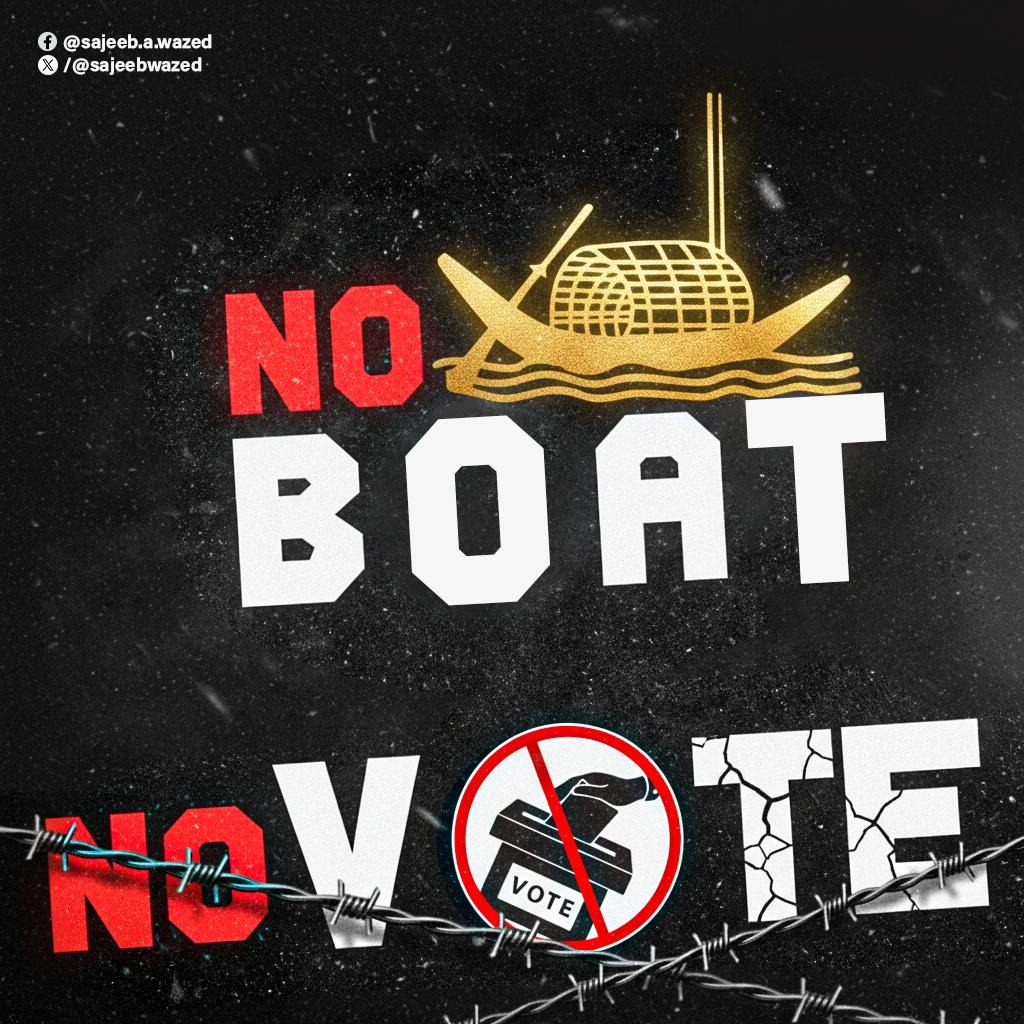
This is not a vote, it’s a trap - to save Bangladesh, Bangladesh will not take part in this rigged election
The upcoming election in Bangladesh is not a transparent democratic process. It is a staged drama orchestrated by the illegal Jamaat-backed Yunus government. Another performance is underway to legitimize a rigged election. Just as extremist fundamentalist forces seized power in July–August by using ordinary students as a front, the same strategy is being applied again.
This government does not want to turn the election into a celebration of democracy. It wants to use the election as a tool to establish fundamentalism. Here, it is not the ballot box but a prewritten script that matters. Not the people’s opinion, but Yunus’s predetermined plan is the final word.
Today, the people of Bangladesh face a difficult but clear choice. Will they participate in this staged election and legitimize fundamentalism, or will they stay away from this farce and protect their future? The answer to this question lies not only at the polling station, but within one’s conscience.
An election from which the Bangladesh Awami League - the party that led the struggle for independence is deliberately excluded can never belong to the people. It is merely a tactic to seize power, a conspiracy to capture the state. Since coming to power, the illegal Jamaat-backed Yunus has pushed a once-organized country toward destruction. The economy, security, and social harmony are all under threat. Creating space for fundamentalism and militancy has become their core objective.
It is the responsibility of every parent in this country to ensure a safe and progressive Bangladesh for their children. To fulfill that responsibility, one must say no to fundamentalism, no to militancy, and no to this rigged election.
This is not a call for a vote boycott; it is a call to save the state. This is not about the interest of any party; it is about the future of Bangladesh.
Boycott this illegal, rigged election.
NO BOAT, NO VOTE
#Bangladesh #Elections #NoBoatNoVote
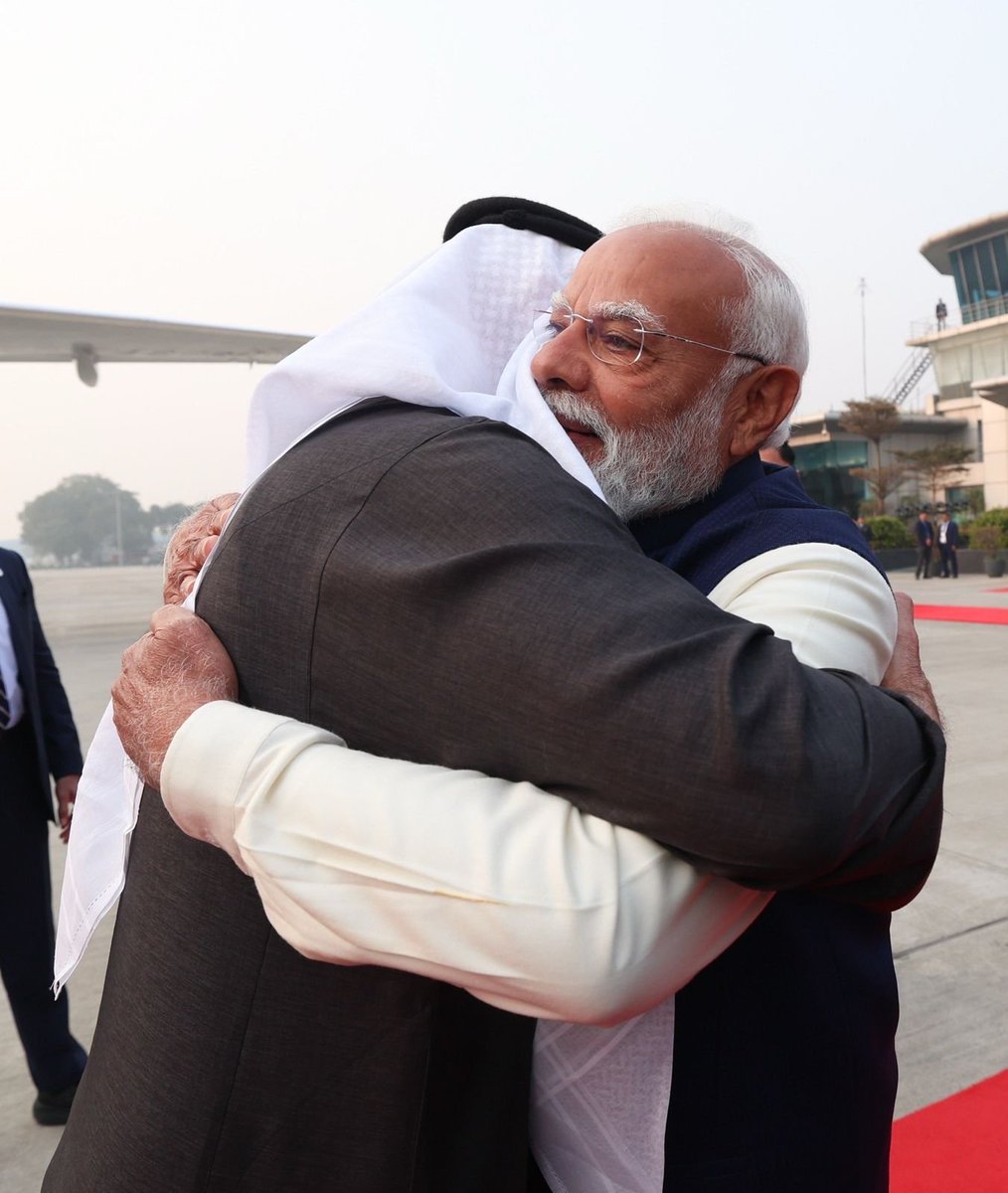
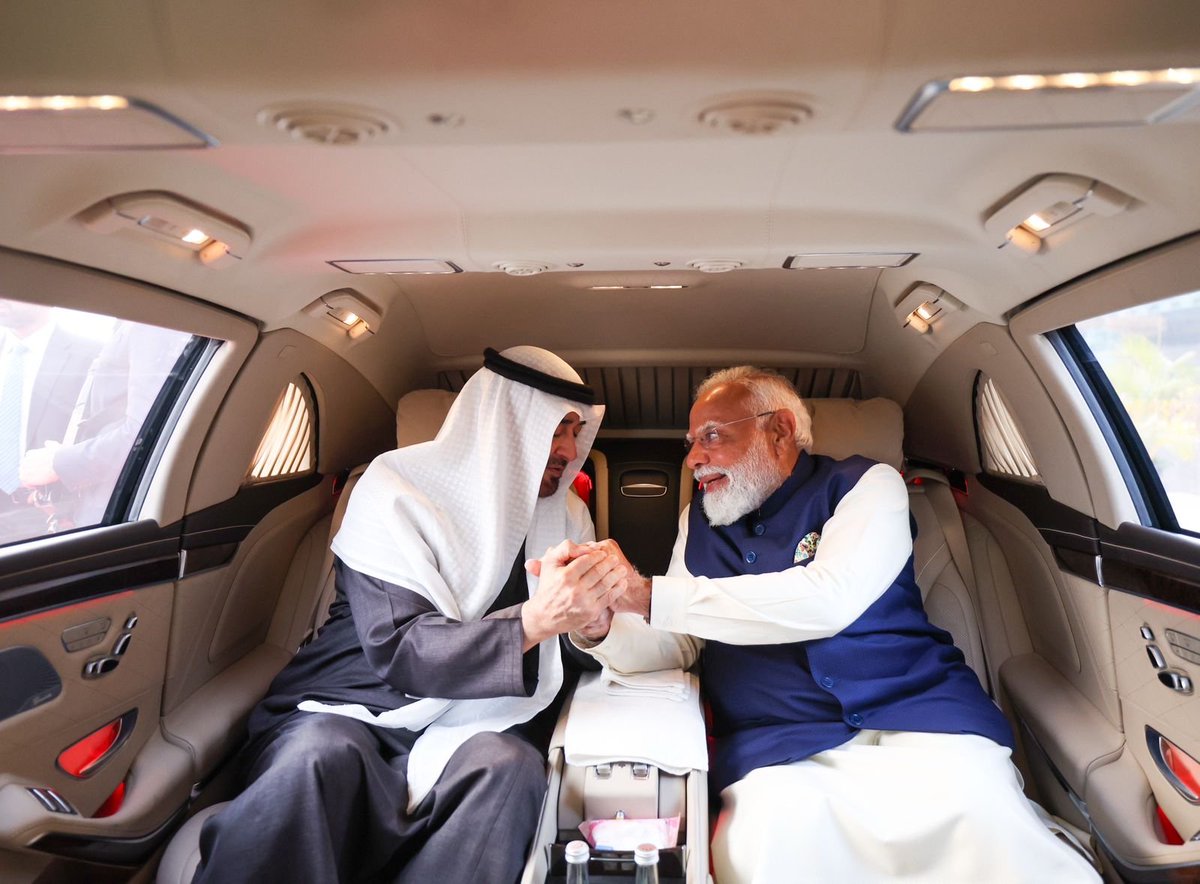
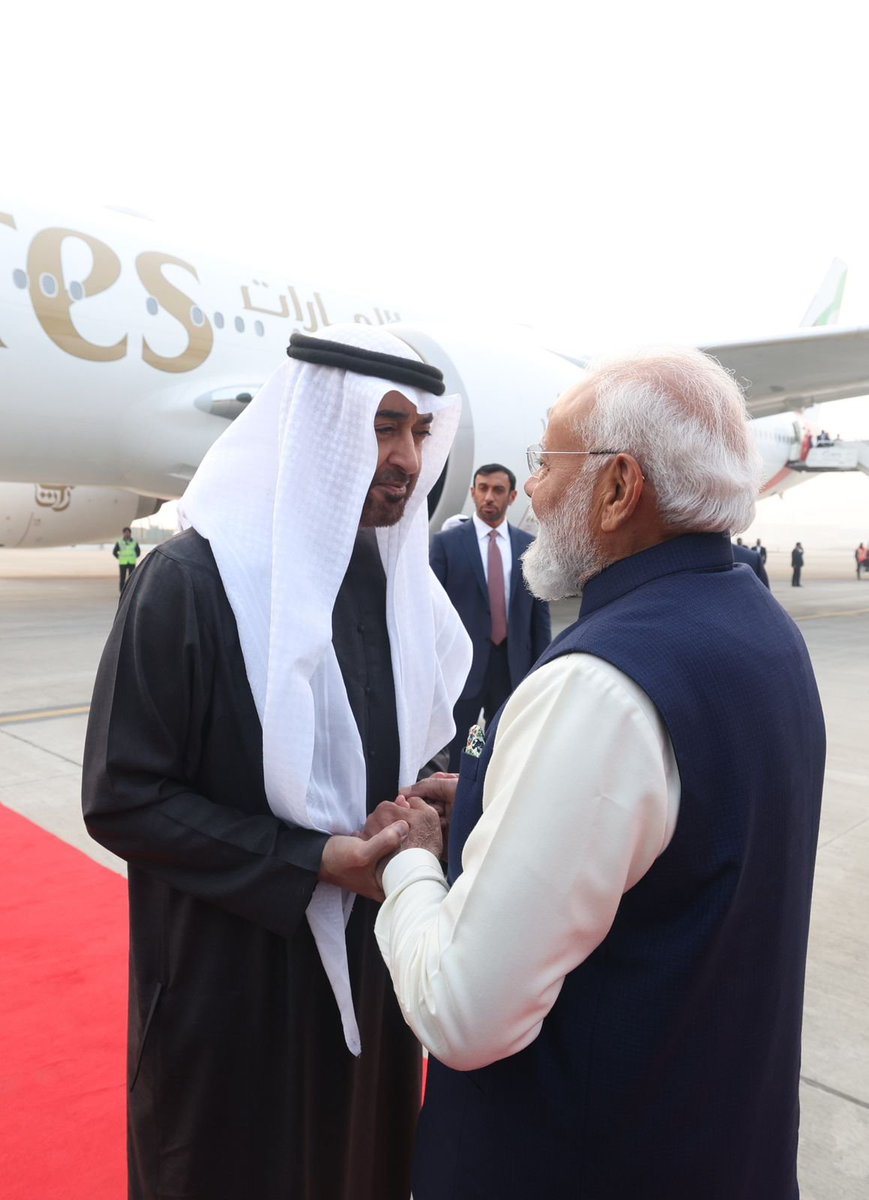
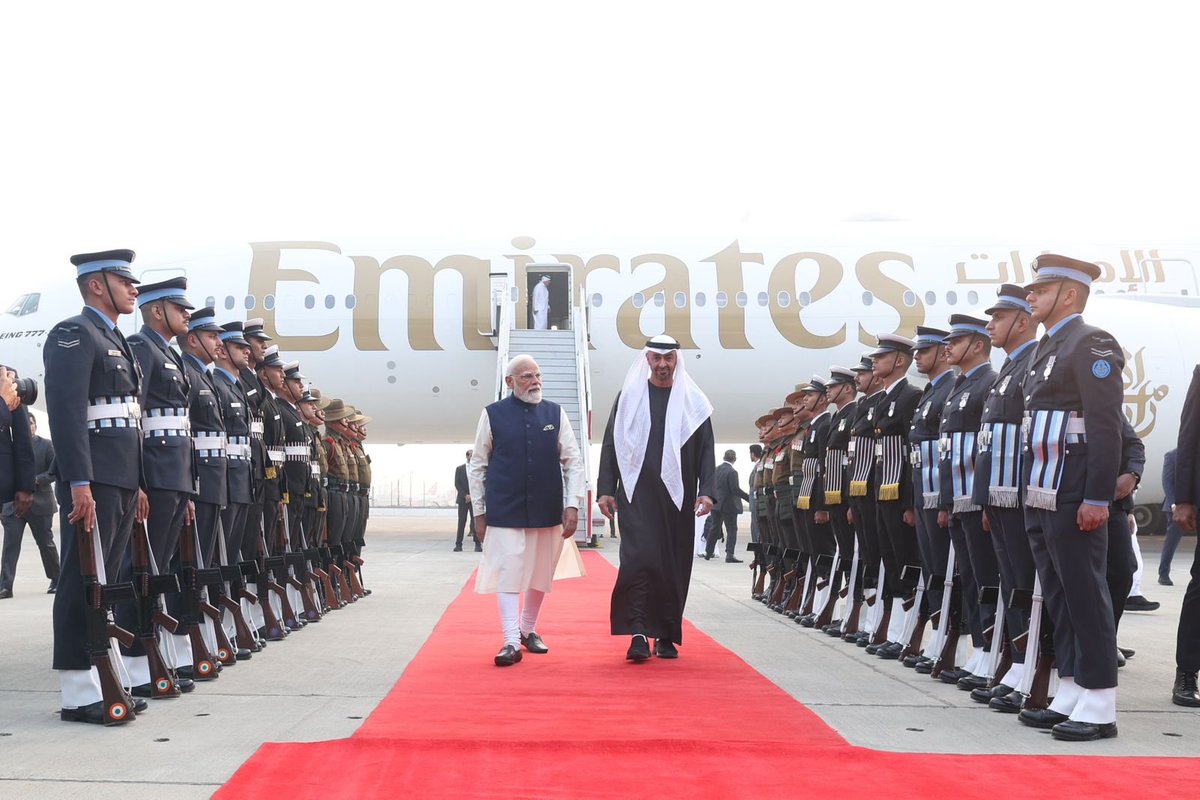
Went to the airport to welcome my brother, His Highness Sheikh Mohamed bin Zayed Al Nahyan, President of the UAE. His visit illustrates the importance he attaches to a strong India-UAE friendship. Looking forward to our discussions.
@MohamedBinZayed
One of the questions in the @ChathamHouse interview raised a very important point, exposing the flaws in Yunus' unelected administration's democratic reform initiatives. The text of the question is given below,
“Why don’t you trust the voters? Trust the voters to vote for any of these parties and rely on them to use their judgement to pick the best ideas rather than a commission going to buy you and your colleagues picking which ideas you like.”
Yunus' response plainly reveals his lack of trust in voters, the most fundamental element in democracy, revealing his anti-democratic worldview.
In Bangladesh, the NGO-driven civil society has an oddly inflated view of itself when it comes to democracy. They believe that neither elections nor elected politicians can reform the country—only they can. To them, political parties are the root of all problems, while they alone are the solution. They claim the right to “fix” the nation without any mandate from the people, dismissing the reality that democracy is inherently messy and imperfect, yet essential. Despite its flaws, political parties remain a vital part of the democratic process—something this NGO-based elite consistently undermines. Their underlying message is that only they can save Bangladesh, while elected leaders merely destroy it. This mindset echoes strongly in Yunus’s interviews.
For years, they have pushed this narrative in the Western media, systematically denying Sheikh Hasina the credit for her decisive leadership and the remarkable economic progress Bangladesh achieved under her. The hard data proves her policies have driven the country’s development, yet these circles continue spreading the lie that Sheikh Hasina created only problems, while they alone are “fixing” them. @EUAmbBangladesh@IFreijsen@PAMPALONIPAOLA@CWhiteleyEU@StateDRL@DRL_AS@Ant_Navarrete@LisaCurtisDC@State_SCA@SergioGor@patlakath@husainhaqqani@geoffreymacdon@DerekJGrossman@MichaelKugelman@dhume@CJBdingo25@Chellaney@mrubin1971@kajakallas@bronwenmaddox@lelispatricia
HRW’s double standard
How HRW whitewashing Yunus regime’s extrajudicial killings spree - Weaponisation of human rights
---
In last eleven months, global media and local rights bodies have accused interim regime of orchestrating extrajudicial killings under reign of nobel peace laureate Dr Yunus . Yet in a meticulously designed act to deceive global audience, @meeganguly , a top @hrw official, sought to cover up the grim reality, falsely crediting @Yunus_Centre's administration.
“Yunus regime has stopped extrajudicial executions”, this claim by Meenakshi Ganguly acts as classic textbook case on how this rights body turned into defender of ongoing rights abuses. This exposes a classic double standard not only on part of the HRW official but also exposed the betrayal with HRW’s stated cause of raising voices against rights abuses irrespective of bias.
Read ➡️ https://t.co/1ykfxukUjC
Let’s take a look how HRW failed to make rights abuses universal ?
- In it’s latest report, released this month, HRSS pointed out at least 40 custodial death under Yunus regime till this June.
Read➡️https://t.co/DdYgvhayKQ
- Another rights body , Global Center For Democratic Governance, published a list of citizens, numbered at least 205, fell prey to politically targeted extrajudicial killings after August 5.
Read➡️https://t.co/9aFlPUMuRa
- In March, Benarnews carried a report with headline “Extrajudicial killings, custody deaths resurface under Yunus govt, activists allege”. This report showed till February local rights bodies found at least 19 fell victim to extrajudicial killings.
Read➡️https://t.co/uspmrqAy1J
- On March 8, Awami League in an official statement exposed names of 24 activists subjected to custodial death.
Read ➡️https://t.co/bIt64K5EFu
- According to MSF, 49 unidentified bodies were recovered in June. The number of bodies was 55 in May. The body claimed these deaths present a stark reality. Most of these bodies were found floating in rivers or ponds, along the highways, under bridges, near railway tracks, in fields, or in abandoned areas. A few bodies were found with slit throats, or in sacks and bloodied.
Read➡️https://t.co/G8EfSzadn9
#Bangladesh #BangaldeshCrisis #ExtrajudicialKillings
(7) The voice recording attributed to PM Sheikh Hasina is neither verified nor, even if authentic, does it indicate culpability or unlawful instructions. BBC did not release the full audio or the context of her statement. If the instruction was directed against armed perpetrators, prison-break instigators, or terrorists attacking state institutions, then it falls squarely within the legal use of force under Bangladeshi law. Law enforcement are permitted, indeed expected, to use lethal force in defense of themselves, civilians, and critical infrastructure. In fact, the government had *explicitly* barred lethal force until July 18. If there was any lifting of that bar, it was likely to restore control and allow law enforcement to defend themselves and civilians—not to unlawfully target protestors.
@BBCWorld@bbcbangla@Riddhi_Jha
#BBCEye
The recent #BBCEye documentary leaves out critical context and omits key facts that are essential to understanding the events it attempts to portray. What’s presented is a selective narrative that, intentionally or not, distorts the reality on the ground. Below are some glaring omissions and misrepresentations:
(1) The documentary never asks the obvious: why was a massive crowd advancing toward the Jatrabari Police Station at all? According to the BBC, protestors were celebrating rumors that Prime Minister Sheikh Hasina had resigned. But that hardly justifies laying seize to a police station, especially when officers had already retreated inside and the Army had taken position outside to prevent escalation.
(2) Just one day before the Jatrabari incident, 17 officers were brutally killed in Enayetpur Police Station. Slaughtered with sharp weapons, their bodies were left hanging from trees. That incident isn’t even mentioned in the documentary. Why? it’s entirely reasonable that police inside Jatrabari feared a similar outcome.
(3) The BBC completely sidesteps the fact that, immediately after the collapse of the government, police stations across the country were attacked in a coordinated manner with a central command. Terrorists embedded in the mob killed dozens of officers, looted 6,000 weapons and over 600,000 rounds of ammunition. The officers at Jatrabari must have had real-time reports of this unfolding carnage. They had every reason to believe they were next.
(4) Throughout the protests, officers were picked off whenever isolated or unprotected. In Jatrabari itself, near the very station in question, two plainclothes officers were dragged out, lynched, and hung upside down from an overpass on July 19 and 20. They were off-duty, identified only because their ID cards and uniforms were found in their bags. The BBC vaguely refers to police “violence” in the area, but skips over these police killings completely.
BBC portrayed Jatrabari as a critical entry point to Dhaka and hub of students and labors. What the BBC fails to mention is what the area is most known for: a dense concentration of hundreds of madrasas, including the institutions that produced several of the so-called “masterminds” and leaders of this meticulous protest. These madrasa compounds sheltered thousands of extremists who organized and launched attacks from within.
(5) Footage clearly shows that police fired only after the Army withdrew and individuals began storming the station. Calls of “come inside” are visible, and people can be seen rushing toward the gate.
(6) By the time police shooting started, Prime Minister Sheikh Hasina was reportedly on the way of leaving the country. The chain of command within the police had collapsed. One officer interviewed admits they received no help despite repeated calls to headquarters. The officers were forced to act independently, likely under panic, stress, and uncertainty, without orders, reinforcements, or backup. In light of the collapse of the government, the idea that officers received superior command to indiscriminately kill people is not only implausible, it’s unsupported by any real evidence. Officers acted on instinct and self-preservation, however imperfectly.
Recognizing a mistake is not weakness — it is the beginning of courage. Let us stand together for our country and its people.
The July Riots of July–August 2024 mark one of the darkest chapters in Bangladesh’s recent history. Fueled by foreign funding and backed by extremist forces, that period of violence and unrest saw the involvement of many — some knowingly, others misled and confused.
Many members of the professional community — people who had served the country for years — fell into the trap of misinformation, rumors, and false promises, and thus became part of that conspiracy.
Now, just 10 months later, many have begun to realize the gravity of their mistake. The independence of the nation, the safety of its people, and its democratic foundation are all under threat — in the hands of an authoritarian regime without any public mandate.
To those we see on social media, in the press, or in private expressing regret, disillusionment, and sorrow for having been misled — we bear no resentment. We seek no vengeance.
The Awami League does not believe in the politics of revenge.
Inspired by the ideals of the Father of the Nation, Bangabandhu Sheikh Mujibur Rahman, we believe in forgiveness, empathy, and always looking toward the future.
If you now recognize the mistake — truly, from the heart — then we invite you: come stand with us once again, for the sake of the nation.
Let us unite for freedom, democracy, and the sovereignty of Bangladesh.
Let us forget divisions of party, opinion, profession, or past choices — and act now to save Bangladesh from the grip of this authoritarian rule.
Even if late, we thank you for your awakening.
Now is the time to act for the country.
Now is the time to stand with the people.
Joy Bangla. Joy Bangabandhu.
#YunusMustGo
Deepak Kumar Goswami: A Curious Study Case
In a recent documentary published by The @thewire_in, Deepak Kumar Goswami is presented as a “minority voice” in Bangladesh—an ostensibly Hindu cultural figure speaking “truth to power.” However, a closer examination reveals a far more troubling reality: despite his Hindu identity, Deepak has long aligned himself with ideological currents that minimize, distort, or outright deny the persecution faced by the Hindu community in Bangladesh.
A committed Marxist and a trusted figure within the radical left ecosystem, Deepak has consistently amplified narratives that prioritize the interests of political allies over the lived realities of vulnerable minorities. His so-called documentary—ostensibly an effort to “separate fact from fiction” in post-Hasina Bangladesh—is not a neutral act of truth-telling. It is a calculated intervention, aimed at shielding the emergent Islamist-RadicalLeft Alliance and the current fascist regime of @Yunus_Centre from growing international scrutiny amid escalating anti-Hindu violence and minority persecution across the country.
This is a familiar pattern. The Islamist-RadicalLeft Nexus has long deployed token minority figures to legitimize its political project. Deepak, by virtue of his Hindu name, lends synthetic credibility to propaganda that dismisses communal suffering as either “exaggeration” or “misinformation.” His work does not confront state-backed violence—it rationalizes it. It does not defend Hindu minorities—it erases their trauma under the guise of “journalism.”
The contradictions of this approach were laid bare on the night of October 31, 2024, when Deepak’s own family became the target of communal violence following the fall of the Awami League government. According to a Facebook post written by Deepak himself, a group of approximately fifty men attacked his residence in Parbatipur. When he attempted to record the assault, they confiscated and destroyed his phone. His mother, who tried to shield him from the mob, was physically assaulted as well.
Link: https://t.co/NZOZIbzb7C
The attackers, according to his own account, were led by a local @bdbnp78@BNPBdMediaCell leader, reportedly instigated by a @BJI_Official affiliated former college teacher. A female BNP leader, present during the incident, reportedly ordered the group to seize Deepak’s phone, warning:
“Take the phone away, or these Hindus will spread this as minority persecution.”
Later that night, his broken phone was returned. Deepak was then forced to apologize—first to his assailants, and then publicly.
This episode raises fundamental questions. What does it mean when a man who repeatedly denies or downplays Hindu persecution even after he himself is a victim of the very forces he defends? What does it say about an 'cultural activist' who chooses to suppress narratives of communal violence under the current authoritarian regime @ChiefAdviserGoB supported up by the Islamists fractjons—even after he himself found him made a victim by those same actors? A classic Stockholm Syndrome case with radical leftist ideological leaning.
Deepak’s experience is not merely ironic—it is pathetic. It underscores the moral bankruptcy of ideological tokenism. It demonstrates that no degree of ideological conformity shields one from the consequences of enabling impunity and legitimizing violence.
In truth, Deepak Kumar Goswami is both a tragic and a pitiful figure—a man who helped construct a façade, only to be crushed beneath its collapse. His documentary was not an act of reconciliation, but a tool of narrative control. His affiliations were not grounded in justice, but in access to platforms and patronage. And even then when the communal mob arrived, his ideological credentials offered no protection.
We must stop conflating identity with solidarity, or ideology with safety. A Hindu name does not make one a spokesperson for the Hindu community’s truth. Only moral clarity, intellectual honesty, and the courage to confront injustice—regardless of where it comes from—can earn that right.
Deepak’s story is not merely one of betrayal. It is a cautionary tale about the price of complicity. If there is any redemption to be found, it lies in finally telling the full, uncomfortable truth—not just to sympathetic journalists, but to the very community whose pain he has long chosen to overlook.