Comparative evaluation of feature reduction methods for drug response prediction @SciReports
1. This study is the first to compare nine feature reduction (FR) methods for drug response prediction (DRP) on cell line and tumor transcriptomes, using over 6,000 machine learning (ML) model runs for robust analysis.
2. A key finding is that Transcription Factor (TF) activities outperform other FR methods on tumor data, distinguishing sensitive from resistant tumors for seven out of 20 drugs tested.
3. The researchers analyzed both knowledge-based methods (e.g., pathway and TF activities) and data-driven approaches (e.g., principal components), providing a broad perspective on FR for DRP.
4. Ridge regression emerged as the most effective ML model across all FR methods, highlighting its ability to handle correlated gene expression data.
5. Cross-validation on cell lines showed that sparse principal components and drug pathway genes performed best, while tumor validation emphasized the robustness of TF activities.
6. The study revealed that effective FR methods often depend on the drug and dataset type, underlining the need for tailored approaches in DRP.
7. TF activities proved to be a compact and interpretable representation of functional cellular states, bridging biological relevance and predictive accuracy in tumor DRP.
8. The findings emphasize the importance of robust FR methods to address the dimensionality challenges in molecular profiling, paving the way for precision medicine.
@bennos@janbaumbach@behnam_bme@Faren_FIR
💻Code: https://t.co/3JpXcLIZug
📜Paper: https://t.co/kO7BDrIEjc
#DrugResponsePrediction #MachineLearning #FeatureReduction #CancerResearch #PrecisionMedicine
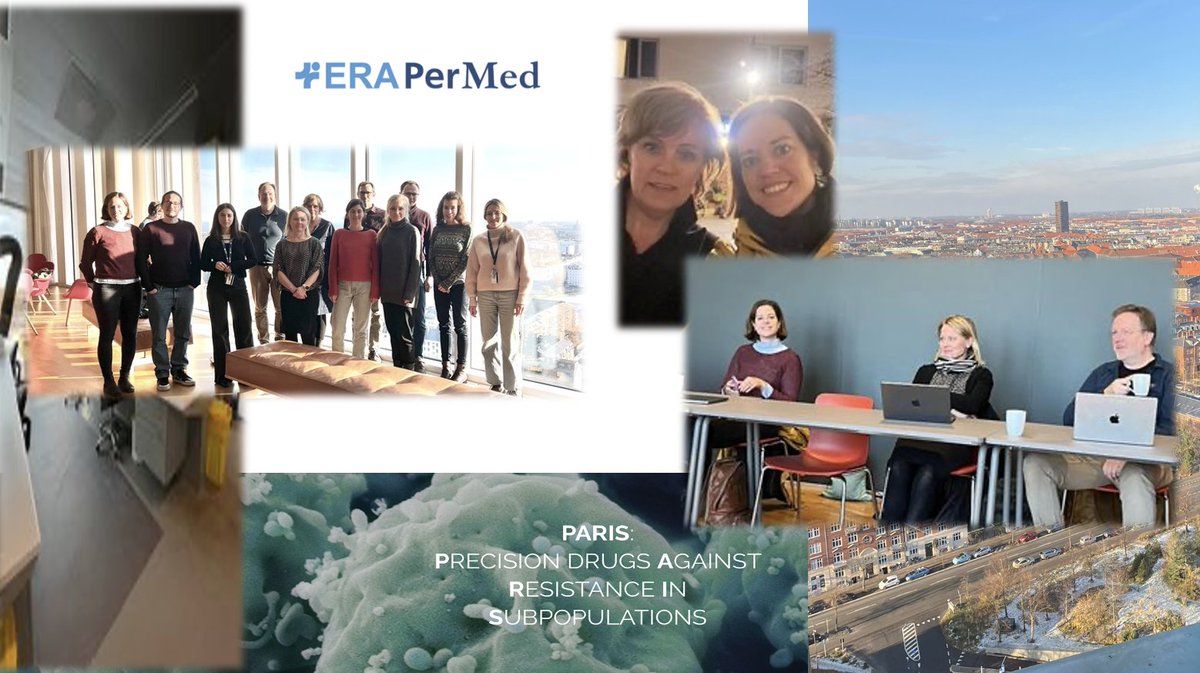
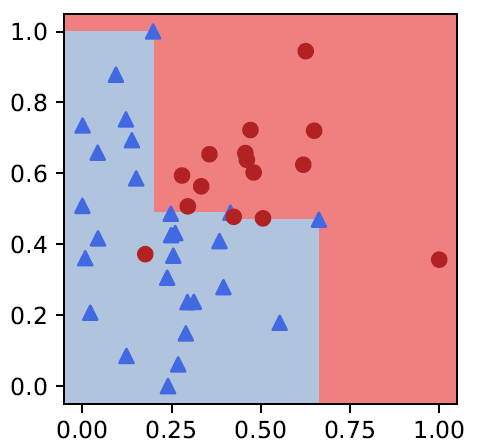
Together with @bennos team @institutpasteur we study ensembles of bivariate monotone classifiers for biomedical applications.
In this @biorxivpreprint we present a preprocessing step that speeds up their construction by factor 10-20: https://t.co/Chhuocp2Vg
Excited to share our preprint on pan-cancer analysis of intra-tumor heterogeneity (ITH), led by Avishai Gavish and Mike Tyler. After exploring ITH in small patient cohorts, we now curated scRNA-seq data from >1,000 tumors to broadly define ITH patterns. https://t.co/9tld8RHOFO
Pleased to inform that our 1st @deciderproject article is published. Fascinating what AI can achieve @precisionpathology. Artificial intelligence-based image analysis can predict outcome in high-grade serous carcinoma via histology alone https://t.co/7cvGUkUBje
I am grateful to EU #H2020 for supporting our #ovariancancer research. The main goals of @deciderproject are 1) understand mechanisms causing chemoresistance in #ovariancancer patients and 2) deliver tools for personalized diagnosis and treatment options.
Did you ever wonder how well pathway and transcription factor analysis work for scRNA-seq data? Christian Holland (@mr_netherlands) et al. shed light on this question in our latest preprint [https://t.co/JC8Tz59TKz]. 1/6
We are excited to share a new study by @Ronnie_Blecher@bost_pierre and @kerryhilligan on molecular roadmaps for antigen-specific immunity @CellSystemsCP https://t.co/F5lQd1ZeYo. A fantastic collaboration with @francaronchese lab at the @Malaghan_Inst (1/14)
Our lab at @institutpasteur in Paris has open #postdoc positions at the interface of statistical data analysis and cancer/autoimmune disease. https://t.co/xG0BLk1LC2 #bioinformatics#jobs



![saezlab's tweet photo. Did you ever wonder how well pathway and transcription factor analysis work for scRNA-seq data? Christian Holland (@mr_netherlands) et al. shed light on this question in our latest preprint [https://t.co/JC8Tz59TKz]. 1/6 https://t.co/lSHKsUZTZL](https://pbs.twimg.com/media/EDck5TQXkAIb77B.png)


