@lucaatalla@Tesla_AI@yunta_tsai Same thing happens to me. They need an altitude adjustment to know if you are on upper or lower level of GWB. Upper level exits right, lower level exits left to HHH. They can catch rockets, I am sure they can figure this out.
Twenty five years ago Dan Nicholls, a London based trader, printed out a page of headlines from the Bloomberg terminal. He put it in his desk as a reminder.
Faded and rumpled, it’s incredibly evocative.
Three quarters of the way down the page, at precisely 3 p.m. London time, there is a headline that marks the event that prompted Dan to print it out:
*WORLD TRADE CENTER TOWER COLLAPSES
That news is preceded and followed by related stories covering everything from stocks and the dollar plunging to the Sears Tower in Chicago being evacuated.
Everyone who lived through 9/11 remembers where they were.
I was the New York Bureau Chief for Bloomberg News. It was a Tuesday. The sky was blue. The air was crisp. I was at the office, which at the time was located at 499 Park Avenue.
The first plane hit the North Tower at 8:46 a.m.
We saw it on CNN. Stock market editor Phil Serafino sent the first headlines. Reporter Josh Hamilton filed the first article.
The initial story made it clear we didn’t understand the scope of what was happening.
When the second plane hit, Tom Cahill raised his hand and volunteered to head to the site. Michael McKee was already downtown at a conference.
When the towers collapsed, everyone’s cell phone blacked out.
We couldn’t reach Mike or Tom for hours.
The subways and buses stopped running. People fled the city and by the afternoon there were virtually no cars or taxis in the streets.
Everyone who worked downtown had to walk home.
Looking out the window onto Park Avenue you could see thousands of people streaming north. The mass of people marching uptown covered the entire avenue and sidewalks. Most walked silently.
Mike made his way back to the office on foot. He was covered in dust, but otherwise unscathed. I was relieved when Tom showed up later.
That day changed the world and everyone who experienced it.
A quarter of a century later it’s getting harder to remember the small details, like how we had to shut our apartment windows from the dust that blanketed the city.
Bloomberg removes headlines after a few days so the uppercase announcement of the tower collapsing is no longer online.
It probably exists only on the piece of paper Dan Nicholls stuffed in a drawer.
In many ways the tragedy seems like a long time ago.
But once a year it seems like yesterday.
And it's a day that if you were there you will never forget.
@colby__donovan@FundamentEdge@snipd_app • One-tap AI-generated snippets / takeaways
• AI email recaps of your snips
• Sync to Obsidian and other PKM tools which allows you to run Claude/Codex over it
It turns hundreds of hours of listening into a searchable, reusable knowledge base.
“The most successful people at Goldman Sachs have extraordinary interpersonal skills”
from Odd Lots Podcast - Goldman Sachs CEO @DavidSolomon on Running a Bank in the Age of AI.
Cc: @tracyalloway@TheStalwart
https://t.co/4SxNf8rW8W
@suekhim This looks awesome Sue. Would love to have my two middle schoolers use this over the summer. Happy to provide feedback. One needs help with physics the other with learning to code.
@FundamentEdge While we are at it, there is a ~25 episode podcast series (5-10min short episodes) from 2007-2009 you can still listen to
https://t.co/LPd00wBePT
My guest today is Paul Tudor Jones (@ptj_official), one of the greatest macro traders of all time.
He correctly predicted the 1987 stock market crash and shorted the Japanese bubble in 1990. For over 40 years, his flagship fund has had a negative correlation to the S&P 500. 100% of his returns are alpha.
He says today's market has so many similarities to 2000, "the easiest bear market I've ever seen in my whole life."
He makes the case for going long dollar-yen, why Bitcoin beats gold as an inflation hedge, and why he was wrong about Warren Buffett.
But what I'll remember most from this conversation is Paul's zest for life. He's 71 and still wakes at 2:30 every morning to trade the London open. He works out for two hours a day. He walks with his wife every evening. He travels the country chasing peak spring and peak fall. He's so excited about the songs picked for his funeral that he wishes he could be there to hear them.
Paul has lived five lifetimes in one. He's one of the most entertaining and interesting people I've met, and the conversation will leave you searching to be as passionate about what you do as he is about what he does.
Enjoy!
Timestamps:
0:00 Intro
1:00 The Kindest Thing
13:19 Trading vs. Investing
17:33 Lessons from Warren Buffet
22:24 The Existential Risks of AI
29:54 The Nature of Trading
31:46 Bitcoin
35:55 Bubbles
42:08 A Day in the Life of PTJ
46:00 Information Overload
47:07 Passion for Markets
50:49 The Robin Hood Foundation
54:18 The Workless World
56:03 Journalism
1:00:00 Principal Components of a Great Life
1:05:06 Kill Them With Kindness
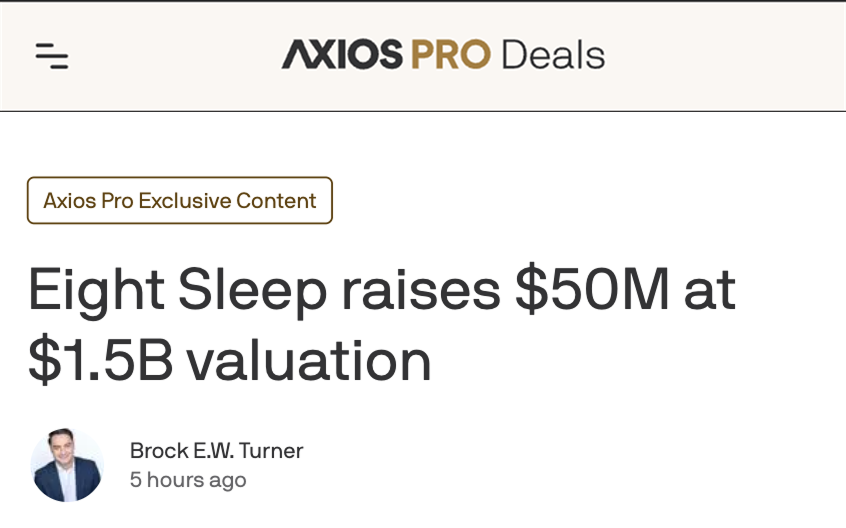
Today we're announcing a new round of funding that values @eightsleep at $1.5 billion, led by @tether Investments.
Ten years ago I started Eight Sleep with one conviction: the night is the most underutilized lever in human health. Almost nobody was engineering their sleep.
Last year, we hit free cash flow positivity, launched 3 new products, expanded to 34 countries, and published peer-reviewed studies showing the Pod reduces menopausal hot flashes by 56% and restores the body's natural circadian temperature rhythm during sleep, lowering core body temperature and improving cardiovascular recovery. A product you sleep on is producing clinical outcomes that rival pharmaceutical interventions.
We're now building a predictive AI agent trained on 1B+ hours of sleep data. It anticipates your night before it happens.
And we're advancing FDA filings for sleep apnea detection. Passive. Every night. No wires, no clinic visits.
The night is just the beginning.
This story is now more than 25 years old and I have told it more times than I can count, but it hits very differently today.
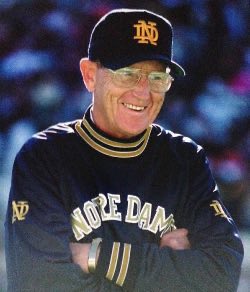
I was anchoring SportsCenter one afternoon and Lou Holtz was on the show. I was quite excited to talk with him, he had been an icon all of my life.
He was very friendly, asking me all about myself as we walked toward the studio to record an interview. I told him: “Actually, Coach, it’s quite exciting, my wife and I are expecting our first child in the next few weeks.”
He stopped dead in his tracks and put a finger up near my face. And I’ll never forget what he said.
“Young man, the most important thing you can do for a child is make sure every day they know how much you love their mother.”
And, just like that, he started walking again.
Our daughter was born a month later, our son came two years after that. And I have thought about what Lou Holtz said to me that day about a million times since.
RIP Coach, thanks for the best advice anyone ever gave me.