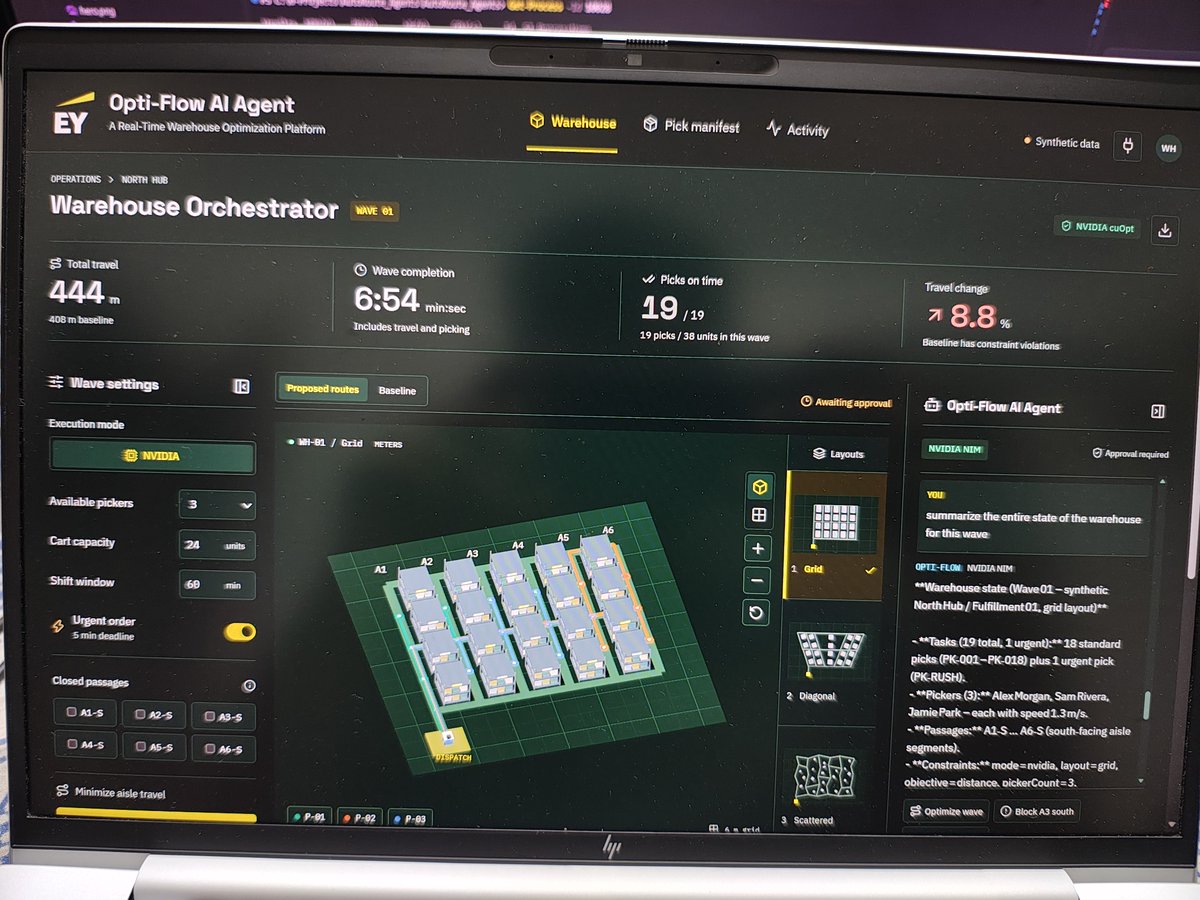
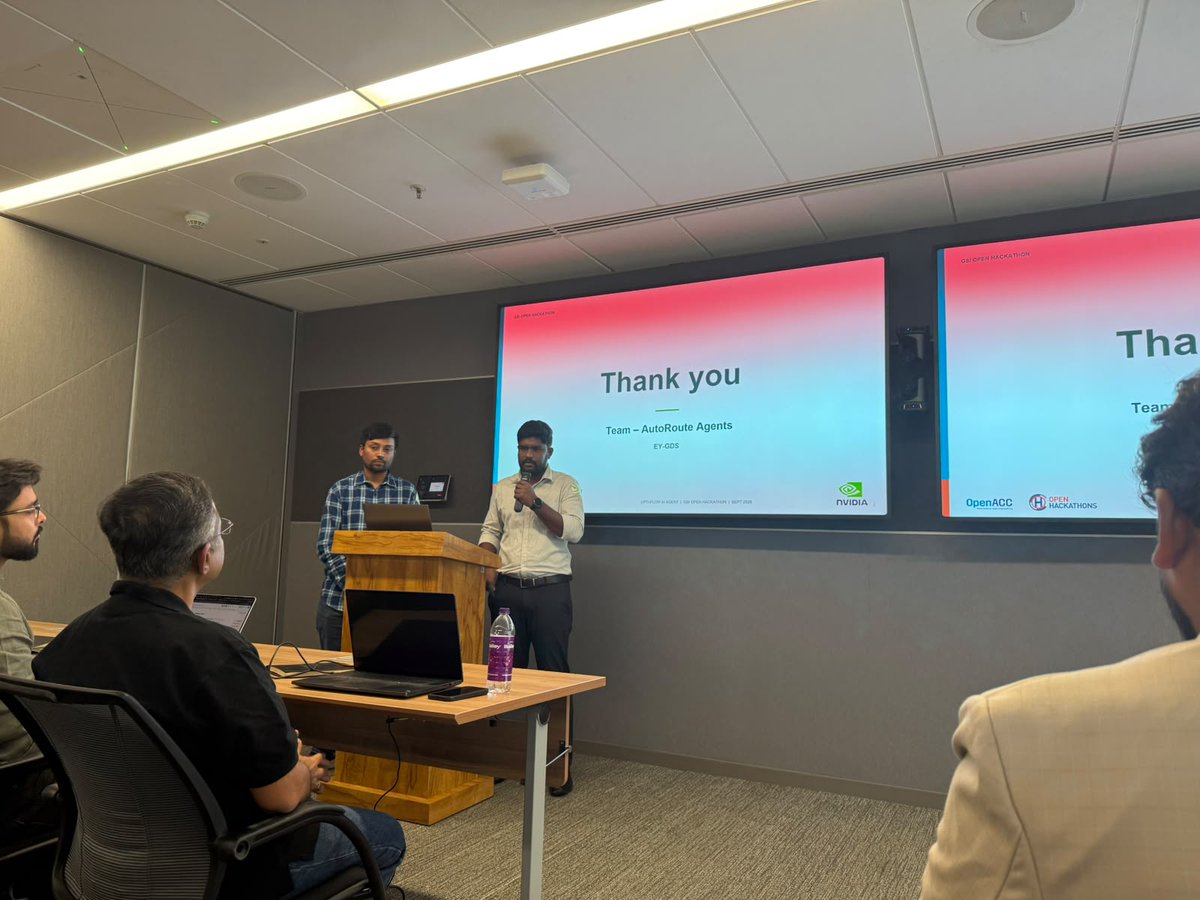
We are thrilled to announce that our team, AutoRoute Agents, was selected as one of the top 20 finalists out of 350 teams who registered for the NVIDIA - GSI Hackathon. It was an absolute privilege to present our solution, Opti-Flow AI Agent, live at the @nvidia India headquarters in Bangalore.
In just three weeks, we conceptualized and built two powerful tools to address real-world challenges like urgent warehouse orders and blocked aisles.
The Goal: Empower warehouse operators to dynamically adapt to disruptions in real time evaluating pick capacities, handling priority shifts, and verifying route changes across intuitive 3D layouts before pushing to physical simulation.
The Solution:
We developed a two-tier architecture: a lightweight React + Three.js web app for immediate operator visualization, alongside a custom Omniverse Extension driving Isaac Sim for high-fidelity physics validation.
NVIDIA cuOpt for optimized warehouse picking routes and NVIDIA NIM to support natural language planning requests from warehouse supervisors.
Both the NVIDIA cuOpt microservice and the Nemotron 3 Nano Omni models ran entirely locally on the high-performance B300 GPU cluster provided by the organizers, delivering near-instantaneous replanning, ultra-low latency spatial inference, and smooth multi-agent orchestration.
The Takeaway: Effective industrial AI isn't simply about solving an optimization algorithm in a black box. It's about bridging mathematical precision with spatial clarity giving operators interactive, explainable, and human-in-the-loop control over complex automated environments.
We could not have accomplished this without the guidance and support of our incredible mentor, Amlan Panigrahi. A big thank you for your invaluable inputs throughout the development process. We'd also like to extend our deepest gratitude to the judges Sundar R Nagalingam and Saurav Agarwal for their insightful feedback as well as the GSI Hackathon organizers, Apoorva Laharia Ganesh Sai Apuroop Koppaka and Bharatkumar Sharma
We are inspired by your suggestions and are excited to explore integrating the remaining features that time didn't allow during the competition.
A huge shoutout to my fantastic teammates Gnana Prakash S Shashank Goud J and Alagappan for the tireless collaboration over the past 3 weeks.
Finally, a massive thank to the EY ( @EYnews) Leadership team for enabling this amazing opportunity and supporting our participation: Srinivasagopalan Venkataraman Shyama Hariharan Indraneel Ghosh and Pranav Buradkar.
We are incredibly proud of what we’ve built and cannot wait to take Opti-Flow AI Agent to the next stage.
#NVIDIA #GSIHackathon #AgenticAI #cuOpt #Nemotron3Nano #NvidiaNIM #WarehouseOptimization #IsaacSim #Omniverse #EY #Innovation
"Liftoff narmal." Engine performance normal. Satellite separarated. Love those phrases. ISRO is back on track.
2367 kgs EOS-05 successfully placed by GLSV in orbit. It will be India's first dedicated earth imaging satellite from a geostationary orbit that can see anywhere in the Indian subcontinent at 40m "stated" resolution ;)
Now ISRO must regularly post one non-sensitive image of interest from India. For a start, point it at the glacier collapse area and release the latest images.
🚨 GSLV performs better than expected, EOS-05 mission life likely to increase! 🔥
GSLV-F17 was supposed to place EOS-05 into a transfer orbit with an apogee of 28,934 km. However, GSLV's cryogenic third stage performed better than expected, achieving an apogee of 31,026 km!
Being a Geostationary satellite, EOS-05 would ideally be launched into an elliptical 170 × 35,786 km Geostationary Transfer Orbit (GTO), from where it would use its own propellant and thrusters to raise its perigee and eventually enter a circular Geostationary Orbit (GEO).
However, at 2,367 kg, EOS-05 is heavier than the 2,250 kg maximum mass GSLV can deliver to GTO.
Therefore, for this mission, GSLV's third stage was made to fire until all propellant is exhausted (burn to depletion), sending the satellite the furthest it could.
ISRO had estimated an apogee of 28,934 km i.e. lower than GTO altitude, hence the term Sub-GTO. EOS-05 would then use its own propulsion system to raise its apogee to GTO altitude before continuing its journey to GEO.
But GSLV achieved an apogee +2,092 km higher than expected!
This means EOS-05 will need to use less of its own propellant to reach GTO, leaving more propellant available once it reaches GEO.
This extra propellant can then be used for stationkeeping and attitude control, likely extending EOS-05's planned 10-year mission life!
Milestone Wins – POEM-4, SpaDex, NISAR
One Stage. A second life in orbit. POEM-4 hosted 24 payload, SpaDex concluded in-space docking experiment and NISAR goes operational!
Join us via livestream for NSpD2026 Celebration:
https://t.co/nJUzQe7ERi
#NationalSpaceDay2026#POEM-4 #SpaDex #NISAR #ISRO
Modi govt destroyed the ISI-backed terror group Shahzad Bhatti Network ahead of Independence Day and thwarted its plans for subversive attacks by arresting more than 200 operatives.
Indian security forces ripped apart the network by launching coordinated operations across different locations in 14 states upholding a brilliant example of India's zero-tolerance towards terrorism.
Substantial recoveries, including IEDs, grenades bearing Pakistan Ordnance Factory markings, pistols, live cartridges, and CCTV cameras used for espionage, were made from the ISI-funded group. The network was involved in several terrorist activities.
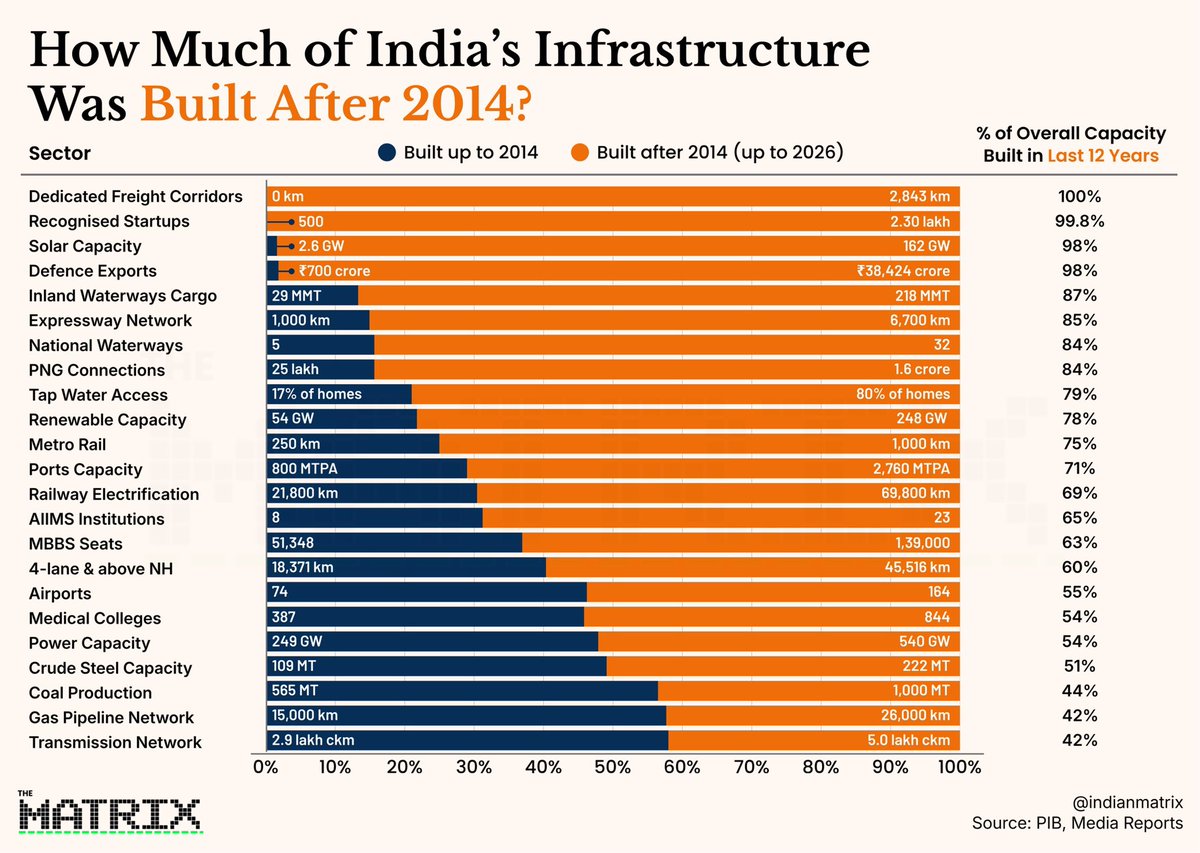
How much of India's infrastructure was built after 2014?
• 100% of Dedicated Freight Corridors
• 98% of Solar Capacity
• 85% of the Expressway Network
• 79% of Tap Water Access
• 75% of Metro Rail
• 71% of Port Capacity
• 69% of Railway Electrification
• 60% of 4-Lane National Highways
Infrastructure is built over decades.
But some decades build more than others.
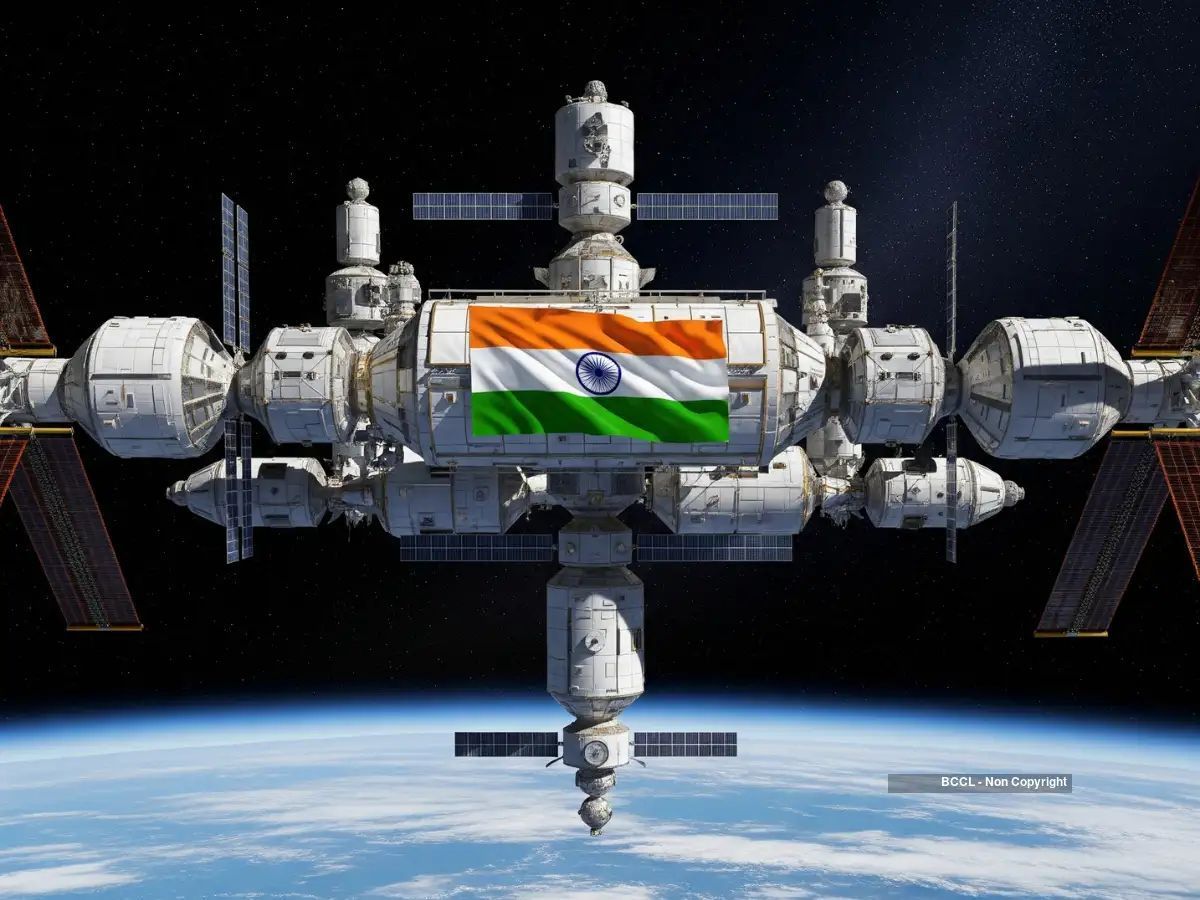
🚨 India is building its own space station, the Bharatiya Antariksh Station (BAS), with the first module, BAS-01, set to launch in 2028.
- Completion slated for 2035.
- Orbit altitude: 400 to 450 km above Earth.
- Designed to support a crew of 3 to 4 astronauts.
- Stays can last for 3 to 6 months.
The aim is to establish a permanent human presence for India in Low Earth Orbit (LEO).
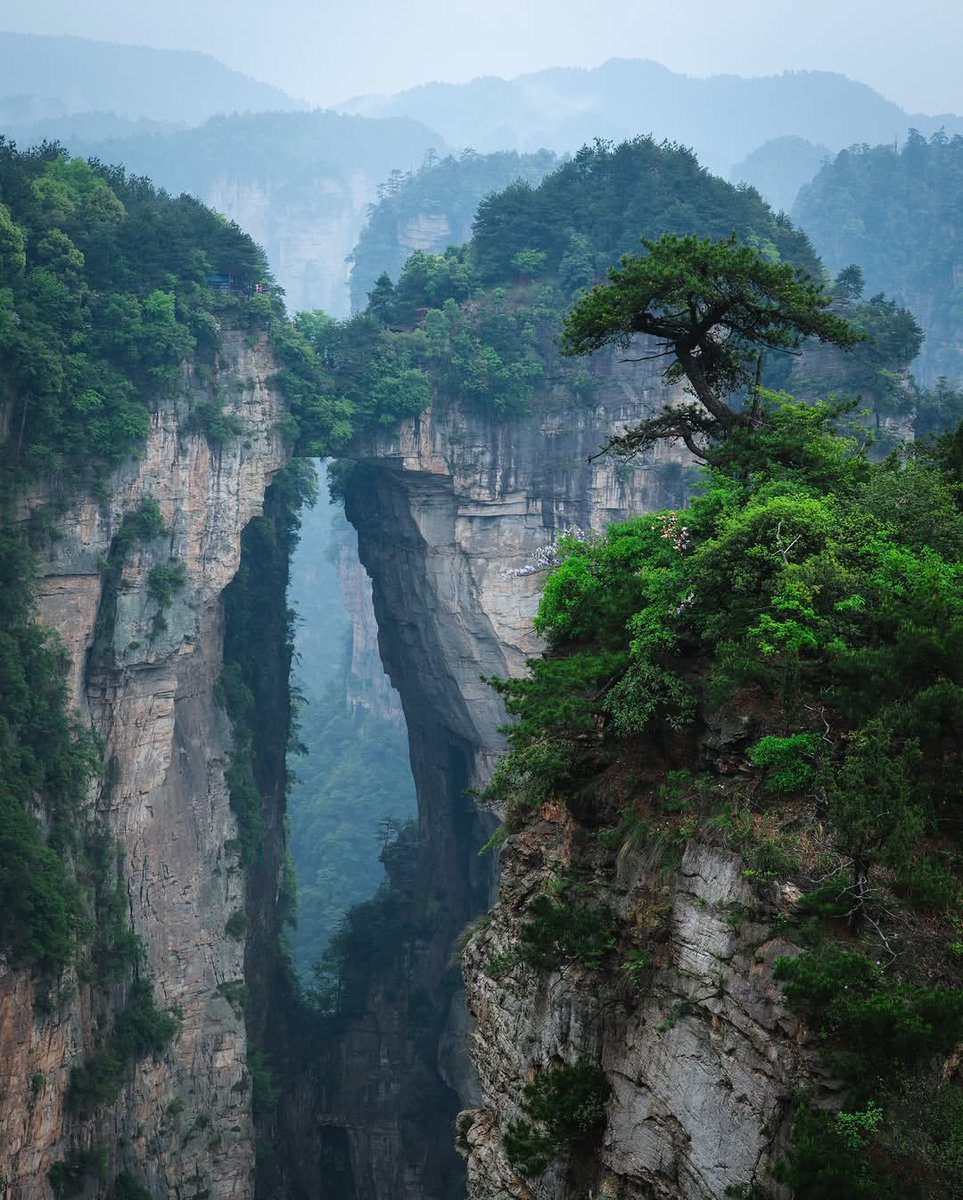
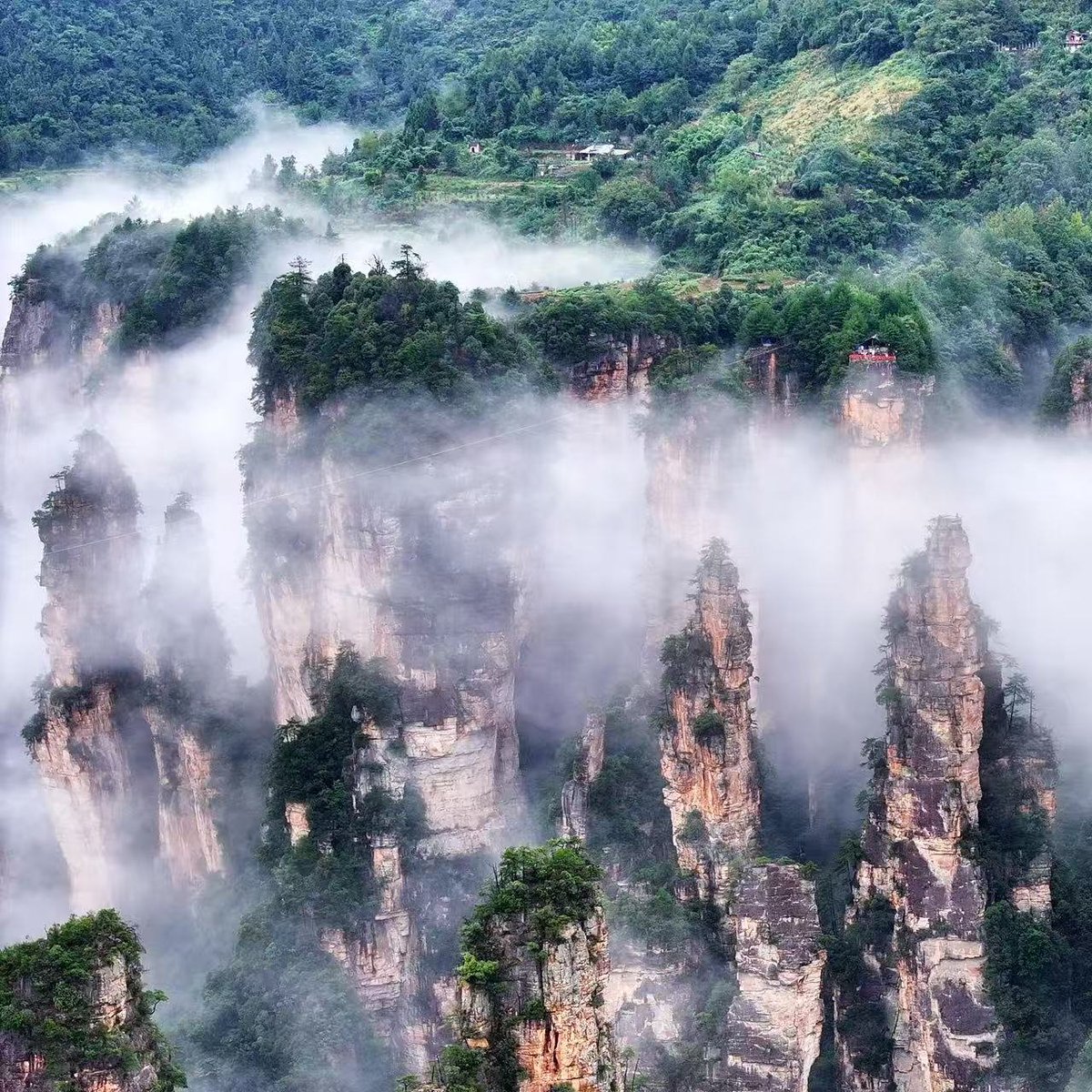
It's hard to believe this place actually exists on Earth
Zhangjiajie National Forest Park in China is famous for its towering sandstone pillars, a landscape so unique that it inspired the floating mountains in the film Avatar
One thing is clear: the Delhi protesters want to plunge India into chaos, and stop the nation's progress. We must defeat this malicious agenda, which is aided and abetted by powers that want to destroy India.
We have a vibrant democracy and elections are the proper way to express our collective judgment.
India’s #Gaganyaan mission takes another big leap forward!
#ISRO has successfully completed three critical qualification tests for the crew module, further strengthening the safety systems designed to bring our astronauts back safely from space.
Human spaceflight isn’t just about reaching orbit, it’s about ensuring a safe return to Earth. These milestones mark a significant step in India’s journey towards becoming a human spaceflight nation.
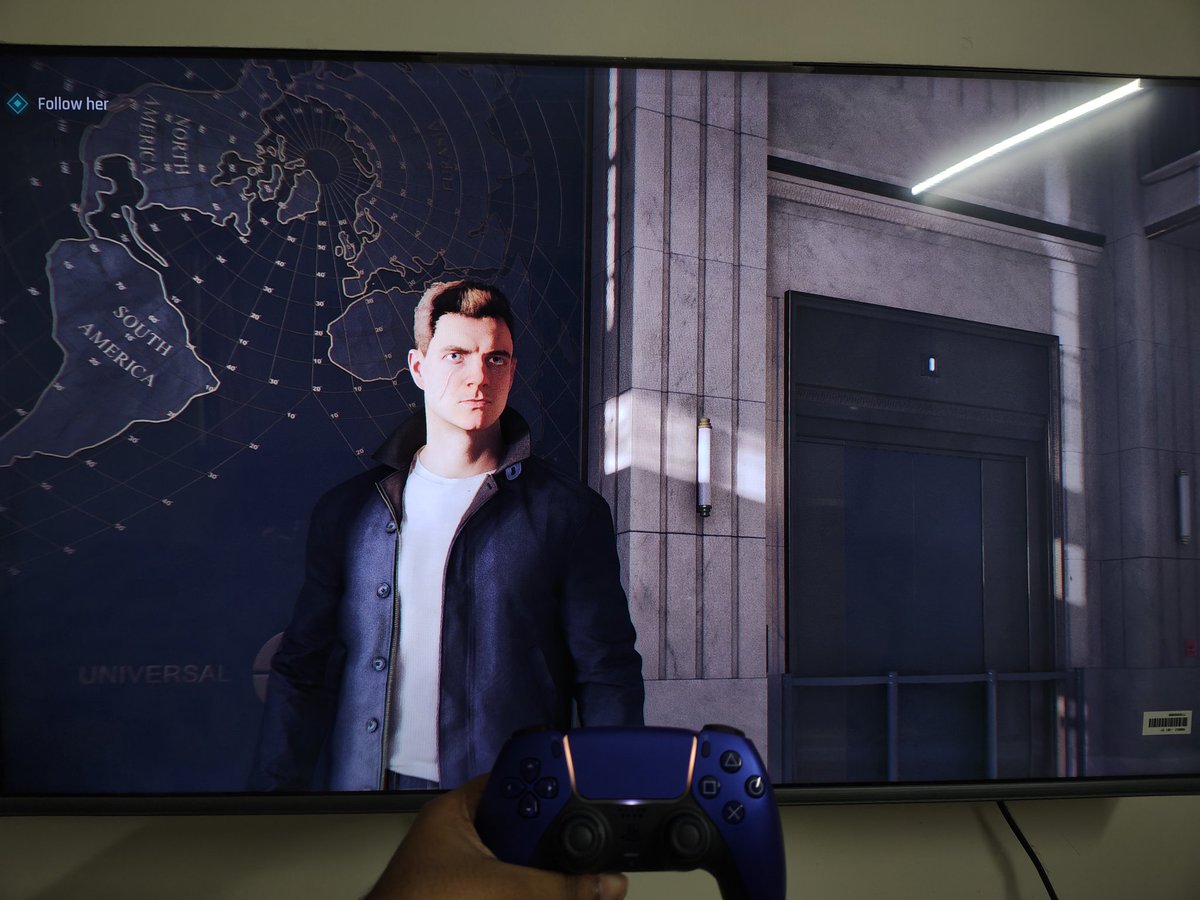
Completed 007 First Light, one of the best depictions of James Bond Universe and 00 program of MI6 in the form of a game. Haven't played any of IOI previous games that much but for this game they truly have put a lot of effort including their proprietary Glacier Engine.
Hoping that the next ones in the Trilogy( as revealed by Amazon MGM Studios and IOI) would be more amazing full of spycraft and action..
@IOInteractive@AmazonMGMStudio@thaRadBrad
#games #ioi #glacierengine #jamesbond #amazonmgm
Mesopotamia was never the cradle of civilisation. India was.
I spent forty years in international shipping, not academia. When I began researching the history of maritime trade, I had no orthodoxy to defend. I followed the evidence, and it kept arriving in the same place: the Indian subcontinent.
Nineteenth century archaeologists dug in Mesopotamia because the climate preserved artefacts, the biblical sources pointed them there, and the Ottomans allowed the excavations. That is the entire basis for the myth of Mesopotamia as "the cradle of civilisation."
Nobody applied the same rigour to India. Mohenjo-daro was not discovered until 1922. By then the narrative had already hardened.
What was actually there was the largest civilisation of the ancient world. Three hundred cities. Fifty thousand people in each, by 2600 BC. Two thirds of them stood on the banks of the Sarasvati, the central and greatest of the seven rivers described in the Rig Veda, flowing down from the Himalayas before the river vanished entirely by 1900 BC. The Vedic kings claimed territory stretching "sea to sea," from Afghanistan to Maharashtra, some 1.5 million square miles, against Egypt's 13,000. A dock at Lothal built to handle thirty ships of sixty tons, unmatched in Europe for four thousand years. When it was first excavated, it was recorded as a bathing pool.
When the scale became impossible to dismiss, the theory was not corrected. It was replaced with a story of pale-skinned nomads from the steppe who supposedly arrived around 1500 BC and brought civilisation with them. There is no evidence. The chronology doesn't work. The Vedas describe no invasion.
In 2019 a Harvard-led genetic study revived the claim, and the press reported it as confirmation. It was not. The same study found the builders of these cities were indigenous. The Sarasvati river that the Rig Veda described had already dried up before these newcomers arrived. What the study also found is that a small group of men, arriving after the Sarasvati had already dried up, interbred with the existing population and left a genetic signature. That is all.
So, where they chose to dig was mostly an accident of climate and access. The Aryan invasion theory was constructed because an Indian civilisation that owed nothing to Caucasians was a fact the late nineteenth century could not accommodate.
Link to full Substack essay with sources in the comments below.
After years of staying mostly silent here, I wanted to share what this moment truly means for us.
Reaching orbit with Vikram-1 is the culmination of an incredibly long and difficult journey. Over the last few years, Team Skyroot pushed relentlessly through missed aggressive deadlines, technical hurdles, and moments when the finish line kept moving. We never lost hope. Not once.
This success feels like redemption for every late night, every difficult choice, and every person who refused to give up on the dream.
The flight has given us a treasure of high-fidelity data. We will use every bit of it to make our vehicle subsystems significantly more robust and to optimize performance across the entire system.
For any launch company, achieving orbit is the single hardest milestone. Productionizing this capability, turning this success into reliable, repeatable flights, is now our central focus.
To every member of Team Skyroot who carried this dream when it was hardest, and to everyone who stood with us through the quiet years: thank you. This is your victory too.
To the entire nation that has celebrated this achievement with so much warmth and pride, thank you! It has meant more to us than words can express.
The real work begins now. 🚀
@SkyrootA
🚨 India decided to develop its own bullet train and adopt an international signaling system after Japan confirmed it could not deliver the E10 Shinkansen before 2034.
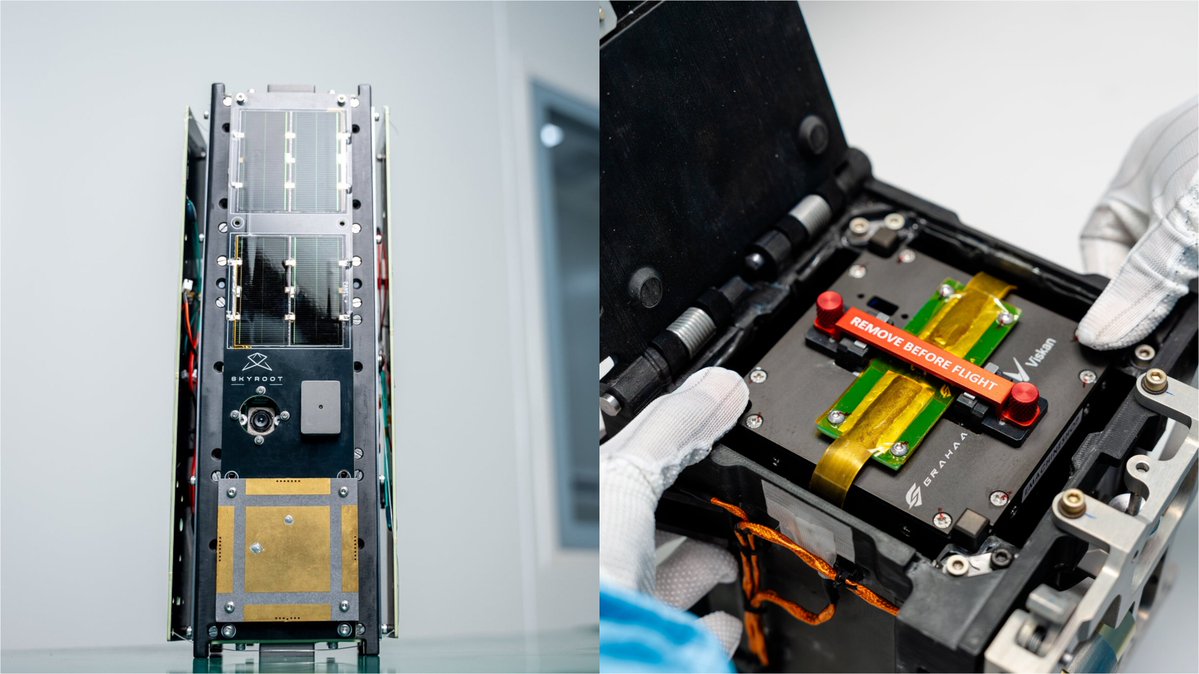
🚨 𝗦𝗶𝘅 𝗽𝗮𝘆𝗹𝗼𝗮𝗱𝘀 𝗼𝗻 𝗩𝗶𝗸𝗿𝗮𝗺-𝟭'𝘀 𝗺𝗮𝗶𝗱𝗲𝗻 𝗼𝗿𝗯𝗶𝘁𝗮𝗹 𝗳𝗹𝗶𝗴𝗵𝘁!
Skyroot Aerospace has finally revealed all the payloads on Mission Aagaman! There are 5 Indian 🇮🇳 payloads & 1 foreign payload 🇩🇪.
Lets learn what are these payloads and who are the companies that built them - a thread 🧵
India's Chandrayaan-3 lunar mission was honoured with the 2026 Goddard Astronautics Award by the American Institute of Aeronautics and Astronautics (AIAA), presented in Washington, D.C., on May 21.
India's Ambassador to the United States, Vinay Kwatra, accepted the award on behalf of the Indian Space Research Organisation (ISRO) at the AIAA ASCEND 2026 Conference.
(Photo source: Ambassador of India to the USA/ X)
This is not a "real story". This is just a story.
Indians earn, save, and spend in INR. This sort of misrepresentation, coming from a professor, seems purposefully creating fear, uncertainty, and doubt.
The USD itself has lost ~32% of its purchasing power in the last 15 years. This is because of inflation.
Controlled inflation (under 5-6%) is considered normal and even healthy for a growing economy. A fast growing economy like India tends to have higher inflation naturally.
In fact, central bankers and finance ministers get worried if inflation drops too low. Focusing only on the nominal USD rate without this context is purposefully misleading.
So while INR has lost its purchasing power, it is natural just like the USD has lost its purchasing power. Someone's savings in India, to be used in India, suddenly doesn't become 50% less due to USD/INR rate increase.
One day in the coming time, INR will suddenly start appreciating against the USD quickly. Then what will they say? They will change the attack to "inflation" then. These are the same people talking about de-dollarization and USD "crashing soon" as well.
So assuming they are right, if suddenly we wake up to 1 USD = 50 INR, did every Indian become twice as rich in the night? Because its GDP and GDP per capita is suddenly 2x now in USD terms? No.
The real story is, for those who can understand these things and see the pattern, there's an orchestrated attempt from a large network of anti-establishment types to fear monger and incite Indians to try cause political and economic instability in India.