Led by Prof Michael Unser @EPFL_en. Working on new algorithms and mathematical tools for the processing of biomedical images. Spline lovers. Tweets by students.
From biomedical imaging research to open source 💙
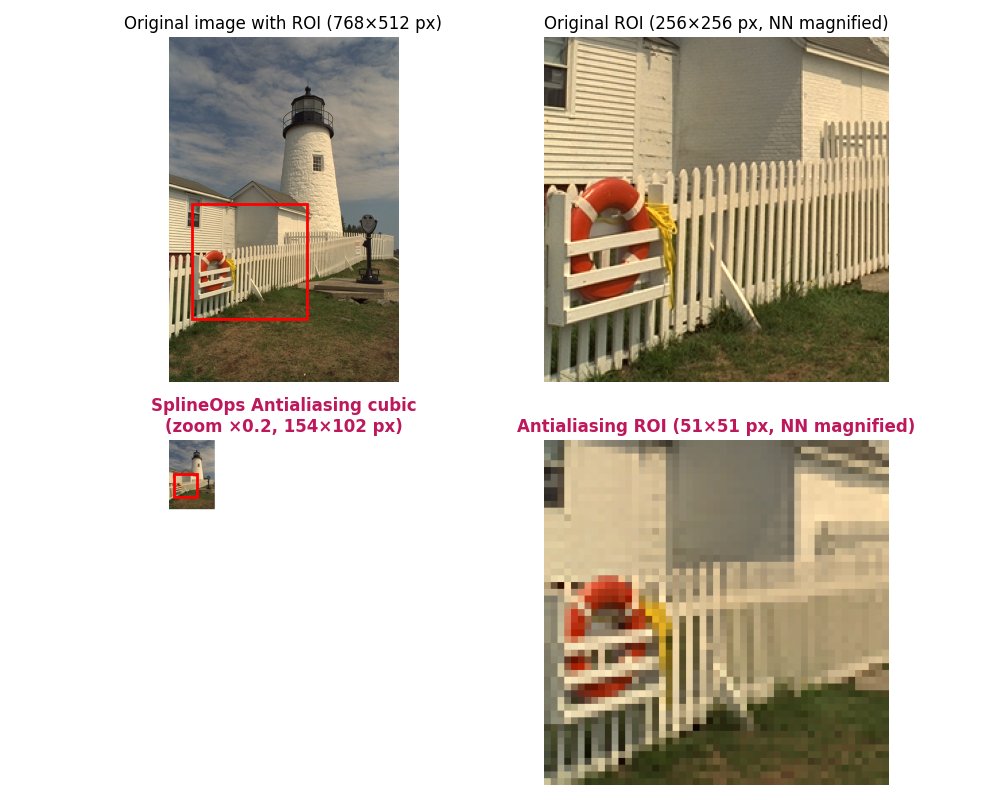
SplineOps v1.2.0 is out: a Python library for fast, high-accuracy spline signal & image processing.
Its projection-based resizing goes beyond the state of the art in quality, for scientific and medical imaging workflows.
An exciting opportunity to help shape the future of cancer research through AI and HPC!
📥 Apply today or share with your network!
More details and application instructions 👉
https://t.co/FVg35Zk5wb
@OscarLlorcaCNIO
We are thrilled to announce SplineOps! 🚀
An open-source library unlocking decades of pioneering research on spline algorithms developed by the Biomedical Imaging Group. Check it out! 🤩
Here: https://t.co/EkB5dPLdlh
I am excited to share that I will be joining the ECE department @UCSanDiego as an assistant professor this fall!
I would particularly like to thank @rdnowak for all his support since the beginning of my Ph.D. and Michael Unser (@big_epfl) for being a great post-doc supervisor.
I am excited to share that I will be joining the ECE department @UCSanDiego as an assistant professor this fall!
I would particularly like to thank @rdnowak for all his support since the beginning of my Ph.D. and Michael Unser (@big_epfl) for being a great post-doc supervisor.
Inverse Problems: Discrete or Continuous? @MehrsaPourya et al. from @big_epfl explain that box splines and multi-res bridge the gap:
"A Box-Spline Framework for Inverse Problems with Continuous-Domain Sparsity Constraints”
On early access:
https://t.co/DHIBwsHCKu
'Improving Lipschitz-Constrained Neural Networks by Learning Activation Functions', by Stanislas Ducotterd et al.
https://t.co/wQMFutWAGk
#regularization#optimization#unconstrained
⏰ First Imaging Seminar of the year on February 1: "Unique X-ray microscopy capabilities at SLS2.0: dynamic tomographic imaging and beyond" by Marco Stampanoni from @psich_en
More info: https://t.co/pUMl2EIPx7
Registration: https://t.co/P1tPikZzhL
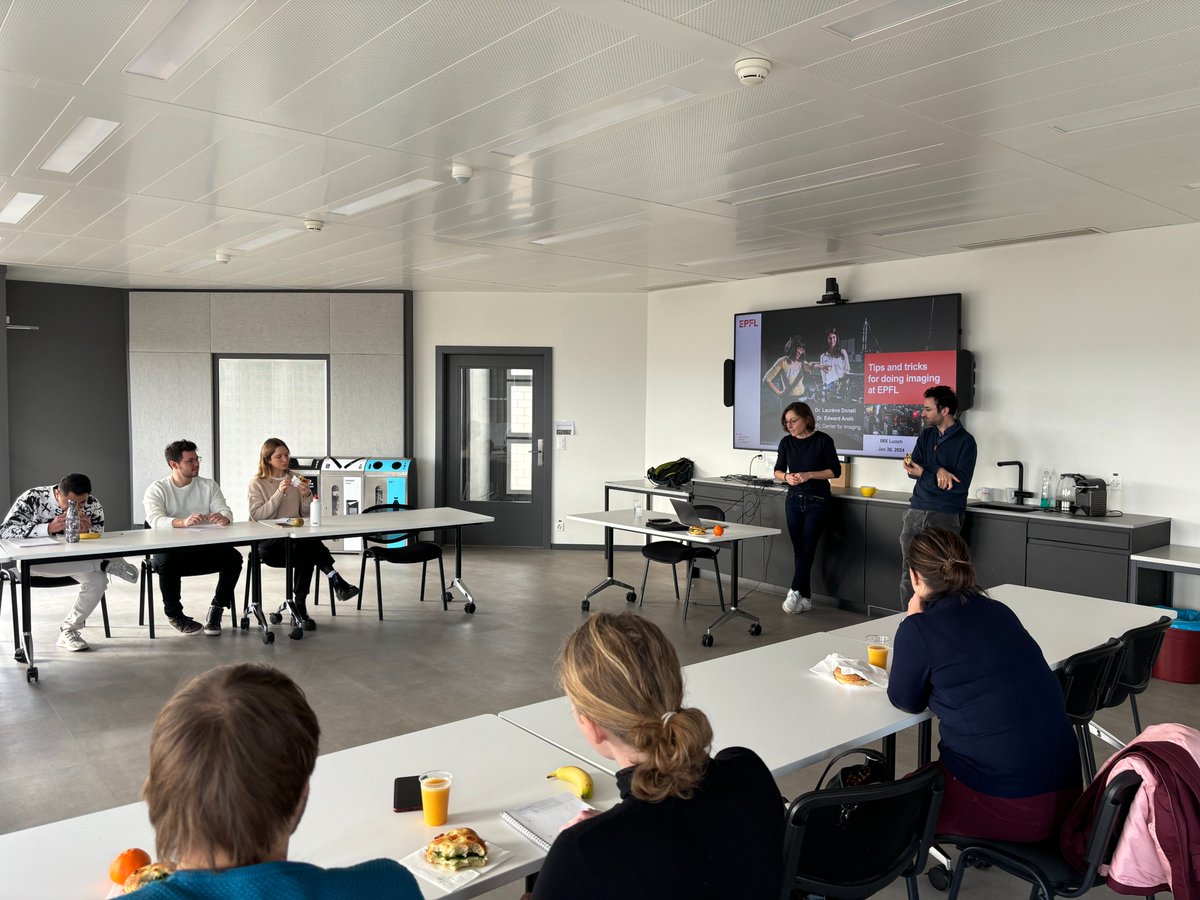
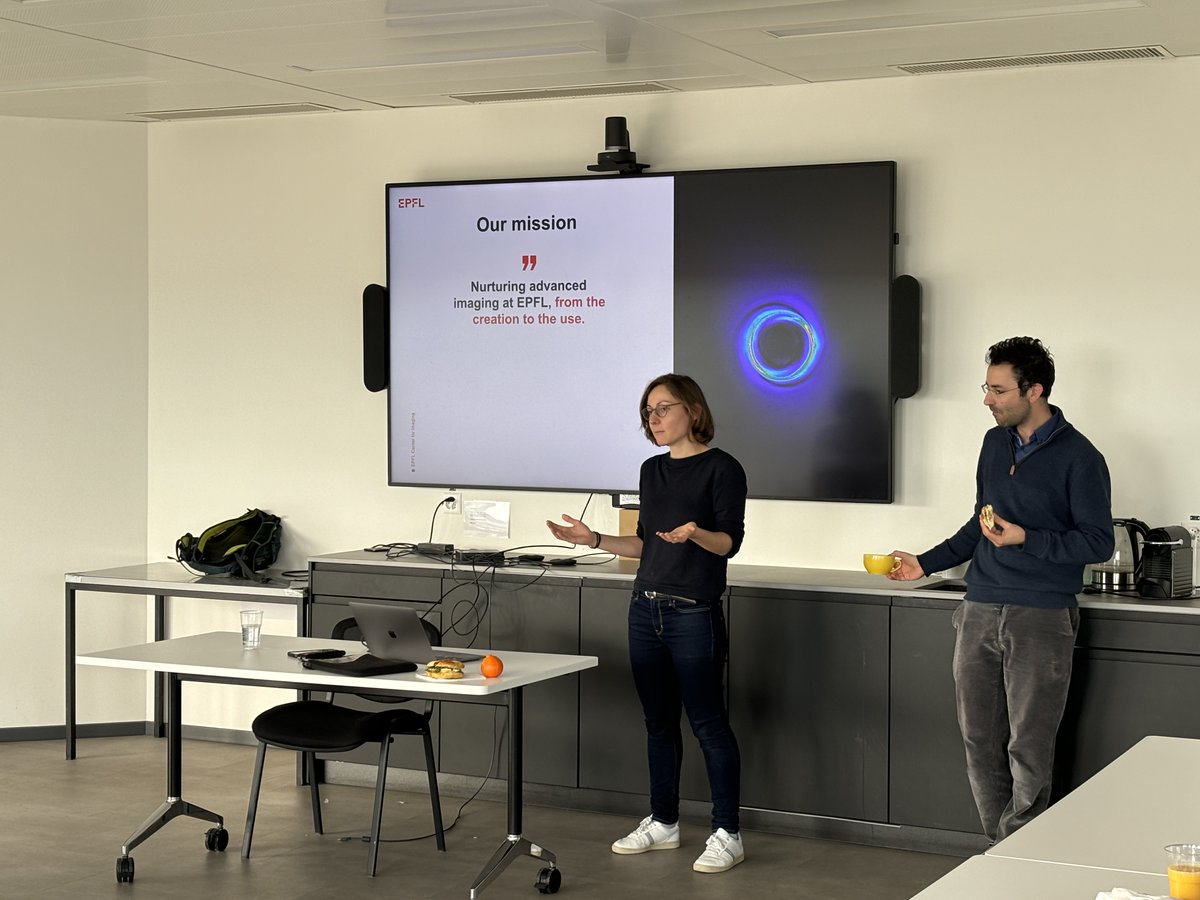
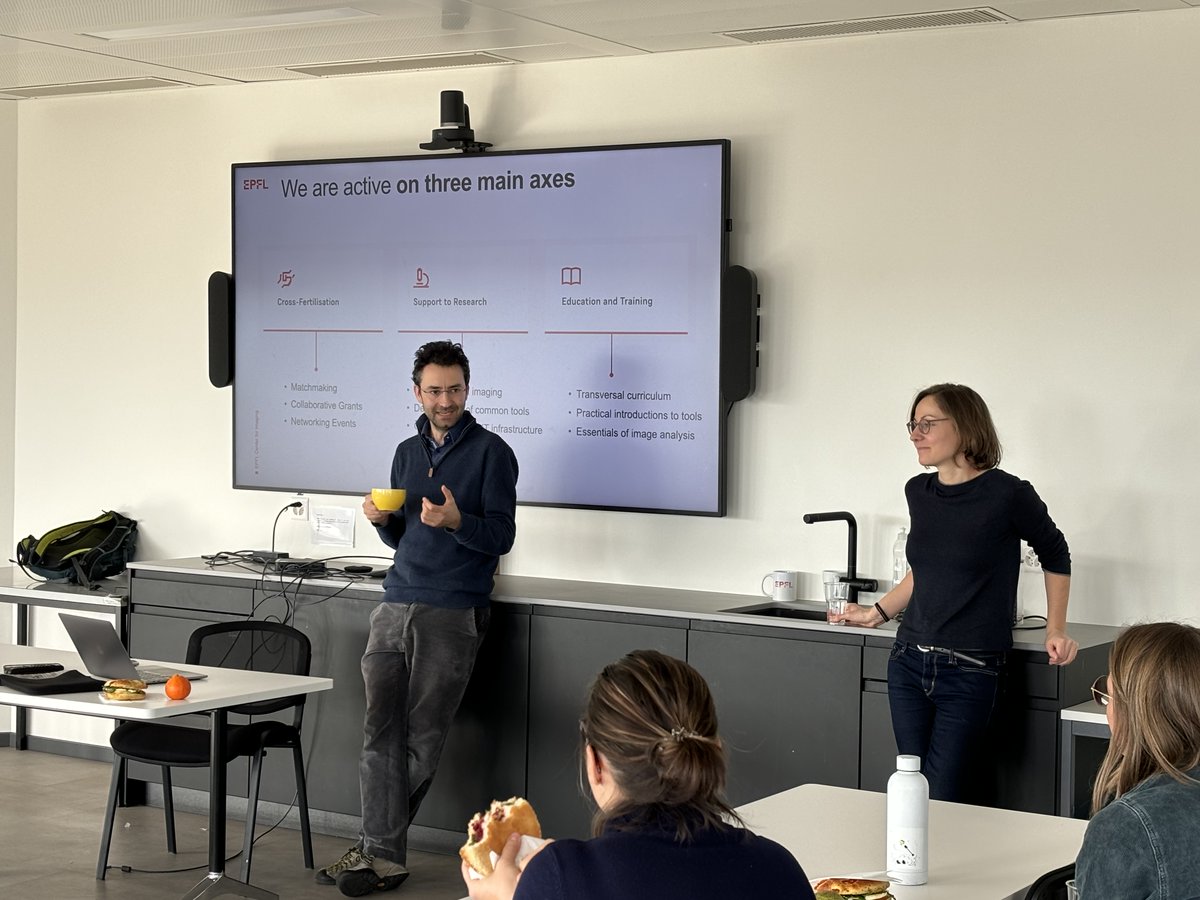
🤔 How to design your #imaging experiment? Where to acquire images at @EPFL or get help for their analysis? What about learning new skills?
Today, Laurène Donati & Edward Andò gave @Materials_EPFL scientists an overview of the resources available at EPFL for doing top imaging.
🎉 A new year, a new website for the EPFL Center for Imaging!
Click on the link below to explore cutting-edge research and resources in #imaging at @EPFL_en🔬📸💻🔭🛰️
Dive in and discover the future of imaging science across scales: https://t.co/UDjbbunNjn
📊🔬 Wonderful discussions yesterday around data management in #imaging at our joint event with @bitsinbio Lausanne!
A big thank you to @joel_luethi, @bercowskya, and Rémy Dornier for sharing their expertise and insights, and to @ThomVett for making it happen so smoothly! 🙌
🚀 Exciting News! Join us at the Applied Machine Learning Days at EPFL, Lausanne, Switzerland on March 26 for an enlightening Poster Session in the "AI & Physics" track! 🤖⚛️ Explore the rich history and recent breakthroughs where Artificial Intelligence and Physics collide.
1/3
🎉 Today marks the official starting day of the new @epfl_en Minor in Imaging!
A broad array of courses is available to students, from sensors, cameras and optical systems to image analysis, computer vision and AI!
Good luck making your picks 😉
https://t.co/CY1YtdvMxR
Big personal news: I will be moving to @UZH_en to setup the BioVisionCenter! Having the opportunity to coordinate research in bioimage analysis and push for the development of standardized open-source resources at home is a dream come true! 🎉🔬
🙌🏼Congratulations to Jonathan Dong (@jonathdong ) from @big_epfl for winning a @snsf_ch Ambizione grant which supports outstanding postdoctoral researchers who wish to conduct, manage and lead their own independent research project. @EPFL_ReO
https://t.co/BFV6FqjfZS